Warning Fitness Disclaimer: The information in this article is for general educational purposes only and does not constitute professional fitness or medical advice. Always consult a qualified healthcare professional before starting any new exercise program, especially if you have existing injuries or medical conditions.
The Most Versatile Piece of Equipment in the Gym That Most People Use Incorrectly
The cable machine overview spent the first four years of my training life as a tricep pushdown station. That was essentially its only function in my program. Every meaningful training I did used barbells and dumbbells. The shift came when a shoulder injury forced me to find alternatives to barbell pressing for three months. Out of necessity, I learned cable machine programming deeply and discovered that I had been treating a uniquely capable piece of equipment as a specialty tool.
The cable machine’s ability to provide cable machine training through full range of motion, load muscles from any angle, and create resistance vectors that free weights fundamentally cannot replicate makes it not merely a supplement to barbell training but a training modality with specific advantages that bars and dumbbells do not possess.
What Makes Cable Machines Mechanically Unique
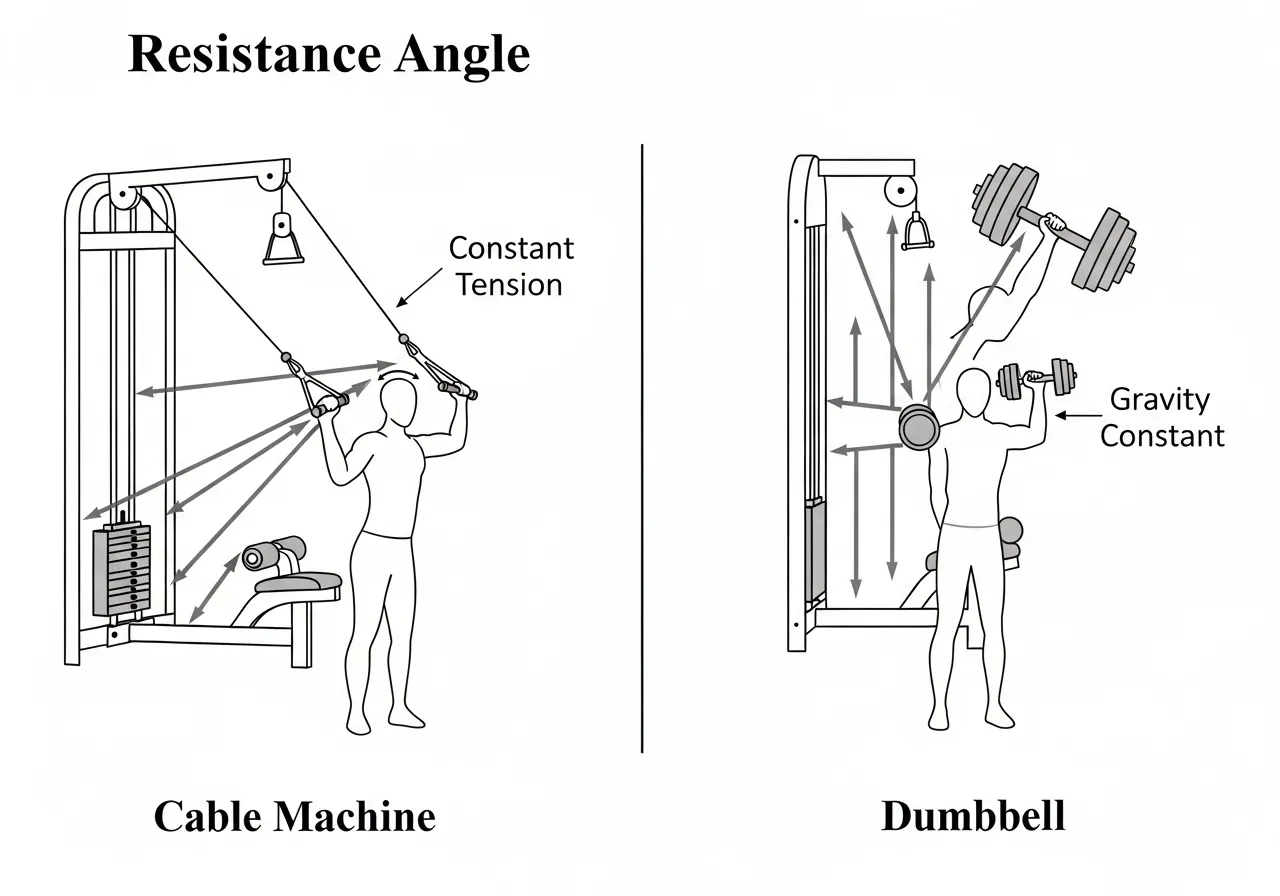
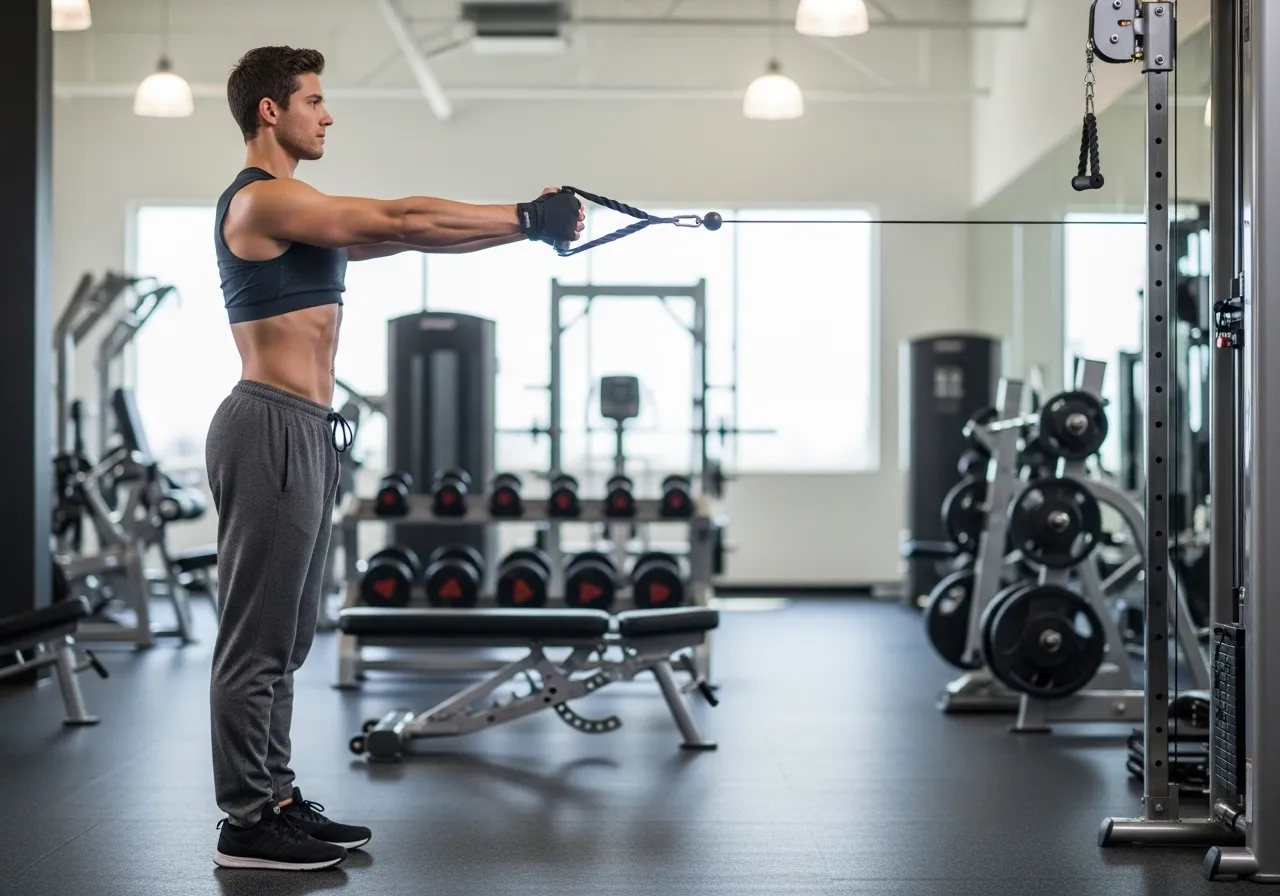
Free weights always provide vertical resistance: gravity. The resistance they create is maximal when the load is horizontal (perpendicular to gravity) and zero when the load is vertical (parallel to gravity). A dumbbell lateral raise is maximally difficult at 90 degrees of arm elevation and provides no meaningful resistance at the start or end of the movement. A cable lateral raise with the cable attached low provides constant, substantial resistance through the entire range of motion, loading the deltoid continuously rather than only in the mid-range where the dumbbell is effective.
This constant-tension property is the cable machine’s primary mechanical advantage. Research on muscle activation and exercise mechanics shows that muscles under constant tension through full range of motion produce greater hypertrophic stimulus than muscles that experience load only in the mid-range.
Angle Versatility: The Cable Machine Second Advantage
A cable machine set at low, mid, or high pulley heights creates fundamentally different resistance vectors for the same movement pattern. This adjustability allows a single machine to provide entirely different training stimuli depending on setup, creating the versatility that makes the cable stack genuinely irreplaceable for complete muscle development.
Essential Cable Exercises: The Complete Library
Cable Fly Variations: Superior Chest Development
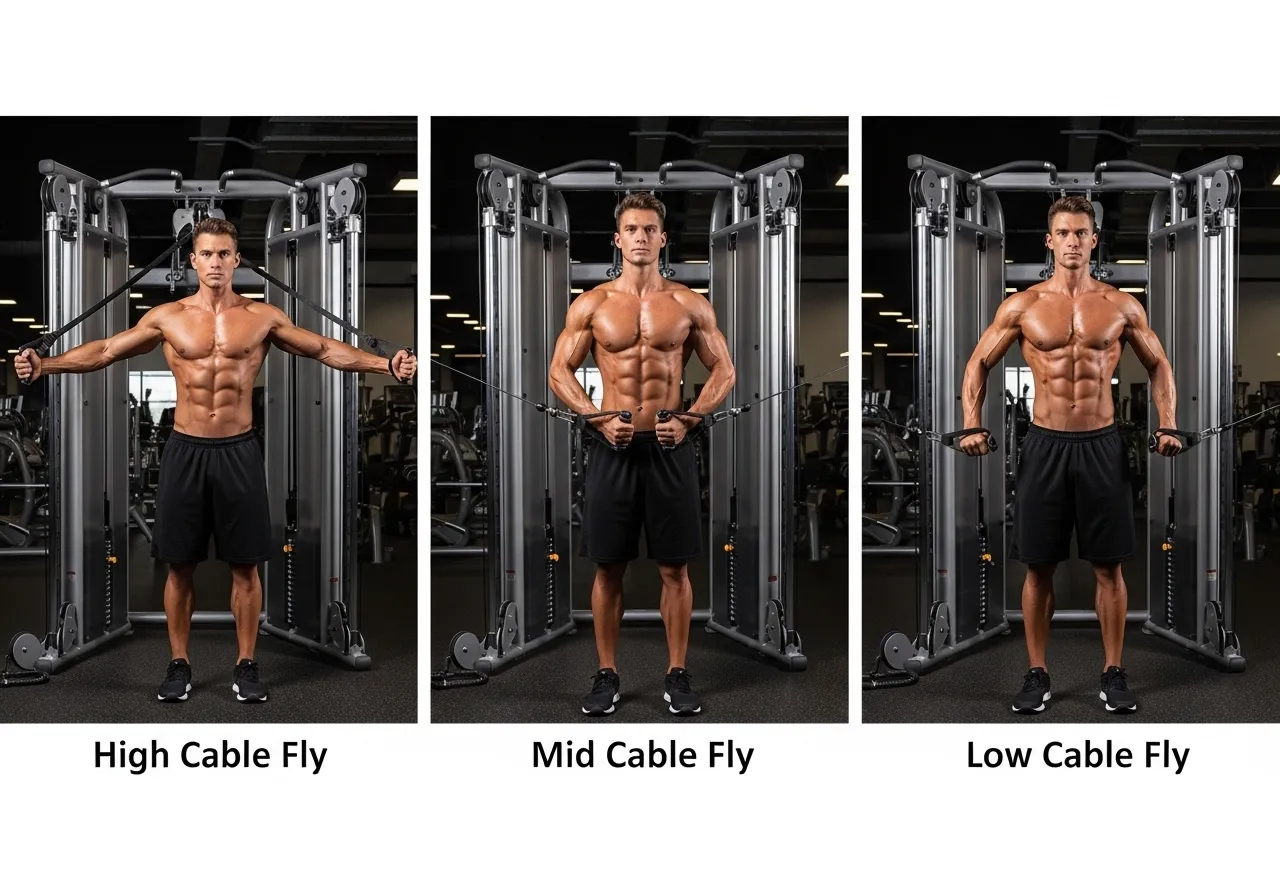
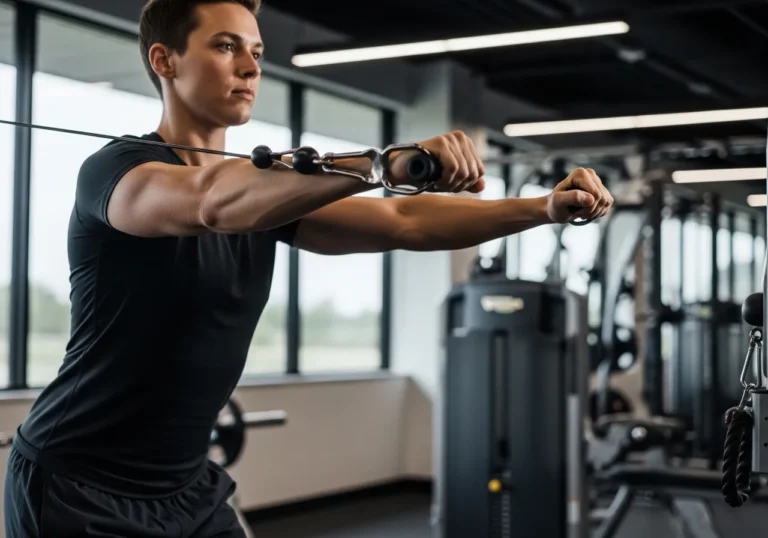
High cable fly guide with cables at highest position: the resistance vector loads the chest most heavily at the bottom in the contracted position. This targets the lower pectoral fibers and produces the peak contraction sensation that free weight flies cannot provide because a dumbbell resistance drops toward zero at the contracted position. Mid cable fly with cables at shoulder height: the most direct replication of the dumbbell fly pattern with the constant-tension advantage. Low cable fly with cables at ankle-to-knee height: loads the upper pectoral fibers most directly as the hands travel upward and inward. This is the cable exercise that most effectively develops upper chest definition.
Cable Row Variations: Back Development from Every Angle
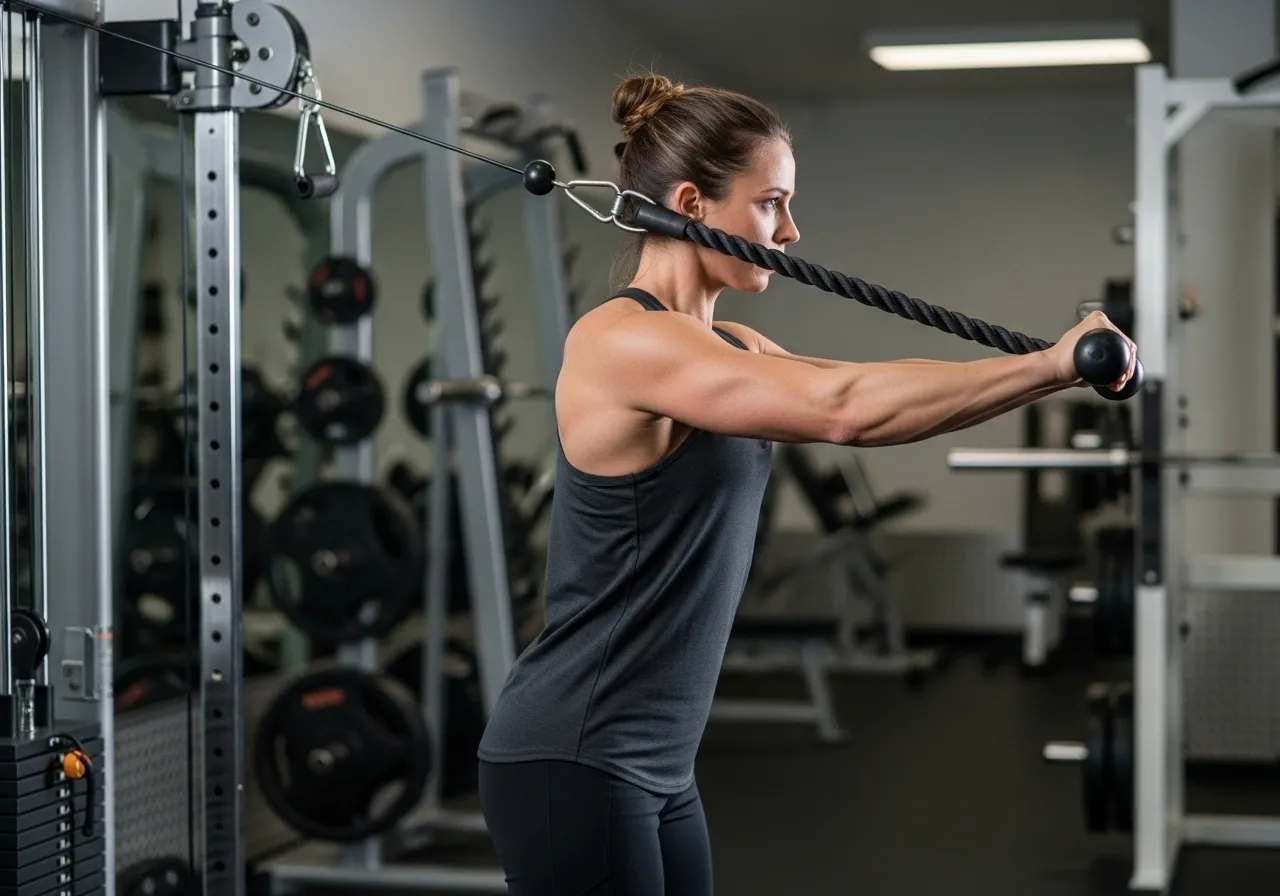
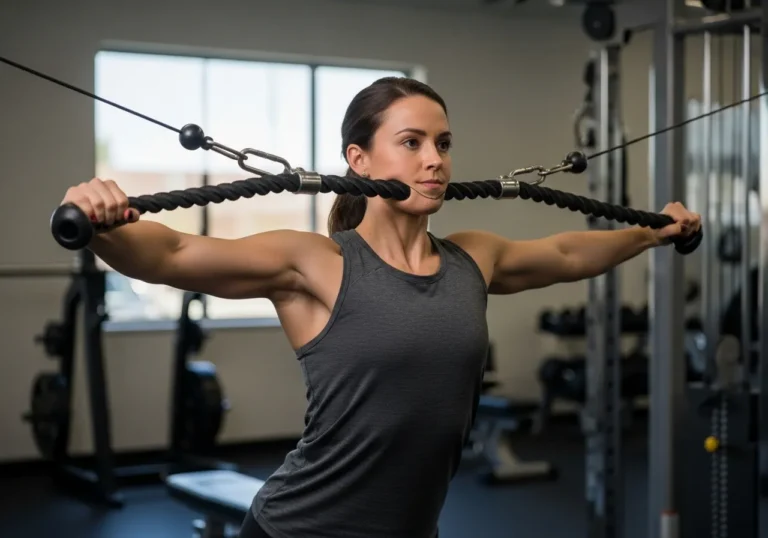
The cable row allows targeting of different back muscles more precisely than any barbell row variation. A close neutral grip targets the middle trapezius and rhomboids. A wide overhand grip shifts emphasis toward the lats. A rope attachment pulled to the face (face pull) targets the posterior deltoid and external rotators. Research on shoulder external rotator training identifies posterior deltoid and external rotator weakness as a primary contributor to shoulder impingement and rotator cuff injury in lifters. Two to three sets of face pulls performed two to three times per week directly addresses this common weakness.
Cable Lateral Raise: Deltoid Development Best Tool
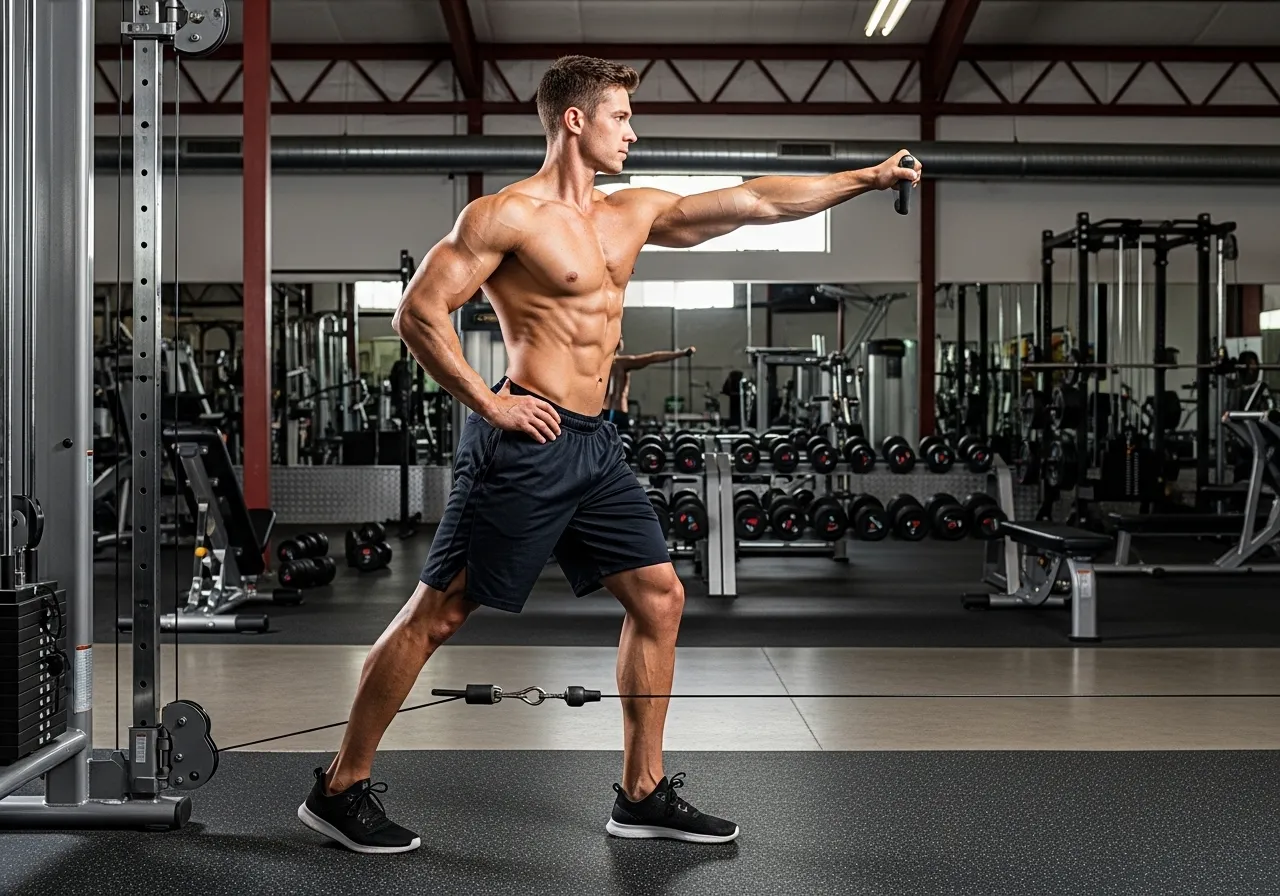
The cable lateral raise with the cable attached at ankle height on the opposite side of the body provides constant horizontal tension against the deltoid through the entire lateral raise range of motion. For lateral deltoid hypertrophy, cable lateral raises provide superior constant tension development compared to dumbbell equivalents.
Cable Bicep Curl and Tricep Pushdown
Cable curls from the low pulley load the biceps with constant tension through both the stretched and contracted positions. The cable provides maximal tension throughout. Both cable curls and tricep pushdowns are superior to their dumbbell equivalents for arm hypertrophy specifically, which is why cable arm work is standard in bodybuilding programs.
Cable Machine Technique: The Setup Principles That Change Everything
Pulley Height: The Variable Most People Ignore
The single most underutilized feature of cable machines is pulley height adjustment. Most gym-goers use whatever height the machine is set to by default, missing the specific angle-to-muscle relationship that pulley height creates. The rule: the cable should pull in the direction that creates peak resistance at the most relevant muscle length for the exercise goal. For chest isolation targeting the contracted position, set cables high. For chest targeting the stretched position, set cables low. For shoulder health work including face pulls and external rotation, set cables at head height.
Body Position Relative to the Machine
Distance from the cable pulley affects the angle of pull and consequently which part of the range of motion is most heavily loaded. Standing close to the pulley creates a more vertical pull. Standing further away creates a more horizontal pull. For exercises like cable flyes, finding the position where the cable remains under consistent tension at both the start and finish of the movement is the body positioning goal.
Unilateral vs Bilateral Cable Work
Cable machines allow both bilateral using both arms simultaneously and unilateral training with one arm at a time. Unilateral cable work identifies and corrects strength asymmetries, provides anti-rotation core demand, and allows a natural range of motion arc. Single-arm cable rows, single-arm cable flyes, and single-arm cable curls all provide the asymmetry correction and core demand that make them productive additions to programs.
Constant Tension vs Peak Contraction: Programming Implications
A slow eccentric on a cable fly maintains meaningful load on the pectoralis throughout the return phase. With a dumbbell fly, the eccentric through the final range requires little muscle effort as the weight approaches the contracted position. This means cable work with slow eccentrics produces greater time under tension than equivalent dumbbell work at the same tempo.
Programming Cable Machines Into Your Training
Cable Work as Primary Exercises
Cable exercises can be used as primary first exercises when the goal is hypertrophy rather than maximum strength. A chest-focused hypertrophy session might begin with cable flies to pre-exhaust the chest and establish the mind-muscle connection before transitioning to barbell or dumbbell pressing. A shoulder session might open with cable lateral raises and face pulls before overhead pressing.
Cable Work as Accessory and Finishing Exercises
After barbell bench pressing, cable flyes and cable crossovers extend chest training volume with constant-tension stimulus that the barbell cannot provide. After rows and pulldowns, face pulls and cable external rotation exercises add the posterior deltoid and rotator cuff work that compound pulling movements underload.
Sample Cable-Focused Upper Body Session
Incline bench press (primary compound) 4 sets of 8 reps at 75 percent 1RM. High cable fly 3 sets of 12 slow tempo, Low cable fly 3 sets of 12 as a superset. Seated cable row narrow grip 3 sets of 12, Face pull with rope 3 sets of 15 as a superset. Cable lateral raise 3 sets of 15 per side. Cable bicep curl 3 sets of 12, Cable tricep pushdown rope 3 sets of 12 as a tri-set. Total working sets: approximately 25, providing high volume at full-range constant tension across all upper body muscles.
The Cable-Dumbbell Hybrid Approach
The most productive hybrid uses cables for exercises where constant tension significantly outperforms free weights including flyes, lateral raises, and curls, and free weights for exercises where the load capacity or movement pattern favors bars and dumbbells. NSCA training resources support combining training modalities to address different aspects of muscle function.
Advanced Cable Techniques and Frequently Asked Questions
The Loaded Stretch Position
One of the most powerful applications of cable machines is loading the target muscle at its maximally stretched position. For the chest, this means performing a cable fly with cables set low and allowing maximum arm extension backward before beginning the adduction. For the lats, performing a pullover on the cable machine loads the lat at its most elongated position. Specifically programming cable exercises to emphasize the stretched position with a brief pause at maximum stretch produces disproportionate hypertrophic results for the volume invested.
Cable Variations for Rotator Cuff Health
The cable machine is the best tool available for shoulder external rotation exercises, the most important movement for rotator cuff health that most programs never include. Cable external rotation with cable set at elbow height, arm held at 90 degrees of abduction, rotating the forearm from pointing down to pointing up against the cable resistance, directly trains the infraspinatus and teres minor. Two sets of 15-20 repetitions per side performed twice per week represents one of the highest returns on investment for any exercise.
Cable Core Training: The Pallof Press
The Pallof press involves standing perpendicular to the cable machine, holding a handle at chest height, and pressing it away from the body while resisting the cable’s rotational pull. This trains the obliques and transverse abdominis in their primary functional role of resisting rotation. Both exercises develop core stability that has direct athletic transfer and directly addresses the rotational demands of sport that standard crunches and planks cannot match.
Are cables better than dumbbells for building muscle? For specific muscle groups and exercises, cables produce greater hypertrophic stimulus than dumbbells due to constant tension and angle versatility. The deltoids, chest in the fly pattern, and arms respond particularly well to cable training.
How do I know which pulley height to use for different exercises? Set the pulley so the cable is aligned with the direction of movement you want resistance in. For pressing and flying movements targeting the contracted position, high cables create downward tension. For targeting the stretched position, low cables create upward tension.
Can the cable machine replace free weights entirely? Cable machines cannot replicate the maximum load capacity of barbells for exercises like squats, deadlifts, and heavy pressing. A cable-only program would develop hypertrophy well but would miss the strength foundation and stabilizer development that free weights build.
Is the cable machine appropriate for beginners? Yes, cable machines are an excellent starting point for beginners because the constant tension provides immediate feedback about muscle activation, the pulley system makes weight increments smaller than dumbbells, and the guided resistance reduces the stabilization demand compared to free weights.
⚠️ Health & Fitness DisclaimerThis article is for general educational and informational purposes only and does not replace professional medical or fitness advice.If you have any pre-existing shoulder, back, or joint condition — consult a qualified healthcare professional or certified trainer before beginning any cable machine mastery program. The cable machine is arguably the most…
The lateral raise is the only exercise that directly targets the medial deltoid head, the muscle responsible for shoulder width. Every pressing movement loads the anterior deltoid heavily. No pressing movement meaningfully loads the medial deltoid. Yet most trainees perform lateral raises as an afterthought: a few sets of dumbbell swings at the end of…
⚠️ Health & Fitness DisclaimerThis article is for general educational purposes only and does not replace professional medical advice. If you have any pre-existing joint, shoulder, or wrist conditions, please consult a qualified healthcare professional before beginning any dumbbell training programme. Dumbbells are the most underestimated tool in the gym. Most trainees treat them as…
⚠️ Fitness Disclaimer: The information in this article is for general educational purposes only and does not constitute professional fitness or medical advice. Always consult a qualified healthcare professional before starting any new exercise program, especially if you have existing injuries or medical conditions. The Leg Press: An Honest Assessment of What It Does Well…
⚠️ Health & Fitness DisclaimerThis article is for general educational purposes only and does not replace professional medical advice. If you have any shoulder, back, or joint conditions, please consult a qualified healthcare professional before beginning a Smith machine vs free weights program. The Smith machine — a barbell constrained to a vertical or near-vertical…
The barbell row is the standard back thickness exercise. It allows heavy loading, trains the entire posterior chain, and has decades of proven effectiveness. Most serious lifters include it and most serious lifters plateau with it eventually. The plateau often has a simple mechanical explanation: the pronated (overhand) grip and horizontal torso position of the…