⚠️ Health & Fitness Disclaimer This article is for general educational and informational purposes only and does not replace professional medical or fitness advice. If you have any cardiovascular condition, joint concerns, or are new to vigorous exercise — consult a qualified healthcare professional before starting any HIIT program.
High-intensity interval training — HIIT — has moved from the domain of competitive athletes to one of the most researched and widely recommended exercise formats in both performance and clinical settings.
The core concept is simple: alternate between short bursts of intense effort and recovery periods, repeated in cycles. The physiological adaptations that result, however, are remarkably comprehensive — cardiovascular, metabolic, hormonal, and body composition changes that often exceed what longer HIIT vs steady-state cardio training achieves in a fraction of the time.
This guide explains the science behind HIIT, compares it to moderate-intensity continuous training, breaks down the most effective protocols, and gives you a complete programming plan from beginner to advanced.
The Physiology of HIIT: Why Short Bursts Produce Big Adaptations
What Happens Inside the Body During HIIT
During each high-intensity effort, the body rapidly depletes phosphocreatine stores and shifts to anaerobic glycolysis (energy production without oxygen, generating lactate as a byproduct) to sustain the effort. Heart rate climbs toward maximum, ventilation increases dramatically, and metabolic demand spikes to levels that steady-state cardio rarely achieves. (see also: heart rate zones)
The recovery periods allow partial restoration of phosphocreatine, lactate clearance, and heart rate reduction — but not full recovery. The next hard interval begins from a mildly fatigued state, producing cumulative stress across the session.
This pattern — repeated incomplete recovery between maximal efforts — is the stimulus that drives the unique adaptations of HIIT:
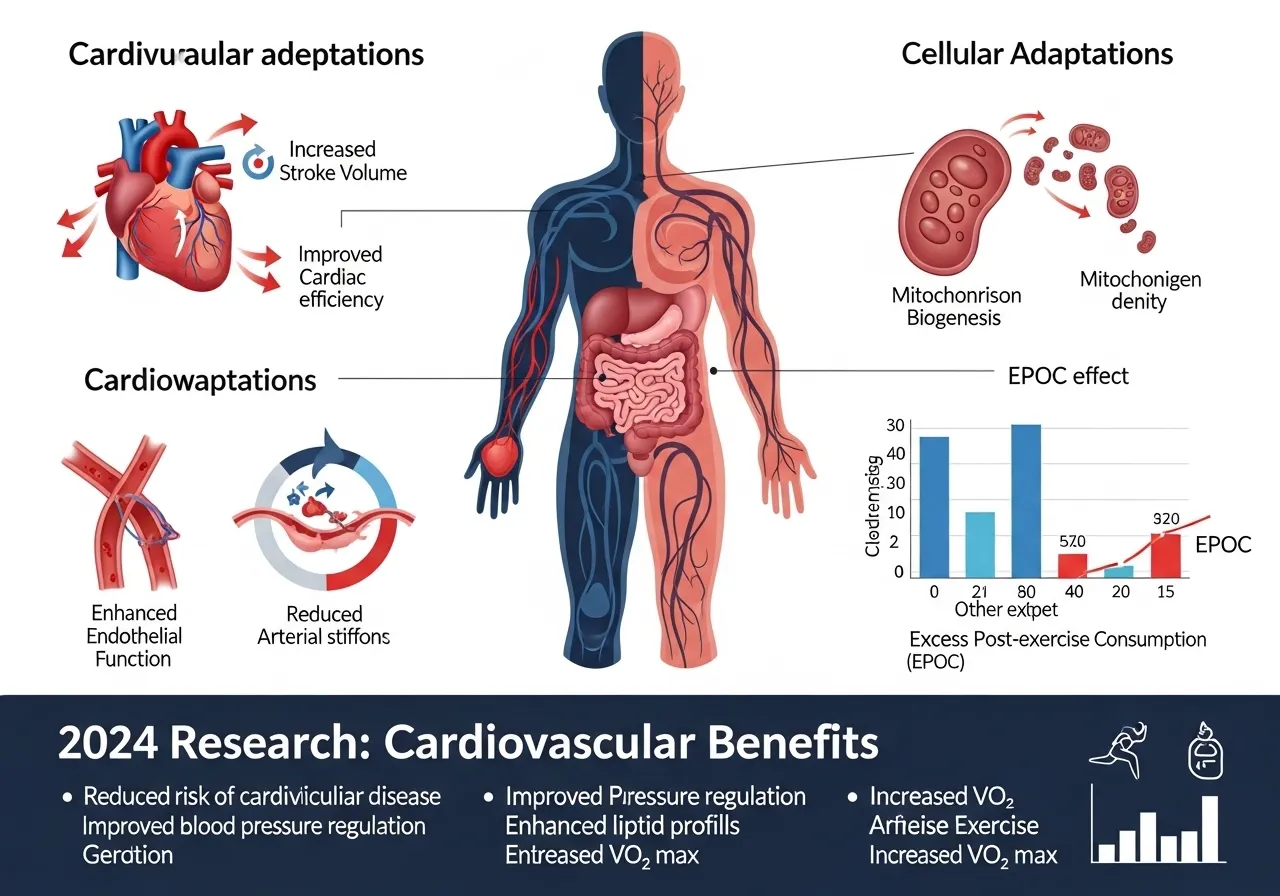
Mitochondrial biogenesis: New mitochondria (the organelles that produce aerobic energy) are synthesized — increasing aerobic capacity even though HIIT involves largely anaerobic efforts
Stroke volume increase: The heart adapts to pump more blood per beat — a fundamental marker of cardiovascular fitness
VO2max improvement: Maximal oxygen uptake increases significantly — the gold standard of cardiovascular fitness
EPOC (Excess Post-exercise Oxygen Consumption): Caloric burn continues elevated for hours after the session ends — often called the “afterburn effect”
The range of cardiovascular adaptations documented makes HIIT exceptional: it simultaneously improves arterial function, heart chamber capacity, blood lipid profile, and autonomic nervous system regulation — outcomes that typically require multiple separate interventions to address.
Cardiometabolic Risk Factors: A 97-Study Meta-Analysis
The breadth of these findings — spanning body composition, lipid profiles, insulin sensitivity, and inflammation — positions HIIT as one of the most pharmacologically comprehensive exercise interventions in the research literature.
The EPOC Effect: Understanding the Afterburn
One of HIIT’s most discussed benefits is excess post-exercise oxygen consumption (EPOC) — the elevated metabolic rate that persists for hours after an intense session.
After a vigorous HIIT session, the body continues consuming oxygen at an elevated rate while it:
Replenishes phosphocreatine stores depleted during maximum efforts
Clears accumulated lactate from the blood and muscles
Restores normal body temperature, which was elevated during exercise
Synthesizes proteins needed for muscle repair and adaptation
Research estimates that EPOC from HIIT adds approximately 6–15% additional caloric expenditure above the session’s direct energy cost — meaningful over many sessions but not the dramatic “metabolism boost for 24+ hours” sometimes claimed in popular fitness media.
The practical take: HIIT produces more total caloric expenditure than duration-matched moderate training both during and after the session — but the primary cardiovascular and metabolic benefits come from the adaptations produced over weeks and months, not from any single session’s burn.
This combination of acute and chronic effects explains why consistently structured HIIT programs outperform sporadic intense workouts in producing lasting fitness improvement.
HIIT vs. Moderate-Intensity Continuous Training: The Evidence-Based Comparison
What Is MICT?
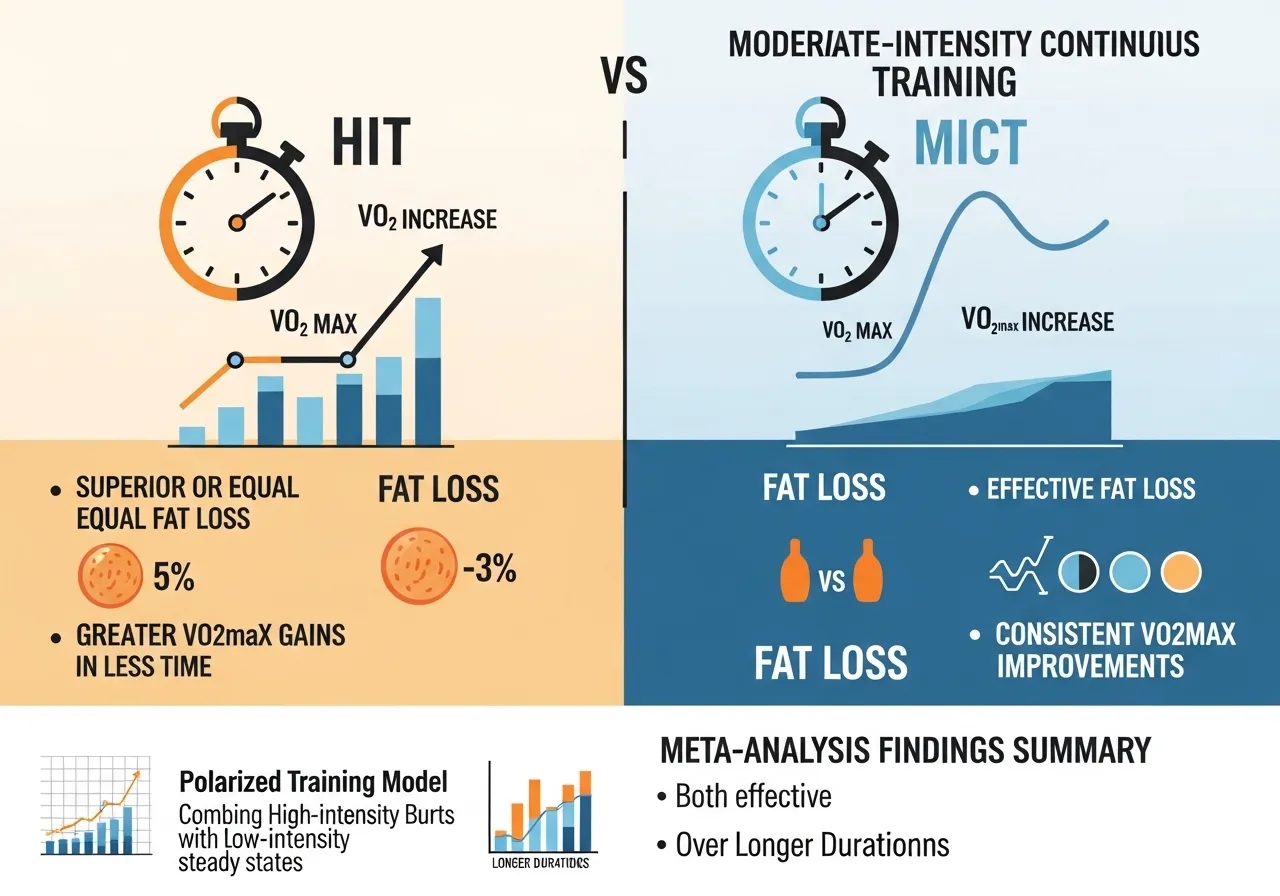
Moderate-intensity continuous training (MICT) refers to sustained aerobic exercise at a steady moderate effort — typically 50–70% of maximum heart rate for 30–60+ minutes. Running, cycling, swimming, and brisk walking at a consistent pace are classic examples.
MICT has decades of research supporting its cardiovascular and metabolic benefits — it is the foundation of most public health exercise guidelines. The comparison with HIIT, therefore, is not “which is better” in absolute terms, but “what are the relative advantages of each, and for whom?”
The “more enjoyable” finding deserves attention: exercise adherence is often the limiting factor in real-world outcomes, and an exercise format that people find more engaging is likely to produce better long-term results regardless of its acute physiological superiority.
Time Efficiency: The Core Practical Advantage
The most practically significant advantage of HIIT over MICT is time efficiency:
Format
Typical Session Duration
Active High-Intensity Time
VO2max Effect
MICT (moderate run)
45–60 min
45–60 min (all)
Moderate improvement
Standard HIIT
20–30 min
8–15 min
Greater improvement
Low-volume HIIT (Tabata)
10–15 min
4–8 min
Significant improvement
When MICT May Be Preferable to HIIT
Despite HIIT’s efficiency advantages, MICT remains the better choice in specific situations:
Recovery days:Zone 2 training MICT promotes active recovery and mitochondrial development without the acute fatigue of HIIT — valuable alongside a heavy strength training program
Beginners and deconditioned individuals: The intensity of HIIT requires a baseline aerobic foundation; MICT at moderate intensity develops this foundation before HIIT becomes appropriate
High cumulative fatigue periods: During heavy training blocks, adding HIIT increases total stress; MICT provides cardiovascular maintenance without additional recovery cost
Long-duration endurance sports: Marathon runners, cyclists, and triathletes need large volumes of sport-specific aerobic work — HIIT alone cannot replicate the race-specific aerobic conditioning this requires
The Optimal Combination: Polarized Training
Research on elite endurance athletes has established the “polarized training model” — approximately 80% of training at low intensity (Zone 1–2) and 20% at high intensity (Zone 4–5), with minimal time in the middle zones.
This combination — not purely HIIT or purely MICT — appears to produce the best long-term cardiovascular adaptations for most adults. Applying this principle practically: 2–3 MICT sessions per week at conversational pace + 1–2 HIIT sessions produces comprehensive cardiovascular development that neither approach alone achieves.
Why the Combination Beats Either Alone
The physiological rationale for combining HIIT and MICT is grounded in the distinct pathways each activates:
HIIT primarily stimulates PGC-1α (a protein that triggers mitochondrial biogenesis) through the AMPK and p38 MAPK pathways activated by metabolic stress
MICT (Zone 2) primarily stimulates fat oxidation enzymes, capillary density, and aerobic enzyme activity through sustained low-level AMPK activation
These pathways are complementary — maximizing adaptation in both requires training that stimulates each specifically
In practical terms: long slow cardio and short intense intervals are not redundant — they develop different but interdependent aspects of the cardiovascular system, and the best-conditioned athletes train both systematically.
The polarized approach essentially treats HIIT and Zone 2 work as a matched pair — each developing what the other cannot, producing cardiovascular fitness that neither could achieve independently over the same training period.
The Major HIIT Protocols: Structure, Science, and Application
Tabata Protocol
The Tabata protocol — developed by Dr. Izumi Tabata at the National Institute of Fitness and Sports in Japan — is the most studied and cited HIIT format:
Structure: 20 seconds all-out effort / 10 seconds rest × 8 rounds = 4 minutes total Intensity required: 170% of VO2max — genuinely maximum effort on every interval Documented effects (original study): Greater VO2max improvement than 60-minute moderate cycling in 6 weeks Best exercises: Cycling, rowing ergometer, burpees, sprint intervals
⚠️ Genuine Tabata requires truly maximal effort — “Tabata” performed at 70% effort does not replicate the original protocol’s benefits
Classic Interval Training (Work:Rest Ratio Methods)
Work-to-rest ratio protocols allow more structured progressive overload than Tabata:
Protocol
Work
Rest
Rounds
Total Time
Level
1:3 ratio
20 sec
60 sec
8–10
13–14 min
Beginner
1:2 ratio
30 sec
60 sec
8–10
12–15 min
Intermediate
1:1 ratio
30–45 sec
30–45 sec
10–12
10–18 min
Intermediate–Advanced
2:1 ratio
40 sec
20 sec
8–10
8–10 min
Advanced
Sprint Interval Training (SIT)
Sprint interval training uses all-out efforts typically lasting 10–30 seconds — shorter but more maximal than standard HIIT:
Classic Wingate Protocol: 30 seconds all-out cycling / 4 minutes rest × 4–6 rounds Research finding: Produces comparable VO2max gains to moderate continuous training with 20% of the time investment Limitation: The extremely high intensity requires excellent baseline fitness and is not appropriate for beginners or those with cardiovascular concerns
EMOM (Every Minute on the Minute)
EMOM protocols — popularized in CrossFit and functional fitness contexts — perform a set number of reps at the start of each minute, using the remaining time as rest:
Example: 10 kettlebell swings at the top of every minute for 20 minutes Advantage: Rest periods automatically adjust with fitness — faster completion = more rest; slower completion = less rest Best for: Combining strength and conditioning; creating progressive overload by adding reps per minute as fitness improves
Norwegian 4×4 Protocol
Developed from Norwegian research on cardiac patients and elite athletes, the 4×4 is the most researched HIIT protocol for cardiovascular disease prevention:
Structure: 4 × 4-minute intervals at 85–95% max heart rate / 3-minute active recovery × 4 rounds = ~30 minutes total Research backing: Superior to moderate continuous training for improving VO2max in cardiac patients, metabolic syndrome, and healthy individuals Best for: Runners, cyclists, rowers with a basic fitness foundation
SIT vs. HIIT: Are They the Same?
Sprint interval training (SIT) and HIIT are related but distinct:
HIIT: Work intervals of 60 seconds to several minutes at 80–95% of maximum — sustainable hard effort, not absolute maximum
SIT: Work intervals of 10–30 seconds at 100%+ of maximum — true all-out sprint efforts
SIT produces remarkable time efficiency — the Wingate protocol achieves comparable VO2max gains to MICT with 90% less time investment in multiple studies. However, SIT’s extreme intensity creates higher injury risk, greater discomfort, and lower adherence rates than standard HIIT.
For most general fitness goals, standard HIIT at 85–95% of maximum provides an excellent balance of effectiveness, safety, and adherence — reserving true SIT for well-conditioned trainees with specific performance goals.
HIIT Exercise Selection: Cardio-Based vs. Bodyweight vs. Combination
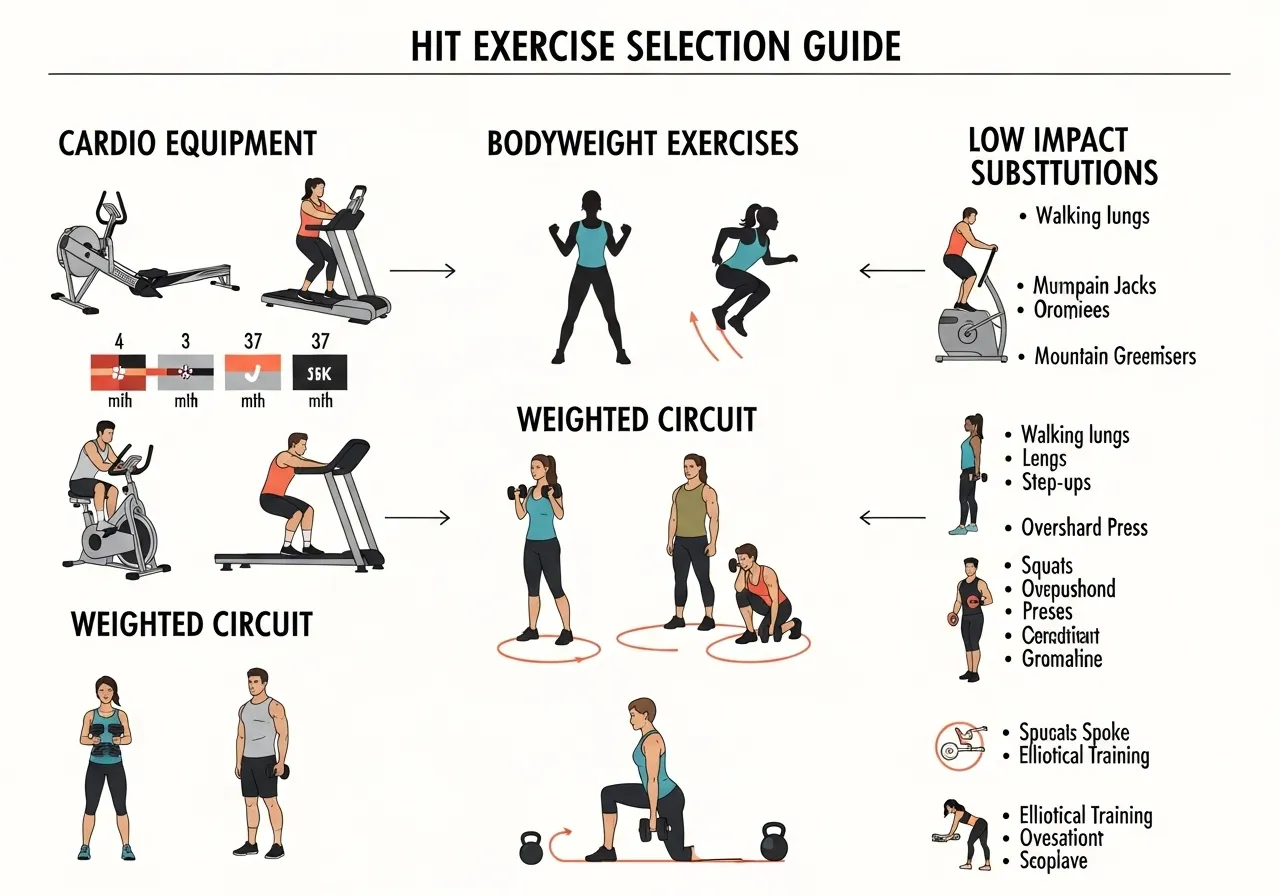
Cardio Equipment HIIT
Machine-based HIIT allows precise intensity control and consistent effort standardization across sessions:
Rowing ergometer: Full-body engagement with measurable wattage output — ideal for monitoring true intensity; low impact
Stationary bike / Assault bike: No impact on lower limbs — excellent for individuals managing running-related joint issues; the Assault bike’s arm involvement makes it particularly demanding
Treadmill sprints: High caloric demand; replicates running mechanics; requires controlled deceleration between intervals to avoid injury
Ski erg: Upper-body-dominant pulling pattern — excellent complement to lower-body-dominant cardio; develops latissimus dorsi and posterior chain while training cardiovascular system
Bodyweight HIIT
Bodyweight HIIT requires no equipment and can be performed anywhere — making it the most accessible HIIT format:
Effective bodyweight HIIT exercises ranked by metabolic demand:
Burpees: The highest metabolic demand of common bodyweight exercises — combining push-up, plank, squat, and jump in one movement
Jump squats: Explosive lower body work; high caloric demand; impacts knees — not recommended for those with knee sensitivity
Mountain climbers: Running-in-place in plank position — continuous lower body drive with core and upper body stabilization
High knees: Running motion on the spot — cardiovascular without displacement; useful when space is limited
Squat thrusts (no-push-up burpee): Lower impact than full burpees while retaining most of the metabolic demand
Weighted HIIT and Circuit Training
Combining resistance exercises with cardiovascular intervals creates a metabolic training effect that develops both strength endurance and cardiovascular capacity:
For individuals managing joint conditions, post-injury recovery, or significant deconditioning, low-impact HIIT substitutions allow high-intensity cardiovascular training without ground impact:
Seated bike sprints — zero lower body impact
Swimming intervals — total body aquatic HIIT with minimal joint loading
Resistance band circuits — controlled upper and lower body work
Aqua jogging — deep water running provides cardiovascular intensity without impact
Individuals recovering from orthopedic surgery or managing chronic joint conditions should work with a physiotherapist to design an appropriate low-impact HIIT approach before self-directing high-intensity training.
Using Music and Apps to Enhance HIIT Training
The high-intensity nature of HIIT makes psychological strategies for effort maintenance particularly valuable:
Music selection: Research consistently shows that music with tempos matching or slightly exceeding exercise cadence (130–160 BPM for high-intensity work) reduces perceived effort and increases performance duration at the same objective intensity
Interval timer apps: Free timer apps (Seconds, Tabata Pro, HIIT Timer) allow custom protocol programming — far more reliable than watching a clock during intervals
Heart rate monitors: Chest strap monitors provide more accurate real-time heart rate data during high-intensity exercise than wrist-based optical sensors, which can lag significantly during interval transitions
Training partner or group classes: Social accountability and shared effort during HIIT consistently improves both intensity achieved and session completion rates in research on exercise adherence
Combining good music, a reliable interval timer, and accountability to a partner or group removes the three most common reasons people abandon HIIT programs prematurely — boredom, poor intensity management, and inconsistent session completion.
HIIT Programming: 8-Week Plan and Frequency Guidelines
How Often Should You Do HIIT?
HIIT frequency is one of the most critical and frequently mismanaged variables in HIIT programming.
Research and clinical guidelines consistently support 2–3 HIIT sessions per week as the effective range for most adults — with at least 48 hours between HIIT sessions to allow adequate recovery.
The rationale for limiting frequency:
Each HIIT session creates significant neuromuscular fatigue that takes 24–48 hours to fully resolve
HIIT performed on top of unresolved fatigue does not produce the intended maximum intensity — the work becomes moderate-intensity training with a HIIT structure, losing its specific adaptation stimulus
Daily HIIT is associated with overtraining symptoms in research — elevated cortisol, reduced performance, increased injury risk
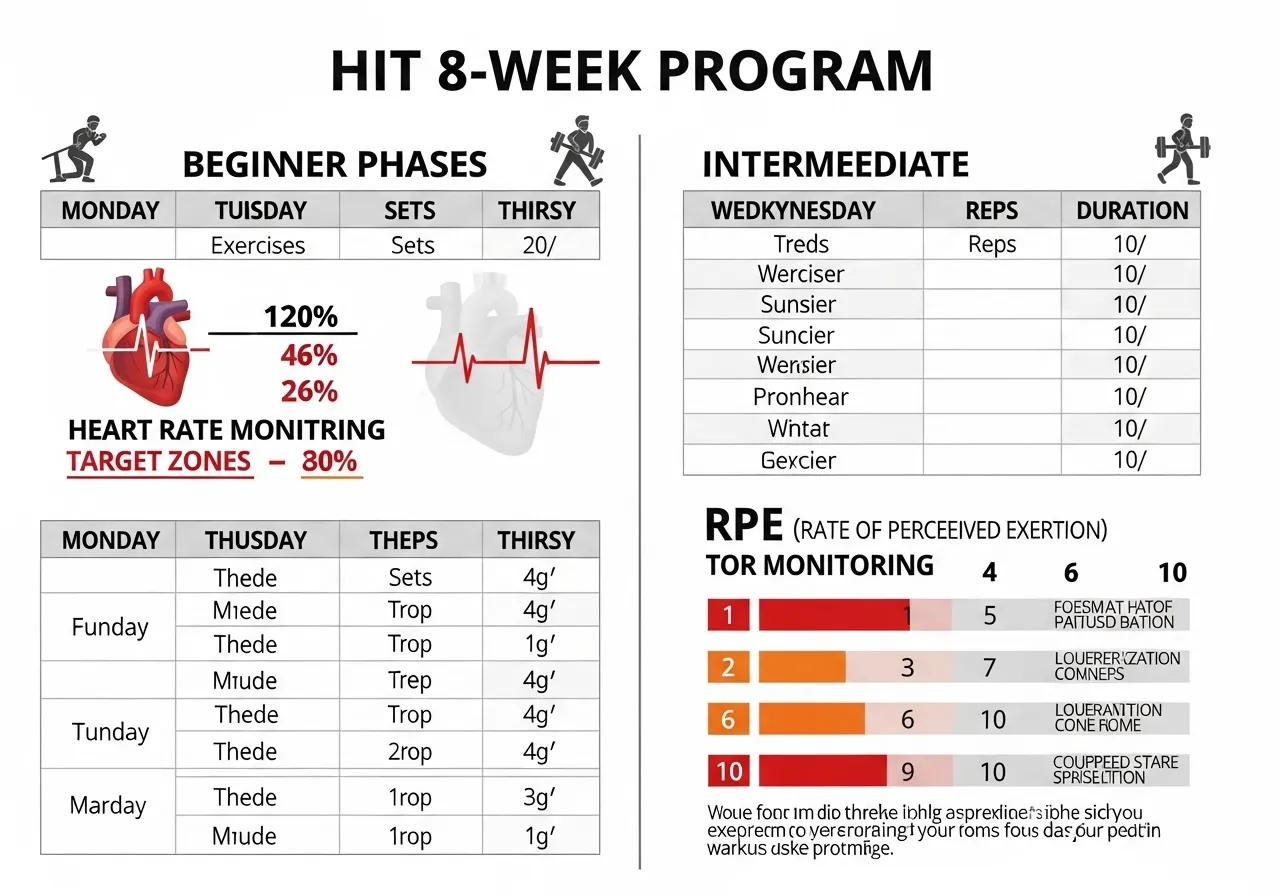
Beginner 4-Week Introduction
Week 1–2 (2 sessions/week):
Protocol: 20 sec effort / 60 sec rest × 8 rounds (1:3 ratio)
Exercise: Stationary bike or brisk walking intervals
Total session: 18–20 minutes including warm-up/cool-down
Week 3–4 (2 sessions/week):
Protocol: 30 sec effort / 60 sec rest × 8 rounds (1:2 ratio)
Progress to: Rowing ergometer or jogging intervals
Total session: 20–25 minutes
Intermediate 4-Week Progression (Weeks 5–8)
Week 5–6 (2–3 sessions/week):
Protocol: 30 sec hard / 30 sec easy × 10 rounds (1:1 ratio)
Add: 1 session/week of Norwegian 4×4 on bike or rower
Weekly Structure for HIIT Combined With Strength Training
Day
Training
Notes
Monday
Strength (lower body)
Heavy compound lifts
Tuesday
HIIT (upper body cardio)
Rowing or bike — protects Monday’s leg recovery
Wednesday
Strength (upper body)
Thursday
Zone 2 MICT or rest
30 min easy cardio or full rest
Friday
Strength (lower body)
Saturday
HIIT (full body)
Bodyweight or weighted circuit
Sunday
Rest or light mobility
Active recovery
Monitoring Intensity: Heart Rate and RPE
The defining characteristic of effective HIIT is genuine high intensity during work intervals — and the most reliable way to confirm this is monitoring heart rate or Rate of Perceived Exertion (RPE):
Target during work intervals: 80–95% of maximum heart rate — formula for estimated max HR: 220 minus age (rough estimate; individual variation is significant)
RPE equivalent: 8–9 out of 10 — “I can say maybe two or three words, but not a sentence”
Target during recovery: Heart rate should drop to 65–70% max by the end of recovery — if it doesn’t, extend recovery or reduce work intensity
HIIT and Mental Health
The cognitive and psychological effects of HIIT have received growing research attention:
A single HIIT session produces greater acute improvements in mood and cognitive function than matched moderate exercise in multiple studies
Regular HIIT training reduces anxiety and depression symptoms comparably to antidepressant medication in some research populations
The high-intensity effort appears to produce larger brain-derived neurotrophic factor (BDNF — a protein supporting neuron growth and cognitive function) responses than moderate training
These mental health benefits — alongside the cardiovascular, metabolic, and body composition effects — make HIIT one of the most comprehensively beneficial exercise formats currently supported by evidence. The key is implementing it with appropriate frequency, intensity, and recovery to sustain the practice long-term.
Approached consistently — 2–3 sessions per week with genuine high intensity and adequate recovery — HIIT stands among the most time-efficient and comprehensively beneficial exercise strategies available in the current evidence base.
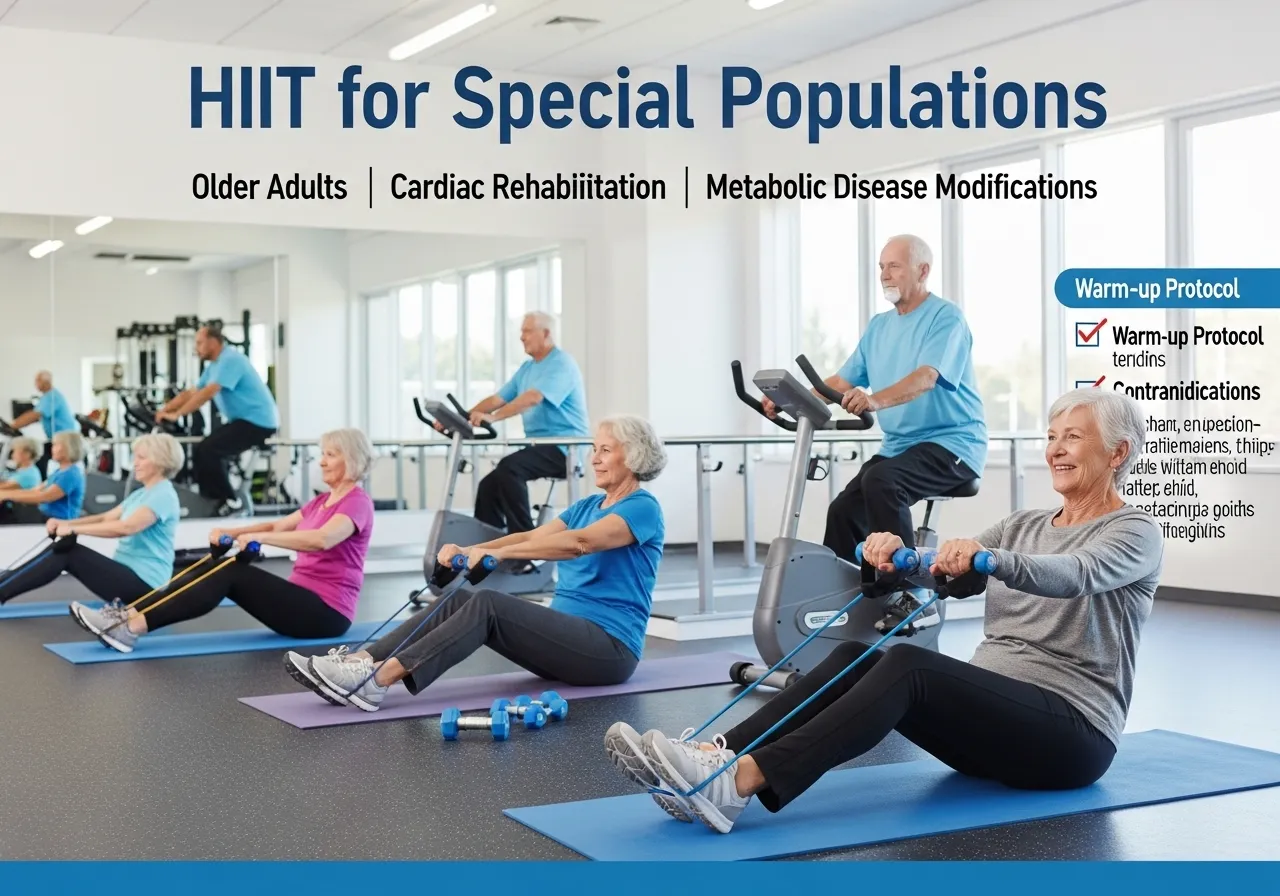
HIIT for Special Populations: Older Adults, Beginners, and Clinical Contexts
HIIT for Older Adults: Updated Evidence
A significant body of research over the past decade has established that HIIT is safe and effective for healthy older adults — contradicting the earlier assumption that high-intensity exercise should be avoided after a certain age.
Key findings from research in older populations:
VO2max improvements from HIIT in adults aged 60–80 are comparable to those seen in younger adults
HIIT has been shown to improve cognitive function in older adults — an effect attributed to increased brain-derived neurotrophic factor (BDNF) production during high-intensity exercise
Muscle mass is better preserved with HIIT than with MICT — relevant for combating sarcopenia (age-related muscle loss)
Modifications appropriate for older adults beginning HIIT:
Begin with cycling or rowing rather than running — eliminates fall risk and reduces lower limb impact
Start with 1:3 or 1:4 work:rest ratios — longer recovery between intervals
Monitor heart rate and RPE closely — subjective exertion perception may differ from cardiovascular load
Obtain medical clearance before beginning any high-intensity exercise program, particularly with cardiovascular history
HIIT in Cardiac Rehabilitation
HIIT has been increasingly incorporated into formal cardiac rehabilitation programs for patients who have experienced heart attacks, undergone cardiac procedures, or have diagnosed heart failure.
The Norwegian 4×4 protocol has been used extensively in cardiac rehabilitation research — showing superior improvements in VO2max compared to traditional moderate-intensity cardiac rehab in multiple trials.
HIIT within cardiac rehabilitation is always supervised and individually prescribed — it is not appropriate for self-directed application in individuals with active cardiac conditions. Participation requires physician referral and monitoring.
HIIT and Metabolic Disease
HIIT has shown particular promise for individuals with type 2 diabetes and metabolic syndrome:
Improved insulin sensitivity has been documented after as few as 2 weeks of HIIT — faster than MICT produces the same effect
Post-meal glucose levels are reduced by HIIT performed within 30 minutes after eating — a potential blood sugar management tool
Visceral adiposity (fat surrounding the abdominal organs — the metabolically dangerous fat type) is specifically reduced by HIIT, with greater reductions than seen with MICT at equal energy expenditure in some studies
Individuals with diagnosed diabetes, metabolic syndrome, or prediabetes should consult their healthcare team before beginning HIIT — exercise-induced blood glucose changes require awareness and potentially management of medication timing.
Tracking Progress in HIIT Training
Unlike strength training where weights provide clear progressive overload markers, HIIT progress requires different tracking methods:
Heart rate recovery: How quickly heart rate drops from the work interval peak to the recovery target — faster recovery at the same intensity confirms cardiovascular adaptation
Perceived effort at fixed intensity: A protocol that felt 9/10 in week 1 should feel 7–8/10 after 8 weeks of consistent training — the same work at reduced perceived difficulty confirms fitness gains
Performance at fixed RPE: How much distance, wattage, or speed can be sustained at a fixed perceived effort level — improvements confirm aerobic power development
Resting heart rate: Gradual decline over weeks of consistent training is a reliable cardiovascular fitness indicator — a drop of 5–10 BPM over 2–3 months of HIIT is a meaningful adaptation
Common HIIT Mistakes, Myths, and Long-Term Development
Mistake 1: Not Going Hard Enough
The single most common HIIT error is performing the work intervals at moderate rather than high intensity — creating a structured, somewhat uncomfortable session that lacks the true physiological stimulus HIIT is designed to produce.
An effective HIIT work interval should be genuinely difficult — not merely elevated above resting. Heart rate should reach 80%+ of maximum, breathing should be heavy enough to prevent conversation, and effort should be sustained at a level that cannot be maintained indefinitely.
If HIIT sessions feel manageable throughout, they are likely not achieving the intensity required for the documented cardiovascular and metabolic adaptations.
Mistake 2: Too Much Too Soon
The enthusiasm that often accompanies starting HIIT leads many beginners to perform it daily or near-daily — quickly accumulating fatigue that degrades performance quality and increases injury risk.
HIIT quality degrades with accumulated fatigue — a fourth consecutive day of intervals produces less cardiovascular stimulus and more injury risk than a single fresh session.
Starting with 2 sessions per week, assessing recovery, and only adding a third session when the first two consistently produce target heart rates and post-session energy suggests adequate recovery capacity.
Myth: HIIT Burns More Calories During the Session Than Steady-State Running
Per minute of exercise, high-intensity intervals do burn more calories than moderate-paced running. However, a 20-minute HIIT session burns fewer total calories during the session than a 45-minute moderate run simply because of the shorter duration.
The EPOC (afterburn) effect of HIIT adds meaningful post-exercise caloric expenditure — but the magnitude of this effect is often overstated in fitness marketing. Research suggests HIIT produces 6–15% additional caloric expenditure through EPOC above session burn — meaningful but not dramatic.
HIIT’s caloric advantage over MICT is primarily in efficiency: producing comparable or greater caloric expenditure in less total time, not burning dramatically more calories per session at matched duration.
Myth: HIIT Is Only Effective for Fat Loss
While HIIT’s metabolic benefits receive the most popular attention, the cardiovascular, cognitive, and performance adaptations of HIIT are arguably more significant for long-term health:
VO2max improvement from HIIT is among the strongest predictors of all-cause mortality reduction in exercise research
The blood pressure, lipid, and insulin sensitivity improvements from HIIT directly reduce the risk of cardiovascular disease, stroke, and type 2 diabetes
Cognitive benefits — improved memory, executive function, and mood — are documented in HIIT research across age groups
Warm-Up and Cool-Down: Non-Negotiable for HIIT
The high-intensity demands of HIIT make adequate warm-up more important than for moderate-intensity training:
Recommended HIIT warm-up (5–10 min):
→ 3–5 min light cardio at Zone 1 intensity (very easy jogging, easy cycling)
→ Dynamic mobility: leg swings, hip circles, arm circles — 10 reps each
→ 2–3 “activation builds” at 50%, 70%, 85% of target effort — 15 seconds each
Cool-down (5 min minimum):
→ 3–5 min very light cardio — walking, very easy pedaling
→ Static stretching of the primary muscles used
Skipping the warm-up for HIIT — going from rest to maximum effort in the first interval — significantly increases cardiac and musculoskeletal risk. The warm-up is not optional.
Knowing When HIIT Is Contraindicated
HIIT is not appropriate in all situations. Conditions that typically contraindicate self-directed HIIT include:
Recent cardiac event (within 3–6 months without physician clearance)
Acute infection, illness, or fever
Severe anemia (low red blood cell count)
Significant orthopedic injury that limits movement quality at high intensity
A qualified personal trainer, exercise physiologist, or sport and exercise physician can design a HIIT program appropriately modified for individual health history and fitness level — producing the benefits of the training stimulus while managing the risks that make self-directed maximum-intensity exercise inappropriate in certain contexts.
✅ Key Takeaways
HIIT produces superior improvements in VO2max, blood pressure, lipid profiles, and body composition compared to MICT — in significantly less time
2–3 sessions per week with 48+ hours between is the evidence-supported frequency — daily HIIT causes overtraining, not better results
Work intervals must genuinely reach 80–95% of maximum heart rate — HIIT performed at moderate intensity produces moderate, not HIIT, adaptations
Warm-up before every HIIT session — the cardiovascular demand makes skipping the warm-up genuinely risky
HIIT and MICT are complementary tools — the optimal approach combines both in a polarized training structure
⚠️ Health & Fitness DisclaimerThis article is for general educational purposes only and does not replace professional medical advice. If you have cardiovascular, musculoskeletal, or respiratory conditions, consult a qualified healthcare professional before beginning a new walking program. Walking is simultaneously the most studied, most accessible, and most underestimated form of physical activity available. It…
⚠️ Health & Fitness DisclaimerThis article is for general educational and informational purposes only.It does not replace professional medical or fitness advice.If you have any pre-existing condition, knee, hip, or lower back concern — please consult a qualified healthcare professional or certified personal trainer before starting or modifying any exercise program. The barbell back squat…
⚠️ Fitness Disclaimer: The information in this article is for general educational purposes only and does not constitute professional fitness or medical advice. Always consult a qualified healthcare professional before starting any new exercise program. ⚠️ Cardiovascular Health Notice: If you have a history of heart disease, high blood pressure, or any cardiovascular condition, obtain…
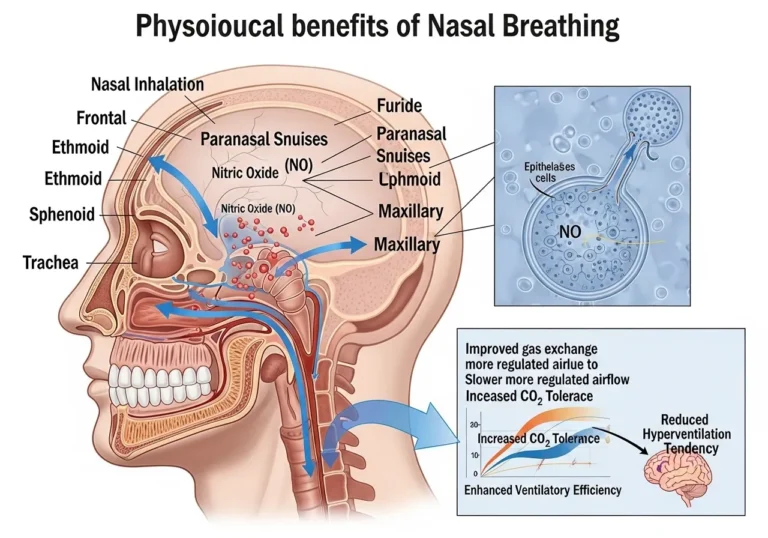
Breathing through the mouth during exercise is the default for most people. It feels necessary at moderate intensity, instinctive at high intensity, and the idea of restricting breathing to the nose during a training run sounds like an experiment in self-imposed oxygen deprivation. The research tells a more nuanced story. Nasal breathing during exercise activates…
⚠️ Health & Fitness DisclaimerThis article is for general educational purposes only. It does not replace professional medical advice. If you have cardiovascular, joint, or respiratory conditions, consult a qualified healthcare professional before beginning a running programme. Running is the most accessible cardiovascular exercise on the planet. No equipment, no membership, no learning curve —…
⚠️ Health & Fitness DisclaimerThis article is for general educational and informational purposes only. It does not replace professional medical or fitness advice. If you have any pre-existing condition, injury, or health concern — consult a qualified healthcare professional or certified personal trainer before starting or modifying any exercise program. Sandbag training occupies a unique…