⚠️ Health & Fitness Disclaimer This article is for general educational purposes only and does not replace professional medical advice. If you have any cardiovascular, metabolic, or respiratory condition, please consult a qualified healthcare professional before beginning any new exercise programme.
Zone 2 training has gone from an elite endurance secret to a mainstream fitness obsession — with Google searches for “Zone 2” reportedly growing over 250–300% year-over-year and coverage from major outlets positioning it as the single most important thing you can do for long-term health. (see also: VO2 max guide)
The appeal is easy to understand: a moderate, conversational-pace workout that burns fat, builds mitochondria, and protects your heart — without the suffering of high-intensity intervals. That narrative is powerful. It is also, according to a growing body of research, significantly overstated.
This guide breaks down what Zone 2 training genuinely does, what the research actually shows about its limits, how to find your personal Zone 2 intensity, the best exercises for it, and an 8-week programme that uses Zone 2 correctly — as a tool within a complete cardio mistakes guide approach, not the sole answer.
The Zone 2 Myth: What Social Media Got Right and Wrong
Where the Zone 2 Hype Came From
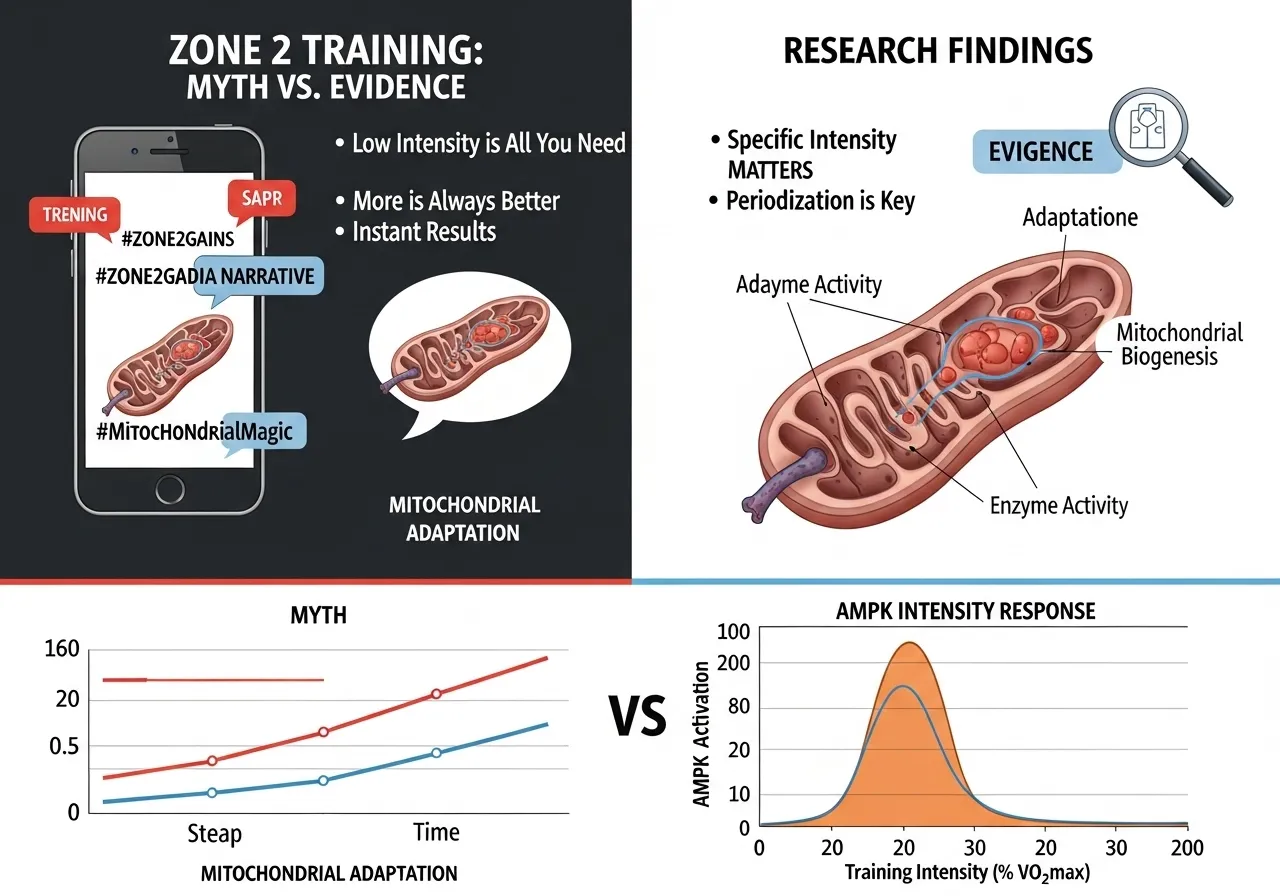
The Zone 2 movement was largely popularised by sports physician Iñigo San Millán, whose observations of elite Tour de France cyclists — who spend the majority of their training time in low-intensity Zone 2 — were interpreted as evidence that Zone 2 is uniquely optimal for mitochondrial development and metabolic health.
The logic seemed sound: elite endurance athletes with exceptional mitochondrial density train heavily in Zone 2, therefore Zone 2 must be the optimal stimulus for building mitochondria. This is a classic case of correlation being mistaken for causation — and it shaped an entire fitness narrative that may have misdirected millions of exercisers.
📌 Key Finding
Zone 2 triggers mitochondrial adaptation signals — but those signals are weaker and less consistent than those produced by higher-intensity training. For the average person with limited exercise time, replacing intensity with Zone 2 volume may not be an optimal trade.
What Zone 2 Does Genuinely Well
None of this means Zone 2 training is without value — it means it has been overhyped beyond what the evidence supports. The genuine, well-evidenced benefits of Zone 2 include:
Aerobic base development: Sustained low-intensity work builds the aerobic foundation that supports all other exercise intensities — higher zones become more sustainable when Zone 2 capacity is well developed
Recovery between hard sessions: Zone 2 work done on recovery days maintains cardiovascular stimulus without the accumulated fatigue that additional high-intensity sessions would create
Fat oxidation at low intensities: Zone 2 does improve the body’s ability to use fat as a primary fuel source during low-to-moderate intensity exercise — relevant for endurance performance
Accessibility: For sedentary individuals beginning exercise, Zone 2 represents a manageable, sustainable starting point that produces real cardiovascular improvements in an undertrained population
High-volume endurance athletes: For those training 10–20+ hours per week, Zone 2 allows large training volumes without unsustainable accumulated fatigue from exclusively high-intensity work
The Core Reframe: Zone 2 as a Tool, Not the Answer
The evidence positions Zone 2 correctly as one valuable component of a complete cardio programme — not a superior replacement for intensity.
If your available training time is limited (3–5 hours per week), replacing high-intensity sessions with Zone 2 volume is likely suboptimal for most cardiovascular and metabolic health goals. If your available training time is large (10+ hours per week), Zone 2 becomes increasingly valuable as a volume-filling, recovery-compatible base builder.
⚠️ Important: The “Zone 2 for everyone, always” narrative is not what the research supports. The optimal intensity distribution depends on your fitness level, available training time, and specific goals — not a universal prescription.
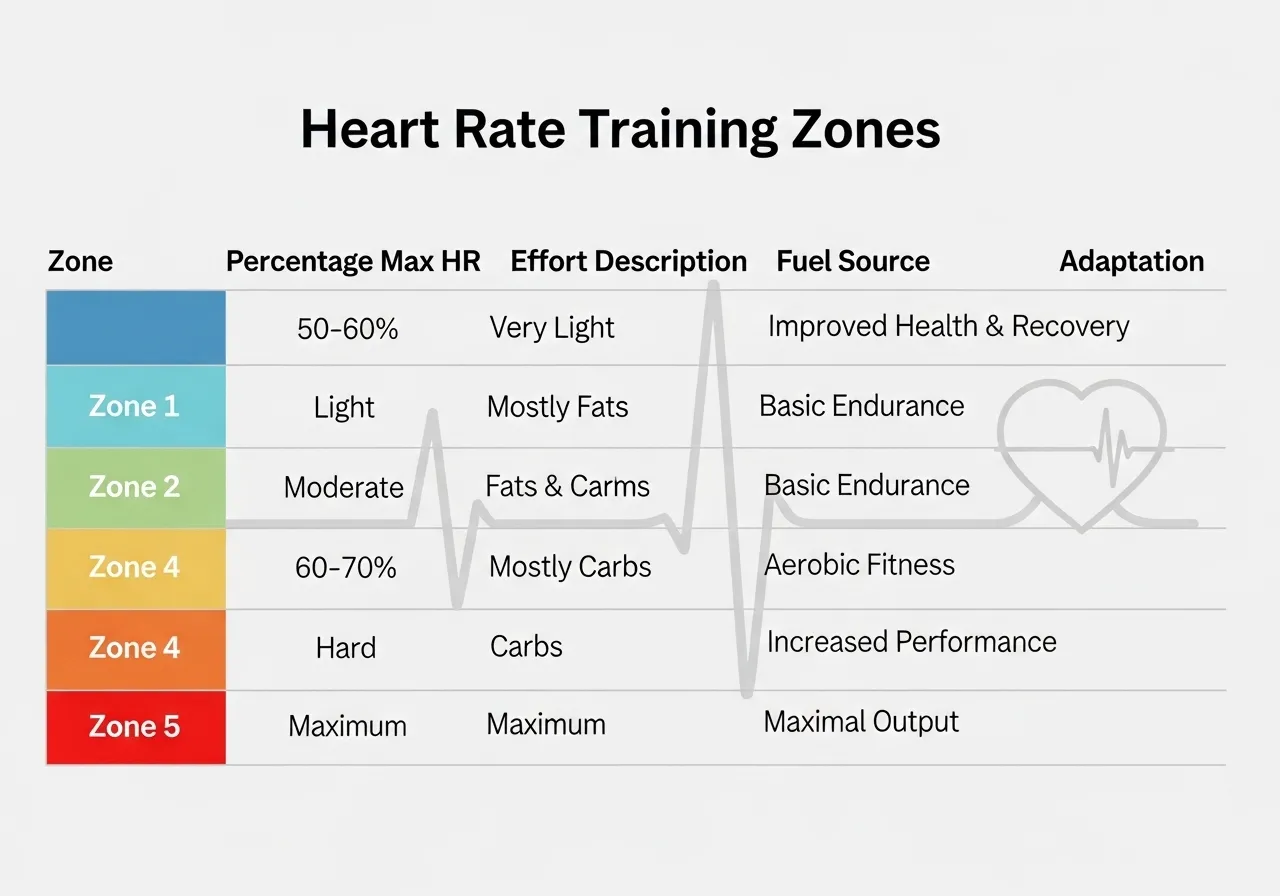
Heart rate zones divide the exercise intensity spectrum into bands, each corresponding to a different physiological state and training stimulus. The challenge is that multiple zone systems exist — 3-zone, 5-zone, and 6-zone models are all used in research and practice — which creates significant confusion when someone says “Zone 2” without specifying which system they mean.
The 5-zone model is the most widely used in endurance sport and is the basis for the Zone 2 discussion in this guide.
Zone
% Max HR
Effort Feel
Primary Fuel
Main Adaptation
Zone 1
50–60%
Very easy, active recovery
Fat dominant
Recovery, blood flow
Zone 2
60–70%
Comfortable, full sentences
Fat + carbohydrate
Aerobic base, fat oxidation
Zone 3
70–80%
Moderate, short phrases
Carbohydrate dominant
Aerobic endurance
Zone 4
80–90%
Hard, single words only
Carbohydrate
Lactate threshold, VO2max
Zone 5
90–100%
Maximal, unsustainable
Carbohydrate
Power, max capacity
How to Find Your Actual Zone 2
The percentage-of-max-HR formula (220 minus age) is a starting point — but it is notoriously imprecise for individuals. Here is a more reliable approach for practical Zone 2 identification:
Talk test: Zone 2 is the highest intensity at which you can speak in complete, comfortable sentences without gasping between phrases. If you can only manage short bursts of words, you have crossed into Zone 3.
Nasal breathing test: You should be able to breathe exclusively through your nose throughout Zone 2 exercise — switching to mouth breathing is a reliable signal you have exceeded the zone.
RPE 4–5/10: On the Rate of Perceived Exertion (RPE) scale, Zone 2 corresponds to an effort that feels moderate — challenging enough to be purposeful, easy enough that you could sustain it for 60–90 minutes if needed.
Lactate threshold testing: The laboratory gold standard — blood lactate at or below approximately 2.0 mmol/L confirms true Zone 2. Practical for serious athletes; not necessary for general fitness purposes.
Why Zone 2 Intensity Is Different for Everyone
A highly trained endurance athlete may be indoor cycling guide at 250–300 watts in Zone 2 — a pace that would push a sedentary beginner to Zone 4 or 5. A brisk walk that keeps a deconditioned person comfortably in Zone 2 may barely register as Zone 1 for a trained runner.
This individual variability is one reason Zone 2 prescriptions based on percentage of max HR alone can be misleading — the physiological state of Zone 2 (below the first lactate threshold, fat-oxidation dominant) must be defined by what is happening internally, not solely by what the heart rate monitor says.
📌 Key Finding
The talk test and nasal breathing test are the most practical daily tools for Zone 2 identification. Use HR data as a secondary reference, not as the primary determiner of whether you are in Zone 2.
What Zone 2 Training Does to Your Heart and Muscles
Cardiac Adaptations: The Athletic Heart Response
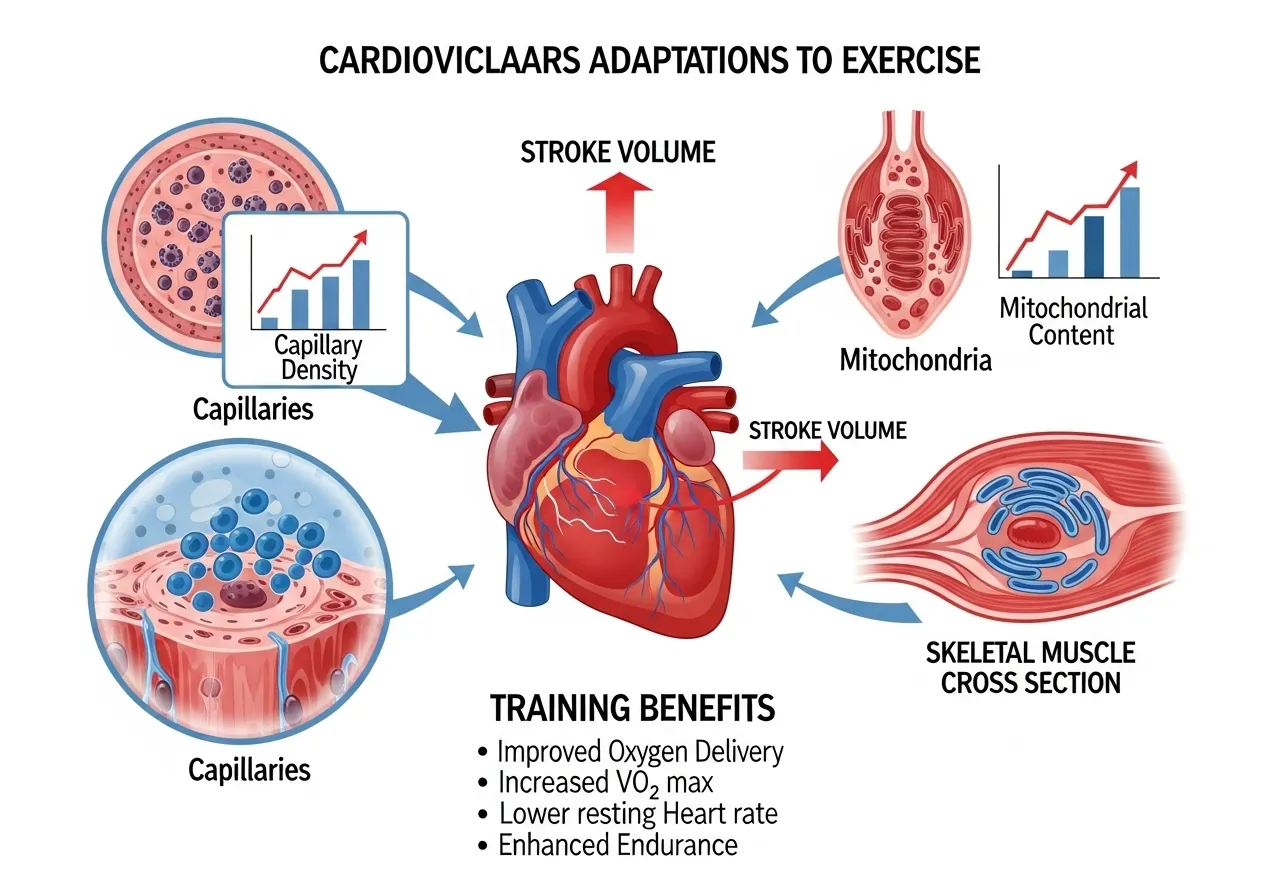
Sustained aerobic exercise, including Zone 2, produces specific cardiac adaptations over weeks and months of consistent training:
Increased stroke volume: The amount of blood ejected per heartbeat increases — meaning the heart pumps more blood per beat at rest and during exercise, reducing resting heart rate over time
Left ventricular remodelling: The left ventricle (the main pumping chamber of the heart) enlarges slightly and its walls may thicken appropriately — a physiological adaptation distinct from the pathological hypertrophy associated with heart disease
Improved cardiac efficiency: A trained heart at rest may beat 40–60 times per minute rather than the sedentary average of 60–80, achieving the same cardiac output with less effort
Skeletal Muscle Adaptations: Capillaries and Mitochondria
📌 Key Finding
The biggest driver of mitochondrial improvement is how deconditioned you are when you start — not whether you train in Zone 2 specifically. Beginners gain more from any exercise than trained individuals gain from optimally prescribed Zone 2 sessions.
Capillary Density: The Overlooked Adaptation
Capillarisation — the growth of new capillaries (tiny blood vessels that deliver oxygen and nutrients directly to muscle fibres) — is one of Zone 2’s genuinely important contributions to long-term cardiovascular health.
Greater capillary density per muscle fibre means:
More oxygen delivered per unit of muscle during exercise
Faster lactate clearance (lactate produced in fast-twitch fibres can be taken up and used as fuel by adjacent oxidative fibres with good capillarisation)
Enhanced insulin sensitivity at the muscle level — improving glucose uptake and metabolic health markers
Research from endurance athletes who maintained lifelong exercise suggests individuals who sustained long-term aerobic training had over 35% more capillaries per muscle fibre than age-matched sedentary individuals — an adaptation that contributes meaningfully to metabolic health and exercise tolerance across the lifespan.
Metabolic Adaptations: Fat Oxidation and Substrate Use
Zone 2 exercise operates in a metabolic state dominated by fat oxidation — the body preferentially uses fatty acids as fuel at this intensity. Over time, consistent Zone 2 training may:
Increase the intensity at which fat oxidation peaks (FATmax — the exercise intensity producing the highest absolute rate of fat burning) — this means you burn more fat at higher intensities than you did before training
Upregulate mitochondrial enzymes involved in fatty acid metabolism, potentially improving the efficiency of fat-based energy production
Shift substrate utilisation during moderate exercise from carbohydrate toward fat — sparing glycogen (the stored form of glucose) for higher-intensity efforts
In sedentary and untrained individuals, these metabolic adaptations are well-evidenced. In already-trained individuals, the additional benefit from Zone 2 volume beyond their existing aerobic base is less clearly established by current research.
The 6 Best Exercises for Zone 2 Training
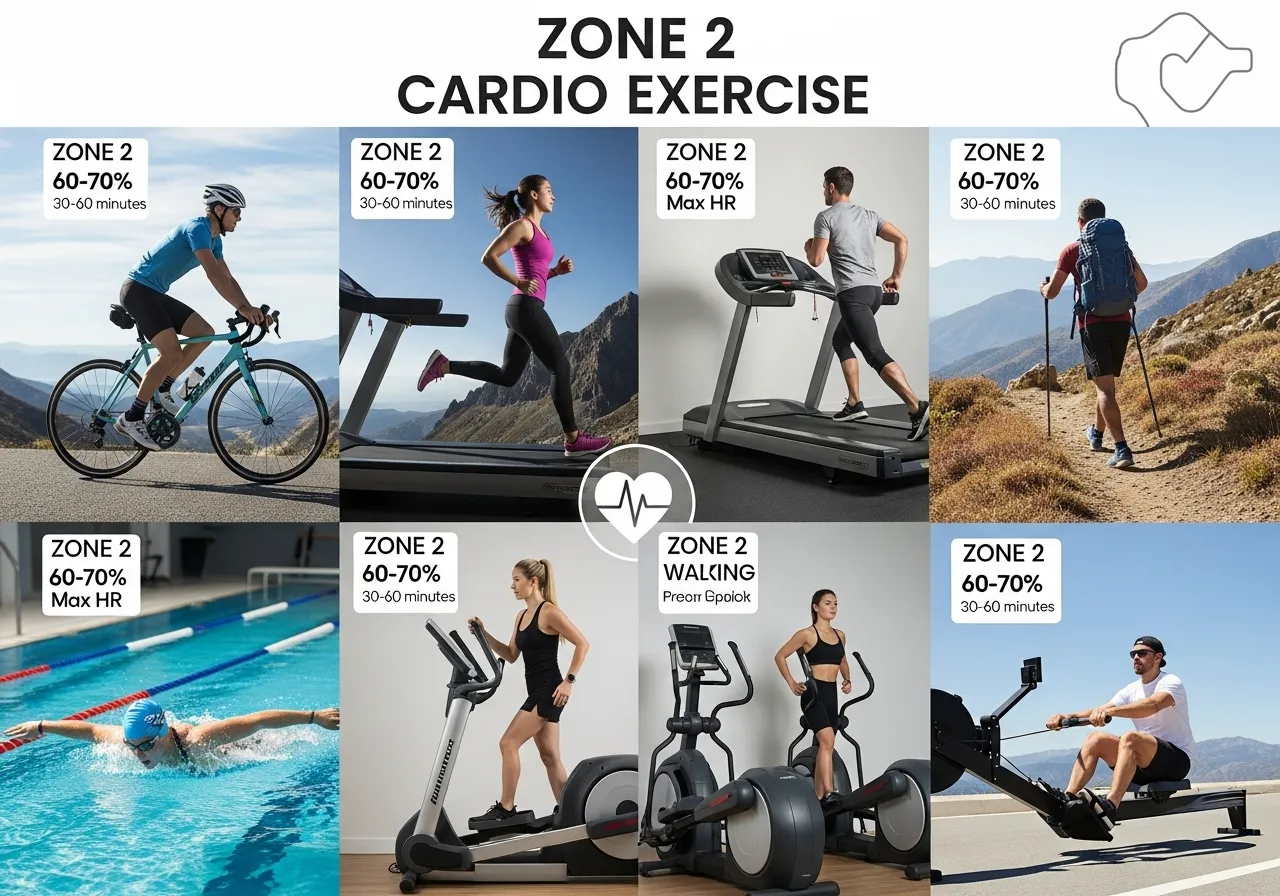
Zone 2 is a physiological state, not an exercise modality. Any activity that sustains your heart rate in the 60–70% max HR range — and meets the talk test — qualifies as Zone 2 training. Here is a practical guide to the most effective options:
Why ideal: Low joint impact makes it easy to sustain 45–90 minutes continuously; resistance and cadence allow fine-tuned intensity control; highly suitable for overweight or older individuals
Key point: Cadence of 80–95 RPM at moderate resistance typically achieves Zone 2 efficiently — a gear that feels slightly easier than you expect is usually correct
Why ideal: High cardiovascular demand per unit of time; Zone 2 running pace is often surprisingly slow — many runners find their Zone 2 is a brisk jog, not a run
Key point: If you cannot maintain the talk test while running, slow down to a walk-jog hybrid — maintaining the physiological state matters more than maintaining a running gait
🚶 Brisk Walking (especially incline)
Target: Cardiovascular system, glutes, hamstrings
Why ideal: For beginners and deconditioned individuals, brisk walking — particularly on an incline treadmill or hilly terrain — consistently achieves Zone 2 heart rates; excellent joint-sparing entry point
Key point: A 10–15% treadmill incline at 5–6 km/h typically places most beginners solidly in Zone 2; incline walking is legitimately as effective as flat running at Zone 2 for aerobic adaptation
🏊 Swimming
Target: Cardiovascular system, full body musculature
Why ideal: Near-complete joint unloading; excellent for individuals with lower limb injuries, arthritis, or obesity-related joint stress; horizontal position slightly reduces cardiac demand vs upright exercise
Key point: Max HR in swimming runs approximately 10–13 BPM lower than land exercise — adjust Zone 2 target HR downward accordingly (e.g., if Zone 2 on land is 120–135 BPM, target 107–122 BPM in water)
🎿 Elliptical Trainer
Target: Cardiovascular system, quadriceps, glutes, upper body (with arm engagement)
Why ideal: Low impact; more muscle mass engaged than cycling (upper body involvement when handles are used actively); easier to sustain Zone 2 than running for individuals new to cardio
Key point: Active arm engagement significantly increases caloric expenditure and cardiovascular demand compared to passively holding the handles
🚣 Rowing Ergometer
Target: Cardiovascular system, legs (60%), back and arms (40%)
Why ideal: Full-body engagement produces high cardiovascular demand at relatively low absolute effort; excellent for individuals who want upper and lower body conditioning simultaneously; non-impact
Key point: Zone 2 on the rower feels deceptively easy for the first 5–10 minutes; heart rate often rises progressively — allow 8–10 minutes to settle into your true Zone 2 pace before adjusting effort
How Long Should Zone 2 Sessions Be?
Duration matters significantly for Zone 2 effectiveness. Here is a practical framework:
Minimum effective dose:20–30 minutes — below this, the session is primarily warm-up; insufficient for meaningful aerobic adaptation in most individuals
Standard session:45–60 minutes — the range where most Zone 2 adaptations are meaningfully stimulated
Extended session:75–120 minutes — valuable for endurance base building and glycogen depletion-driven fat adaptation; reserved for appropriately conditioned individuals
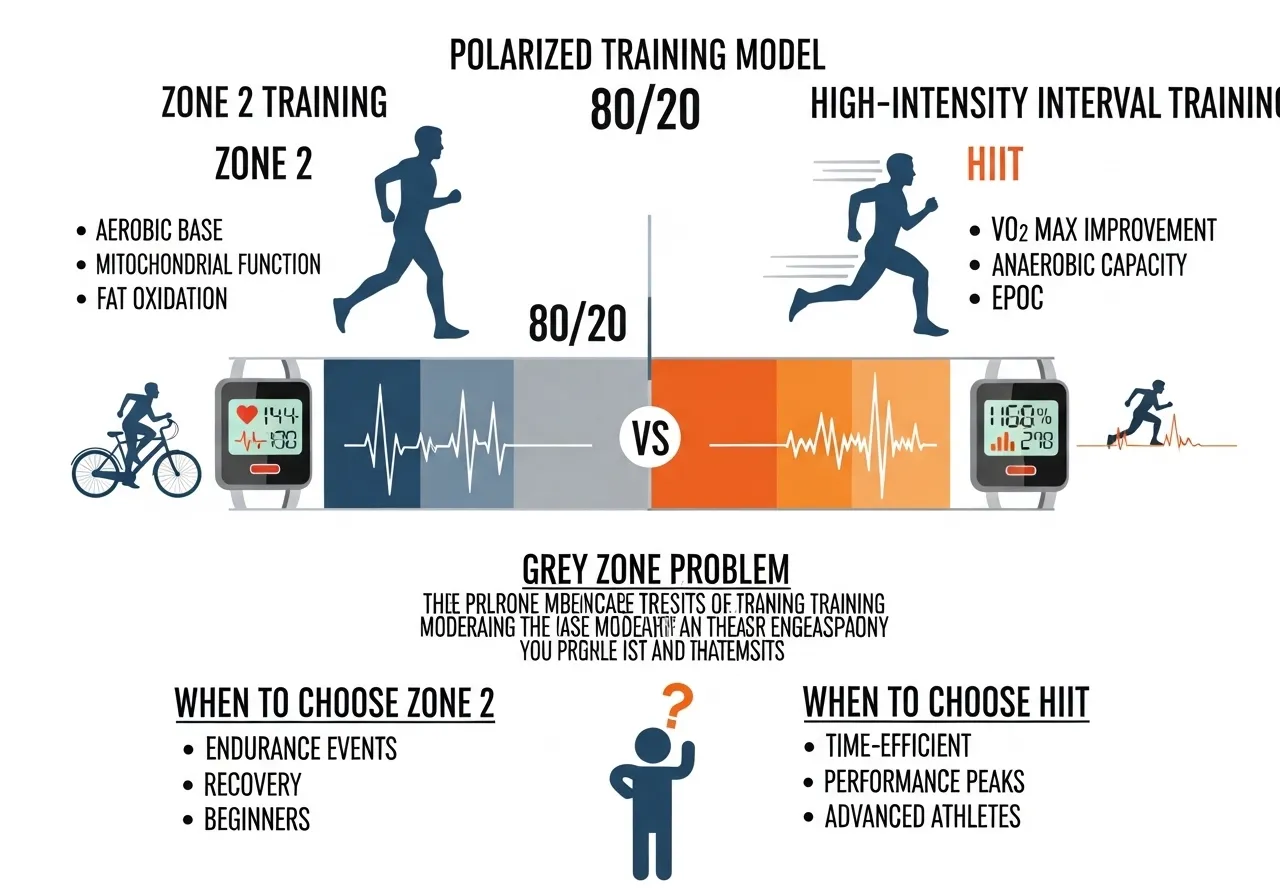
Fitness media tends to frame Zone 2 and HIIT as competing philosophies — you either believe in low-intensity aerobic base work or high-intensity intervals. In practice, this is a false choice that leads to suboptimal outcomes in both directions.
Trainees who do only HIIT accumulate fatigue rapidly, under-develop their aerobic base, and often find their high-intensity performance plateau within months — because the aerobic system that supports recovery between intervals is underdeveloped.
Trainees who do only Zone 2 miss the mitochondrial signalling stimulus and VO2max improvements that higher-intensity work uniquely provides — particularly relevant given the emerging research questioning Zone 2’s supremacy for mitochondrial adaptation in general populations.
What the Research Supports: A Polarised Model
Elite endurance athletes — across cycling, running, rowing, and cross-country skiing — consistently show a training intensity distribution of approximately 75–80% low intensity (Zone 1–2) and 15–20% high intensity (Zone 4–5), with relatively little time in the moderate “Zone 3” or “grey zone.”
This polarised model (also called 80/20 training) does not mean the general population should replicate it directly — elite athletes have 10–20+ training hours per week, making 80% Zone 2 a very large absolute volume. But it does suggest that combining Zone 2 base work with some higher-intensity sessions outperforms either extreme alone.
Situation
Recommended Emphasis
Reason
Beginner, sedentary start
Zone 2 dominant
Joint safety, sustainable habit, base building
3–5 hrs/week available
2 Zone 2 + 1 higher intensity
Maximises adaptation per available hour
Fat loss primary goal
Mixed (all zones)
Caloric deficit matters most; intensity helps total burn
Endurance event training (10K+)
Zone 2 dominant with threshold work
Event demands aerobic base plus sustained-pace capacity
VO2max improvement priority
Zone 4–5 emphasis
Higher intensity drives larger VO2max gains per minute
Recovery day
Zone 1–2 only
Active recovery without adding fatigue load
The “Grey Zone” Problem: Why Moderate Intensity May Be the Worst Choice
Here is what most cardio guides do not tell you: sustained moderate-intensity exercise — the Zone 3 range where most people default on a treadmill or bike — may be the least effective intensity for most goals.
It is too hard to recover from easily, making it difficult to accumulate the high volumes that make Zone 2 valuable
It is too easy to drive the high-intensity adaptations (VO2max, lactate threshold improvement) that Zone 4–5 uniquely stimulates
Many recreational exercisers spend most of their cardio time in this “grey zone” — working hard enough to feel tired, but not hard enough to maximally benefit from either aerobic base or intensity adaptations
📌 Key Finding
If you feel moderately breathless throughout your cardio sessions and could not sustain them for 90 minutes, you are likely training in the grey zone. Either slow down into true Zone 2 (full sentences, nasal breathing) or commit to genuine intervals — the middle is often the worst of both worlds.
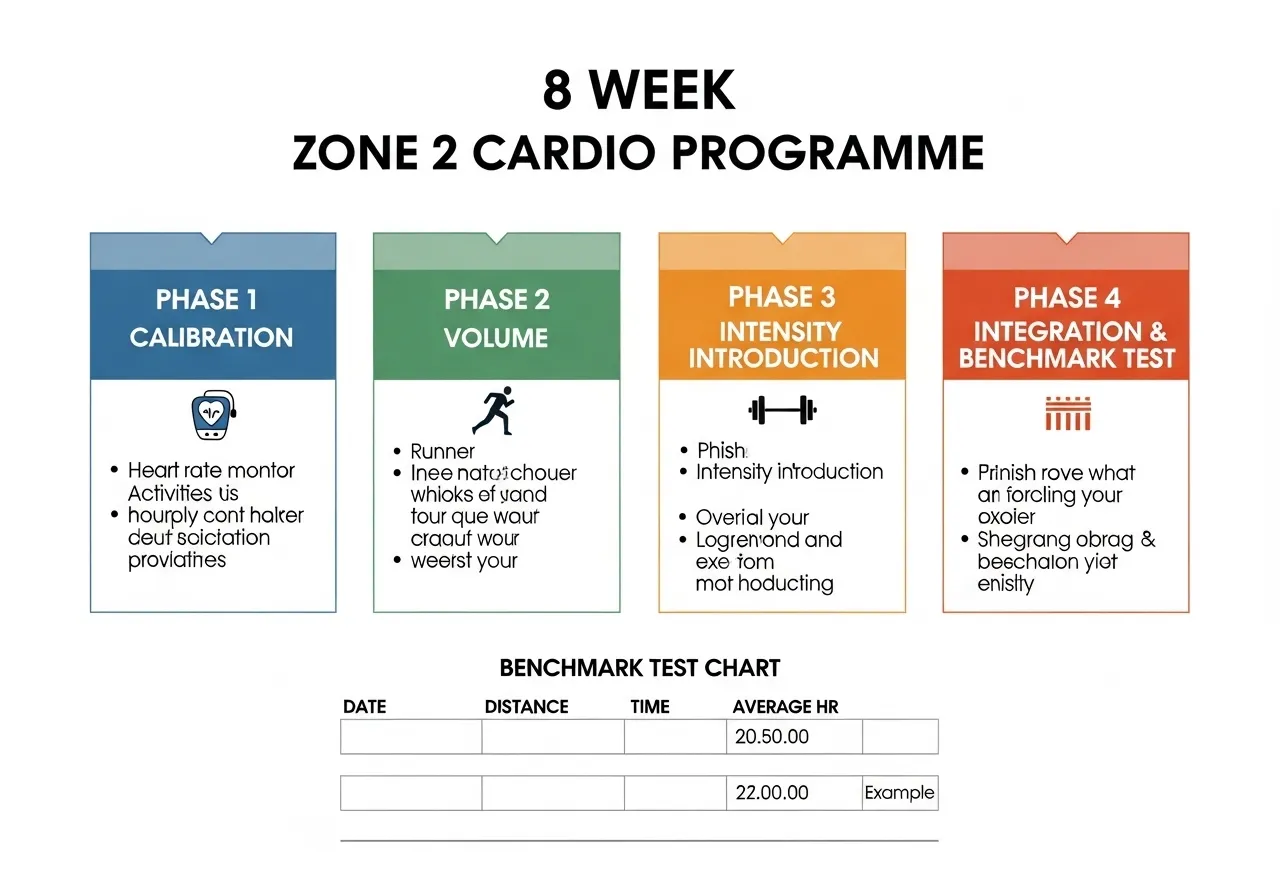
8-Week Zone 2 and Cardio Foundation Programme
This programme builds Zone 2 capacity progressively while introducing appropriate higher-intensity work from Week 5. It is designed for individuals with some existing cardiovascular activity — not complete beginners (who may need 4–6 weeks of foundation work before Week 1 of this programme).
Choose one primary Zone 2 exercise (cycling, running, walking, swimming, rowing) and keep it consistent across weeks for measurable progression tracking.
📅 Phase 1 — Weeks 1–2: Zone 2 Calibration
Session A (×2/week): 30 min Zone 2 — focus on identifying your true Zone 2 via talk test; do not worry about pace or distance
Session B (×1/week): 20 min easy Zone 1 active recovery walk
Total cardio: 3 sessions, ~80 min
Focus: Calibrate your Zone 2 feel; establish the habit before adding volume
📅 Phase 2 — Weeks 3–4: Volume Build
Session A (×2/week): 40–45 min Zone 2 — increase from Phase 1 by adding 10 min per session
Session B (×1/week): 30 min Zone 2 — lighter than Session A, same Zone 2 intensity
Total cardio: 3 sessions, ~110–120 min
Focus: Extend Zone 2 duration; note whether your HR drifts upward during the final 10 min (cardiac drift — normal at this stage)
📅 Phase 3 — Weeks 5–6: Intensity Introduction
Session A (×2/week): 45 min Zone 2
Session B (×1/week): 30 min mixed — 10 min Zone 2 warm-up + 4×3 min Zone 4 intervals (1.5 min recovery between) + 10 min Zone 2 cool-down
Total cardio: 3 sessions, ~120 min
Focus: Introduce the higher-intensity stimulus that Zone 2 alone cannot provide; note how Zone 4 feels relative to Zone 2
📅 Phase 4 — Weeks 7–8: Integration and Benchmark
Session A (×2/week): 50–60 min Zone 2 — compare your HR at the same pace to Week 1; lower HR at the same pace indicates aerobic adaptation
Session B (×1/week): 35 min mixed — 10 min Zone 2 warm-up + 5×3 min Zone 4 (1 min recovery) + 10 min cool-down
Benchmark test (Week 8): Repeat the same 30-min Zone 2 session from Week 1 and compare average HR — a reduction of 3–8 BPM at the same pace is a typical 8-week adaptation marker
Focus: Measure your Zone 2 improvement; establish the mixed-intensity habit that will serve long-term cardiovascular health
How to Know Zone 2 Is Working
Unlike strength training where progressive overload is tracked in weight or reps, Zone 2 progress is often invisible to newcomers. Here is what to track:
Pace at fixed HR: If your Zone 2 HR is 130 BPM, track what pace you can sustain at exactly 130 BPM. Over 8–12 weeks, your pace at 130 BPM should increase — you cover more distance at the same heart rate cost
HR at fixed pace: If you always run at 8 min/km, your HR at that pace should gradually decrease as your aerobic capacity develops
Resting heart rate: A reduction of 3–8 BPM in resting heart rate over 8–12 weeks of consistent Zone 2 work is a reliable adaptation marker
HR recovery speed: How quickly your heart rate drops in the first 60 seconds after stopping exercise — faster recovery indicates improved cardiovascular fitness
Frequently Asked Questions About Zone 2 Training
How many Zone 2 sessions per week should I do?
For general health and aerobic base development, 2–3 Zone 2 sessions per week of 40–60 minutes each represents a practical and evidence-supported starting point for most individuals. Elite endurance athletes may train 5–7 days per week with large Zone 2 volumes, but this is neither necessary nor appropriate for general fitness.
Can I do Zone 2 training every day?
True Zone 2 exercise (genuinely low intensity, below lactate threshold) is generally well-tolerated daily due to its low neuromuscular fatigue cost — this is part of why elite athletes can accumulate such large Zone 2 volumes. However, daily Zone 2 without any higher-intensity sessions or rest days may lead to undertraining relative to your potential adaptations.
Is Zone 2 good for weight loss?
Zone 2 burns calories and can support a caloric deficit — however, the idea that “fat burning zone” exercise is uniquely superior for weight loss is a persistent fitness myth. Total caloric expenditure, protein intake, and caloric deficit are the primary drivers of fat loss, regardless of exercise intensity. Higher-intensity exercise generally burns more total calories per unit of time, though it may be harder to sustain for beginners.
Do I need a heart rate monitor for Zone 2 training?
A heart rate monitor is helpful but not strictly necessary. The talk test (ability to speak full sentences comfortably) and nasal breathing test are reliable low-tech alternatives that many experienced coaches consider more practically useful than heart rate data alone, particularly given the individual variability in heart rate zone calculations.
Why does my heart rate keep drifting up during Zone 2 sessions?
Cardiac drift (the gradual rise in heart rate during sustained Zone 2 exercise at constant effort) is a normal physiological response — particularly during longer sessions and in warm conditions. It occurs primarily due to progressive dehydration reducing plasma volume. Staying well hydrated during sessions longer than 45 minutes and allowing 10 minutes of settling time at the start of sessions before making intensity adjustments may help manage drift.
Can strength training days count as Zone 2 cardio?
Strength training sessions generally do not count as Zone 2 cardio training — the intermittent nature of sets and rest periods means the cardiovascular system rarely sustains the continuous Zone 2 state for sufficient duration. Some circuit training or metabolic conditioning formats may briefly enter Zone 2, but dedicated continuous Zone 2 sessions remain the most reliable approach for aerobic base development.
⚠️ Fitness Disclaimer: The information in this article is for general educational purposes only and does not constitute professional fitness or medical advice. Always consult a qualified healthcare professional before starting any new exercise program. ⚠️ Cardiovascular Health Notice: If you have a history of heart disease, high blood pressure, or any cardiovascular condition, obtain…
⚠️ Health & Fitness DisclaimerThis article is for general educational and informational purposes only.It does not replace professional medical or fitness advice.If you have any pre-existing condition or injury — please consult a qualified healthcare professional or certified personal trainer before starting any new exercise program. Resistance bands are dismissed by many gym-goers as beginner…
⚠️ Health & Fitness DisclaimerThis article is for general educational and informational purposes only. It does not replace professional medical or fitness advice. If you have any pre-existing condition, injury, or health concern — consult a qualified healthcare professional or certified personal trainer before starting or modifying any exercise program. VO2 max is one of…
⚠️ Health & Fitness DisclaimerThis article is for general educational and informational purposes only.It does not replace professional medical or fitness advice.If you have any pre-existing condition, joint concern, or cardiovascular issue — please consult a qualified healthcare professional before starting or modifying any exercise program. Jump rope training has been used by boxers, athletes,…
person running VO2 max interval training track high intensity cardiovascular aerobic development VO2 max interval training meta-analysis 0.51 L/min improvement continuous vs interval cardiac output mechanism Billat vVO2max protocol 5 minute intervals research minimal velocity VO2max oxygen uptake kinetics logic short vs long VO2 max intervals 90 percent time comparison 3 minute vs 5 minute…
⚠️ Health & Fitness DisclaimerThis article is for general educational purposes only and does not replace professional medical advice. If you have any lower back, knee, or cardiovascular conditions, please consult a qualified healthcare professional before beginning a rowing machine mastery guide program. The rowing machine training guide machine — or ergometer — produces a…