⚠️ Health & Fitness Disclaimer This article is for general educational purposes only and does not replace professional medical advice. If you have any cardiovascular, respiratory, or musculoskeletal conditions, please consult a qualified healthcare professional before beginning a swimming program.
Swimming stands apart from almost every other cardiovascular training modality — it develops aerobic capacity, whole-body muscular endurance, and functional flexibility simultaneously, while placing virtually no compressive load on the joints. For these reasons it is simultaneously one of the most complete fitness activities available and one of the most underutilised by people who could benefit most from its unique combination of properties. (Related: heart rate zones) (Related: VO2 max guide) (Related: rowing machine guide)
This guide covers what the research demonstrates about swimming’s physiological benefits, explains the four competitive strokes and their distinct muscle activation profiles, details training zones and technique fundamentals for each stroke, and provides a complete 8-week program for beginners and intermediate swimmers.
Water’s buoyancy (the upward force that counteracts gravity in proportion to the volume of water displaced — approximately 90% of body weight is supported for a fully submerged person) is the defining physiological feature that distinguishes swimming from land-based exercise:
Ground reaction forces of 2–3 times bodyweight at each step during running become effectively zero in water — eliminating the cumulative joint loading that limits running volume and excludes many individuals from impact-based cardiovascular training
The warm water temperature of most pools (typically 26–29°C) promotes muscle relaxation and joint range of motion — many people with joint stiffness from osteoarthritis or chronic inflammation find movement in water significantly more comfortable than equivalent movement on land
The hydrostatic pressure (the pressure exerted by water on all submerged surfaces — approximately 0.1 bar per metre of depth, uniform in all directions) provides a gentle compression that enhances venous return (blood flow back to the heart) and may reduce oedema (fluid retention and swelling) in the lower limbs
Whole-Body Muscle Recruitment
Unlike most cardiovascular machines — which primarily load the lower body — swimming recruits the upper body, core, and lower body as genuine co-contributors to propulsion and stability:
Upper body: The latissimus dorsi, pectoralis major, anterior and posterior deltoids, and triceps drive the pull phase of every stroke — developing upper body pulling and pushing endurance that treadmills and bikes cannot produce
Core: Trunk rotation, hip stabilisation, and spine alignment require continuous core activation throughout every stroke — particularly in freestyle and backstroke where body rotation is a core propulsion mechanism
Lower body: The gluteus maximus, quadriceps, and gastrocnemius contribute the kick component — with the proportion varying significantly by stroke (minimal in breaststroke; substantial in butterfly)
One important nuance: swimming-derived VO2max improvements show limited transfer to running and cycling VO2max — the specificity of cardiovascular adaptation means that the heart and lungs adapt to the demands of swimming specifically rather than producing universally transferable aerobic fitness. This is not a limitation for swimmers — it is a reason why swimming-specific training is essential for swimming performance and why swimmers who wish to maintain cardiovascular fitness across multiple modalities must train in each.
The Four Competitive Strokes: Technique and Muscle Activation
Freestyle (Front Crawl): The Speed and Efficiency Standard
Freestyle is the fastest and most efficient swimming stroke — the default choice for fitness training and the benchmark stroke for competitive swimming performance.
Muscle activation profile:
Pull phase: Latissimus dorsi (the primary motor), pectoralis major, anterior deltoid, and triceps drive the arm through the water — the pull phase generates approximately 80% of freestyle propulsion
Body rotation: The obliques and thoracic rotators rotate the body 35–45° around the long axis with each stroke — this rotation lengthens the catch (the initial arm entry into the water) and reduces frontal drag simultaneously
Kick: A relatively minor propulsion contributor in freestyle — primarily functions to maintain body position and counterbalance the arm pull rather than generating significant forward force
Key technique cues for beginners:
Head position: Eyes looking at the pool bottom, not forward — lifting the head creates a 2–4 cm rise in the hips (increased drag) Hand entry: Fingers first, thumb side slightly down — entering thumb-first (the most common beginner error) collapses the catch and reduces pull efficiency High elbow catch: After hand entry, the elbow remains high while the forearm reaches forward — creating the optimal pull surface area Breathing: Rotate to breathe (don’t lift), returning the face to neutral immediately — bilateral breathing (alternating sides) develops symmetrical stroke mechanics
Backstroke: The Low-Strain Recovery Stroke
Backstroke is mechanically similar to freestyle performed on the back — the same alternating arm pull with body rotation, but with the face permanently clear of the water, eliminating the breathing coordination challenge that many beginners find most difficult in freestyle.
Unique advantages:
Continuous natural breathing — no timing coordination required
Greater posterior shoulder and trapezius activation than freestyle — the recovery phase (arm moving out of the water) stretches the anterior shoulder, making backstroke a useful corrective stroke for desk workers with anterior shoulder tightness
Good active recovery stroke between intensive freestyle sets
Breaststroke: The Technique-Dependent Efficiency Champion
Breaststroke is the slowest competitive stroke but the most popular recreational stroke — it keeps the head above water during the glide phase, making it accessible to beginners who find submerging the face uncomfortable.
Breaststroke is uniquely knee-intensive compared to the other strokes — the whip kick (drawing the heels toward the buttocks, then driving them outward and together) places significant demand on the medial knee structures. Individuals with knee pathology may find breaststroke the most uncomfortable stroke and should consider freestyle or backstroke alternatives.
Butterfly: The Power and Technique Challenge
Butterfly is the most physically demanding stroke — the simultaneous double-arm pull combined with the dolphin kick (an undulating whole-body movement driven by the hips and core) produces the highest power demands and the most comprehensive core activation of any stroke.
Butterfly’s significant technical prerequisites make it inappropriate as a beginner stroke — attempting butterfly before adequate core strength and timing are developed typically produces an exhausting, inefficient movement that bears little resemblance to efficient butterfly technique. Beginners should establish solid freestyle before introducing butterfly.
Stroke
Primary Muscles
Relative Speed
Beginner Accessibility
Freestyle
Lats, pecs, anterior deltoid, obliques
Fastest
Good (most efficient stroke)
Backstroke
Posterior deltoid, traps, lats, obliques
Moderate
High (no face submersion)
Breaststroke
Pecs, inner thighs, quads, core
Slowest
High (head stays above water)
Butterfly
Full body — highest demand stroke
Second fastest
Low (requires technique base)
Is Swimming Effective for Weight Loss and Body Composition?
Caloric Expenditure in Swimming
Swimming burns calories at rates comparable to moderate-to-vigorous land-based exercise — with the exact expenditure depending on stroke selection, intensity, swimming efficiency, and body weight. General estimates for a 70 kg individual:
Stroke/Activity
Approximate kcal/30 min
Intensity
Freestyle (moderate pace)
250–300
Moderate
Freestyle (vigorous)
350–420
High
Breaststroke (moderate)
270–320
Moderate
Butterfly
380–450
Very high
Water aerobics
150–200
Low–moderate
The Appetite Response: A Nuance for Weight Loss Goals
Swimming research has identified a distinctive appetite-stimulating effect compared to equivalent-intensity land-based exercise — several studies have found that swimmers report greater post-exercise hunger than runners or cyclists at matched caloric expenditure levels.
The proposed mechanism is thermoregulatory: in cool water, the body works to maintain core temperature (37°C) against the cooling effect of submersion, potentially activating hunger signals as part of the heat conservation response. This does not make swimming ineffective for weight loss — it simply means that post-swim nutrition management may require more conscious attention than equivalent land-based exercise for individuals with fat loss as a primary goal.
Body Composition Research: What Swimming Actually Produces
Research on body composition from swimming consistently shows:
Significant reductions in body fat percentage in previously sedentary and moderately active populations over 8–16 week programs
Upper body muscle development — particularly in the latissimus dorsi and shoulder musculature — that is meaningfully greater than in comparable land-based cardiovascular activities
Improved lipid profiles (HDL elevation, triglyceride reduction) comparable to or greater than equivalent-intensity land-based exercise
Swimming Training Zones and Structured Session Design
Pace-Based vs. Heart Rate-Based Intensity Monitoring
Heart rate monitoring is less straightforward in swimming than in land-based exercise — the horizontal body position, face submersion, and water pressure all affect cardiac output and heart rate response, producing a slightly lower heart rate at equivalent subjective intensity compared to upright land exercise. Maximum heart rate in swimming is typically 10–13 beats per minute lower than running maximum heart rate.
The most practical intensity monitoring tools for pool swimmers:
Pace-based training: Using a pace clock (the large poolside clock with a sweep second hand, standard in most pools) to time each 100-metre interval — target times provide consistent intensity reference across sessions
RPE (rate of perceived exertion — a subjective effort scale from 1–10):Zone 2 training guide feels like a 4–5 out of 10 effort where conversation is possible; Zone 4–5 feels like 8–9 where speaking is not possible
Waterproof heart rate monitors: Optical wrist monitors provide usable data in pool swimming — less precise than chest straps but adequate for zone estimation
The Essential Swimming Session Structure
Well-designed swim sessions follow a standardised structure regardless of the specific workout:
Warm-up (15–20% of session distance): Easy swimming, mixed strokes, gradually increasing pace Drill set: Technique-focused exercises (kick sets, catch-up drill, fingertip drag) — 10–15% of session Main set: The training stimulus component — intervals, threshold work, or endurance continuous swimming — 50–65% of session Cool-down: Easy backstroke or freestyle at recovery pace — 10–15% of session, blood lactate clearance and shoulder decompression
Common Swimming Training Formats
Straight sets: Fixed distance per repetition with fixed rest — e.g., 10 × 100m with 20 seconds rest. The simplest format and the foundation of most programs.
Descending rest: Set distance with reducing rest interval over the set — develops aerobic threshold and pacing discipline. e.g., 5 × 200m: 60s / 45s / 30s / 20s / 15s rest
Pyramid sets: Increasing then decreasing distances within a set — e.g., 50/100/200/400/200/100/50m — provides natural intensity variation within a session
Threshold intervals: Longer repetitions (400–800m) at a pace that can be sustained for the full set but not beyond — directly develops the lactate threshold relevant to sustained swimming performance
8-Week Swimming Program: Beginner to Intermediate
Program Assumptions
Three sessions per week in a 25-metre or 50-metre pool. The program assumes the ability to swim at least 50m of freestyle without stopping before beginning week 1. Total session time 30–45 minutes. All distances in metres; rest intervals in seconds.
Goggles: The single most important piece of swimming equipment — without clear underwater vision, technique feedback is impossible and eye irritation from chlorine accumulates. A proper seal (press goggles against eyes and release — they should hold in place briefly from suction) and adjustable strap tension are the fit criteria that matter most.
Swimsuit (competitive cut): Brief or jammer style rather than board shorts — excess fabric creates drag that increases resistance and distorts stroke feedback
Swim cap: Reduces hair drag and keeps hair from obstructing vision during breathing — essential for open water, practical for pool training
Kickboard: Allows isolated leg training (kick sets) and serves as a buoyancy aid for beginners working on arm technique independently from kicking
Pull buoy: A buoyancy device held between the thighs, eliminating the kick — allows isolated upper body pull practice and reduces the cardiovascular demand temporarily to focus on stroke mechanics
Fins: Short-blade training fins improve kick mechanics, increase ankle flexibility, and allow higher speeds that make stroke timing easier to feel — particularly useful for beginners developing freestyle body rotation
Pool Etiquette and Safety
Pool lane discipline ensures all swimmers can train safely and efficiently:
Swim in the correct lane for your pace — fast, medium, and slow lanes exist in most public pools to prevent collisions between swimmers of widely different speeds
Circle swimming (anticlockwise on the left side of the lane in most countries) allows multiple swimmers per lane — always follow the lane’s designated direction
Rest at the lane ends, not in the middle of the lane — resting at a wall keeps the circle clear for continuous swimmers
Tap the foot of a swimmer ahead to indicate you wish to pass — the swimmer ahead should stop at the next wall to allow overtaking
Open Water Swimming Considerations
For swimmers interested in lakes, rivers, or ocean swimming beyond the pool:
Never swim alone in open water — a swimming buddy or kayak support is essential
Wetsuit selection (for water below 18°C) provides both thermal protection and buoyancy — improving body position and reducing energy expenditure relative to swimming without a wetsuit in cold water
Sighting (briefly lifting the head to look forward for navigation landmarks) replaces the pool lane lines that guide direction — practice sighting during pool training to minimise the stroke disruption it creates in race or open water conditions
Swimming FAQ
How do I stop getting so tired after just a few lengths?
Premature fatigue in beginners almost always reflects inefficient technique rather than inadequate fitness — the same person who exhausts themselves in 50 metres of swimming can often ride a bike or walk briskly for an hour. Water is approximately 800 times denser than air, meaning that small technique inefficiencies that are insignificant on land create enormous drag penalties in the water.
The most common efficiency killers for beginners: lifting the head (which sinks the hips and creates massive drag), crossing the hands over the centreline on entry (which produces a zigzag body path rather than a straight one), and holding the breath rather than exhaling continuously underwater (which causes CO2 buildup and premature breathlessness). Addressing each of these with 2–4 weeks of focused drill work typically produces more improvement in sustainable distance than fitness alone.
Is swimming good for people with back pain?
Swimming is frequently recommended for individuals with lower back pain because the buoyancy-supported horizontal position eliminates the compressive spinal loading of upright activities. The gentle spinal extension that freestyle and backstroke require may actually provide therapeutic benefit for some lower back conditions — particularly those involving disc-related pain that is aggravated by flexion.
However, breaststroke places the lumbar spine in sustained extension — which may aggravate facet joint conditions or spondylolysis (a stress fracture in the posterior elements of the vertebra) in susceptible individuals. Anyone with diagnosed spinal conditions should consult their physiotherapist or sports medicine physician before selecting a swimming stroke.
How much does swimming technique matter for fitness goals (as opposed to competitive performance)?
Even for recreational fitness swimmers with no competitive ambitions, technique matters considerably — but for different reasons than in competition. Poor technique in fitness swimming does not reduce medals or race times; it reduces session quality by causing premature fatigue, creates repetitive stress patterns that lead to shoulder impingement over years of training, and makes the activity unnecessarily difficult.
A minimum investment of 3–4 lessons with a qualified swimming coach at the beginning of a swimming fitness program produces dividends that accumulate for years — the technique improvements they produce create a more comfortable, more sustainable, and more enjoyable activity that people actually continue doing.
✅ Key Takeaways
Swimming develops cardiovascular fitness, whole-body muscular endurance, and flexibility simultaneously — with near-zero joint impact, making it uniquely accessible for populations where land-based impact is painful or contraindicated
Regular swimming produces significant improvements in body fat, cardiovascular endurance, and blood lipid profiles — including HDL elevation and triglyceride reduction
HIIT swimming develops VO2max through the same dual cardiovascular-muscular mechanisms as land-based HIIT vs steady-state cardio — sprint intervals in the pool are an effective and underutilised cardiovascular tool
Premature fatigue in beginner swimmers reflects technique inefficiency, not fitness — addressing the three common technique errors (head position, hand entry, breathing) produces faster improvement than simply swimming more
All four strokes develop distinct muscle groups — incorporating multiple strokes within a training week provides more comprehensive upper body development than freestyle alone
Why Running Is the Most Accessible and Most Misstarted Fitness Activity Running has the lowest barrier to entry of any fitness activity — it requires no equipment beyond supportive shoes, no gym membership, and no specific skill level to begin. It is also the fitness activity most commonly attempted and abandoned within the first few…
Most cardio equipment trains the legs while the upper body assists at best. The assault bike is different. The arms drive the handlebars forward and back while the legs pedal. Both contribute to power output simultaneously. This total-body demand creates a cardiovascular and metabolic challenge that leg-only cardio equipment cannot replicate at the same effort…
⚠️ Health & Fitness DisclaimerThis article is for general educational and informational purposes only and does not replace professional medical or fitness advice.If you have any pre-existing back, knee, or cardiovascular condition — please consult a qualified healthcare professional before starting any rowing program. The rowing machine mastery sits in an unusual category among cardio…
⚠️ Fitness Disclaimer: The information in this article is for general educational purposes only and does not constitute professional fitness or medical advice. Always consult a qualified healthcare professional before starting any new exercise program. ⚠️ Cardiovascular Health Notice: If you have a history of heart disease, high blood pressure, or any cardiovascular condition, obtain…
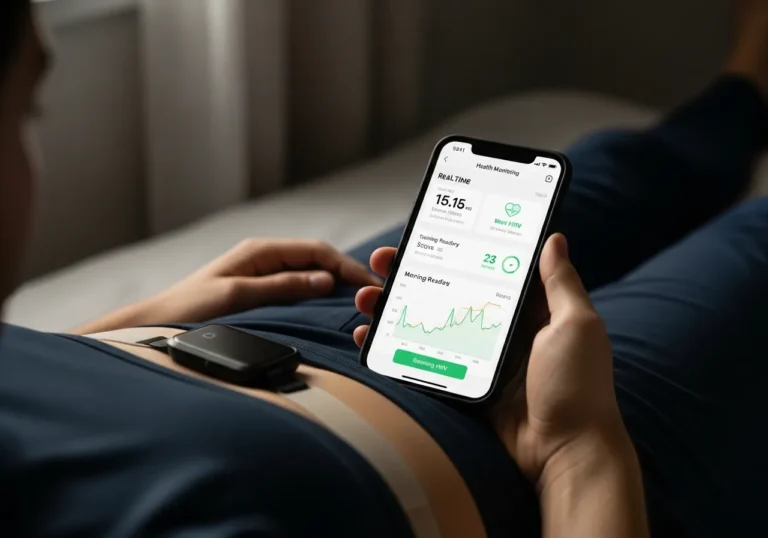
⚠️ Cardiovascular Monitoring Safety NoteHRV monitoring is a wellness and performance tool — not a medical diagnostic device. Consistently low HRV accompanied by symptoms such as chest pain, unexplained breathlessness, palpitations, or severe fatigue may indicate an underlying cardiovascular or systemic condition requiring medical evaluation. Do not use HRV data alone to override symptoms that…
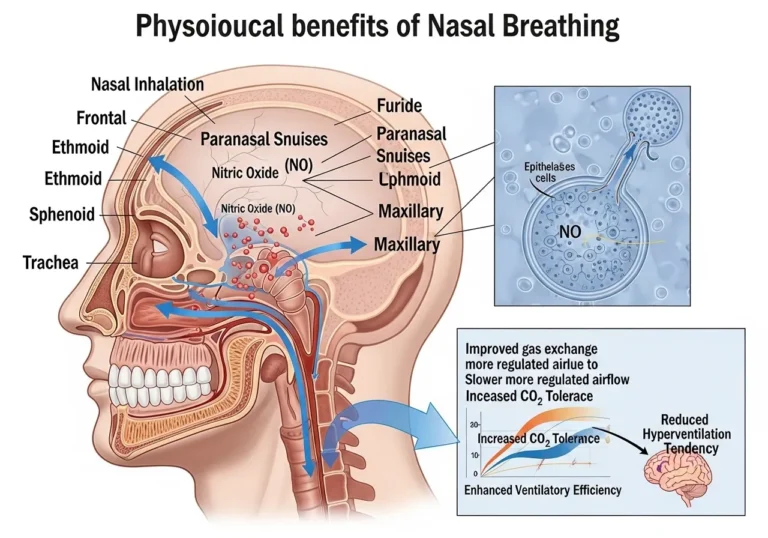
Breathing through the mouth during exercise is the default for most people. It feels necessary at moderate intensity, instinctive at high intensity, and the idea of restricting breathing to the nose during a training run sounds like an experiment in self-imposed oxygen deprivation. The research tells a more nuanced story. Nasal breathing during exercise activates…