⚠️ Health & Fitness Disclaimer This article is for general educational purposes only. It does not replace professional medical advice. If you have cardiovascular, joint, or respiratory conditions, consult a qualified healthcare professional before beginning a running programme.
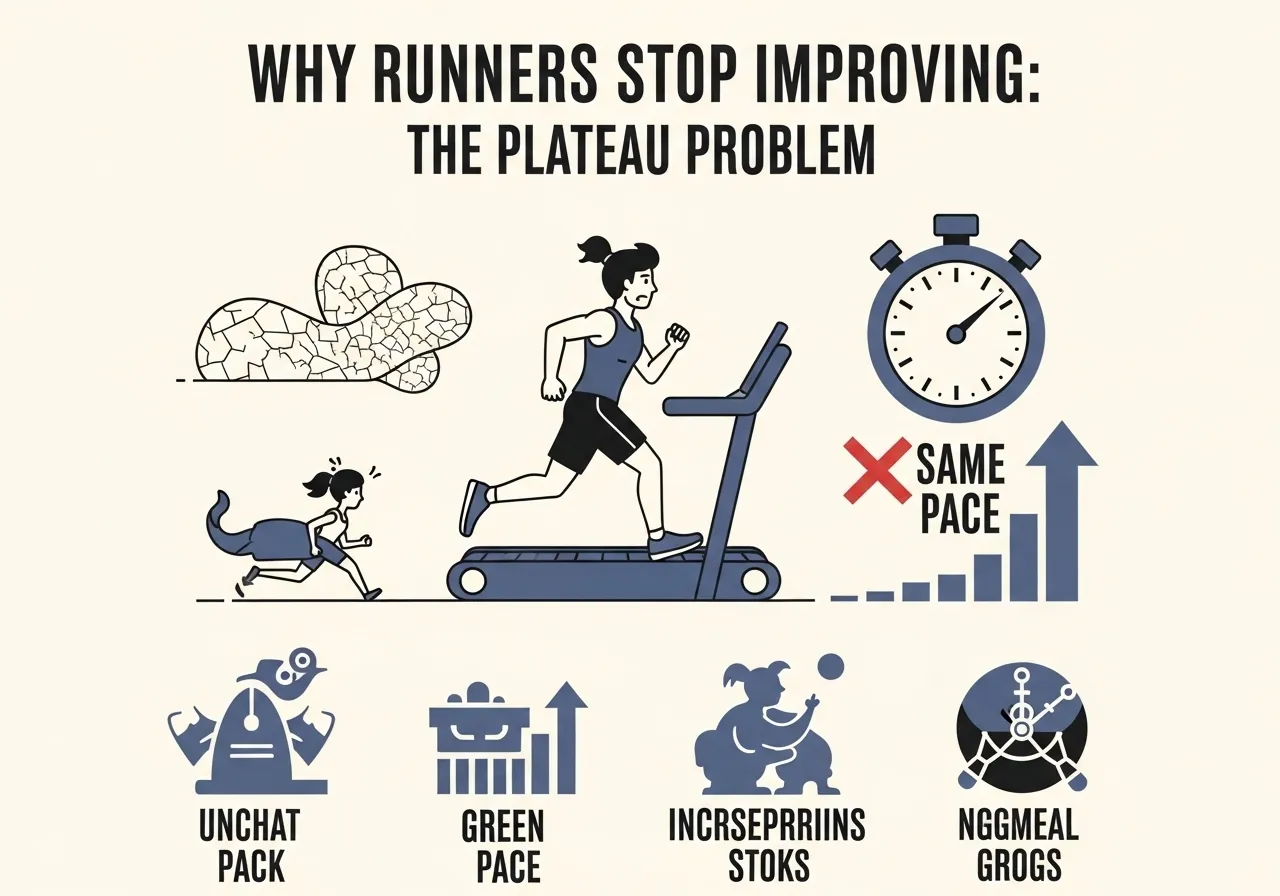
Yet most recreational runners make the same three mistakes that cap their progress: they run too fast every session, they never vary their training, and they ignore the physiological markers that separate effective training from junk miles.
This guide covers the cardiovascular science behind running adaptation, how intensity zones actually work, the technique cues that matter at every pace, and an 8-week programme that builds genuine aerobic capacity regardless of your starting point.
The “No Pain, No Gain” Running Myth: Why Going Hard Every Run Backfires
The Moderate-Intensity Trap
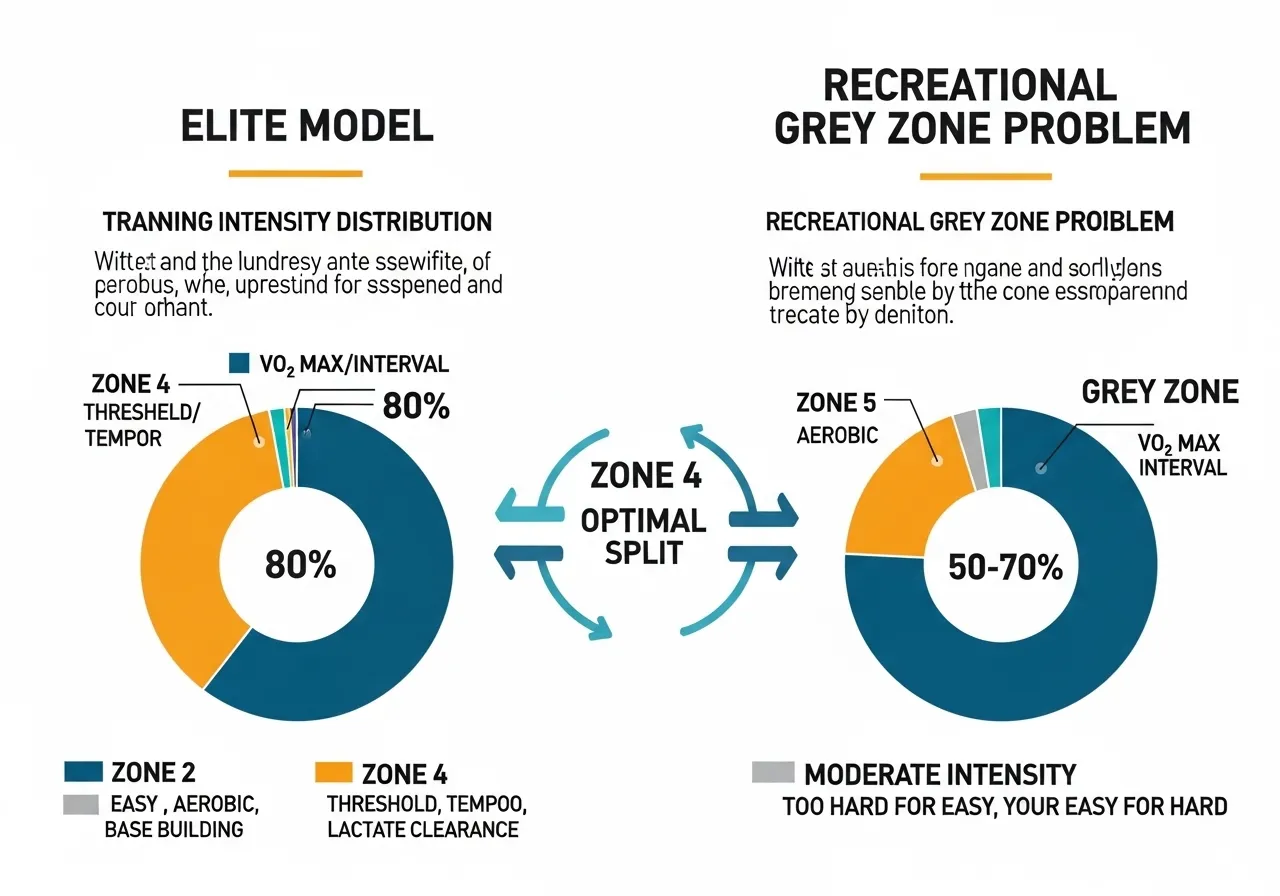
Ask a recreational runner about their usual pace and most describe something like this: hard enough to be uncomfortable, easy enough to keep going.
This moderate-intensity “grey zone” feels like productive training. The breathing is laboured. The effort registers. But this intensity range consistently underdelivers compared to properly polarised training.
It is simultaneously too easy to drive maximum aerobic adaptation and too hard to allow the recovery volume that builds aerobic base. The result: a training plateau that arrives within weeks and persists for years.
📌 Key Finding
Elite runners train easy most of the time and hard on specific sessions. Most recreational runners do the opposite — moderately hard, all the time — and wonder why progress stalls.
📌 Key Finding
Neither pure easy running nor pure hard running is optimal. A mixed-intensity model — mostly easy, some hard — produces the best VO2max gains across the broadest population.
The Practical Reset
For most recreational runners, the immediate fix is counterintuitive: slow down on easy days.
If you can hold a full conversation throughout a run, you are in the correct easy zone. If you are breathing too hard to speak in complete sentences, you have drifted into the grey zone — even at a pace that feels manageable.
Slowing easy runs allows greater total weekly volume, faster recovery between hard sessions, and a more pronounced aerobic base adaptation over 8–12 weeks.
What Running Does to Your Heart, Lungs, and Muscles
Cardiac Adaptations: The Runner’s Heart
Consistent running training triggers specific cardiac changes within weeks of starting a programme.
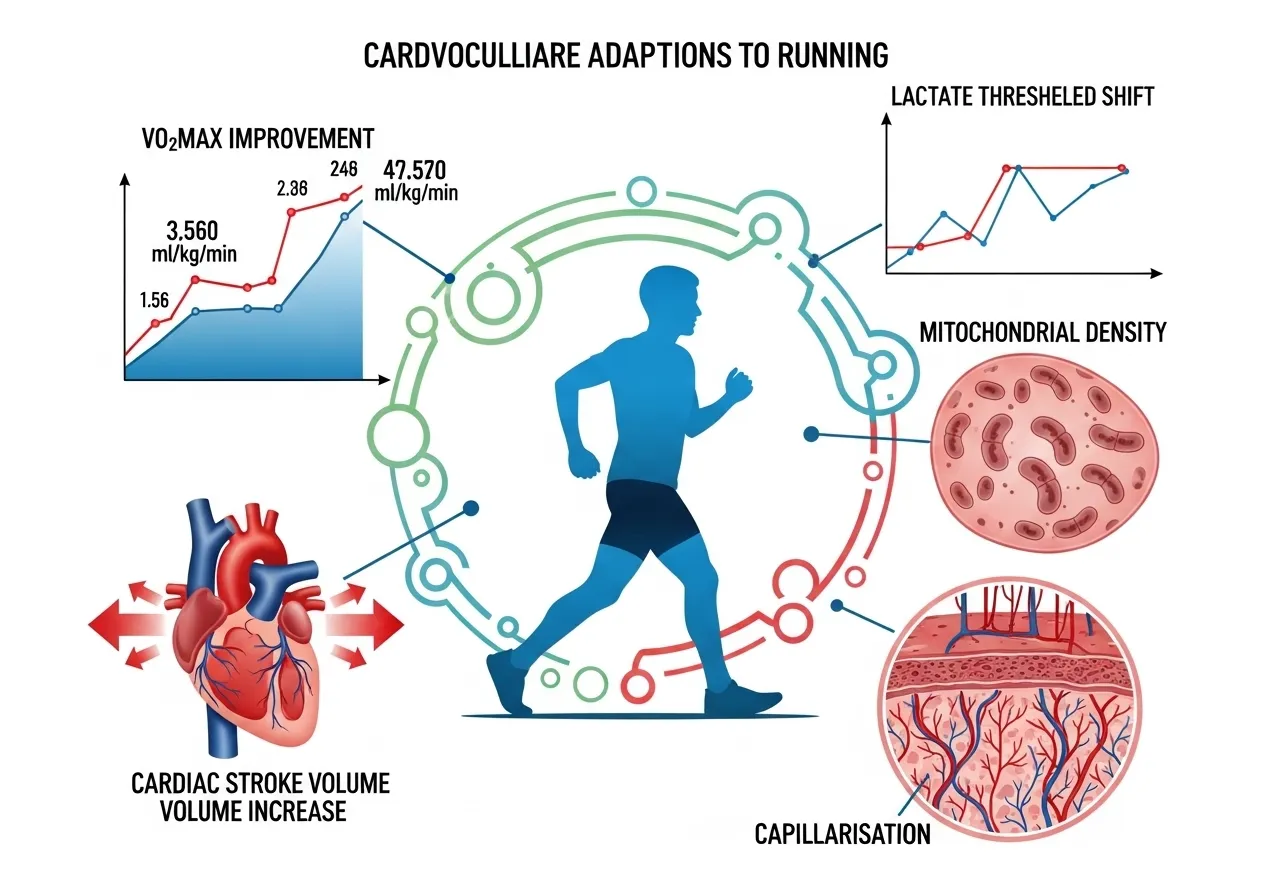
The most significant adaptation is increased stroke volume — the amount of blood the heart ejects per beat. A trained runner’s heart pumps more blood per beat at rest and during exercise. This means the heart achieves the same cardiac output at a lower heart rate, producing the characteristic low resting heart rate (often 45–60 BPM) of trained endurance athletes.
The left ventricle also enlarges slightly — a benign physiological adaptation called eccentric cardiac hypertrophy. This is distinct from the pathological hypertrophy associated with heart disease and represents a positive structural adaptation to sustained aerobic load.
VO2max: The Gold Standard of Running Fitness
VO2max (maximal oxygen uptake — the maximum volume of oxygen the body can consume per minute per kilogram of bodyweight) sets the ceiling for aerobic performance.
Oxygen delivery — primarily determined by maximal cardiac output — limits VO2max in most people. Training improves cardiac output by increasing stroke volume, which raises the oxygen ceiling available for muscle work.
Typical VO2max improvements from a structured 8–12 week running programme range from 5–15% in previously sedentary individuals. Trained runners improve more slowly, as they operate closer to their genetic ceiling.
The Lactate Threshold: The Practical Performance Marker
VO2max tells you your ceiling. Lactate threshold (the exercise intensity above which blood lactate accumulates faster than the body can clear it) tells you how much of that ceiling you can access sustainably.
A runner with a high VO2max but a low lactate threshold as a percentage of that ceiling cannot sustain fast paces without rapid fatigue. A runner who raises their lactate threshold to 85–90% of VO2max can run at near-maximal aerobic intensity for extended periods.
This is why threshold training — running at the edge of lactate accumulation — is the most powerful tool for improving running performance once a base stands as.
Muscle Adaptations: The Mitochondrial Engine
Running training multiplies the number and size of mitochondria (the organelles within muscle cells that convert oxygen and fuel into usable energy) within slow-twitch muscle fibres.
More mitochondria means more oxidative capacity — the ability to sustain energy production aerobically at higher intensities for longer durations. This directly raises the lactate threshold by enabling the working muscles to clear lactate more efficiently at a given running pace.
Capillarisation (the growth of new capillaries between muscle fibres) accompanies mitochondrial adaptation, improving oxygen delivery to the exact sites of energy production. Both adaptations develop primarily at easy-to-moderate running intensities — not at the high intensities most recreational runners default to.
Running Economy: The Efficiency Factor That Separates Equal-VO2max Runners
Two runners with identical VO2max can perform very differently in a race.
The differentiating variable is running economy — the oxygen cost of running at a given sub-maximal pace. A more economical runner uses less oxygen to maintain a target speed, leaving more capacity available as the race progresses.
Running economy improves through three main mechanisms: neuromuscular efficiency from consistent training volume, connective tissue stiffness improvements that store and return elastic energy during footstrike, and technique refinements that reduce biomechanical waste.
Strength training — particularly heavy lower body compound work and plyometrics — is one of the most effective running economy interventions available. Runners who add 2 strength sessions per week often see measurable pace improvements within 8–10 weeks even without increasing running volume.
The Role of Heat Adaptation
Running in warm conditions stresses the cardiovascular system more than the same pace in cool weather. Heart rate climbs higher for the same pace. Perceived effort increases.
This is not weakness — it is a predictable physiological response. The body prioritises thermoregulation (heat dissipation through sweating and increased skin blood flow), which competes with muscle blood flow demands.
Adjust pace expectations by 20–30 seconds per km for every 5°C above optimal running temperature (approximately 10–15°C for most runners). Maintaining effort level — not pace — in hot conditions produces comparable adaptation without excessive heat stress.
Running Intensity Zones: How to Know What Pace Does What
The Five-Zone System for Runners
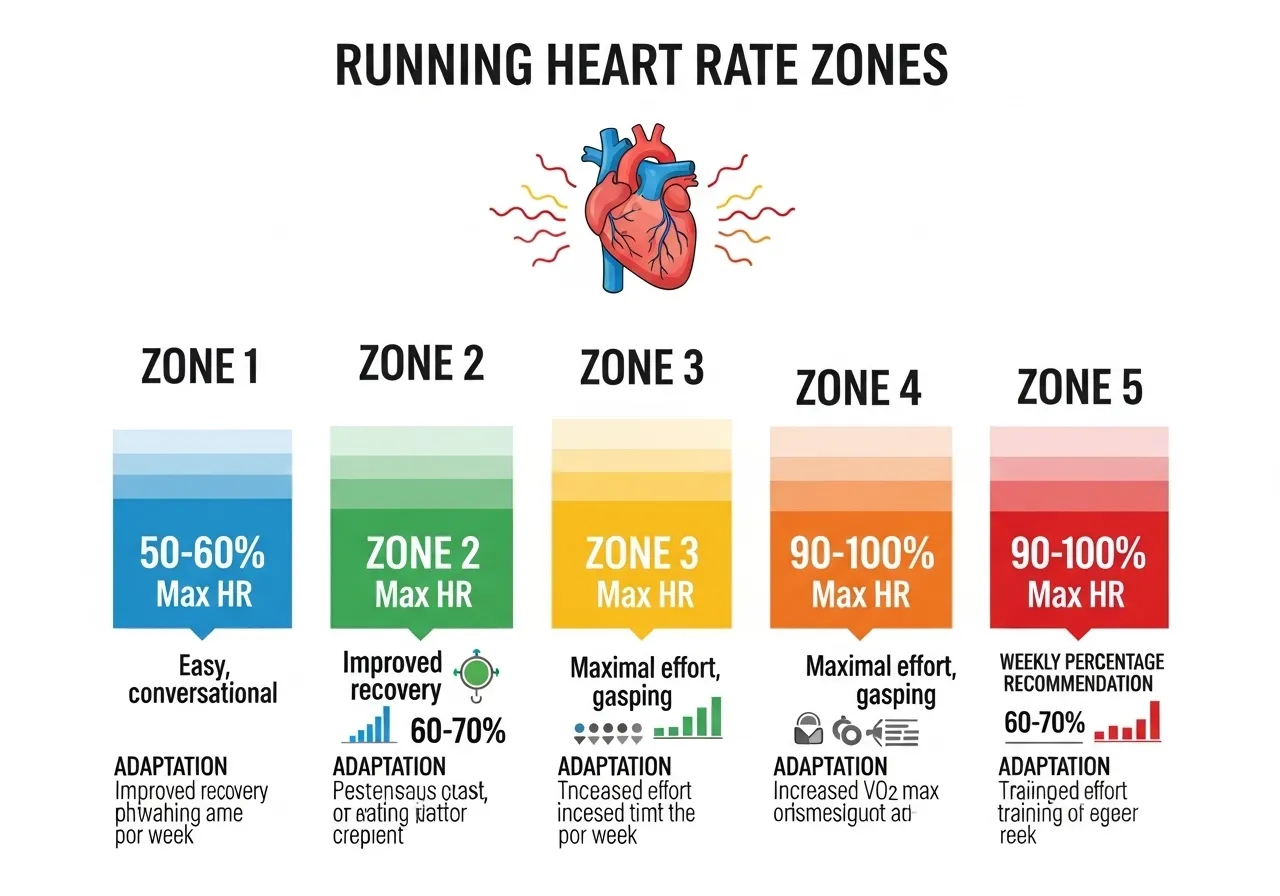
Zone
% Max HR
Breathing Feel
Primary Adaptation
Recommended Weekly %
Zone 1
50–60%
Conversational walk/jog
Active recovery, blood flow
10–15%
Zone 2
60–70%
Full sentences, easy
Aerobic base, fat oxidation, capillarisation
60–70%
Zone 3
70–80%
Short phrases only
Aerobic endurance — the grey zone
5–10%
Zone 4
80–90%
Single words, hard effort
Lactate threshold, race pace
10–15%
Zone 5
90–100%
Cannot speak
VO2max, maximal capacity
5%
The Lactate Threshold Run: How to Execute It
Threshold running (Zone 4) is the most productive single session type for improving running performance.
📌 Key Finding
Heart rate is not a reliable sole indicator of lactate threshold. The “comfortably hard” feel — heavy breathing but sustainable, no burning in the legs — is a reliable practical threshold marker for runners without lab testing access.
How to Find Your Personal Threshold Pace
Without laboratory testing, these practical methods approximate lactate threshold pace:
Talk test: Threshold pace is the fastest pace at which you can say a brief phrase — not a full sentence, but not single words either. One or two words come out; then you need a breath.
60-minute race pace: Your current best 60-minute race effort approximates threshold pace. If you have not raced, your tempo run should feel like 85–88% effort.
RPE 7–8/10: On the Rate of Perceived Exertion scale, threshold runs register as “hard” — demanding concentration, but no panic breathing or leg burning.
Heart rate: Approximately 85–90% of maximum heart rate as a secondary guide — remembering the individual variability shown in research.
What Happens to the Grey Zone (Zone 3)?
Zone 3 — where most recreational runners live — is not worthless. Long runs and tempo progression runs naturally pass through it.
The problem is defaulting to Zone 3 for every session. It accumulates fatigue faster than Zone 2 training guide while delivering smaller adaptation benefits than Zone 4. Minimise it to 5–10% of weekly running time unless you are specifically training for events where sustained Zone 3 effort is required (such as a half marathon run at moderate pace).
Does Running Technique Actually Matter — or Is It Just Running?
The Honest Answer
Running technique matters — but not as much as running consistently, and not in the way most coaching cues suggest.
No single technique style works for everyone. Foot strike (heel striking vs midfoot vs forefoot), arm swing, and cadence all vary naturally between efficient runners. Forcing an unnatural technique pattern typically increases injury risk rather than reducing it.
That said, specific technique errors consistently appear in recreational runners and are directly associated with increased injury rates and reduced efficiency.
The Four Technique Elements Worth Addressing
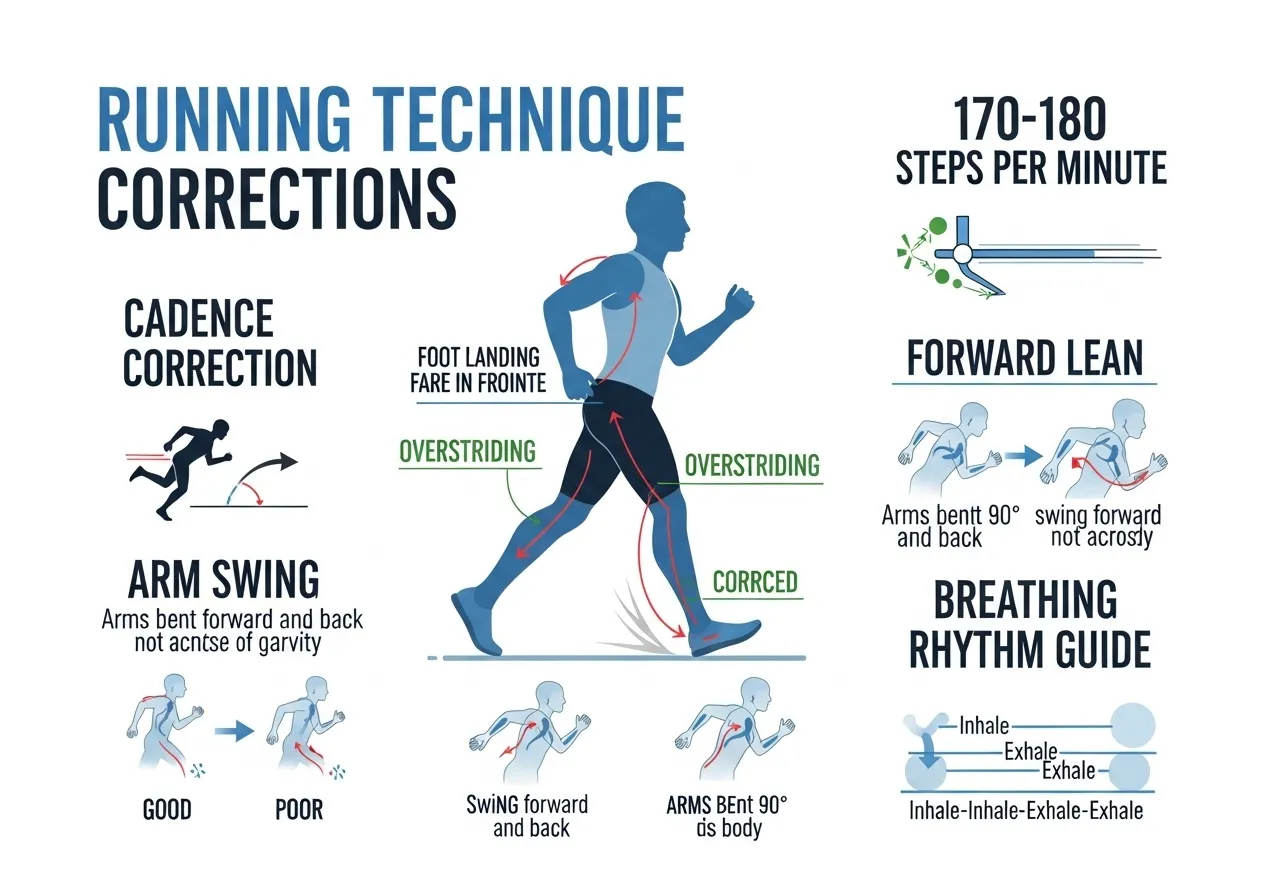
Overstriding: Landing with the foot well ahead of the body’s centre of mass creates a braking force on every stride — slowing forward momentum and increasing knee impact. The fix is not to shorten stride length but to increase cadence slightly. A target of 170–180 steps per minute naturally corrects overstriding for most runners without requiring conscious foot placement changes.
Forward lean: A slight forward lean (5–10° from vertical at the ankles — not the waist) uses gravity to assist forward momentum. Bending at the waist is not forward lean. Trunk stays tall; the entire body leans forward slightly from the ground up.
Arm swing: Arms drive forward and back — not across the body. Crossing the midline creates rotational waste. Elbows at roughly 90°, hands relaxed. Tension in the hands migrates upward into the shoulders and neck.
Breathing: Rhythmic breathing (inhale for 2–3 strides, exhale for 2–3 strides) synchronises with footstrike and reduces side stitches. Mouth breathing at higher intensities is natural and appropriate — nasal-only breathing is only sustainable at Zone 1–2 paces.
Cadence: The Most Useful Metric for Most Runners
Of all technique variables, cadence responds most predictably to intervention and produces the broadest improvements.
Increasing cadence by even 5–10% above baseline reduces ground contact time, decreases overstriding, and lowers the mechanical load on the knee joint during each footstrike — making it the single most evidence-supported technique change for recreational runners at any pace.
Most running watches now track cadence automatically. If yours consistently reads below 160 steps per minute, a gradual cadence increase (adding 5 steps per minute every 2 weeks) produces measurable technique and injury risk changes without disruptive biomechanical alteration.
When Technique Intervention Is Worth Prioritising
Technique analysis is most valuable when:
A runner has a recurring injury at a specific anatomical site (e.g., knee pain on every run) that is not responding to load management alone
Running economy (the oxygen cost of running at a given pace) plateaus despite adequate training volume
A gait analysis reveals a specific, correctable asymmetry between sides
For healthy runners without these patterns, consistency of training volume and intensity distribution matters far more than technique refinement.
Why Most Runners Stop Improving After 3–6 Months
The Same-Pace-Every-Run Problem
Most recreational runners find a comfortable pace and run it for every session, every week.
The body adapts to this stimulus within 4–6 weeks. After adaptation, the same pace at the same distance no longer represents a novel challenge — it maintains fitness without building it.
Progress requires progressive overload: either more distance at the same pace, more pace at the same distance, or the introduction of new stimulus types (tempo runs, intervals, hills) that challenge the system in ways the body has not previously encountered.
Skipping the Easy Run
Many runners who follow a structured plan abandon the easy days because “easy running feels like a waste of time.”
Easy runs serve three critical functions that hard runs cannot replace:
Mitochondrial and capillary adaptation: These structural adaptations develop primarily during sustained low-intensity running — not during hard efforts where the demand exceeds the aerobic system’s capacity
Active recovery: Blood flow during easy running clears metabolic waste from previous hard sessions and accelerates structural repair
Volume accumulation: Total weekly running volume is a strong predictor of long-term improvement. Easy runs enable higher volume without accumulating excessive fatigue
Ignoring the Long Run
The weekly long run is the cornerstone of aerobic base development for every running distance from 5K to marathon.
Its benefit comes not from intensity but from duration — sustained aerobic activity for 60–120+ minutes depletes glycogen stores, stimulates fat oxidation adaptation, and conditions musculotendinous structures to withstand repeated loading cycles.
Running the long run too fast — a near-universal recreational error — defeats this purpose. Long runs should feel easy throughout. If you finish a long run feeling strong, you ran it correctly. If you arrive home exhausted, you ran it too hard.
Doing Too Much Too Soon
The single biggest cause of running-related injury is increasing weekly mileage faster than the musculoskeletal system can adapt to.
Cardiovascular fitness improves faster than tendons, bones, and connective tissue. A runner who feels aerobically capable of running further is often structurally 2–4 weeks behind that perception.
The 10% rule — increasing weekly mileage by no more than 10% from one week to the next — is a conservative but reliable ceiling for injury-safe progression. More aggressive increases are possible for experienced runners with running-specific strength work. They are high-risk for beginners and returning runners.
Neglecting Strength Work
Running is often treated as a purely aerobic discipline. Strength training gets dropped when running volume increases — a trade-off that limits performance and elevates injury risk.
The calf muscles, Achilles tendon, hip abductors, and glutes absorb and generate force on every stride. Weakness in these structures shows up as the classic running injuries: Achilles tendinopathy, IT band syndrome, and shin splints.
Two strength sessions per week — calf raises, hip hinge patterns, single-leg work, and basic plyometrics — directly addresses the structural weakness that underlies most running injuries and improves running economy simultaneously.
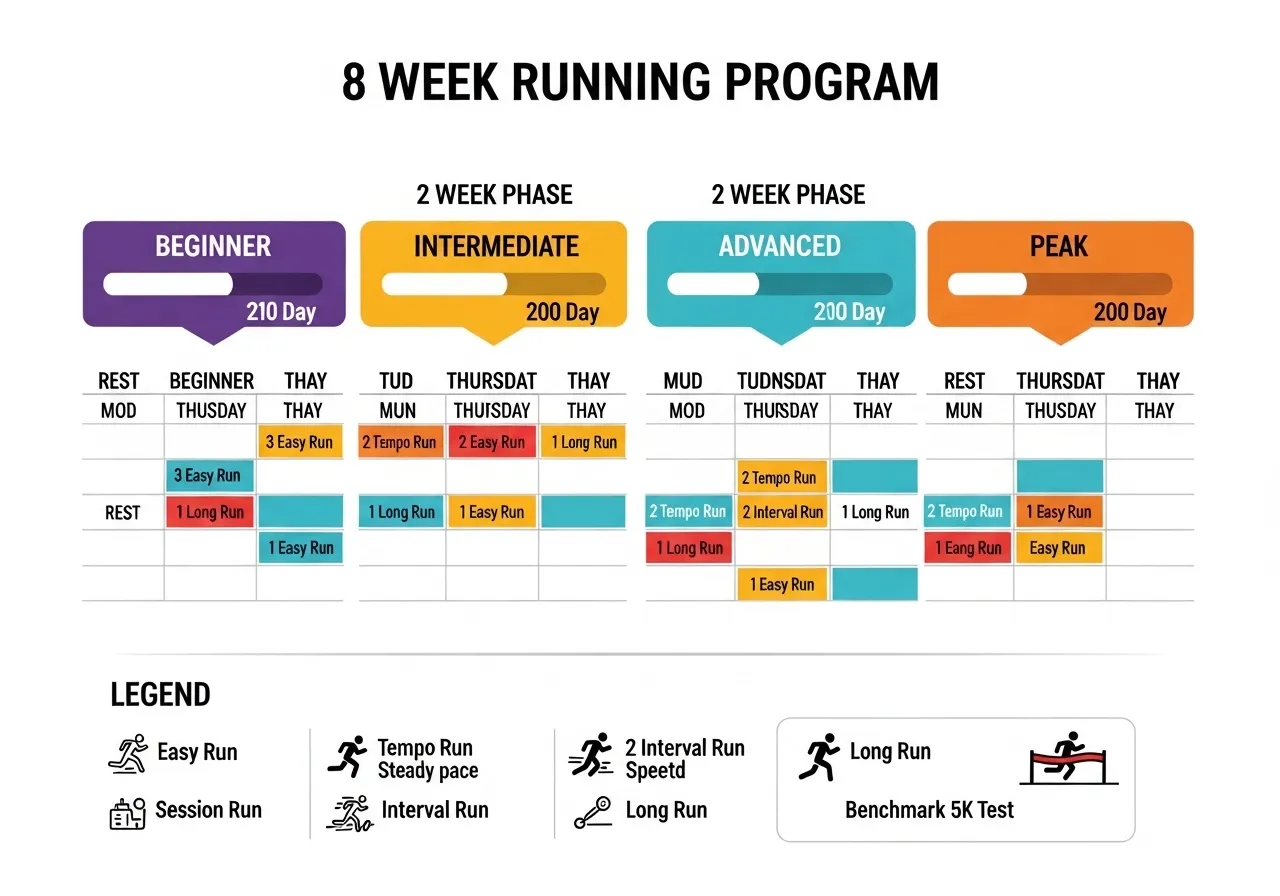
8-Week Running Programme: Three Levels
This programme runs four days per week for all levels. The session types remain consistent — easy run, tempo run, interval session, long run — but the duration and intensity targets scale by level.
Before starting: Beginners should be able to walk briskly for 30 minutes without stopping. If running 5 minutes continuously causes significant breathlessness, begin with a run-walk approach (1 min run / 2 min walk) for the first 2 weeks before following Week 1 of the programme as written.
📅 Phase 1 — Weeks 1–2: Aerobic Base
Day 1 (Easy): Beginner 20 min Zone 2 | Intermediate 30 min Zone 2 | Advanced 40 min Zone 2
Day 2 (Tempo): Beginner 10 min easy + 10 min Zone 3 + 5 min easy | Intermediate 10 min easy + 15 min Zone 4 + 5 min easy | Advanced 10 min easy + 20 min Zone 4 + 5 min easy
Day 3 (Easy): Same as Day 1
Day 4 (Long): Beginner 25 min Zone 2 | Intermediate 40 min Zone 2 | Advanced 60 min Zone 2
Focus: Establish correct Zone 2 pace; every easy run must pass the full-sentence talk test throughout
📅 Phase 2 — Weeks 3–4: Volume Build
Day 1 (Easy): Add 5 min to Phase 1 Day 1 across all levels
Day 2 (Intervals): Beginner 5×2 min Zone 4 / 2 min walk | Intermediate 6×3 min Zone 4 / 2 min easy | Advanced 6×4 min Zone 4 / 90 sec easy
Day 3 (Easy): Same as Day 1
Day 4 (Long): Add 5–10 min to Phase 1 long run across all levels
Focus: Introduce intervals; maintain full recovery between reps — gasping during recovery means pace was too high
📅 Phase 3 — Weeks 5–6: Intensity Development
Day 1 (Easy): Same as Phase 2
Day 2 (Tempo): Beginner 10 min easy + 15 min Zone 4 + 5 min easy | Intermediate 10 min easy + 20 min Zone 4 + 5 min easy | Advanced 10 min easy + 25 min Zone 4 + 5 min easy
Day 3 (Strides): 20 min easy + 6×20 sec strides (short accelerations to 90% effort with full recovery) + 10 min easy
Day 4 (Long + Progression): Final 10–15 min of long run at Zone 3 effort — not a full tempo run, just a gradual acceleration into the finish
Focus: Extend tempo block duration; introduce strides for neuromuscular speed without aerobic fatigue
📅 Phase 4 — Weeks 7–8: Peak and Benchmark
Week 7: Highest volume week — add one extra easy day (5th session) at 20–30 min for intermediate and advanced
Week 8 (Taper + Test): Reduce volume by 30%. On Day 4, attempt a timed 5K effort at best sustained pace.
Benchmark: Compare Week 8 5K time to Week 1 easy run pace. A 30–90 second improvement in 5K time is a typical 8-week outcome for consistent trainees. Beginners who started with run-walk often achieve their first continuous 5K.
Focus: Trust the taper; the rest in Week 8 is productive — it allows adaptations from training stress to fully consolidate
Frequently Asked Questions About Running
Is running bad for your knees?
The available evidence does not support this. Large studies consistently show that recreational runners have lower rates of knee osteoarthritis than sedentary populations. The mechanical loading of running stimulates cartilage nourishment and bone density — both protective against joint degeneration over the long term.
Running-related knee injuries do occur — but they almost always result from excessive load increases, training errors, or biomechanical issues. Not from running itself.
Should I run every day?
Daily running is sustainable for experienced runners with high training loads. For beginners and intermediates, 3–5 days per week with rest or cross-training days allows the musculoskeletal system to recover between sessions.
Running fitness improves during rest days — not during the runs themselves. Removing all recovery days to run every day typically produces diminishing returns and elevated injury risk within 4–6 weeks.
How do I stop getting side stitches?
Side stitches (exercise-related transient abdominal pain — sharp cramping below the ribcage during running) most commonly result from eating too close to a run, shallow breathing, or a sudden increase in running pace from rest.
Practical fixes: wait 90–120 minutes after eating before running; exhale forcefully when the foot on the side of the stitch hits the ground; slow pace briefly and take several deep diaphragmatic breaths. Most stitches resolve within 1–2 minutes of these interventions.
What should I eat before a run?
For runs under 60 minutes, no pre-run fuelling is required if a normal meal was consumed in the preceding 3–4 hours. For runs over 60–90 minutes, a light carbohydrate snack 30–60 minutes before helps sustain energy through the session.
Fasted morning runs (before breakfast) are safe for easy Zone 1–2 sessions and may enhance fat oxidation adaptation over time. Fasted hard sessions reduce quality and are not recommended.
How long does it take to see results from running?
Cardiovascular improvements begin within 2–3 weeks of consistent training — early gains come from improved cardiac efficiency and increased plasma volume. Structural adaptations (mitochondrial density, capillarisation) continue developing over 8–12 weeks. Most beginners notice a tangible improvement in their easy pace or breathing comfort within the first month of consistent running.
Why Running Is the Most Accessible and Most Misstarted Fitness Activity Running has the lowest barrier to entry of any fitness activity — it requires no equipment beyond supportive shoes, no gym membership, and no specific skill level to begin. It is also the fitness activity most commonly attempted and abandoned within the first few…
Most recreational athletes choose one form of cardio and repeat it. Runners run. Cyclists cycle. Swimmers swim. This is not a strategic decision. It is the path of least resistance: the familiar equipment, the practised movement, the social group tied to the activity. The repetition accumulates a specific cardiovascular adaptation to one mode of exercise…
Most recreational endurance athletes train by feel. Some days hard, some days easy. Occasionally very hard. They improve for the first six months, plateau, and then wonder why more miles are not producing better results. The answer is almost always the same: they are training in the middle. Not easy enough to build aerobic base….
⚠️ Fitness Disclaimer: The information in this article is for general educational purposes only and does not constitute professional fitness or medical advice. Exercise carries inherent risks. Always consult a qualified healthcare professional or certified personal trainer before starting or modifying any exercise program, especially if you have a pre-existing medical condition, injury, or health…
⚠️ Health & Fitness DisclaimerThis article is for general educational purposes only and does not replace professional medical advice. If you have any lower back, knee, or cardiovascular conditions, please consult a qualified healthcare professional before beginning a rowing machine mastery guide program. The rowing machine training guide machine — or ergometer — produces a…
⚠️ Health & Fitness DisclaimerThis article is for general educational and informational purposes only and does not replace professional medical or fitness advice.Kettlebell training involves ballistic movements that require proper technique. If you have any pre-existing back, shoulder, or joint condition — please consult a qualified healthcare professional or certified instructor before beginning. The kettlebell…