⚠️ Health & Fitness Disclaimer This article is for general educational purposes only. It does not replace professional medical advice. If you have cardiovascular, joint, or lower back conditions, consult a qualified healthcare professional before starting sled training.
Its unique quality: it is the only common training implement that is almost entirely concentric-only. The muscles shorten against resistance. They never lengthen under load. That single mechanical fact changes everything about how sled training fits into a programme — and why it does things that squats, deadlifts, and running simply cannot replicate.
This guide covers the science behind the sled’s unique training stimulus, how to select load for different goals, the key push and pull exercises, and an 8-week programme for any training level.
The “Just Use a Squat” Myth: What Sled Training Does That No Other Exercise Can
The Eccentric Problem — and the Sled’s Solution
Every standard lower body exercise — squat, deadlift, lunge, leg press — contains an eccentric phase. The muscles lengthen under load as the weight descends.
The eccentric phase is valuable. It drives hypertrophy, builds connective tissue strength, and improves force absorption. But it is also the primary cause of delayed onset muscle soreness (DOMS) and the neuromuscular fatigue that requires 48–72+ hours of recovery after heavy lower body work.
Sled pushing and pulling eliminate the eccentric phase almost entirely. The legs push the sled forward; they never absorb a lowering load. The metabolic demand can be extremely high — blood lactate levels spike significantly during heavy sled work — but muscle damage markers remain near baseline.
What the Research Finds on Recovery
Research examining the metabolic and neuromuscular responses to backward sled drag sessions finds that blood lactate rises sharply to approximately 12.4 mmol/L immediately after training — indicating substantial metabolic stress — while creatine kinase levels (the primary blood marker of muscle damage) show no significant elevation. Neuromuscular function recovers to baseline within 3 hours of a sled session, compared to 24–72 hours for equivalent volume of eccentric-loaded work.
📌 Key Finding
Sled training produces high metabolic stress with minimal muscle damage. You can train with sleds 3–5 times per week without the recovery cost that heavy squats or deadlifts require.
📌 Key Finding
A brief sled push session before sprinting improves 20-metre sprint times without increasing fatigue. For athletes and recreational trainees who sprint, sled priming is among the most time-efficient performance-enhancing protocols available.
Why General Fitness Trainees Need This Too
Sprint performance and post-activation potentiation matter for athletes. But for general fitness trainees, the sled’s value lies elsewhere.
It trains the lower body at high intensity, high volume, and high frequency — without accumulating the fatigue that prevents consistent training. A trainee who squats heavy 2–3 times per week may add 2–3 sled sessions without affecting squat recovery at all. Total weekly training volume increases substantially. The legs get more work. Progress accelerates.
Sled Science: Load, Speed, and What Each Combination Trains
The Load-Velocity Relationship
Sled training has a clear dose-response relationship between load and training outcome. The heavier the load, the slower the movement — and the different the adaptation.
📌 Key Finding Heavy loads = horizontal force, acceleration, strength-speed. Light loads = velocity, rate of force development, speed-endurance. The sled trains different athletic qualities depending entirely on how much weight is on it.
Post-Activation Potentiation: The Sprint Priming Protocol
Research finds that a sled push loaded with 75% of bodyweight potentiates 20-metre sprint performance when performed 4–12 minutes before the sprint effort. A load of 125% bodyweight impairs subsequent sprint performance — the heavy load creates too much fatigue to allow the potentiation effect to express itself.
⚠️ Important: The optimal priming load (75% BM) and recovery window (4–12 minutes) are specific. Heavier loads or shorter recovery impair performance rather than potentiating it. Test the protocol at lower loads before applying at competition.
Bodyweight as a Load Reference — Why It Works
Using bodyweight percentage as a load guide is practical because sled resistance depends on both the weight loaded and the friction of the surface. The same 50 kg on a sled produces different resistance on rubber turf versus concrete.
Bodyweight percentage normalises this across surface types. A trainee who weighs 80 kg targets 60 kg on the sled for a moderate conditioning session (75% BM) regardless of surface — adjusting intuitively based on how the actual push feels rather than relying solely on a fixed number.
Sled Push vs Sled Pull: Are They Actually Different Exercises?
The Mechanics Are Fundamentally Different
Sled pushing and sled pulling share the concentric-only quality. But the body position and muscle emphasis are genuinely distinct.
Sled push: The body leans forward at 45°, hands on the handles, driving through the legs with a sprint-like posture. Primary movers are the quadriceps (dominant knee extension), glutes, and calves. The upper body acts as a force transfer platform — the chest, shoulders, and arms stabilise without generating primary propulsive force.
Sled pull (forward and backward): The load changes dramatically based on direction:
Forward sled pull (harness or rope, facing away): Similar to the push but uses a hip extension pattern — glutes and hamstrings dominate more than in the push. Requires a leaning-forward sprint posture. Useful for acceleration mechanics development.
Backward sled drag: Face the sled, walking backward. The quadriceps (particularly the VMO — vastus medialis obliquus, the teardrop-shaped inner quad muscle) are loaded in a partially extended knee position through the entire drag. Widely used in knee rehabilitation and patellar tendon loading protocols. The backward drag uniquely trains terminal knee extension without compressive joint loading.
Upright sled pull (rope overhead): Walking forward while pulling a rope attached to a sled overhead — upper back, biceps, and posterior chain involvement increases significantly. A conditioning-focused variation that adds upper body pulling stimulus to the lower body drive.
Which Should You Prioritise?
Goal
Recommended Variation
Why
General leg conditioning
Sled push (moderate load)
High quad/glute stimulus, easiest technique to learn
Sprint speed development
Light forward pull (harness)
Closest to sprint mechanics; maintains velocity
Knee rehabilitation / VMO
Backward drag
Unique VMO loading without compressive knee force
Full-body metabolic conditioning
Upright rope pull alternated with push
Upper/lower combined; maximum metabolic demand
Acceleration strength (PAP)
Heavy push (75% BM)
Directly supported by potentiation research
The Backward Drag for Knee Health: An Underappreciated Clinical Tool
The backward sled drag loads the quadriceps through a range of motion where the knee joint experiences minimal compression forces — because the shin remains nearly vertical throughout the drag.
This makes it one of the few exercises that trains the quadriceps at meaningful loads in individuals with patellar tendinopathy (patellar tendon irritation — the most common tendon complaint in recreational and competitive athletes), anterior knee pain, or post-surgical rehabilitation where compressive joint loading is contraindicated.
Many physiotherapy programmes now incorporate backward sled drags as a bridge between early rehabilitation isometrics and the compressive loading of squats and lunges.
How: Hands on low handles, arms fully extended. Lean the body forward at 45–50° from vertical. Drive through the balls of the feet in short, powerful steps. Keep the head in line with the spine — do not look down at the sled. Maintain a rigid torso throughout.
Key point: The push is leg-driven, not arm-driven. The arms remain straight and act as rigid struts to transfer leg force to the sled — bending the elbows shifts load onto the arms and reduces leg drive efficiency.
🏋️ 2. Backward Sled Drag
Target: Quadriceps (VMO emphasis), hip flexors
How: Face the sled. Hold the rope or handles in front of the body. Walk backward in small, controlled steps, keeping the back upright and the knees slightly bent throughout. The sled follows behind you as you drag it. Maintain constant tension on the rope — do not allow slack.
Key point: The upright posture is critical. Leaning backward shifts the emphasis from the quads to the hip extensors and changes the knee loading pattern. Stay tall, walk backward.
🏋️ 3. Forward Sled Drag (Harness Sprint)
Target: Glutes, hamstrings, calves, hip extension power
How: Attach a harness around the waist or shoulders. Lean forward into a sprint posture and drive forward. The sled drags behind via an attached rope. Sprint-specific technique: drive the knees forward and the feet backward, using a full hip extension on each stride.
Key point: Use light loads (10–25% BM) for speed development. The goal is maintaining a sprint pattern with slight additional resistance — not grinding forward under a heavy load that destroys sprinting mechanics.
How: Face the sled. Hold the rope with both hands. Walk backward, alternating hand-over-hand pulls on the rope as you retreat. Each pull mimics a rowing motion — elbow drives back past the hip. The rope shortens as you pull the sled toward you.
Key point: This combines upper body pulling with lower body walking — a rare exercise combination that makes it genuinely full-body. Excellent for building upper back endurance without the compressive spinal loading of barbell rows.
How: Hands on high handles (shoulder height). Body remains more upright than the low-handle variation — roughly 30° lean rather than 45°. Drive through the legs with longer, more powerful strides. Upper body contributes more pressing force through the high handles.
Key point: The high-handle variation shifts emphasis from quads toward glutes and hamstrings due to the more upright posture. It also loads the upper chest and triceps more directly — making it a genuine upper body conditioning stimulus alongside the lower body work.
🏋️ 6. Lateral Sled Drag
Target: Hip abductors (gluteus medius, TFL), adductors
How: Attach a rope from the sled to one ankle via a cuff. Walk sideways — leading with the attached leg pulling the sled. Each step pulls the sled laterally. Alternate sides. Keep hips level throughout the lateral walk.
Key point: Hip abductor and adductor strength directly supports knee valgus control (prevention of the knee collapsing inward during landing and cutting). Lateral sled drags address this plane of movement that most training completely ignores.
🏋️ 7. Sled Push Sprint (Light Load, Maximum Speed)
Target: Full lower body, cardiovascular system, sprint mechanics
How: Load the sled with 10–20% of bodyweight. Sprint maximally for 10–20 metres. Full rest between efforts (60–90 seconds minimum). The goal is maximum speed — not maintaining a grinding pace under heavy load.
Key point: This is the speed development application of sled training. The load is minimal enough to maintain near-sprint mechanics while adding slight additional resistance. Separate from conditioning work — never combine speed sled sprints with heavy load conditioning in the same cluster.
Why Most Trainees Under-Use the Sled — and What They Miss
Treating the Sled as Cardio-Only
The most common mischaracterisation: the sled is a conditioning tool, not a strength tool.
Heavy sled pushes — at loads approaching or exceeding bodyweight — produce significant quadriceps and glute strength stimulus. Research comparing sled push EMG to back squat EMG finds similar activation patterns across the primary movers. The absence of eccentric loading means the absolute hypertrophic stimulus per set is somewhat reduced — but the ability to train at high volume without accumulating eccentric fatigue means total weekly leg training stimulus can actually be higher with sled work included.
Use the sled at both ends of the load spectrum — heavy for strength, light for speed — not exclusively at moderate loads where it is neither an optimal strength nor an optimal conditioning tool.
Always the Same Distance
Most trainees default to 20–40 metre pushes, session after session. This produces rapid adaptation and plateau within 4–6 weeks.
Sled training offers multiple progression variables: load, distance, rest period, direction, and number of rounds. Cycling through these variables — increasing distance one week, adding rounds the next, reducing rest the week after — maintains novel stimulus far longer than load progression alone.
Ignoring the Backward Drag
The backward sled drag is the most underused sled variation in general fitness. Most trainees push exclusively.
The backward drag develops the VMO — the inner quad muscle most responsible for patellar tracking — through a unique loading pattern that no other common gym exercise replicates at comparable stimulus levels. Trainees with a history of anterior knee pain, patellar tendinopathy, or ACL rehabilitation should prioritise this variation. Even healthy trainees benefit from the knee stability improvements the backward drag develops over 6–8 weeks of consistent use.
Competing with Recovery
The concentric-only nature of sled work means it does not compete with recovery from conventional training — if the load and volume are reasonable. But trainees sometimes load the sled excessively and perform exhaustive volume, generating systemic fatigue that does compromise recovery from subsequent sessions.
The guideline: sled conditioning sessions should leave you breathing hard but not devastated. If lower body soreness from a sled session affects squat quality 48 hours later, you accumulated too much volume or used loads too heavy to maintain the concentric-only recovery advantage.
8-Week Sled Training Programme
This programme adds 2–3 sled sessions per week to existing training. Each sled session takes 15–25 minutes. Sessions are designed to complement — not replace — strength training, running, or other cardio.
Equipment: a training sled with weight plates, a 10–15 metre rope or strap for pulling variations, a harness (optional, for forward drags), and a turf, concrete, or indoor gym floor surface.
📅 Phase 1 — Weeks 1–2: Foundation (Technique and Load Calibration)
Session A (2×/week): Sled push (50% BM) 6×20 m — 60 sec rest | Backward drag (30% BM) 4×20 m — 45 sec rest
Session B (1×/week): Sled row pull 4×15 m | Sled push (30% BM, speed focus) 4×20 m — 90 sec rest
Focus: Calibrate your working loads; confirm that 50% BM push feels challenging but maintains technique throughout all 6 sets
📅 Phase 2 — Weeks 3–4: Volume Build
Session A (2×/week): Sled push (60% BM) 8×20 m — 60 sec rest | Backward drag (40% BM) 4×20 m
Session B (1×/week): Sled row pull 5×15 m | Lateral drag (20% BM) 3×15 m each side | Sled push (20% BM sprint) 5×15 m — 90 sec rest
Focus: Increase push volume to 8 sets; introduce lateral drag for hip abductor work
📅 Phase 3 — Weeks 5–6: Heavy Load Introduction
Session A — Heavy (1×/week): Sled push (75–100% BM) 5×15 m — 2 min rest | Backward drag (50% BM) 4×20 m
Session B — Conditioning (2×/week): Sled push (50% BM) 8×20 m — 45 sec rest | Sled row pull 4×15 m | Lateral drag 3×15 m each side
Focus: Heavy session develops strength and PAP potential; conditioning sessions reduce rest to increase metabolic demand
📅 Phase 4 — Weeks 7–8: Peak and Benchmark
Session A — PAP Protocol (1×/week): Sled push (75% BM) 3×15 m → 8 min rest → sprint 20 m maximally (repeat ×3). Compare sprint feel vs pre-programme.
Session B — Conditioning (2×/week): Sled circuit: push (50% BM) 20 m + row pull 15 m + backward drag 20 m + lateral drag 15 m each side. No rest within circuit. 90 sec between circuits. 4–5 rounds.
Benchmark (Week 8): Retest Phase 1 Session A. Count completed sets before technique breakdown. Completing all 8 push sets at 60% BM with maintained technique — versus technique failure at set 4–5 in Week 1 — confirms significant conditioning improvement.
Focus: Test PAP protocol for sprint-focused trainees; establish the sled circuit as a permanent high-density conditioning option
Frequently Asked Questions About Sled Training
Do I need a special surface for sled training?
Flat turf or rubber flooring is ideal — the sled slides with consistent friction. Concrete works but wears down the sled’s base more quickly. Hard indoor gym floors with smooth tiles are usable but can feel very different from turf. Avoid uneven surfaces and inclines for loaded work. Many commercial gyms now have dedicated sled turf lanes — if yours does, prioritise it.
Can I use a sled if I have knee pain?
Possibly — but only after professional assessment. The backward sled drag is commonly used in knee rehabilitation because it loads the quadriceps with minimal compressive force on the kneecap. However, the push variations require significant knee force and are inappropriate during active knee irritation. Always get clearance from a physiotherapist before using sled training for knee-related rehabilitation.
How heavy should the sled be for fat loss?
For metabolic conditioning and fat loss goals, moderate loads (40–60% of bodyweight) at higher volume and shorter rest periods produce the best caloric expenditure. Heavy loads require long rest and reduce total work per session. Light sprint loads are high-quality but low total work. The moderate conditioning zone maximises calorie burn per unit of time.
How do sled sessions fit around regular gym training?
Heavy sled sessions (75%+ BM) pair best with rest days or light training days — even though sled work produces minimal DOMS, the cardiovascular and neuromuscular fatigue is still meaningful. Light to moderate sled conditioning (under 60% BM, 15–20 minutes) can be added after regular strength sessions as a finisher without significantly affecting session quality or next-day recovery.
What if I do not have access to a sled?
A loaded wheelbarrow, a furniture slider on carpet, or pushing a car (with an operator inside, doors open, in neutral gear) all simulate the concentric-only push stimulus. The backward drag can be approximated with a resistance band anchored to a fixed point walking backward. None are perfect substitutes — but the fundamental stimulus (concentric-only locomotion against resistance) remains achievable without gym equipment.
⚠️ Health & Fitness DisclaimerThis article is for general educational purposes only and does not replace professional medical or fitness advice. If you have any cardiovascular or joint concerns, consult a healthcare professional before starting a new exercise program. Jump rope is one of the most underrated training tools available — a piece of equipment…
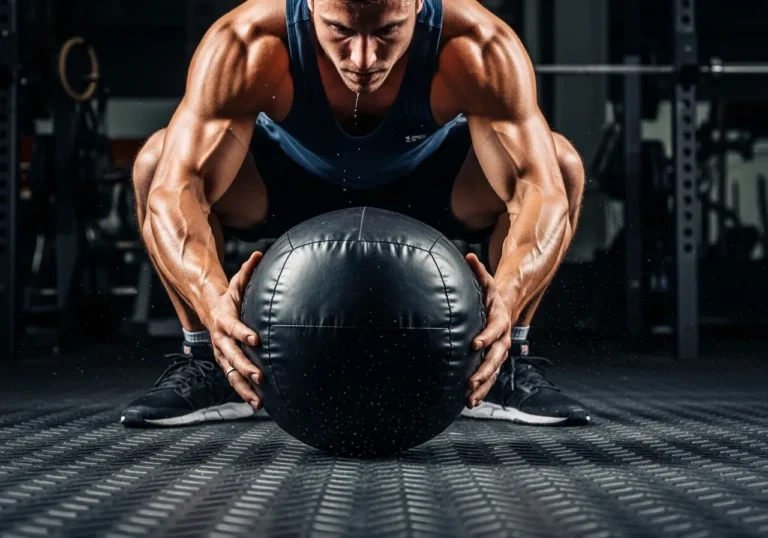
⚠️ Fitness Disclaimer: The information in this article is for general educational purposes only and does not constitute professional fitness or medical advice. Always consult a qualified healthcare professional before starting any new exercise program, especially if you have existing injuries or medical conditions. The Ball That Made My Conventional Training Feel Incomplete I added…
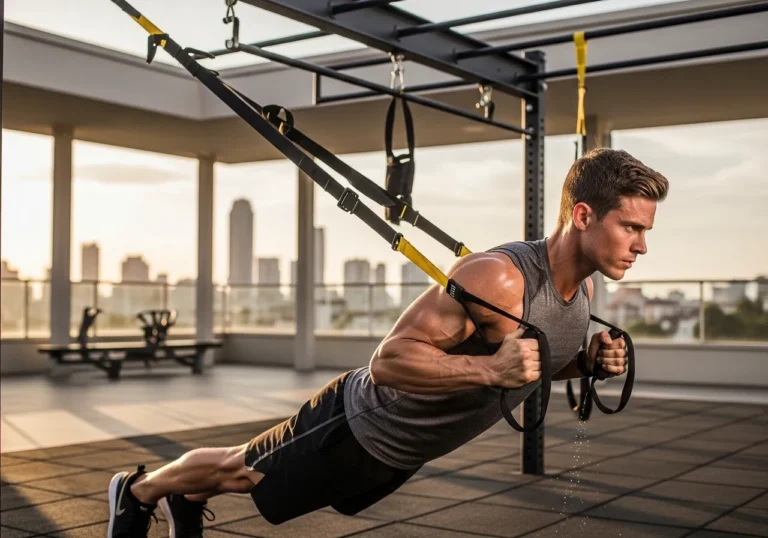
Why TRX training overview and Suspension Training Belong in Every Serious Training Program The TRX suspension trainer — two adjustable straps with handles anchored to a single point, allowing the exerciser to use their own bodyweight and gravity as resistance through an infinite range of angles and positions — has earned a permanent place in…
⚠️ Health & Fitness DisclaimerThis article is for general educational purposes only and does not replace professional medical advice. If you have any pre-existing shoulder, wrist, or back conditions, please consult a qualified healthcare professional before beginning medicine ball training. The medicine ball is one of the oldest and most versatile training implements in existence…
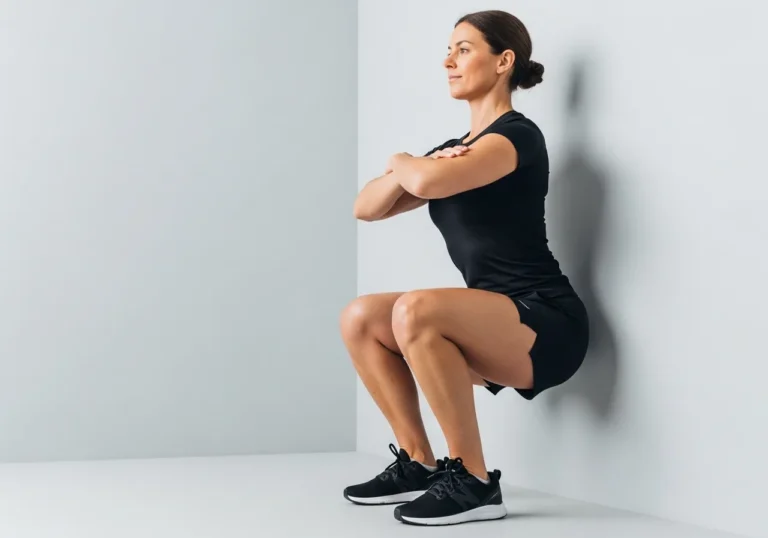
Isometric training — holding a static contraction without joint movement — is one of the oldest forms of resistance exercise and one of the most under-appreciated in modern strength and conditioning. Its reputation as a limited, rehabilitation-only tool until two decades of research overturned that view that have established it as a genuinely effective intervention…
Most training programmes develop either strength or power. Powerlifters squat heavy and get strong. Sprinters sprint fast and get explosive. The two qualities rarely develop in the same session, in the same set pairing, or even in the same training block. Contrast training challenges this separation. By pairing a heavy compound lift with an explosive…