⚠️ Health & Fitness Disclaimer This article is for general educational purposes only and does not replace professional medical advice. If you have any lower limb, knee, or ankle conditions, please consult a qualified healthcare professional before beginning plyometric training overview training.
Plyometric training — exercise that uses the stretch-shortening cycle (the rapid lengthening of a muscle immediately followed by powerful shortening) to develop explosive power — bridges the gap between strength and speed in a way that conventional resistance training cannot fully replicate. (Related: kettlebell training) (Related: HIIT training guide) (Related: jump rope training)
While barbell squats and deadlifts develop the capacity to produce maximum force, plyometric exercises develop the rate of force development (how quickly that force can be applied) — a quality that determines athletic performance in jumping, sprinting, direction changes, and any activity requiring rapid power output.
This guide covers the research on plyometric training effects, explains the stretch-shortening cycle mechanism, details the foundational and advanced plyometric exercises, and provides an 8-week program.
Plyometric Research: Power, Hypertrophy, and Athletic Performance
Squat Jump Training: Power and Functional Performance
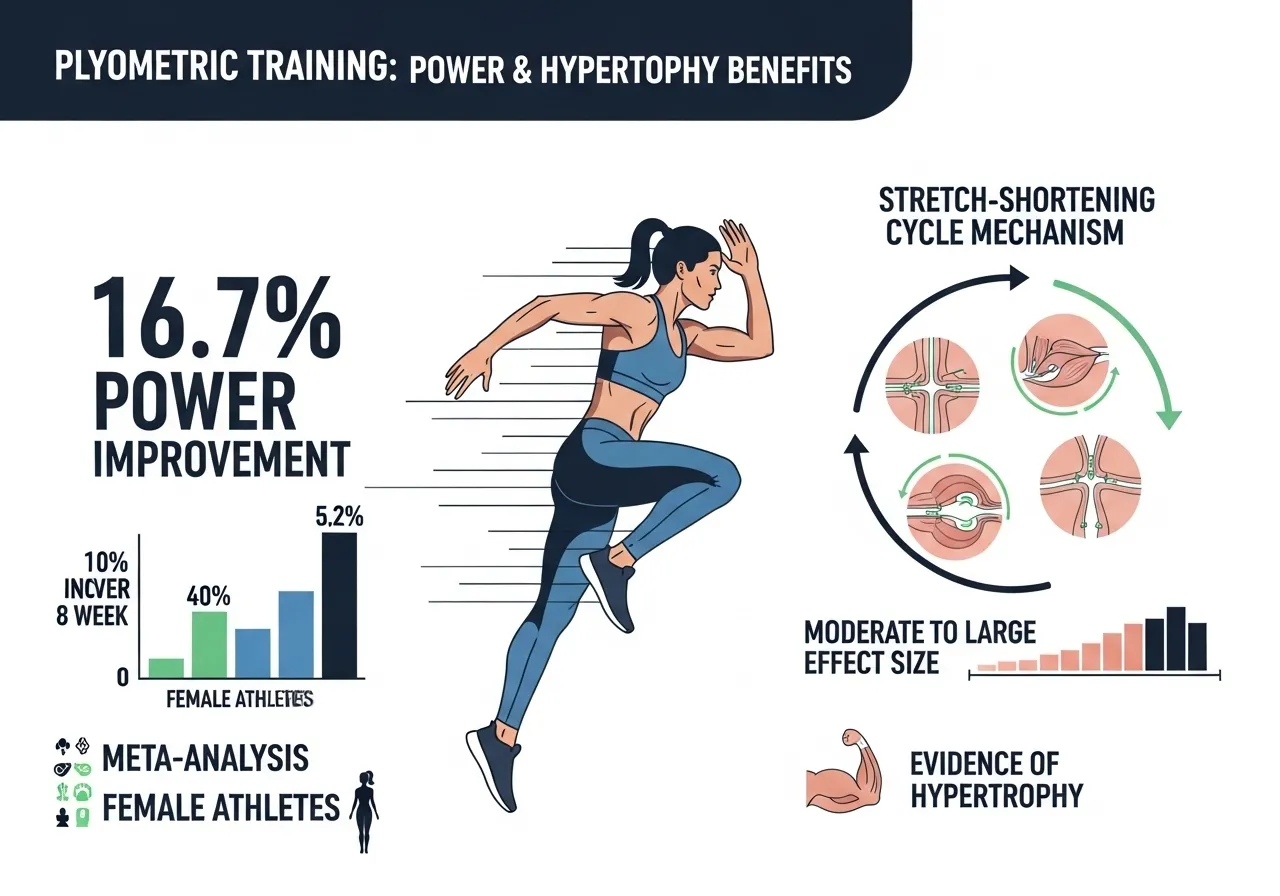
The 16.7% average power improvement over 8 weeks from low-volume plyometric training is a performance gain that would be difficult to achieve in the same timeframe through conventional strength training alone — confirming that plyometric exercise provides a distinct and additive training stimulus beyond what resistance training delivers.
Plyometric Training in Female Athletes: Vertical Jump Meta-Analysis
The Stretch-Shortening Cycle: The Mechanism of Plyometric Power
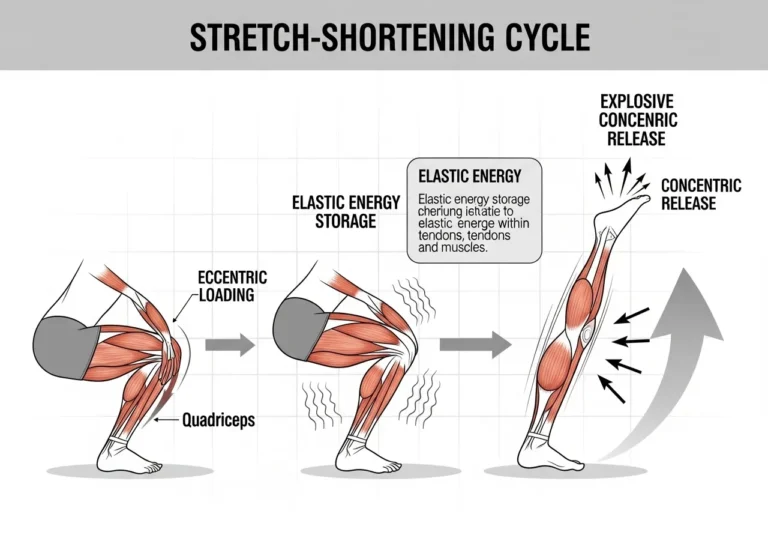
The stretch-shortening cycle (SSC) is the physiological mechanism that distinguishes plyometric power from conventional strength:
Eccentric loading phase: As the body lands or prepares for a jump, the muscles and tendons stretch rapidly — storing elastic strain energy in the tendon and activating the muscle spindle stretch reflex
Amortisation phase: The brief transition between the eccentric and concentric phases — longer amortisation times (slow transitions) dissipate the stored elastic energy as heat; shorter amortisation times preserve it for the explosive phase
Concentric power phase: The stored elastic energy is released simultaneously with the concentric muscle contraction — producing a force output that exceeds what the muscle could generate from a standing start alone
Training the SSC reduces the amortisation time and increases the stiffness of the musculotendinous unit — allowing more elastic energy to be stored and released more rapidly. This is why trained jumpers produce more power than equally strong untrained individuals: it is not a strength deficit but a power expression deficit that plyometric training specifically addresses.
Plyometric Training and Bone Density: An Underappreciated Benefit
The osteogenic (bone-building) effects of plyometric training are among the most potent available through exercise — exceeding even heavy resistance training in some populations for specific skeletal sites:
Bone responds to mechanical loading according to the peak strain magnitude and the strain rate (how rapidly the load is applied) — plyometric landing forces produce both high peak strains and extremely high strain rates that maximally stimulate osteoblast activity
Impact-based plyometric exercises produce peak ground reaction forces of 3–8× bodyweight at the ankle and hip — loading frequencies and magnitudes that stimulate bone mineral density development at exactly the sites most vulnerable to osteoporotic fracture in older adults
Research on pre-menopausal women and adolescents consistently shows that jump training and impact exercise produces superior bone density development compared to non-impact activities (swimming, cycling) and even compared to resistance training at equivalent training volumes
For young athletes particularly, the bone density gains from plyometric training during adolescence — when the skeleton’s responsiveness to loading is at its lifetime maximum — have lifelong implications for peak bone mass and osteoporosis prevention in later life
This osteogenic benefit makes plyometric training genuinely valuable for general health purposes beyond athletic performance — particularly for populations where bone density protection is a priority, such as postmenopausal women, older adults, and individuals with family histories of osteoporosis.
Rate of Force Development: Why Plyometrics Fills the Gap Between Strength and Speed
The rate of force development (RFD) — how rapidly a muscle can increase its force output from zero — is a physical quality that conventional strength training develops only indirectly:
In most athletic movements (a sprint step, a jump landing, a punch), the available time is 100–250 milliseconds — most athletic movements complete before maximal muscle force can be produced, because maximum force production requires 300–500 milliseconds of contraction time
This means that the athlete who can produce the most force in the first 100ms wins the athletic contest — even if their maximum force capacity is identical to their competitor
Plyometric training specifically develops this early-phase RFD through neural adaptations — increased motor unit recruitment rate, improved inter-muscular coordination, and enhanced stretch reflex contribution — that resistance training at typical speeds does not selectively develop
Plyometric Exercises: From Beginner to Advanced
Beginner: Bodyweight Foundations
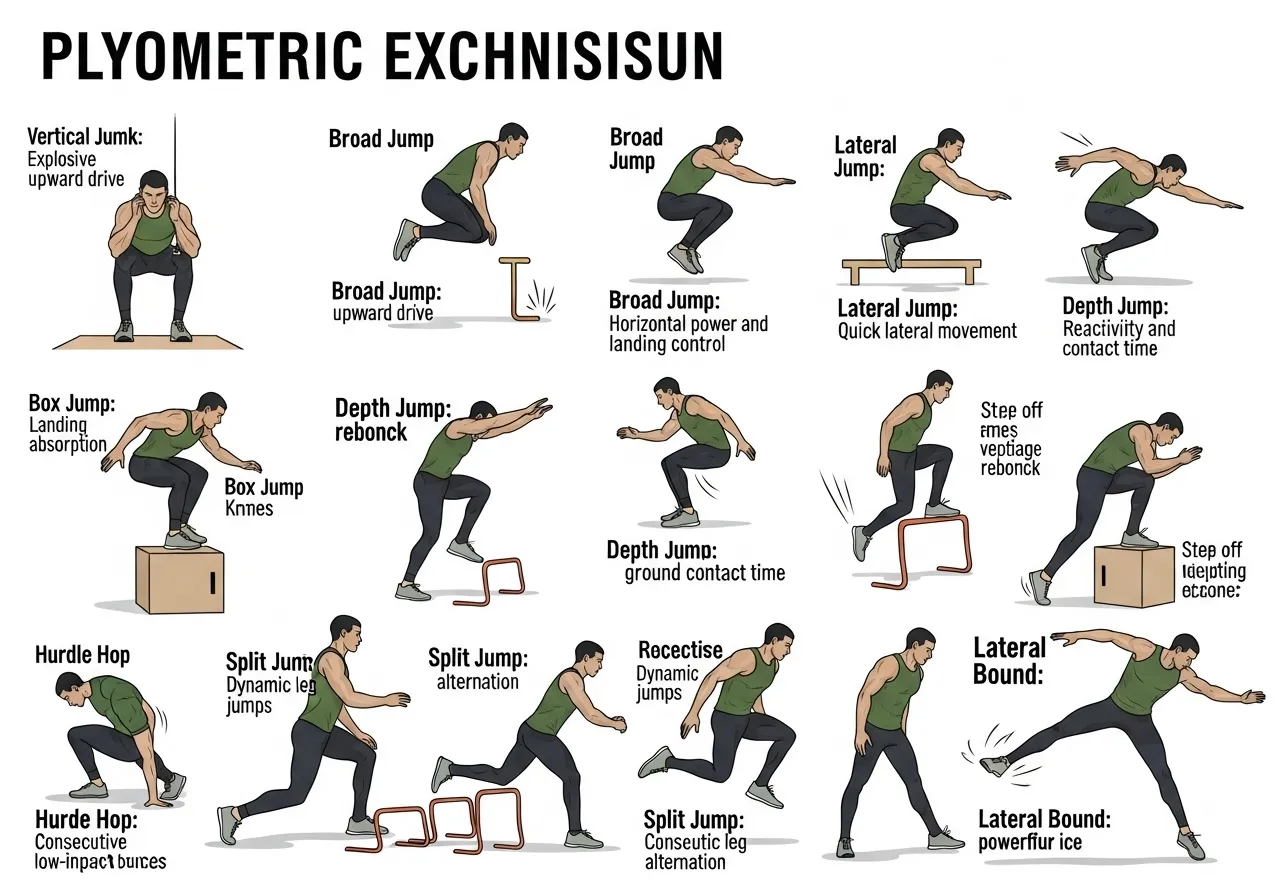
Vertical jump (standard): The foundational plyometric assessment and training exercise. Stand with feet shoulder-width apart, perform a countermovement (brief squat) and jump vertically as high as possible. Land softly with knees bent to absorb impact. The quality of the countermovement — depth, speed, and arm swing — significantly affects jump height.
Squat jump (no countermovement): Descend to a quarter squat and pause for 2 seconds before jumping — the pause eliminates the stretch-shortening cycle contribution, training concentric force production specifically. Heavier muscle activation of the quadriceps compared to the countermovement jump at equivalent flight height.
Broad jump (horizontal plyometric): Jump forward for maximum distance rather than height — developing the horizontal power production relevant to sprinting and acceleration. Land in a stable two-foot position and hold the landing for 2 seconds to develop the deceleration quality that prevents knee injuries during sport-specific landing.
Intermediate: Reactive and Directional Variations
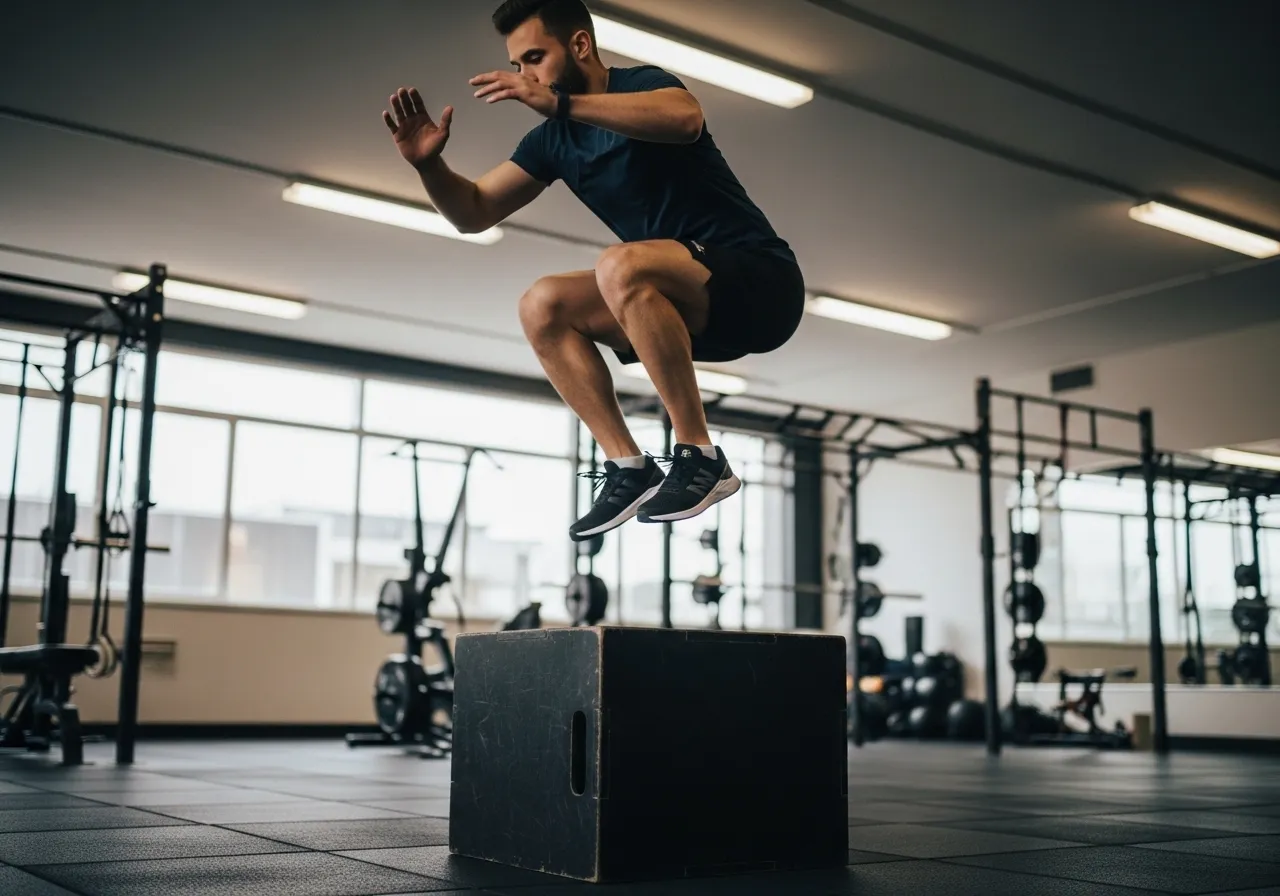
Box jump: Jump onto a stable box or platform — the primary value being the reduction of landing impact compared to equivalent-height jumps landing on the ground. Step down rather than jumping down to minimise the eccentric loading that accumulated box jump landings create. Height selection is critical: the box should challenge without compromising landing form.
Depth jump: Step off a box, land on both feet, and immediately jump as high as possible — the most demanding plyometric exercise in terms of SSC loading. The drop-land sequence creates the maximum eccentric pre-load that amplifies the subsequent jump. Box heights of 30–60 cm are appropriate; excessive height reduces jump performance by requiring too much ground contact time for absorption.
Lateral bound: A single-leg lateral jump from one foot to the other — developing the lateral power and single-leg stability relevant to court sports and cutting movements. The landing leg must absorb and redirect the momentum with controlled single-leg stability before the next bound.
Split jumps (lunge jumps): A lunge position jump, switching legs in the air to land in the opposite lunge position. Develops single-leg explosive power and requires the hip flexor and hip extensor coordination relevant to sprinting and kicking mechanics.
Advanced: Loaded and Compound Plyometrics
Weighted jump squat: A barbell or trap bar loaded to 20–60% of back squat 1RM, jumping explosively from the bottom of the squat. The added load increases the power stimulus while maintaining the speed of movement — used in complex training protocols paired with heavy squat sets.
Hurdle jumps: Consecutive two-foot jumps over a series of hurdles — developing reactive strength (the ability to rapidly absorb and reverse landing forces) across multiple successive contacts. The rhythm of hurdle jumping trains the reactive strength index (the ratio of jump height to ground contact time).
Single-leg box jump: Jumping onto a box from one leg — developing the unilateral explosive power that running and sport performance primarily requires. More demanding than bilateral box jumps and exposes left-right asymmetries that bilateral training masks.
Upper Body Plyometric Exercises
Plyometric training is not exclusively a lower body discipline — upper body plyometrics develop the explosive pressing and throwing power relevant to combat sports, throwing athletes, and functional fitness:
Plyometric push-up: Pushing explosively from the bottom of the push-up with enough force that the hands leave the floor — the upper body equivalent of the squat jump. Develops pectoral and triceps explosive power with the same SSC mechanism as lower body plyometrics.
Medicine ball chest pass: Catching a medicine ball training and immediately throwing it against a wall or to a partner — the catch provides the eccentric pre-load, and the throw completes the SSC cycle. Specifically develops the explosive horizontal pressing power relevant to push, shove, and throwing movements.
Overhead medicine ball slam: Lifting a medicine ball overhead and slamming it to the floor with maximum force — training the lat, core, and hip flexor explosive power used in throwing, spiking, and wrestling takedown finishing. The deceleration component trains the posterior chain eccentrically.
Is Plyometric Training Safe for Beginners?
The Prerequisites Before Beginning Plyometrics
Plyometric training produces high instantaneous forces on joints and connective tissues — the landing forces from box jumps and depth jumps can reach 3–8 times bodyweight in trained individuals. The connective tissue preparation required before these forces are applied is the primary safety consideration:
Baseline strength: Most authorities recommend that beginners establish a foundation of lower body strength before beginning intensive plyometric training — typically the ability to squat 1.5× bodyweight before beginning depth jumps and advanced reactive plyometrics
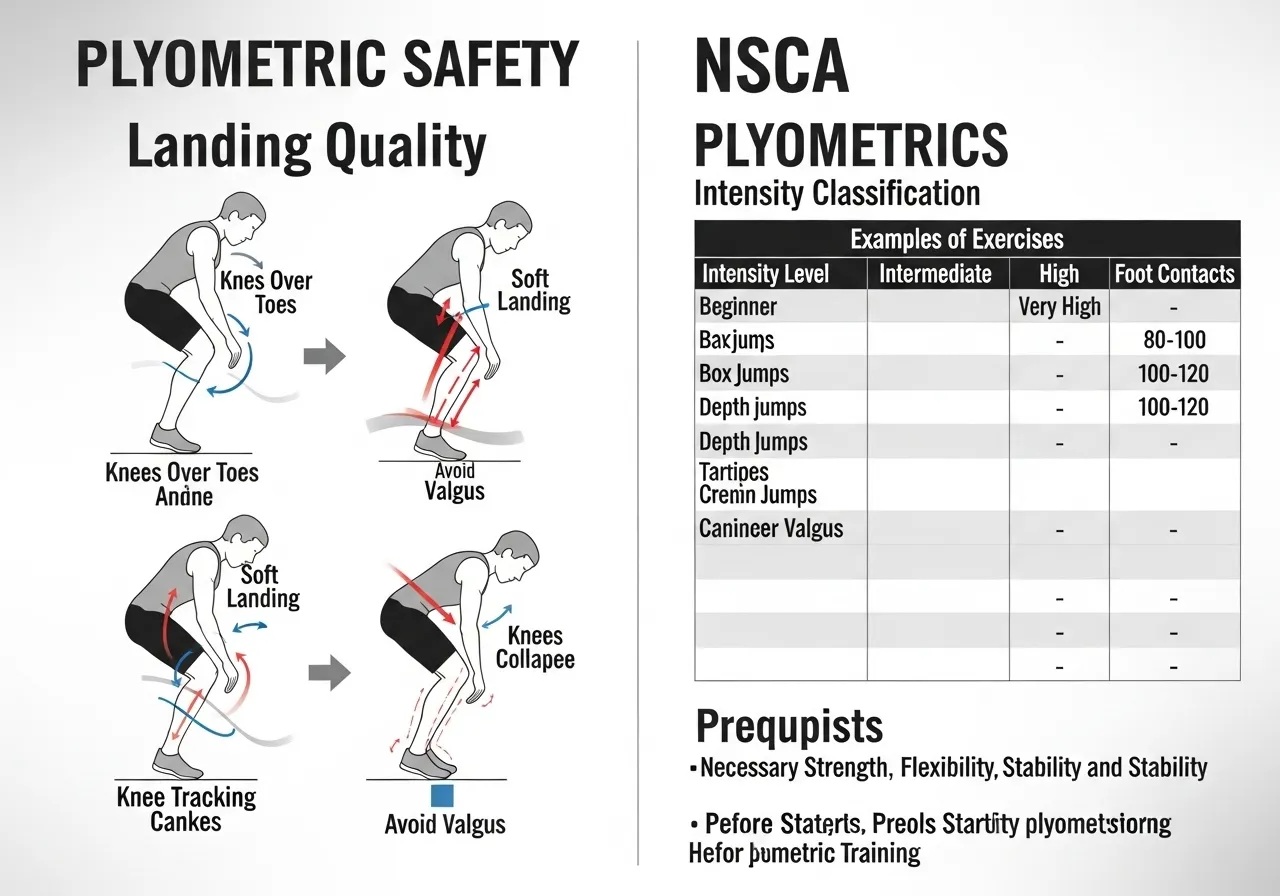
Landing mechanics: The ability to land from a bodyweight squat jump with knees tracking over the toes, no inward knee collapse, and a soft knee bend that absorbs force — is the non-negotiable safety prerequisite for plyometric training. Poor landing mechanics under bodyweight become dangerous under the amplified forces of loaded and reactive plyometrics.
Connective tissue preparation: Gradual progression from low-intensity (bodyweight vertical jumps) to high-intensity (depth jumps) plyometrics over 4–8 weeks allows the tendons, ligaments, and articular cartilage to adapt before the highest-intensity loading is applied
The NSCA Plyometric Classification System
The National Strength and Conditioning Association classifies plyometric exercises by intensity to guide programming progression:
Intensity Level
Examples
Foot Contacts/Session
Prerequisites
Low
Squat jump, broad jump, lateral jump
80–100
Basic movement quality
Medium
Box jump, split jump, hurdle hop
100–150
Beginner plyometrics mastered
High
Depth jump, reactive bounding
120–150
1.5× BW squat, soft landing
Very high
Weighted plyometrics, reactive hurdles
100–120
Advanced athlete
Surface Selection and Landing Mechanics
The training surface significantly affects the safety and quality of plyometric training:
Grass or rubber flooring: The most appropriate surfaces for high-intensity plyometrics — the slight give absorbs peak landing forces and reduces joint stress compared to concrete or hardwood
Concrete: The hardest common surface — amplifies peak joint loading compared to softer surfaces. Acceptable for low-volume, low-intensity plyometrics but should be avoided for depth jumps and reactive bounding where landing forces are highest
Sand: Reduces peak landing forces further than grass — useful for rehabilitation contexts or introductory plyometric training where impact reduction is the priority
Footwear selection also matters: shoes with adequate lateral stability (to prevent ankle inversion on bounding), sufficient cushioning (to reduce peak landing forces), and non-compressible soles (to ensure full ground force transmission during the reactive phase) are the key performance and safety criteria for plyometric training footwear.
Plyometric Training Volume: Why More Is Not Always Better
Unlike resistance training where volume (sets × reps) is the primary driver of adaptation, plyometric training quality — specifically the reactivity and intent of each contact — determines training outcomes more than raw volume:
A depth jump performed with minimal ground contact time and maximal intent produces a fundamentally different neural stimulus than the same movement performed slowly and without urgency
Fatigued plyometrics — continuing sets when landing quality, contact time, or jump height decreases — trains poor movement patterns rather than developing reactive strength
Most authorities recommend stopping a plyometric set when performance measurably decreases — typically when jump height drops more than 10% from the set average, or when landing mechanics visibly deteriorate
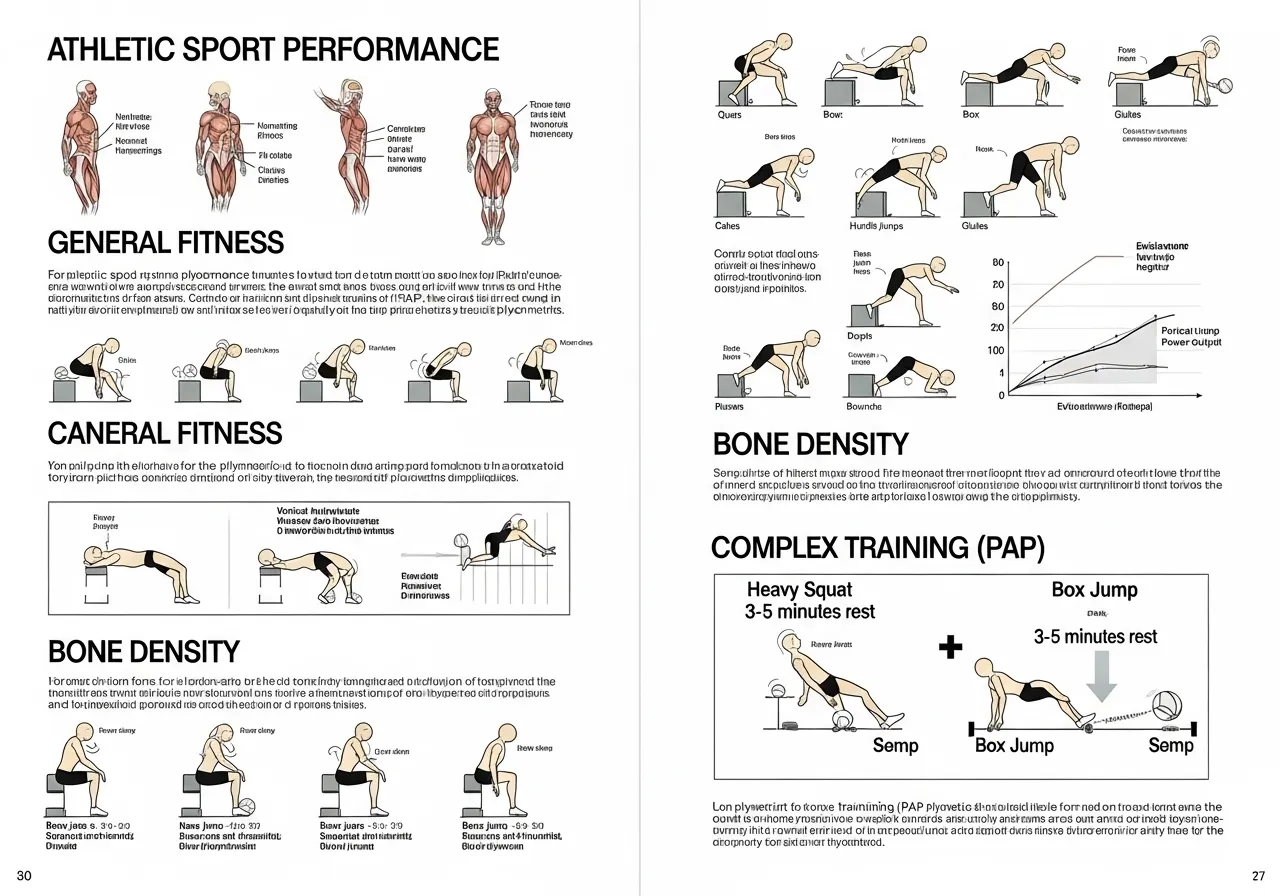
Plyometric Training for Athletic Performance vs. General Fitness
Athletic Performance Applications
Plyometric training transfers most directly to sport performance through its development of explosive power and reactive strength:
Basketball and volleyball: Vertical jump height is directly tested in competition — plyometric training is among the most evidence-supported methods for jump height improvement across these sports
Sprinting and field sports: Horizontal plyometrics (bounds, broad jumps, hurdle hops) develop the horizontal force production that determines sprint acceleration — particularly in the first 10–15 metres where horizontal force application rather than top speed is the limiting factor
Martial arts and combat sports: The reactive speed and power of strike delivery and takedown initiation is directly developed by plyometric training — research confirms significant improvements in power output for combat athletes with plyometric interventions
Tennis and racket sports: The rapid direction changes, split-step reactivity, and overhead power that distinguish elite racket sport performance are all developed by appropriate plyometric programming
General Fitness Applications
Beyond athletic performance, plyometric training offers general fitness benefits that make it valuable even for non-athletes:
Caloric expenditure: The high-intensity, whole-body nature of plyometric exercises produces significant caloric expenditure — a 20-minute plyometric session at moderate-high intensity can burn comparable calories to running at the same duration
Bone density: The high impact forces of plyometric landing provide the most potent osteogenic (bone-building) stimulus available in exercise — particularly at the hip and spine where osteoporosis risk is highest
Functional movement quality: Jump training develops the landing mechanics, single-leg stability, and reactive balance that reduce everyday injury risk from falls and unexpected loading situations
Complex Training: Combining Strength and Plyometrics
Complex training — pairing a heavy strength exercise with a biomechanically similar plyometric movement in the same session — takes advantage of post-activation potentiation (PAP), where heavy loading temporarily increases the neural drive available to the muscles:
Heavy barbell squat followed by immediate box jumps (3–8 minutes rest between the strength set and the plyometric) — the residual neural activation from the heavy squat amplifies the explosive quality of the subsequent jumps
Heavy Romanian deadlift followed by broad jumps — the posterior chain activation from heavy hip hinge loading potentiates hip extension power in the subsequent bounding
Research consistently documents improved plyometric performance following appropriately timed heavy strength sets — making complex training one of the most efficient methods for developing both strength and power simultaneously
Plyometric Training for Older Adults: Modified Applications
The bone density and functional power benefits of plyometric training are particularly valuable for older adults — and appropriately modified plyometric training is both safe and effective for this population:
Research on modified plyometric training in adults over 50 shows significant improvements in functional power, balance, and bone density — addressing the muscle power loss (dynapenia) that declines faster than muscle mass with aging and is more strongly predictive of fall risk
Appropriate modifications: replacing depth jumps with step-down exercises; using pool plyometrics (water buoyancy reduces landing forces while maintaining explosive movement patterns); focusing on low-height bilateral jumps with maximal intent rather than maximising jump height
The reactive balance and landing quality training from modified plyometrics provides direct fall prevention benefits — a major public health priority in populations over 65 where falls are the leading cause of injury-related hospitalisation
Plyometrics in the Weekly Training Schedule
Positioning plyometric sessions within the weekly training schedule requires consideration of the recovery interactions with other training modalities:
Plyometrics are best performed before heavy strength training in the same session — fatigued lower body muscles produce lower-quality reactive contractions, and the neural demands of plyometrics should be met with fresh neuromuscular status
If performed in a separate session, plyometrics should ideally follow a rest day rather than following a heavy leg training session — the connective tissue recovery demand of plyometric loading compounds with the muscle damage from heavy resistance training
Upper-body training days are ideal “rest days” between plyometric sessions — providing the cardiovascular and metabolic active recovery benefits of training without adding to the lower limb connective tissue recovery load
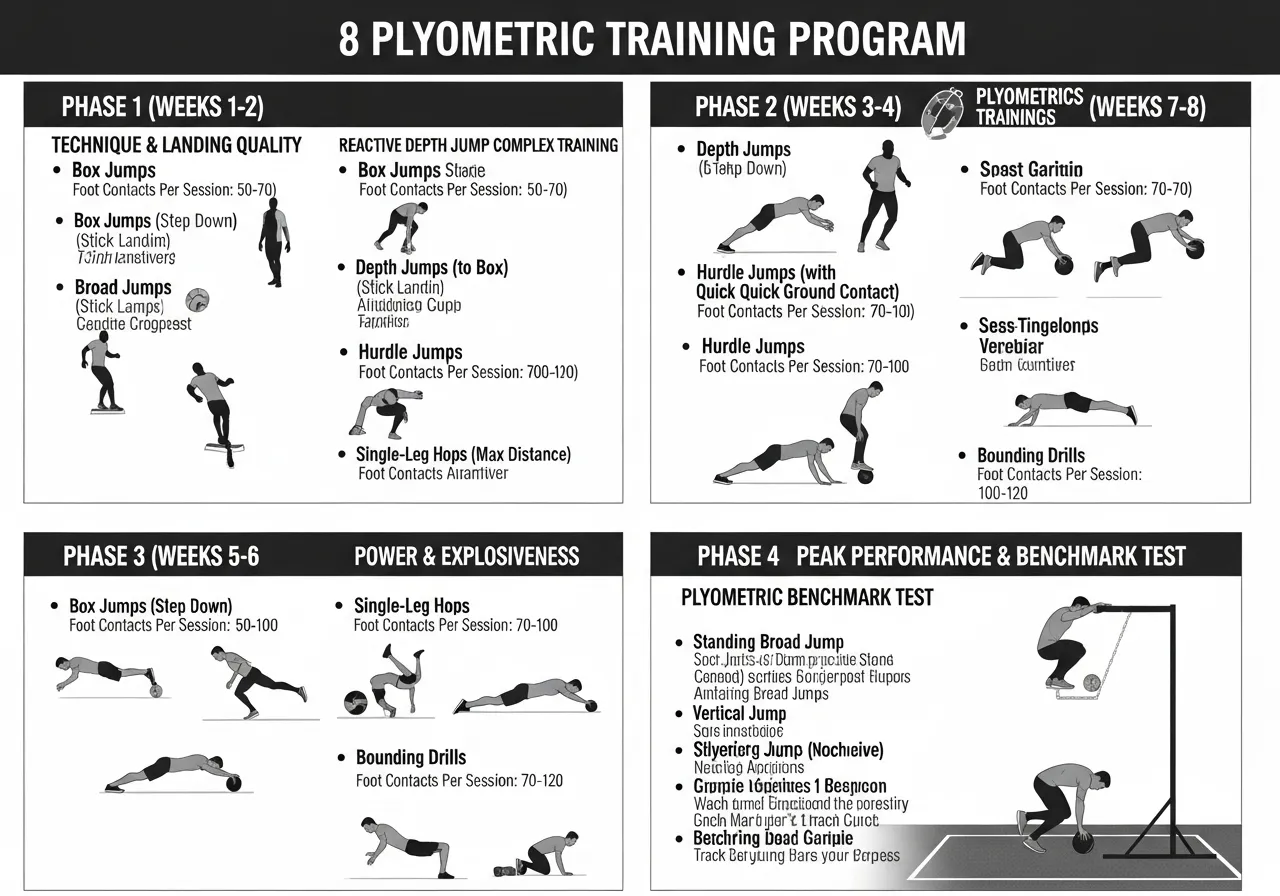
8-Week Plyometric Training Program
Program Design
Three sessions per week, 20–35 minutes each. Sessions are not performed on consecutive days — at least 48 hours of recovery between plyometric sessions is essential to prevent overuse injury from cumulative impact loading. Total foot contacts per session increase progressively across the program.
Phase 1 — Weeks 1–2 (Foundation, 80–100 contacts/session):
Vertical jump: 3 × 8 (pause 2 sec between each; focus on landing quality)
Squat jump (no countermovement): 3 × 6
Broad jump: 3 × 5
Lateral jump (bilateral): 3 × 6 each side
Landing quality drill: 3 × 10 drops from 10 cm platform
Focus: Soft landings, knee tracking, no valgus collapse
Phase 3 — Weeks 5–6 (Intensity, 120–140 contacts/session):
Depth jump (30–40 cm box): 3 × 6 (minimal ground contact time)
Box jump (55–65 cm): 3 × 5
Hurdle hop (5 hurdles): 3 × 5
Lateral bound (reactive): 3 × 6 each side
Complex: Heavy squat × 3 → rest 5 min → box jump × 5 (2 rounds)
Phase 4 — Weeks 7–8 (Peak, 120–150 contacts/session):
Reactive depth jump (40 cm): 4 × 5
Single-leg box jump (30–40 cm): 3 × 4 each side
Hurdle hop (10 hurdles, maximum speed): 3 × 10
Bounding series (5 contacts): 3 × 5
Complex: Trap bar deadlift × 3 → rest 5 min → broad jump × 4 (2 rounds)
Benchmark test (last session): vertical jump height, broad jump distance, 10-metre sprint
Tracking Progress in the Plyometric Program
Quantifying plyometric improvement requires different metrics than resistance training — load on the bar is not the primary progress indicator:
Vertical jump height: The standard plyometric performance benchmark — measured consistently using a Vertec, force plate, or contact mat. A reliable, standardised test that directly reflects the power development the program aims to produce.
Broad jump distance: Horizontal power expression — complements vertical jump by measuring the direction-specific power relevant to sprinting and deceleration
Reactive strength index (RSI): Jump height divided by ground contact time — the most sophisticated single metric for plyometric quality, quantifying how much height is produced relative to the ground contact time invested. Higher RSI reflects improved reactive strength rather than simply higher absolute jump
Sprint time (10m and 30m): Transfer of plyometric training to the speed quality most directly relevant to field sport performance
Testing at the beginning and end of each 2-week phase provides sufficient benchmark data to confirm adaptation is occurring and guide the intensity progression from phase to phase — preventing the under-loading that leaves adaptive potential untapped and the over-loading that increases injury risk.
Plyometric Training Injury Prevention and Recovery
The Most Common Plyometric Injuries and How to Avoid Them
The high-impact nature of plyometric training creates specific injury risks that appropriate technique and programming management significantly reduces:
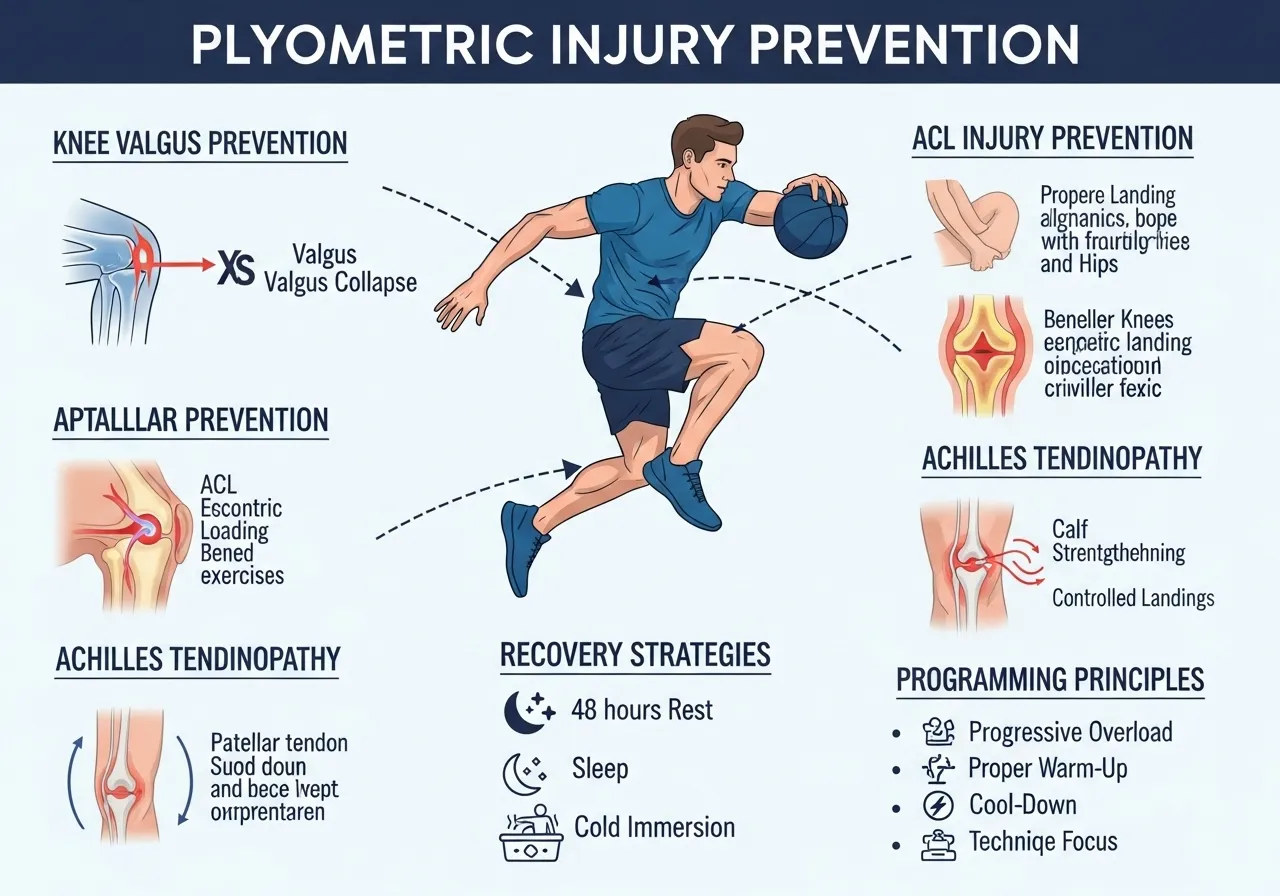
Knee valgus on landing (the most common and preventable issue): The knees collapsing inward on landing dramatically increases the valgus stress on the ACL and medial knee structures. Prevention: conscious knee-over-toe cuing during all landing work; pre-plyometric gluteus medius and TFL activation; single-leg landing quality drills before progressing to reactive plyometrics.
Patellar tendinopathy: Repeated high-load tendon loading without adequate recovery produces the cumulative microtrauma that becomes patellar tendinopathy (“jumper’s knee”). Prevention: progressive intensity increase rather than jumping straight to high-intensity plyometrics; 48+ hours between plyometric sessions; eccentric quadriceps strength development alongside plyometric training.
Achilles tendinopathy: The gastrocnemius and Achilles tendon absorb the highest forces during landing — rapid increases in plyometric volume without adequate tendon adaptation time are the primary cause. Prevention: progressive loading over 4–6 weeks before high-intensity reactive plyometrics; specific eccentric calf training alongside plyometrics.
Recovery Between Plyometric Sessions
Plyometric training creates a unique recovery demand from conventional strength training — the connective tissue and reactive neuromuscular systems require longer recovery than the muscles themselves:
48–72 hours minimum between plyometric sessions — the reactive strength qualities that plyometrics develop require full neural recovery between sessions
Sleep quality significantly affects reactive strength expression — sleep deprivation reduces jump performance more consistently than it reduces conventional strength performance, making sleep quality a higher-priority recovery variable for plyometric athletes
Cold water immersion immediately following high-intensity plyometric sessions may reduce the delayed onset muscle soreness and connective tissue inflammation that limits training quality in subsequent sessions
Warm-Up for Plyometric Training
The plyometric warm-up must specifically prepare the neuromuscular system for explosive work — a standard cardiovascular warm-up alone is insufficient:
5 min light cardiovascular activity to raise core temperature and tissue extensibility
Dynamic stretching: leg swings, hip circles, ankle circles — 10 reps each direction for each joint
Activation drills: glute bridge, clamshell, lateral band walk — activating the hip abductors and stabilisers that must work at the landing moment
Sub-maximal jumps: 2 × 5 vertical jumps at 60% effort, 2 × 5 at 80% — progressively loading the reactive system before full-intensity work
The total warm-up takes 12–15 minutes but significantly reduces injury risk and improves performance in the working sets — particularly for the first set of depth jumps or reactive bounding where the SSC quality is highest at optimal tissue temperature.
Completing this warm-up protocol consistently — rather than treating it as optional on days when time is limited — is one of the highest-leverage injury prevention habits available to the plyometric trainee, given that most plyometric injuries occur in the early sets of sessions where tissue temperature and activation are suboptimal.
Plyometric Training FAQ
Do I need to be able to squat a certain weight before doing plyometrics?
For beginner plyometrics — bodyweight jump variations, low-intensity bounds, and basic box jumps — there is no minimum strength standard. The ability to perform a technically clean bodyweight squat, controlled landing, and soft single-leg balance is more relevant than any load-based strength metric.
For advanced plyometrics — depth jumps from significant heights, loaded plyometrics, and reactive bounding — a reasonable baseline strength provides the connective tissue resilience and landing force absorption quality that makes these exercises safe. The commonly cited 1.5× bodyweight back squat recommendation for depth jumps reflects the landing force demands (which can exceed 5× bodyweight) rather than the jumping forces.
Can plyometric training replace strength training?
For power development specifically, plyometric training cannot fully replace heavy strength training. Research on the dose-response of power development consistently shows that the combination of strength training and plyometric training produces superior power improvements compared to either approach alone — the strength provides the base force capacity that plyometrics learn to express rapidly.
For general fitness goals, plyometric training provides a more complete stimulus than many people assume — developing power, caloric expenditure, bone density, and functional movement quality in a time-efficient format. As a primary training modality for non-athletes, plyometrics combined with bodyweight strength training can produce comprehensive fitness development.
How many plyometric sessions per week is appropriate?
Two to three sessions per week with 48+ hours between each is the standard recommendation for most training contexts. Three sessions per week is appropriate in the build-up to competitive season or when rapid power development is the primary goal. Two sessions per week is the preferred maintenance frequency during high-volume strength training phases where plyometric recovery competes with strength training recovery.
✅ Key Takeaways
8 weeks of plyometric training increases average power by 16.7% and peak power by 8.2% — through neuromuscular adaptation, not structural muscle change
Plyometric training produces moderate-to-large effects on vertical jump performance, with durations over 10 weeks producing large effect sizes in female athletes
The stretch-shortening cycle is the mechanism — short amortisation times allow elastic tendon energy to amplify concentric power output beyond what muscles alone can generate
Landing quality (no knee valgus, soft absorption) is the non-negotiable safety prerequisite that must be established before progressing to reactive and loaded plyometrics
Complex training (heavy strength + plyometric in same session) produces superior power development through post-activation potentiation compared to either method alone
These metrics collectively provide a complete picture of the plyometric adaptations occurring across the program — ensuring that the neural, structural, and transfer-to-sport benefits of plyometric training are all developing as expected, and providing the objective data needed to justify progression to higher-intensity exercises in subsequent training phases.
Every squat you perform at 100 kg involves both legs. One leg may contribute 55 kg worth of force. The other may contribute 45 kg. The bar goes up. The asymmetry is invisible. This hidden asymmetry compounds over months and years of bilateral-only training. The dominant leg becomes increasingly stronger relative to the non-dominant leg….
Walk into any gym and you will find cable stacks, pull-up bars, and Smith machines. Gymnastic rings are the one piece of equipment almost nobody uses. They also happen to be the one piece that trains the quality every other tool ignores: three-dimensional shoulder stability under dynamic load. Rings hang freely. They rotate, swing, and…
⚠️ Health & Fitness DisclaimerThis article is for general educational purposes only and does not replace professional medical advice. If you have any shoulder, wrist, or lower back conditions, please consult a qualified healthcare professional before beginning suspension training. Suspension training — using adjustable straps anchored overhead to leverage bodyweight as resistance — offers a…
⚠️ Health & Fitness Disclaimer This article is for general educational purposes only and does not replace professional medical advice. If you have any joint, tendon, or cardiovascular condition, please consult a qualified healthcare professional before beginning any isometric training programme. Isometric training — contracting a muscle without any change in joint angle or muscle…
Isometric training — holding a static contraction without joint movement — is one of the oldest forms of resistance exercise and one of the most under-appreciated in modern strength and conditioning. Its reputation as a limited, rehabilitation-only tool until two decades of research overturned that view that have established it as a genuinely effective intervention…
⚠️ Fitness Disclaimer: The information in this article is for general educational purposes only and does not constitute professional fitness or medical advice. Always consult a qualified healthcare professional before starting any new exercise program, especially if you have existing injuries or joint conditions. Why Strength Alone Will Never Make You Truly Explosive I squatted…