⚠️ Health & Fitness Disclaimer This article is for general educational purposes only and does not replace professional medical advice. If you have any spinal, pelvic, or chronic pain conditions, please consult a qualified healthcare professional before beginning a Pilates program.
Pilates occupies a unique position in the fitness landscape — simultaneously a rehabilitation tool used by physiotherapists, a performance training method used by elite athletes, and a general fitness practice accessible to older adults and beginners. Its distinguishing characteristic is the emphasis on precise movement quality and deep muscle activation rather than the load, speed, or volume metrics that dominate conventional resistance training. (Related: foam rolling guide) (Related: stretching guide)
Joseph Pilates developed the method in the early twentieth century under the name “Contrology” — emphasising the mind’s control of the body’s muscles, particularly those of the core, as the foundation of all movement. The modern research literature has since quantified many of the mechanisms he described intuitively: the deep core muscles he prioritised are indeed the spinal stabilisers that modern neuroscience confirms are critical for spinal health and movement quality.
This guide covers the research on Pilates core muscle activation and its therapeutic applications, explains the foundational exercises and principles, and provides an 8-week program.
Pilates Research: Core Muscle Activation and Therapeutic Benefits
Systematic Review: Pilates and Deep Core Muscle Activation
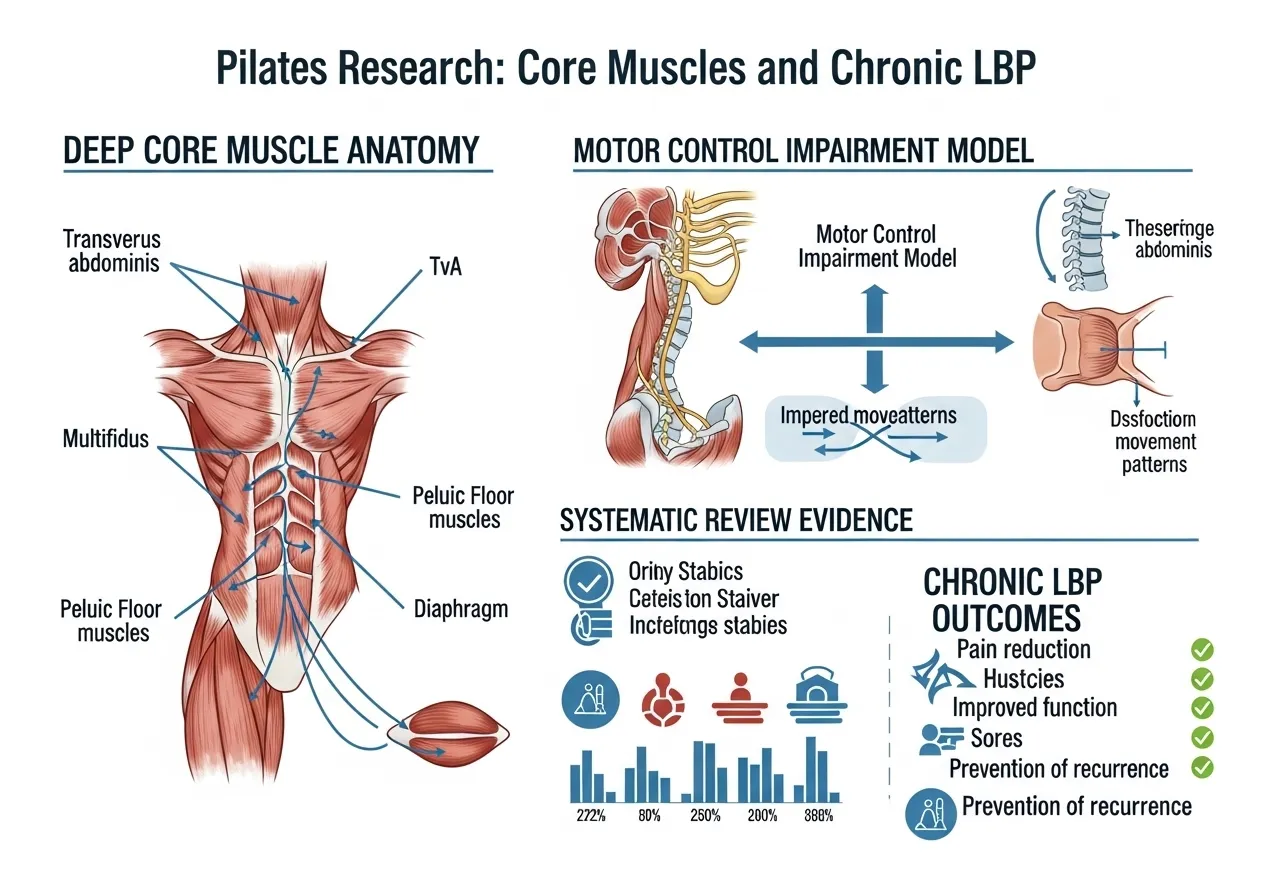
The motor control impairment model underlying this research is important: in people with chronic lower back pain, the deep stabilising muscles show delayed activation onset and reduced recruitment compared to pain-free controls — and the superficial muscles overactivate to compensate. Pilates specifically targets this deep muscle recruitment quality rather than superficial muscle strength — making it fundamentally different from conventional abdominal training that emphasises the rectus abdominis rather than the transversus abdominis and multifidus.
Deep Core Training: The Transversus Abdominis and Multifidus
The Deep Core Anatomy: Why Pilates Targets These Muscles Specifically
The four muscles that Pilates emphasises form a pressure canister around the lumbar spine:
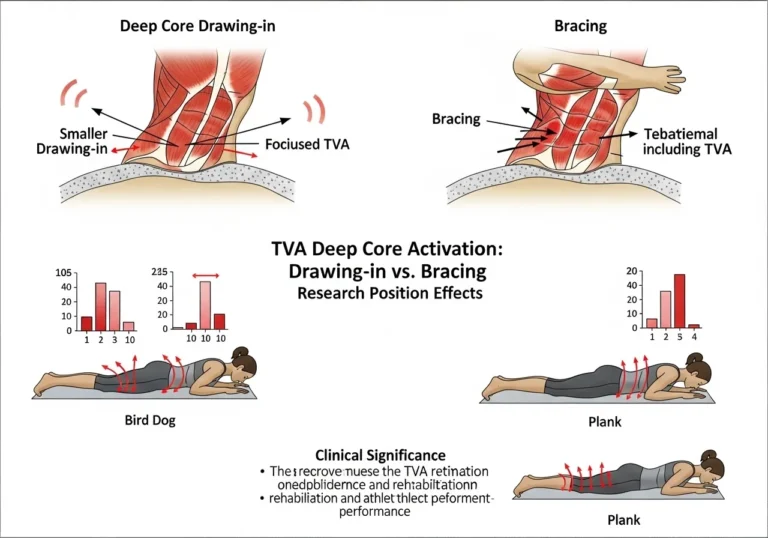
Transversus abdominis (TvA): The deepest abdominal muscle — wraps horizontally around the trunk like a corset. Unlike the rectus abdominis (the “six-pack” muscle), the TvA does not produce movement but creates intra-abdominal pressure that stiffens the lumbar spine. It activates in advance of arm and leg movements in pain-free individuals — the anticipatory stabilisation that is impaired in chronic lower back pain.
Lumbar multifidus: A deep, segmental spinal muscle — spans 2–4 vertebrae and provides fine-tuned vertebral segment stability. Atrophies rapidly with disuse and pain and recovers slowly — often remaining reduced even after acute pain resolves, which is proposed as a mechanism for chronic pain recurrence.
Pelvic floor: The muscular floor of the pelvis — co-activates with the TvA and diaphragm as part of the core pressure system. Pelvic floor dysfunction is associated with lumbar instability and vice versa.
Diaphragm: The primary breathing muscle that doubles as a core stabiliser — its dome descends on inhalation, creating intra-abdominal pressure alongside the TvA and pelvic floor. Optimal breathing mechanics are therefore a component of core stability training guide.
Pilates and Posture: The Structural Case
Modern sedentary work habits — prolonged sitting, forward head posture from screen use, reduced thoracic mobility from desk positions — create predictable structural adaptations that Pilates directly addresses:
Anterior pelvic tilt (pelvis tilting forward, increasing lumbar curvature) from prolonged sitting and hip flexor shortening is directly addressed by Pilates exercises that develop posterior pelvic tilt control and hip flexor lengthening
Upper crossed syndrome (forward head, rounded shoulders, thoracic kyphosis) from screen work is addressed by Pilates exercises that develop thoracic extension, scapular retraction, and cervical alignment awareness
The postural alignment correction that Pilates develops through movement training may produce more lasting improvements than passive interventions (massage, manipulation) because it addresses the motor patterns and muscle imbalances that create the poor posture rather than simply releasing the symptoms temporarily
The relationship between Pilates practice and posture improvement is one of the most commonly reported outcomes in both research studies and clinical practice — and mechanistically plausible given Pilates’ direct targeting of the deep spinal stabilisers and the alignment cues embedded in every exercise.
The emerging research on Pilates and cognitive function adds a further dimension — regular Pilates practice has been associated with improved executive function and attention in older adults, suggesting the dual physical-mental demands of Pilates provide cognitive stimulation beyond conventional exercise modalities that require less active mental engagement during performance.
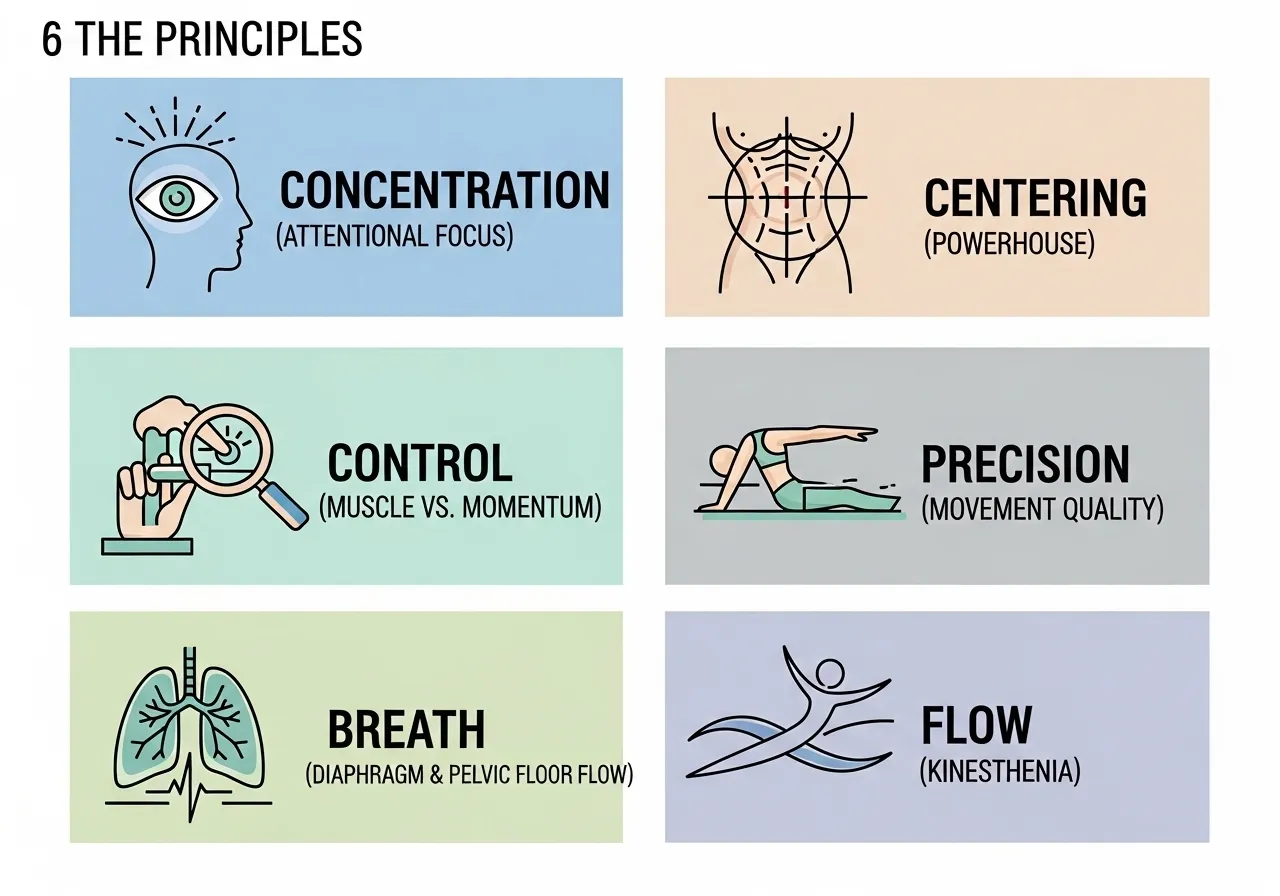
The Six Pilates Principles: Foundation of All Exercises
Concentration
Every Pilates exercise requires full mental attention to the movement being performed — where the body is in space, which muscles are activating, and whether the movement quality matches the intended pattern. This focused attention is not merely motivational but functionally important: neuromuscular research shows that directing conscious attention to a specific muscle during exercise increases its EMG activation — a phenomenon known as “attentional focus” that Pilates formalises as a core practice principle.
Control
Movements are performed with complete muscular control throughout every stage — not through momentum, gravity assistance, or compensation patterns. Control is deliberately more demanding than momentum-assisted movement and explains why Pilates exercises performed correctly are more challenging than their simplicity suggests.
Centering
All movement originates from the “powerhouse” — Joseph Pilates’ term for the deep core system encompassing the TvA, multifidus, pelvic floor, and diaphragm. Every arm and leg movement in Pilates is initiated with the core musculature pre-activated, replicating the anticipatory stabilisation pattern that pain-free, well-coordinated movement naturally produces.
Precision
Each exercise has a specific intended movement quality — exact limb positioning, specific spinal curves to maintain or avoid, precise breathing patterns. Precision in Pilates is the mechanism by which correct muscle recruitment is achieved and by which incorrect compensation patterns are avoided.
Breath
Breathing in Pilates is active and purposeful rather than unconscious — typically exhaling during the most demanding phase of each exercise. The exhale activates the pelvic floor and TvA reflexively, providing automatic core support at the moment of greatest mechanical demand. Pilates breathing also facilitates thoracic cage expansion and diaphragmatic descent, connecting breathing mechanics to core stability in ways that conventional exercise rarely addresses.
Flow
Movements transition smoothly between positions with efficiency and grace rather than stopping and restarting. The fluidity of Pilates movement develops kinesthetic awareness (proprioception — the body’s awareness of its position in space) that translates to improved movement quality in all physical activities.
Breathing in Pilates: The Lateral Thoracic Technique
Pilates uses a specific breathing technique — lateral thoracic breathing or “rib cage breathing” — that differs from the diaphragmatic breathing common in yoga guide and meditation traditions:
Lateral thoracic breathing expands the rib cage sideways and backward on inhalation rather than allowing the abdomen to expand forward — maintaining the abdominal wall engagement while still achieving full respiratory volume
This technique allows the TvA and pelvic floor to remain engaged while breathing normally — the critical skill that enables continuous core activation throughout exercises rather than releasing the core with each inhale
Developing this breathing pattern typically takes several sessions and is the primary learning challenge for beginners — the habitual abdominal expansion on inhale must be consciously modified until the new pattern becomes automatic
The quality of attention brought to each exercise — not merely the physical execution — determines whether the deep muscles are genuinely training or whether the movement is being performed by the more accessible superficial muscles instead, making the concentration principle the most important and most easily overlooked of all six foundational principles. This progressive challenge across all dimensions simultaneously — longer levers, reduced support, increased speed, and greater movement complexity — means Pilates practitioners continue to find genuine challenge and continued improvement for years after beginning, unlike exercise modalities where adaptation plateaus more quickly.
Is Pilates Effective for Lower Back Pain?
The Evidence for Pilates in Lower Back Pain Management
Lower back pain is the single most common musculoskeletal condition worldwide and the condition for which Pilates has the most research support:
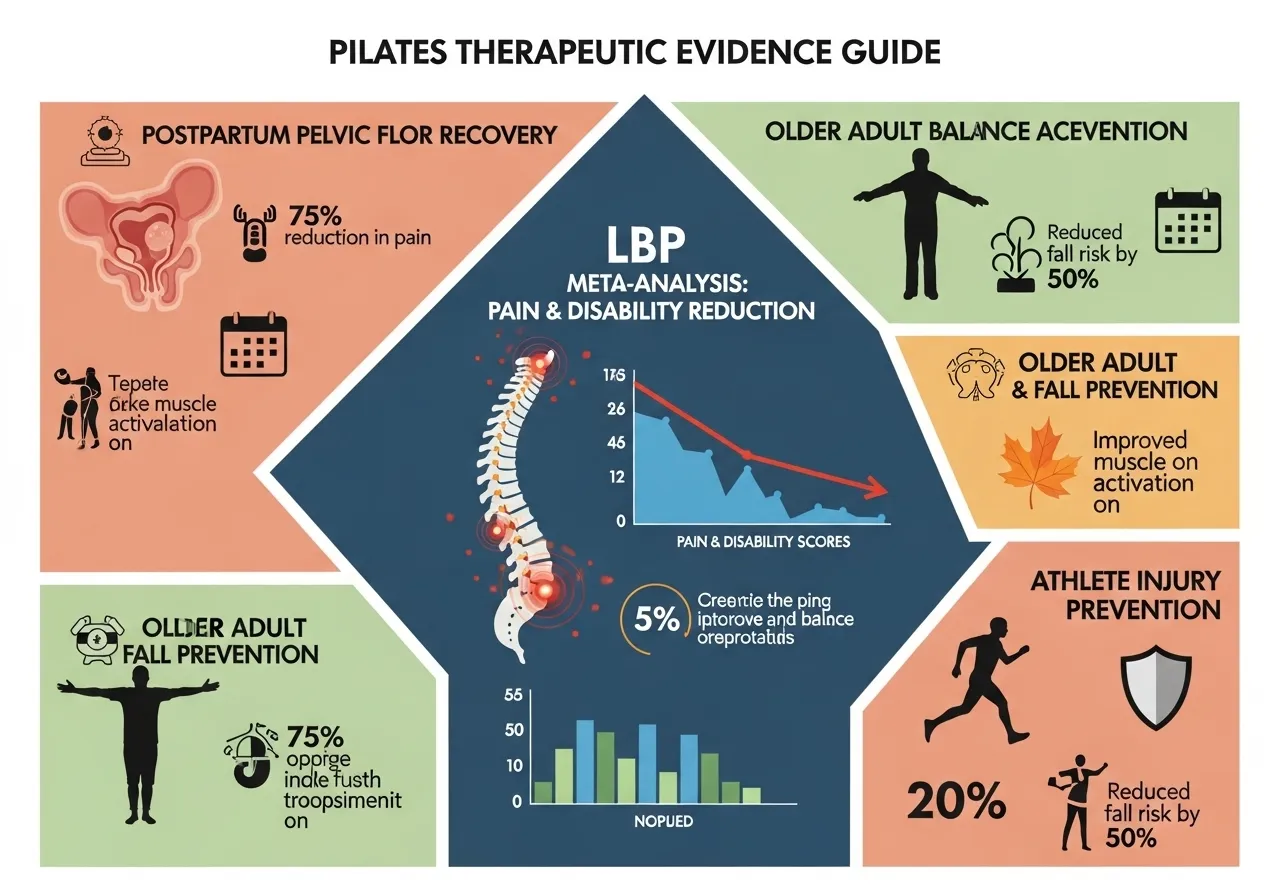
Meta-analyses consistently show that Pilates produces significant reductions in pain intensity and disability scores in people with chronic lower back pain — with effect sizes comparable to other evidence-based physical therapies
The specific mechanism — restoration of deep muscle motor control rather than strength alone — may explain why Pilates shows lasting benefits beyond the treatment period in some studies, unlike passive treatments that address pain without addressing the underlying motor control deficit
Pilates is now included in clinical practice guidelines for chronic lower back pain management in several countries — positioned as an active exercise approach alongside other evidence-based physical therapies
Beyond Lower Back Pain: Other Clinical Applications
Pilates research has extended beyond lower back pain to other populations:
Postpartum recovery: The pelvic floor and deep core work in Pilates is specifically relevant to the muscle inhibition and laxity that follows pregnancy and childbirth — with several studies showing improvements in pelvic floor function and diastasis recti (abdominal separation) with specific Pilates protocols
Older adults: Research shows Pilates improves balance training guide, functional mobility, and quality of life in older adults — with the combination of body awareness, balance challenge, and core strength development producing functional benefits relevant to fall prevention
Athletes: Pilates is increasingly used in elite sport for injury prevention, movement quality development, and rehabilitation from sports injuries — the focus on single-leg stability, rotational control, and hip-spine coordination addressing deficits common in athletes
Limitations of Current Evidence
The Pilates research literature has acknowledged methodological limitations that should temper interpretation:
Significant heterogeneity in Pilates protocols across studies — comparing mat versus reformer, group versus individual, different session frequencies and durations — makes direct comparisons difficult
Blinding of participants is impossible in exercise research — placebo effects cannot be fully separated from specific Pilates effects in single-group studies
The high variability in instructor qualification and experience means that research results may not generalise uniformly to all Pilates instruction contexts
Pilates for Athletic Performance: The Sport Science Perspective
Elite sport environments have increasingly integrated Pilates into athletic preparation and injury prevention programs — with specific applications that the research supports:
Rotational sport athletes (golf, tennis, baseball): The thoracic rotation and spinal segmental control developed in Pilates directly addresses the common finding that athletes in rotational sports develop asymmetrical spinal stiffness and rotational limitation from their dominant-side-only practice patterns
Dancers and gymnasts: Pilates was originally developed within the dance community — its emphasis on precise body positioning, spinal articulation, and full-range hip and shoulder control directly complements the demands of these movement arts
Swimming: The streamlined spinal position and bilateral shoulder symmetry that Pilates develops transfer directly to efficient swimming mechanics — several elite swimming programs include Pilates as a complement to aquatic training
Running: Single-leg stability, hip extension control, and core anti-rotation training from Pilates addresses the neuromuscular deficiencies most commonly associated with running-related injuries including IT band syndrome and patellofemoral pain
Progressive loading through the program can also be achieved by increasing the number of repetitions per exercise, reducing the number of rest breaths between exercises, or adding the reformer-based equivalents of mat exercises where apparatus access is available — each providing a distinct progression pathway that extends the program beyond the 8-week framework when continued development is the goal. Each phase of the program builds the foundation for the next — the breathing and activation work of phases 1 and 2 makes the coordination demands of phases 3 and 4 achievable, and the integration work of phase 4 consolidates the movement quality that will be maintained in post-program practice going forward.
Foundational Pilates Exercises: Mat-Based Program
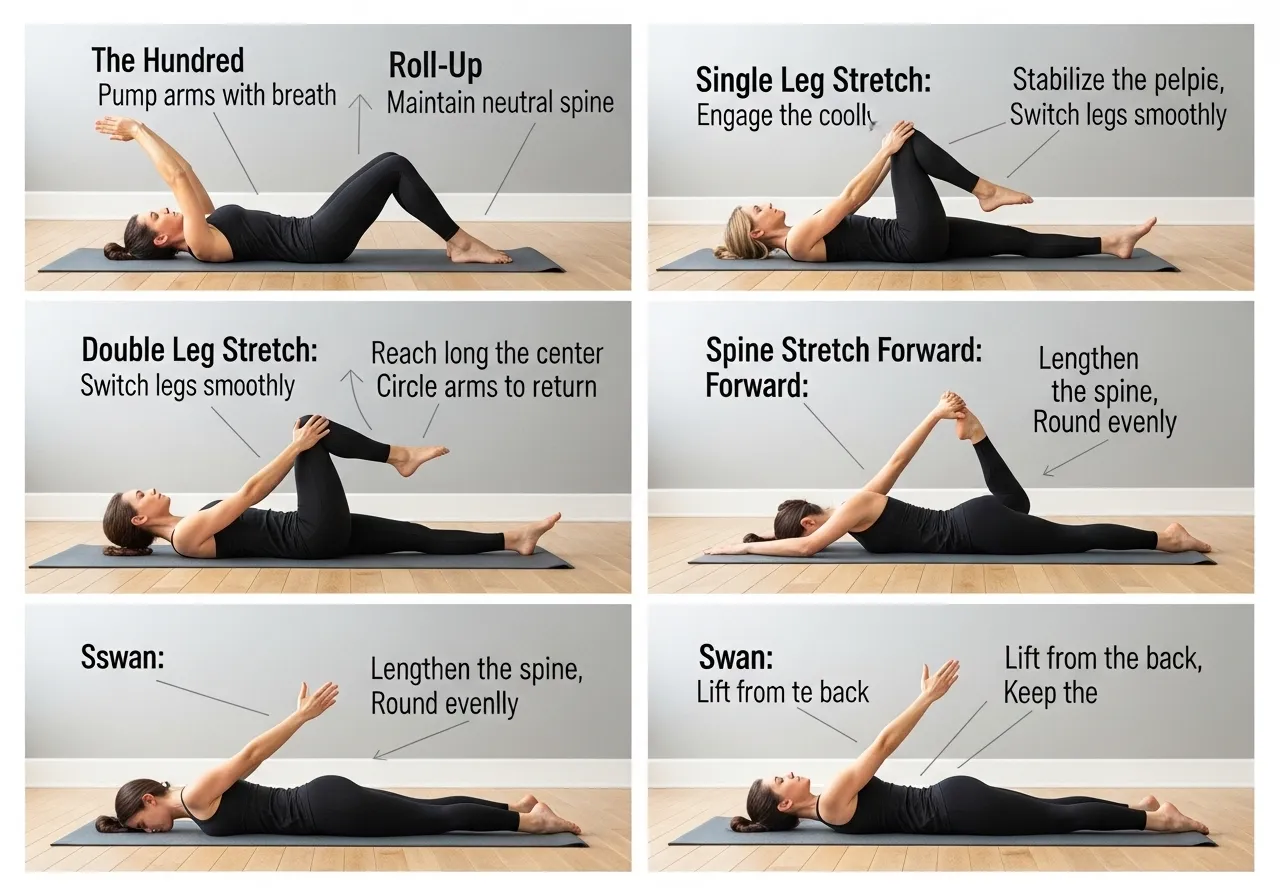
The Hundred
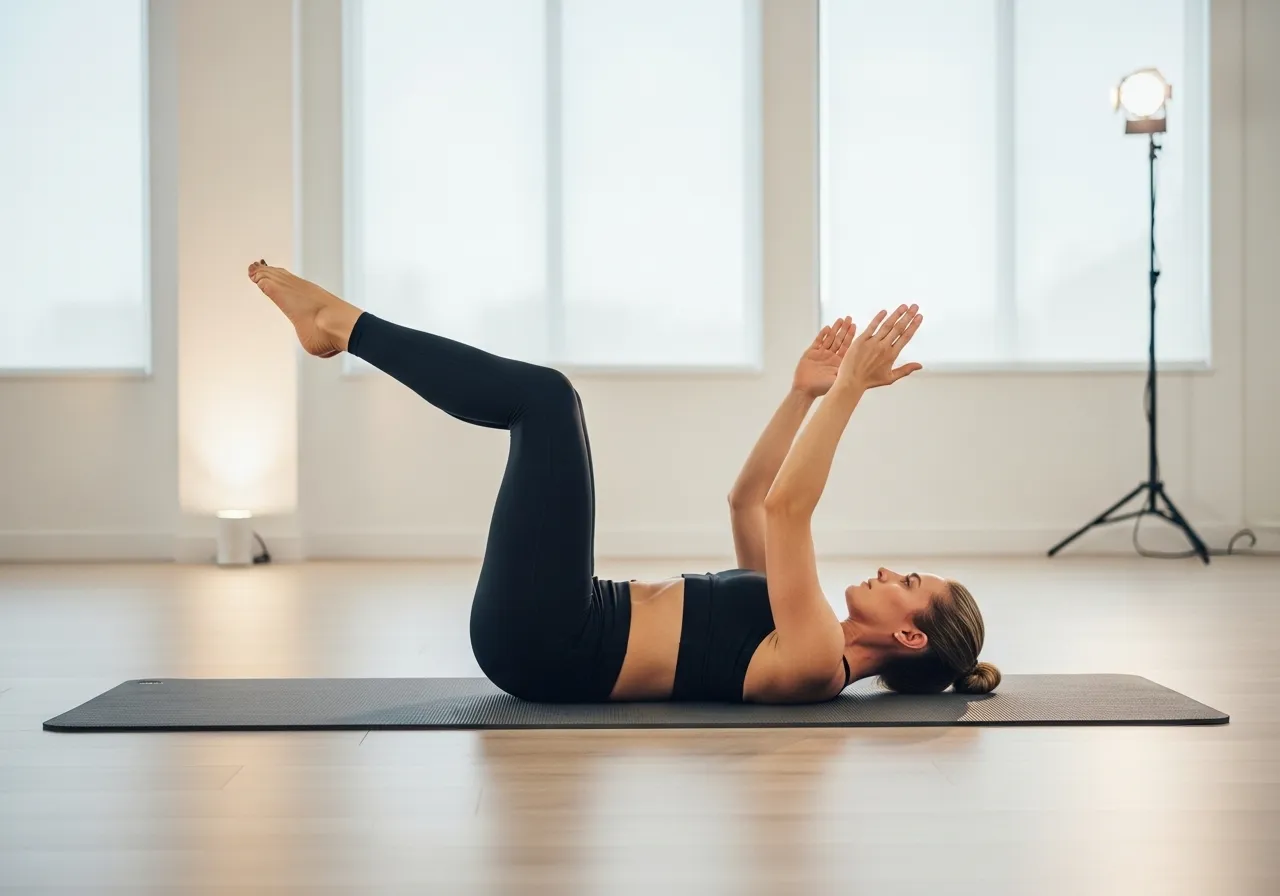
The foundational Pilates warm-up exercise — lie on the back, legs in tabletop position (90° at hips and knees), arms extended at the sides, head lifted slightly. Pump the arms up and down in small pulses (5 up, 5 down) while breathing in for 5 counts and out for 5 counts, completing 100 pumps total.
Primary purpose: establishing coordinated breathing with core activation, warming the thoracic flexors, and developing the TvA and internal oblique co-activation that underlies all Pilates exercises. The head lift activates the cervical flexors and requires the scapular stabilisers to maintain scapular depression throughout.
The Roll-Up
From lying flat, arms extended overhead, slowly articulate the spine from the floor to a seated forward fold — one vertebra at a time — then return with the same controlled articulation. This exercise directly develops spinal segmental control and reveals (and addresses) the spinal stiffness that prevents smooth segmental movement.
Single-Leg Stretch
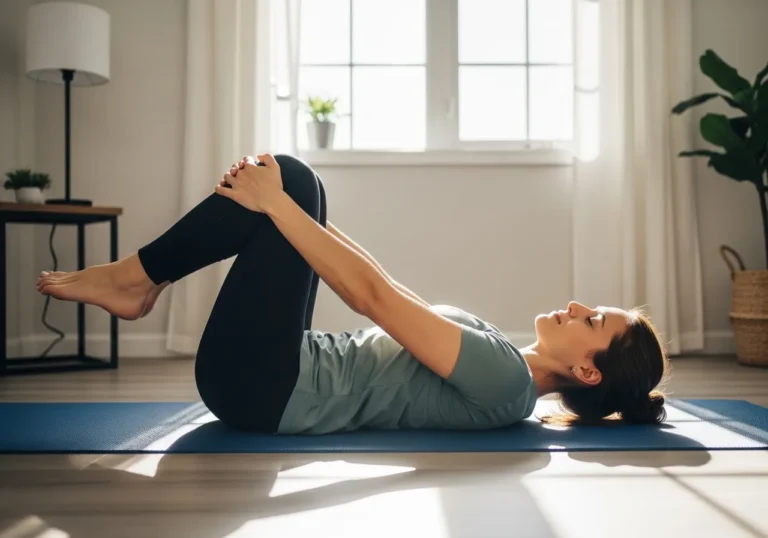
Lying on the back, both knees drawn to the chest, head lifted. Alternately extend one leg while drawing the other knee toward the chest — the hand placement on the shin rather than the knee protects the joint. Core stability must prevent the lower back from arching as each leg extends.
Double-Leg Stretch
Both knees to the chest, head lifted. Simultaneously extend both arms overhead and both legs out to a low diagonal — returning together. The challenge is maintaining lumbar stability while the limbs create a long lever arm against gravity. Beginner modification: arms reaching forward rather than overhead; legs at higher angle (closer to vertical).
Spine Stretch Forward
Seated with legs extended, arms reaching forward — exhale and round forward through the spine while maintaining the pelvic position. Works thoracic flexibility and hamstring length simultaneously while teaching the spinal segmental control of the roll-up in a supported position.
The Swan (Prone Extension)
Lying face down, hands placed near the shoulders. Exhale and lift the chest — supported by the spinal extensors rather than pushing with the arms. Develops thoracic extension and erector spinae strength specifically in the extension direction that daily forward-flexed postures deplete.
Side-Lying Leg Work
Lying on the side, lifting and lowering the top leg in various directions — forward kicks, circles, up-and-down movements — while maintaining a stable spine and pelvis. Specifically develops the hip abductors (gluteus medius, tensor fasciae latae) and hip external rotators that support pelvic stability during single-leg activities.
The Plank (Pilates Version)
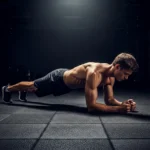
In Pilates, the plank — supporting the body on hands and feet or forearms and feet with a straight line from ears to heels — is performed with specific emphasis on the deep core activation rather than simply holding the position. The TvA and pelvic floor must be actively recruited throughout, with the breathing pattern maintained, distinguishing Pilates planks from their conventional fitness counterparts.
Progressive Pilates: From Beginner to Advanced
The progression framework within Pilates is built on increasing demands across several dimensions simultaneously:
Lever length: Shorter lever arms (bent knees) require less core stability than long lever arms (extended legs) — progression moves from flexed to extended limb positions as stability develops
Base of support: Two points of contact are more stable than one — progression reduces support from lying (maximum stability) through sitting and kneeling to standing single-leg positions
Speed: Slower movement requires more sustained control than faster; progression may paradoxically involve learning controlled speed as an advanced application rather than exclusively slowing all movements
Complexity: Coordinating multiple simultaneous movements — arms and legs moving together while breathing precisely — requires higher neural integration than simple single-movement exercises
The progression from mat to reformer also introduces a social dimension to Pilates practice — reformer sessions typically involve more direct instructor attention than large group mat classes, accelerating technique development and providing the cueing quality that distinguishes effective Pilates from its superficial imitations.
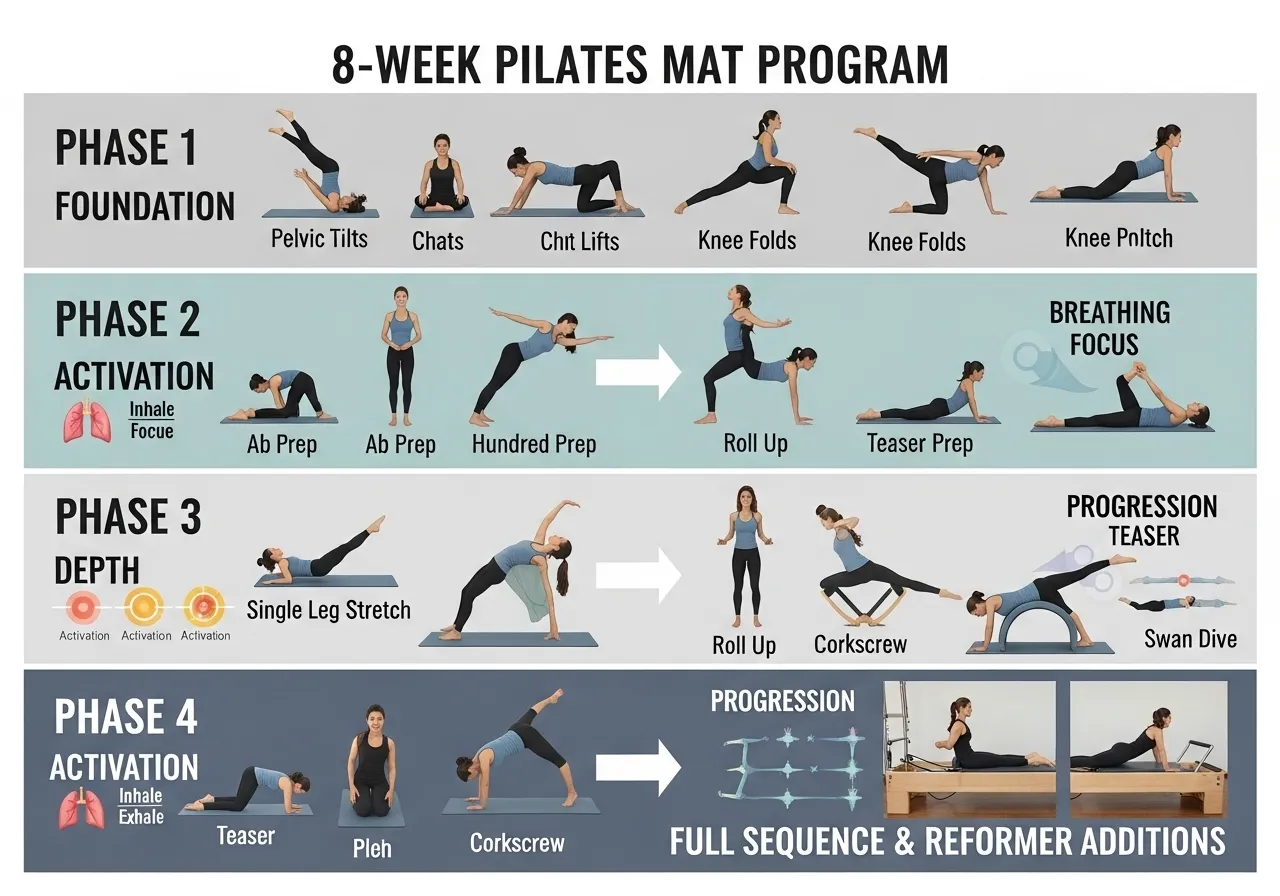
8-Week Pilates Program
Program Design
Four sessions per week, 30–45 minutes each. The program begins with mat-based foundational work and progresses to more challenging variations and integration with reformer exercises (where equipment is available). Each session follows the same structural template.
Focus: Deep muscle activation before movement; breathing pattern establishment
Phase 2 — Weeks 3–4 (Building: Spinal Articulation and Hip Control):
The Hundred (full): 1 × 100 pumps
Roll-up: 3 × 6
Double-leg stretch: 3 × 10
Single-leg circles: 3 × 5 each direction, each leg
Side-lying leg work: front kick, up-down, circles — 10 each
Swan (full extension): 3 × 8
Plank: 3 × 20 seconds
Phase 3 — Weeks 5–6 (Integration: Balance and Rotational Control):
The Hundred: 1 × 100
Roll-up to standing: 3 × 5
Crisscross (rotation): 3 × 12 alternating
Leg pull front (plank with leg lift): 3 × 8 each side
Side kick (kneeling): 3 × 10 each side
Swimming (prone alternating arm-leg): 3 × 20 counts
Teaser (V-sit): 3 × 5 (or preparation if not ready)
Phase 4 — Weeks 7–8 (Peak: Full Program Integration):
Full mat sequence: Hundred → Roll-up → Single/double stretch → Crisscross → Spine stretch → Saw → Swan → Swimming → Teaser → Side work
Plank progressions: standard + side plank + leg lift plank
Add reformer footwork and legwork where available
Session duration: 40–45 minutes
Finding a Qualified Pilates Instructor
The quality of Pilates instruction varies significantly — from weekend-certified group fitness instructors to comprehensively trained practitioners who have completed 500–800 hours of training and assessment. This variation matters practically because Pilates’ benefits are largely technique-dependent — poorly taught Pilates that fails to cue deep muscle activation and precise alignment produces a different (and less beneficial) movement experience than well-taught Pilates.
Key credentials to look for:
Comprehensive training programs of 450+ hours covering mat, reformer, and other apparatus (Cadillac, chair, barrels)
Membership in recognised Pilates organisations — Body Arts and Sciences International (BASI), Balanced Body, Pilates Method Alliance (PMA), or equivalent national bodies
For therapeutic applications (lower back pain, postpartum recovery, injury rehabilitation), additional qualifications in physiotherapy, exercise physiology, or sports medicine provide the clinical reasoning that general Pilates training alone may not develop
Pilates and Mindfulness: The Mental Health Dimension
The concentration and body awareness demands of Pilates practice produce psychological benefits beyond the direct physical outcomes:
The requirement for sustained attention to internal body sensations during Pilates practice — where the body is in space, what each muscle is doing, whether the movement matches the intended quality — produces a state of focused attention comparable to mindfulness meditation practice
Research on Pilates and mental health outcomes shows improvements in anxiety, self-efficacy, and mood that parallel the findings from other mind-body exercise modalities
The Contrology framework Joseph Pilates originally proposed — the mind’s disciplined control of the body’s movement — explicitly bridges physical and psychological practice in a way that pure strength training typically does not
The combination of precise technique demands, breathing coordination, and deep muscle activation makes every Pilates session a simultaneous physical and cognitive training stimulus that few other movement modalities can match in this dual-domain development quality.
Pilates Equipment: Reformer, Cadillac, and Mat Differences
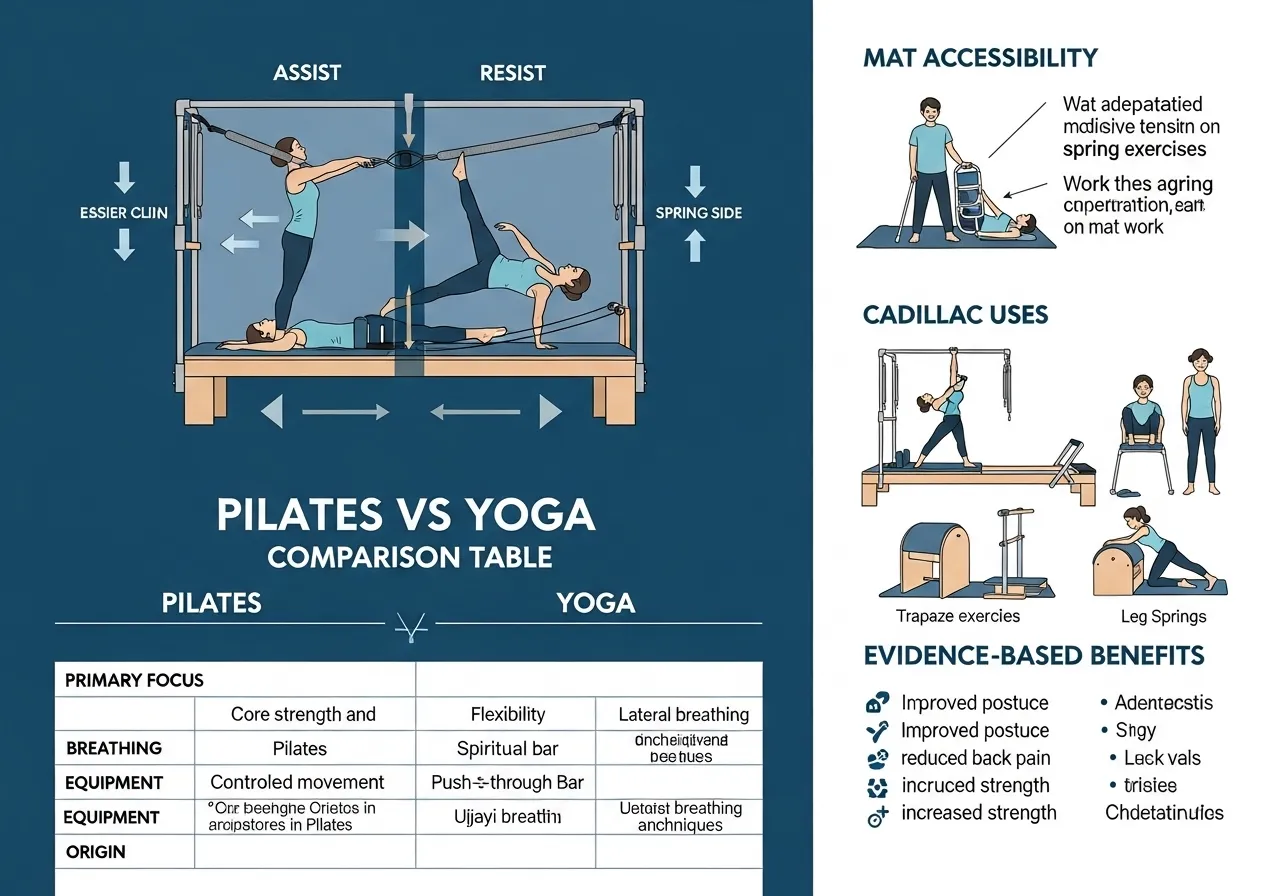
Mat Pilates: Accessible and Foundational
Mat Pilates requires no equipment beyond a firm, non-slip surface — making it the most accessible Pilates format. The mat work is the foundation of the Pilates system and remains the primary format for most group classes and home practice.
The mat provides no resistance assistance — the body works against its own weight and gravity throughout. This makes some exercises more challenging than their reformer equivalents (where the spring resistance can assist movement) and others easier (where springs are used to challenge).
The Reformer: Springs, Straps, and Versatility
The reformer — a sliding carriage within a frame with adjustable spring resistance — is the most commonly used Pilates apparatus. Its spring system allows precise resistance adjustments that accommodate significant differences in strength and ability:
Heavier spring resistance assists movement — useful for beginners or rehabilitation where muscle inhibition makes bodyweight work too demanding
Lighter spring resistance resists movement — increasing the challenge for more advanced trainees or in specific exercise directions
The reformer uniquely allows supine, seated, side-lying, and kneeling positions — expanding the exercise library beyond what mat work alone can access
Pilates vs. Yoga: Key Differences
Pilates and yoga are frequently confused or combined, but their underlying philosophies and primary benefits differ significantly:
Quality
Pilates
Yoga
Primary focus
Core stability, spinal alignment, motor control
Flexibility, breath, mindfulness, philosophy
Breathing
Coordinated with movement; lateral thoracic
Various traditions; often ujjayi or natural
Equipment
Mat + optional specialised apparatus
Mat + optional blocks, straps, bolsters
Therapeutic evidence
Strong for LBP; growing for other conditions
Strong for flexibility; growing for mental health
The Cadillac, Wunda Chair, and Barrel Apparatus
Beyond the reformer, classical Pilates studios include additional apparatus that expand the exercise library:
Cadillac (Trapeze Table): A large flat table with a four-posted frame from which springs, bars, and straps hang. The Cadillac allows the full range of Pilates exercises in all positions and is particularly useful for rehabilitation where gravity-assisted or partially-supported movement is needed before full weight-bearing exercises are appropriate.
Wunda Chair: A small box with a pedal resisted by springs — the compact design allows standing, seated, and kneeling exercises that challenge balance and single-limb stability in ways the reformer cannot replicate. Particularly useful for developing the functional single-leg strength relevant to sport performance and fall prevention.
Barrels (Spine Corrector, Ladder Barrel): Curved surfaces that support the spine in extension or lateral flexion positions — allowing the thoracic extension and side-bend exercises that promote the spinal mobility improvements Pilates is known for. The spine corrector shape specifically supports the thoracic curve that desk-based postural habits reduce.
Pilates FAQ
Do I need to attend a class or can I practice Pilates at home?
Both approaches are valid, with different strengths. For beginners, attending at least a few classes with a qualified instructor is strongly recommended — the precise technique demands of Pilates mean that subtle errors in setup position, activation quality, and breathing coordination are difficult to self-assess and correct without external feedback. The two most common beginner errors (using the rectus abdominis instead of the TvA for core work, and breath-holding instead of coordinating breath with movement) are largely invisible without an instructor’s assessment.
Once foundational technique is established — typically after 6–10 supervised sessions — home practice using video guidance or written programs is effective for continuing development. The precision skills learned in supervised sessions can be maintained and deepened through consistent home practice.
How is Pilates different from standard core training?
Standard core training — planks, crunches, leg raises, hollow body holds — primarily develops the superficial core muscles (rectus abdominis, obliques, erector spinae) for strength and endurance. These are important muscles, but they are not the primary targets of Pilates.
Pilates specifically targets the deep stabiliser system: the TvA, multifidus, pelvic floor, and diaphragm. These muscles do not produce movement — they produce stability. Developing them requires specific attention to the quality of muscle recruitment rather than the amount of load moved.
How many sessions per week should I do Pilates?
Two to three sessions per week is the most commonly recommended frequency for meaningful Pilates adaptation. Unlike resistance training where muscle damage requires rest days between sessions, Pilates exercises can be performed on consecutive days because the intensity of muscle loading is moderate and the emphasis is on neural quality rather than mechanical overload. Daily short Pilates practice (15–20 minutes of foundational work) accelerates motor pattern retention through repetition.
✅ Key Takeaways
Pilates specifically develops the deep stabiliser system — transversus abdominis, lumbar multifidus, pelvic floor, and diaphragm — that conventional core training does not target with the same precision
In people with chronic lower back pain, Pilates improves deep muscle motor control and produces significant reductions in pain and disability — supported by systematic review evidence across multiple RCTs
The six Pilates principles (concentration, control, centering, precision, breath, flow) are functional mechanisms — each develops a neuromuscular quality that translates to improved movement quality
Mat Pilates and reformer Pilates complement each other — mat work develops bodyweight control; reformer spring assistance and resistance diversify the exercise stimulus
Slow, precise, breath-coordinated movement with deep muscle activation — not superficial strength — is the active ingredient that distinguishes Pilates benefits from general exercise
Sciatica is one of the most common causes of persistent lower body pain in active adults, and radiating arm pain from cervical nerve compression is its upper body equivalent. Both conditions share a mechanism: the peripheral nerve is irritated, compressed, or has lost its normal ability to glide freely through the surrounding tissues. Movement that…
Balance is your base: how your body stays upright Balance connects strength, cardio, and mobility into one system Balance begins at your feet and your inner ear. Your eyes then refine the picture. Your brain coordinates all three systems. Good balance training guide lowers injury risk and improves lifting efficiency. It also improves running economy…
Most people who train the core train the visible core: crunches for the rectus abdominis, planks for surface endurance, side bends for the obliques. These exercises develop the muscles that are visible and the movements that feel like core work. They largely bypass the transversus abdominis, the deepest abdominal muscle, which is invisible, produces no…
⚠️ Health & Fitness DisclaimerThis article is for general educational purposes only. It does not replace professional medical advice. If you have existing shoulder pain, rotator cuff injury, or shoulder impingement, consult a qualified healthcare professional before starting any scapular training programme. Most shoulder problems in the gym do not start at the shoulder joint…
⚠️ Fitness Disclaimer: The information in this article is for general educational purposes only and does not constitute professional fitness or medical advice. Always consult a qualified healthcare professional before starting any new exercise program, especially if you have existing injuries or medical conditions. ⚠️ Medical Disclaimer: This article is for general informational purposes only…
⚠️ Fitness Disclaimer: The information in this article is for general educational purposes only and does not constitute professional fitness or medical advice. Always consult a qualified healthcare professional before starting any new exercise program. ⚠️ Medical Disclaimer: This article is for general informational purposes only and does not constitute medical advice. If you are…