⚠️ Health & Fitness Disclaimer This article is for general educational and informational purposes only. It does not replace professional medical or fitness advice. If you have any pre-existing condition or injury — please consult a qualified healthcare professional or certified personal trainer before starting any new exercise program.
Resistance bands are dismissed by many gym-goers as beginner tools or rehabilitation aids — rarely taken seriously as a genuine training modality for strength and muscle development.
The research tells a different story.
This guide covers what the evidence actually says about how resistance band training guide compare to free weights, why the unique resistance profile of elastic bands creates distinct training adaptations, and how to build an effective program using bands alone or alongside conventional equipment.
What Makes Resistance Bands Different: The Physics of Variable Resistance
The Force-Length Relationship
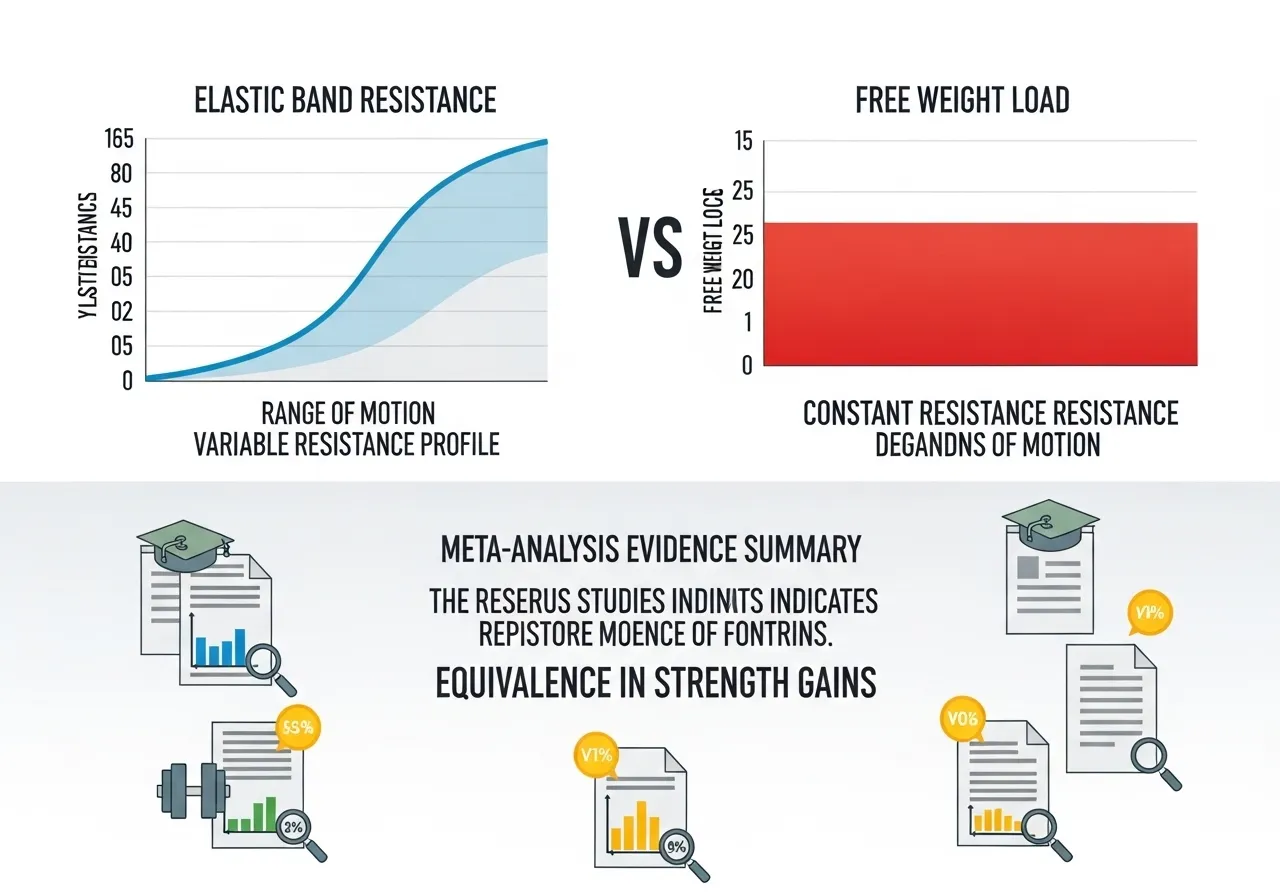
The fundamental mechanical difference between resistance bands and free weights is the resistance profile across the movement range:
Training Tool
Resistance at Start
Resistance at Mid-Range
Resistance at Full Extension
Free weight / machine
Fixed (gravity-dependent)
Fixed
Fixed
Resistance band
Low (slack/minimal tension)
Moderate (increasing)
Highest (maximum stretch)
This property — called variable resistance (resistance that increases as the band is stretched further) — creates a training stimulus that differs meaningfully from free weights in several ways:
The resistance increases as muscles approach their strongest mechanical position — matching the ascending strength curve of many exercises better than constant-load free weights
The “sticking point” (the portion of a lift where mechanical disadvantage is greatest) receives lighter resistance while stronger positions receive higher resistance
The eccentric loading profile (resistance during the return/lowering phase) is lighter than with free weights — potentially reducing post-exercise soreness
What the Research Shows: Bands vs. Free Weights for Strength
The PMC full version of this meta-analysis confirms this equivalence across diverse populations and conditions — a finding with significant practical implications for home trainees, travelers, and those without gym access.
Muscle Activation During Band Training
Research comparing muscle activation during band and free-weight exercises shows a nuanced picture:
Primary target muscles tend to show similar or slightly lower activation with bands compared to free weights at equivalent perceived effort
Secondary stabilizer muscles often show equal or greater activation with bands — because the band’s non-linear pull requires more active stabilization than the predictable gravity of a dumbbell
The combination of primary and secondary muscle activation is broadly comparable between modalities when effort levels are matched
Why Variable Resistance May Be Advantageous for Some Trainees
The matching of band resistance to the strength curve of an exercise has a meaningful training implication:
In most traditional exercises (bench press, squat, overhead press), the movement is hardest at the starting position — when muscles are most lengthened — and easiest at the top, when muscles are shortened and in a mechanically advantageous position.
Free weights provide the same resistance throughout this entire range — meaning the exercise is limited by the weakest point (bottom position), and the stronger portions of the movement are undertrained.
Resistance bands, by contrast, load the stronger end-range positions with progressively more tension — potentially producing a more complete stimulus across the full movement range.
This theoretical advantage has practical applications for trainees specifically seeking to develop strength at end-range positions — such as athletes who need explosiveness at full extension, or individuals who find that the top of a press or squat feels unchallenging with fixed weights.
Band Training and Injury Risk Profile
Resistance band training is generally considered lower risk than free weights for several reasons:
No dropped weights — the band simply reduces tension if grip is lost, rather than falling to the floor
Lighter loads at joint-vulnerable end ranges — at the deepest, most vulnerable positions, band resistance is lowest
Reduced eccentric load — the returning band requires less muscular braking force than lowering a heavy dumbbell or barbell
No momentum-related injury risk — the physics of band resistance prevent the momentum-driven form breakdown common with free weights when loads become challenging
This favorable injury profile makes resistance bands particularly appropriate for individuals returning to training after injury, those with joint sensitivity, and older adults where fall risk during free-weight loading is a concern.
Resistance Bands and the Science of Mechanical Tension
Mechanical tension (the force placed on a muscle during a resistance exercise) is considered the primary driver of muscle hypertrophy in exercise science research.
The critical question for bands is whether they produce sufficient mechanical tension to drive muscle growth — and the research answer is yes, provided the band resistance is adequate and the set is taken close to muscular fatigue.
The key insight from muscle physiology research is that the stimulus for muscle growth comes from reaching high levels of motor unit (the combination of a motor nerve and the muscle fibers it controls) recruitment — and this can be achieved with lighter loads if the set is taken to near-failure, or with heavier loads at lower rep counts.
For bands, this means that moderate-to-high resistance bands taken to challenging rep ranges (last 2–3 reps genuinely difficult) produce the motor unit recruitment needed for hypertrophic adaptation — even if the absolute load numbers are lower than free weights would allow.
Who Benefits Most From Resistance Band Training
Population
Primary Benefits
Recommended Application
Home trainees
Full-body training without gym
Primary training tool
Travelers
Portable training maintenance
Hotel room sessions
Older adults (60+)
Strength, balance, mental health
Primary or supplementary
Rehabilitation clients
Low-risk progressive loading
Under physiotherapist guidance
Athletes
Warm-up activation, supplementary volume
Supplement to barbell training
Budget-conscious trainees
Equivalent strength outcomes at low cost
Primary training tool
Comparing Cost: Band Sets vs. Gym Memberships
A complete resistance band set — covering light through heavy resistance across all major movement patterns — typically costs between $25 and $80 for quality products.
A standard gym membership costs $30–$80 per month in most urban areas.
For individuals whose primary training goal is general strength and fitness maintenance rather than competitive strength sport or bodybuilding, the research suggests that a one-time band investment can provide equivalent strength outcomes to months of gym membership at a fraction of the cost.
This cost comparison is particularly relevant for individuals in lower-income situations, those in areas without accessible gyms, and those for whom gym travel time creates a barrier to training consistency.
The most effective training program is ultimately the one that is consistently performed — and for many individuals, the accessibility and zero-travel-time convenience of band training at home produces better long-term training adherence than theoretically superior gym-based programs they struggle to attend consistently.
This accessibility advantage is one of the most practically significant aspects of band training for improving population-wide physical fitness outcomes.
Band Types, Resistance Levels, and Equipment Selection
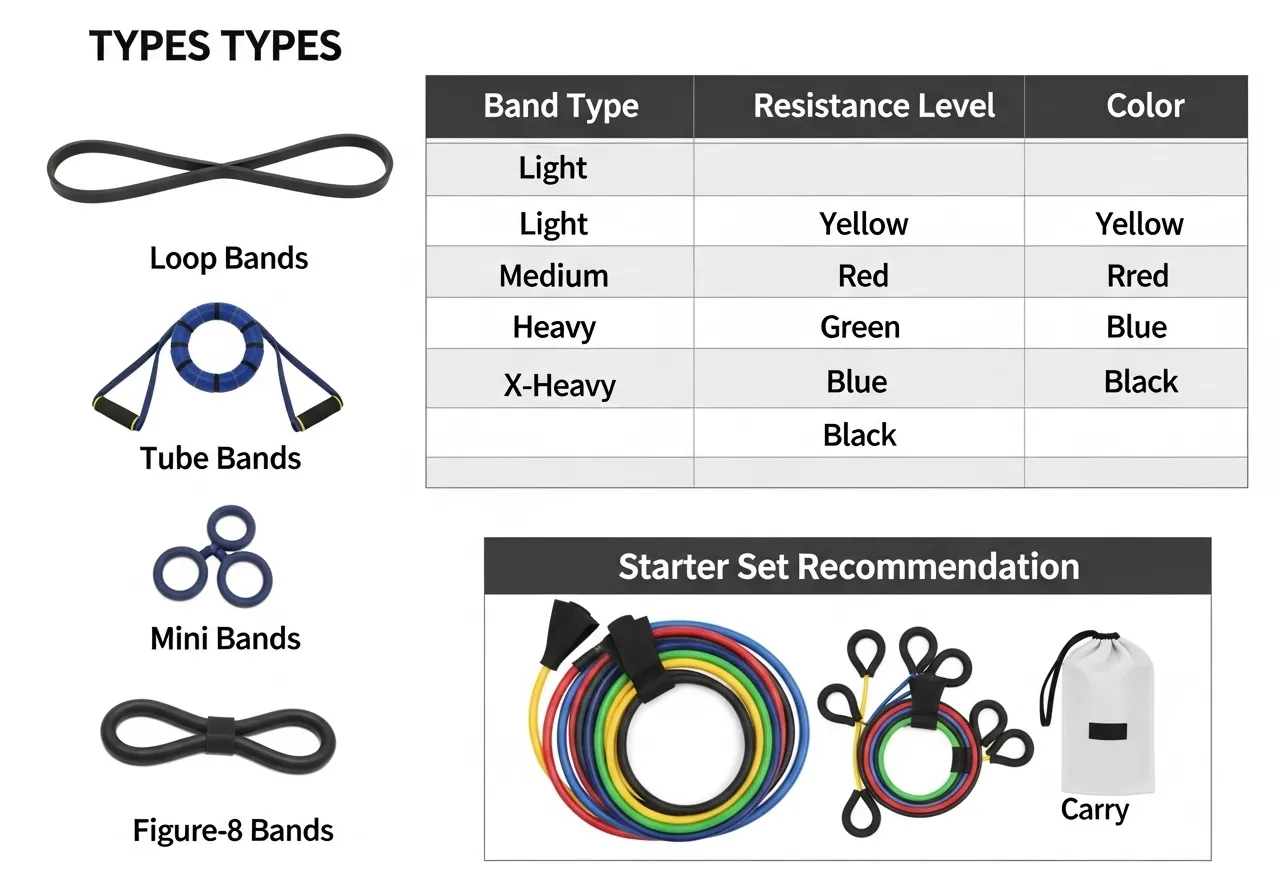
The 4 Main Band Types
1 — Loop Bands (Mini Bands):
Small circular bands used around the ankles, knees, or wrists Best for: Glute activation, hip abduction, lateral band walks, warm-up exercises Resistance range: Typically 5–40 lbs depending on width and thickness
2 — Long Loop Bands (Pull-Up Assist / Power Bands):
Long circular bands, typically 41 inches in total length Best for: Pull-up assistance, deadlifts, squats, full-body compound movements, anchor-based exercises Resistance range: 5–200+ lbs depending on band thickness
3 — Tube Bands with Handles:
Elastic tubing with plastic or rubber handles on each end Best for: Bicep curls, shoulder press, rows, chest press, replicating dumbbell exercises Resistance range: Typically 10–80 lbs depending on tube thickness
4 — Figure-8 Bands:
Figure-8 shaped short bands with two handles Best for: Inner thigh, lateral arm exercises, some rehabilitation movements
Standard Resistance Color Coding
Most manufacturers use a color-coded system to indicate resistance levels, though these are NOT standardized across brands:
Typical Color
Approximate Resistance
Best Suited For
Yellow / Light
5–15 lbs / 2–7 kg
Warm-up, rehabilitation, older adults
Red / Medium
15–35 lbs / 7–16 kg
Upper body, general fitness beginners
Green / Heavy
35–65 lbs / 16–30 kg
Lower body, intermediate trainees
Blue / Extra Heavy
65–120 lbs / 30–55 kg
Squats, deadlifts, pull-up assistance, advanced
Black / Monster
120–200 lbs / 55–90 kg
Heavy compound movements, advanced athletes
Always check the specific resistance rating for any band before purchasing — the same color can represent very different resistance levels across brands.
Choosing a Starting Band Set
For most adult beginners, a set of 3–5 bands covering the light to heavy range provides sufficient variety for a complete full-body training program.
A practical starter recommendation:
✅ 1 × light band (warm-up, face pulls, external rotations)
✅ 1 × medium band (upper body pressing and pulling, biceps)
✅ 1 × heavy band (lower body, rows, pull-up assistance)
✅ 2 × mini loop bands (glute activation, lateral work)
Checking Band Quality and Longevity
Resistance bands have a finite lifespan — typically 1–3 years depending on usage frequency, storage conditions, and UV exposure.
Signs that a band should be replaced before use:
Visible cracking, surface checking, or white stress marks when stretched
Reduced elasticity — the band does not return fully to its original length after use
Discoloration or sticky texture — indicating rubber degradation
Any previous partial tear or notch in the band — stress concentrates at these points
Store bands away from direct sunlight, heat sources, and sharp edges — a cloth bag or drawer storage significantly extends band lifespan compared to leaving them in sunlight or tangled with other equipment.
Band Training for Warm-Up Activation
One of the most widely adopted uses of resistance bands in athletic training is pre-session activation work — using light bands to “wake up” specific muscle groups before heavy compound lifting.
The most common and evidence-supported warm-up band protocols include:
Before lower body sessions: Mini band clamshells (2 × 20), lateral band walks (2 × 12 steps), glute bridges with mini band (2 × 15) — activates gluteus medius and maximus before squats and deadlifts
Before upper body push sessions: Band pull-aparts (2 × 20), band external rotations (2 × 15 per side) — activates rotator cuff and scapular stabilizers before bench pressing
Before pulling sessions: Band face pulls (2 × 15), scapular retractions with band (2 × 20) — prepares the mid-back and posterior shoulder for row and pull-up work
This activation approach is particularly relevant because research suggests that the muscles most important for stabilizing a heavy lift (glutes for the squat, rotator cuff for pressing) are sometimes underactivated in people who sit for long periods — and brief warm-up band work before loading may reduce compensation patterns and improve the quality of the subsequent heavy sets.
The 10 Most Effective Resistance Band Exercises
Upper Body Push
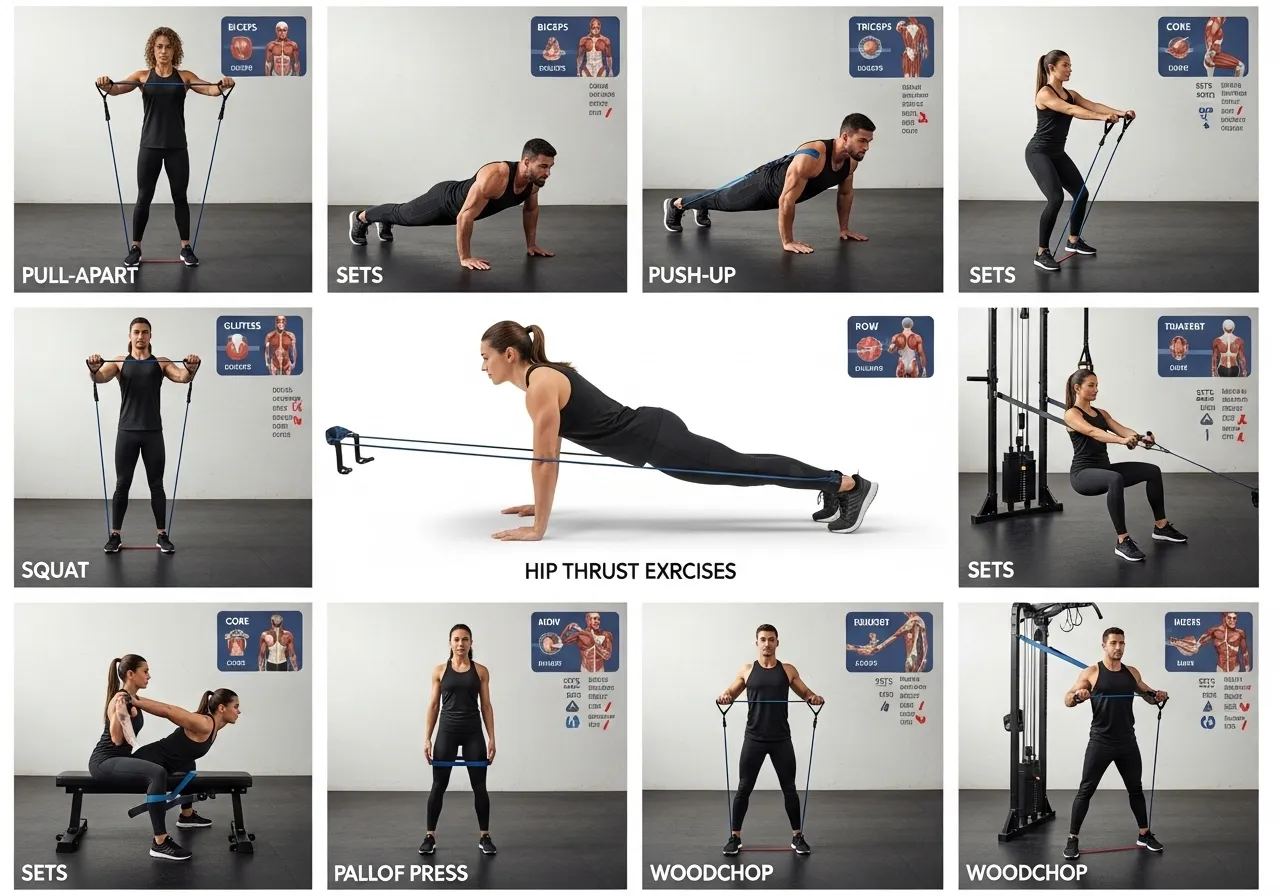
Banded Push-Up: Place a long loop band across the upper back, holding the ends under each palm. The band adds resistance at the top of the push-up where bodyweight challenge is lowest — matching the increasing strength curve naturally. Sets/Reps: 3 × 8–15.
Standing Band Chest Press: Anchor band behind at chest height. Stand facing away, press both arms forward. Engages chest, anterior deltoid, and triceps. Sets/Reps: 3 × 12.
Upper Body Pull
Band Pull-Apart: Hold band at shoulder width with both hands, arms extended forward. Pull hands apart horizontally until band touches the chest. Targets rear deltoids, rhomboids (the muscles between the shoulder blades that retract the scapula), and external rotators. Sets/Reps: 3 × 15–20.
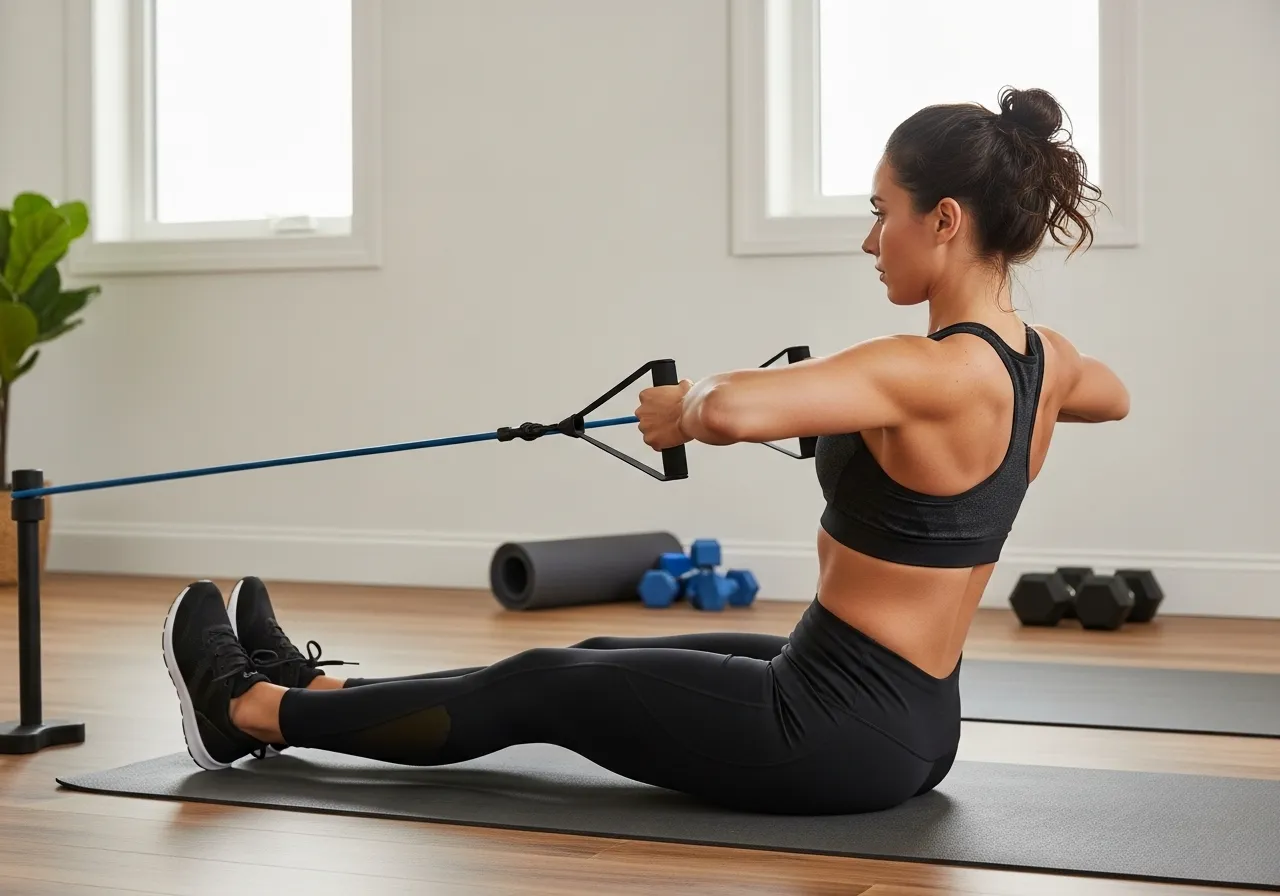
Seated Band Row: Sit on the floor with legs extended, loop band around feet. Pull handles toward the lower ribs with elbows close. Targets mid-back (rhomboids, middle trapezius) and biceps. Sets/Reps: 3 × 12.
Banded Face Pull: Anchor band at face height. Pull handles toward the face, elbows high and wide. Develops rear deltoids and rotator cuff — one of the most practical shoulder health exercises. Sets/Reps: 3 × 15.
Lower Body
Band Squat: Stand on band, hold handles at shoulder height (or loop over shoulders). Variable resistance squats — lightest at the bottom (where the movement is hardest biomechanically) and heaviest at the top. Sets/Reps: 3 × 12–15.
Hip Thrust with Band: Place heavy loop band across the hips, loop ends anchored behind. Drives hip extension with added resistance — excellent glute development tool. Sets/Reps: 3 × 15.
Lateral Band Walk: Mini band around ankles. Step sideways maintaining tension on the band — targets gluteus medius (the hip abductor critical for knee and hip stability). Sets: 2–3 × 10–15 steps each direction.
Core
Pallof Press: Anchor band at chest height beside you. Hold band with both hands at chest, press straight out and return. The rotational pull from the band requires active core anti-rotation — one of the most research-supported core stability exercises. Sets/Reps: 3 × 10 per side.
Band Woodchop: Anchor band high and to the side. Pull the band diagonally across the body from high to low in a chopping motion. Develops rotational power through the obliques and hip flexors. Sets/Reps: 3 × 10 per side.
Exercise Summary Table
Exercise
Primary Muscles
Band Type
Level
Band Pull-Apart
Rear deltoid, rhomboids
Light-Medium loop
Beginner
Banded Push-Up
Pectorals, anterior deltoid, triceps
Medium loop
Intermediate
Seated Band Row
Mid-back, biceps
Medium-Heavy tube
Beginner
Band Squat
Quadriceps, glutes, hamstrings
Heavy loop
Beginner-Intermediate
Hip Thrust with Band
Gluteus maximus
Heavy loop
Intermediate
Pallof Press
Core anti-rotation, obliques
Medium loop
Intermediate
Band Exercises for Specific Training Goals
For shoulder health and injury prevention:
Band external rotation: 3 × 15 each side — strengthens the infraspinatus and teres minor (external rotators of the rotator cuff)
Band face pull: 3 × 15–20 — develops rear deltoid and rotator cuff
Band pull-apart: 3 × 20 — builds scapular retractor strength
For glute activation before lower body sessions:
Mini band clamshell: 2 × 20 — activates gluteus medius
Mini band lateral walk: 2 × 12 steps each direction — glute medius and minimus
Mini band glute bridge: 2 × 15 — gluteus maximus activation prior to hip-dominant work
For core stability training:
Pallof press: 3 × 10 per side — anti-rotation core stability
Band woodchop: 3 × 10 per side — rotational power through the core
Banded dead bug: 3 × 8 per side — core stability with hip flexion demand
The Anchor Point: Making Band Training Versatile
The versatility of resistance band exercises is largely determined by where the band is anchored — different anchor heights create different movement patterns and muscle emphasis:
Low anchor (floor level): High pulls, upright rows, bicep curls, front raises — resistance increases as arms move overhead
Mid anchor (waist-to-chest height): Horizontal rows, chest press, horizontal pulls, pallof press — horizontal movement against resistance
High anchor (above head): Lat pulldown, tricep pushdown, face pull, kneeling abs — resistance increases as hands pull downward
A simple door anchor — a small strap with a foam stop that catches in a closed door frame — costs under $10 and immediately provides all three anchor heights using any standard door.
Resistance Band Programming: Full-Body and Split Programs
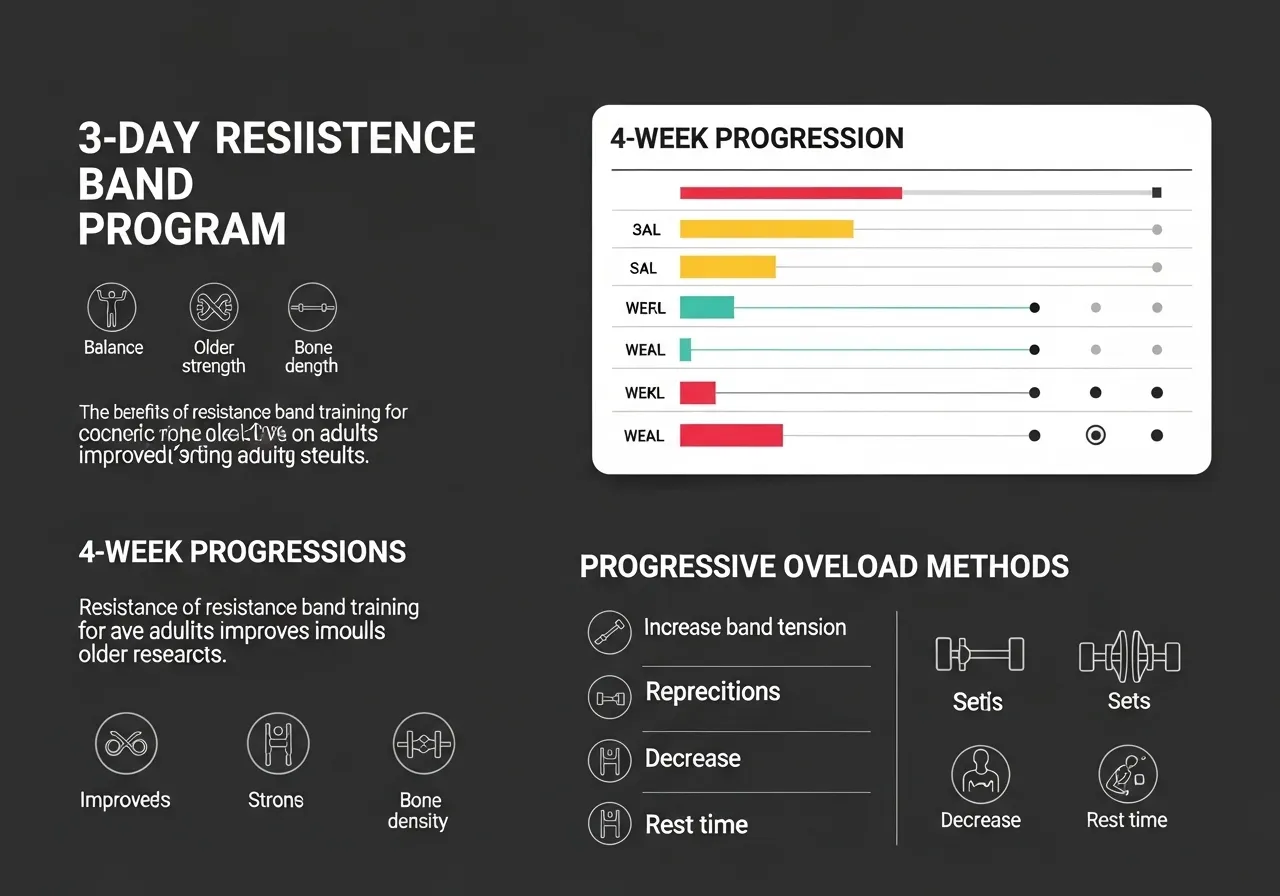
Beginner 3-Day Full-Body Program
Day A (Monday):
Band Pull-Apart: 3 × 20
Band Squat: 3 × 15
Seated Band Row: 3 × 12
Band Chest Press: 3 × 12
Lateral Band Walk: 2 × 12 steps each way
Day B (Wednesday):
Banded Push-Up: 3 × 10–12
Band Romanian Deadlift: 3 × 12
Banded Face Pull: 3 × 15
Band Hip Thrust: 3 × 15
Pallof Press: 3 × 10 per side
Day C (Friday):
Repeat Day A or Day B with slight load increase (next resistance band or more stretch)
4-Week Progression
Week
Sets × Reps
Band Tension
Focus
1
2 × 12–15
Light–Medium
Movement pattern learning
2
3 × 12
Medium
Volume accumulation
3
3 × 10
Medium–Heavy
Load progression
4
3–4 × 8–10
Heavy
Strength emphasis
Progressive Overload Methods Unique to Bands
Increase stretch: Stand wider or further from the anchor point to increase resting tension — more pre-stretch = higher resistance throughout the range
Add a second band: Doubling a lighter band combines resistances — useful when a single heavier band is not available
Reduce anchor height: For rows and pulls, lowering the anchor point changes the resistance curve and the muscles emphasized
Slow the eccentric: A 3–4 second return (band releasing) increases time under tension without heavier bands
Reduce rest periods: Shortening rest from 90 seconds to 60 seconds while maintaining rep count increases training density
Bands as Free Weight Supplements
Adding bands to barbell movements creates an “ascending resistance curve” that challenges the strongest portion of the lift — a technique used extensively in powerlifting to overcome strength plateaus:
Banded Barbell Squat: Bands looped under the feet and over the bar add resistance at the top (lockout) where the squat is easiest mechanically
Banded Barbell Deadlift: Bands create increasing tension through the pull, loading the stronger lockout position more heavily
Banded Bench Press: Bands from the rack uprights create maximum tension at full extension — training the triceps-dominant lockout specifically
Periodization Applied to Band Training
The same periodization principles that govern free-weight training apply to resistance band programs — ensuring progressive adaptation rather than training accommodation (the plateau that occurs when the body fully adapts to a fixed stimulus):
Phase 1 (Weeks 1–4) — Endurance/Technique: Light-medium bands, 15–20 reps, 2–3 sets, short rest Phase 2 (Weeks 5–8) — Hypertrophy: Medium-heavy bands, 10–12 reps, 3–4 sets, 60–90 sec rest Phase 3 (Weeks 9–12) — Strength: Heavy bands or doubled bands, 6–8 reps, 4 sets, 2 min rest Deload Week: Light bands only, 2 sets per exercise — once every 4–6 weeks
Rotating through these phases over a 12-week block produces more complete strength and muscular adaptations than remaining in a single repetition range throughout.
Resistance Bands for Deload Weeks
A practical application of resistance bands for intermediate and advanced strength trainees is the deload week — a planned period of reduced training intensity to allow connective tissue and neuromuscular recovery before the next training block.
Switching from heavy free-weight training to full-body band-only sessions for 5–7 days maintains training frequency and movement patterns while dramatically reducing the mechanical load on joints, tendons, and the central nervous system.
This approach maintains the habit of daily training and prevents full detraining during the deload, while providing genuine recovery from the accumulated fatigue of the preceding training block.
For individuals who find that complete rest during deloads leads to stiffness or motivational challenges, an active deload with resistance bands provides a practical middle ground — enough stimulus to stay physically engaged, but with minimal recovery cost.
Resistance Bands for Health, Rehabilitation, and Special Populations
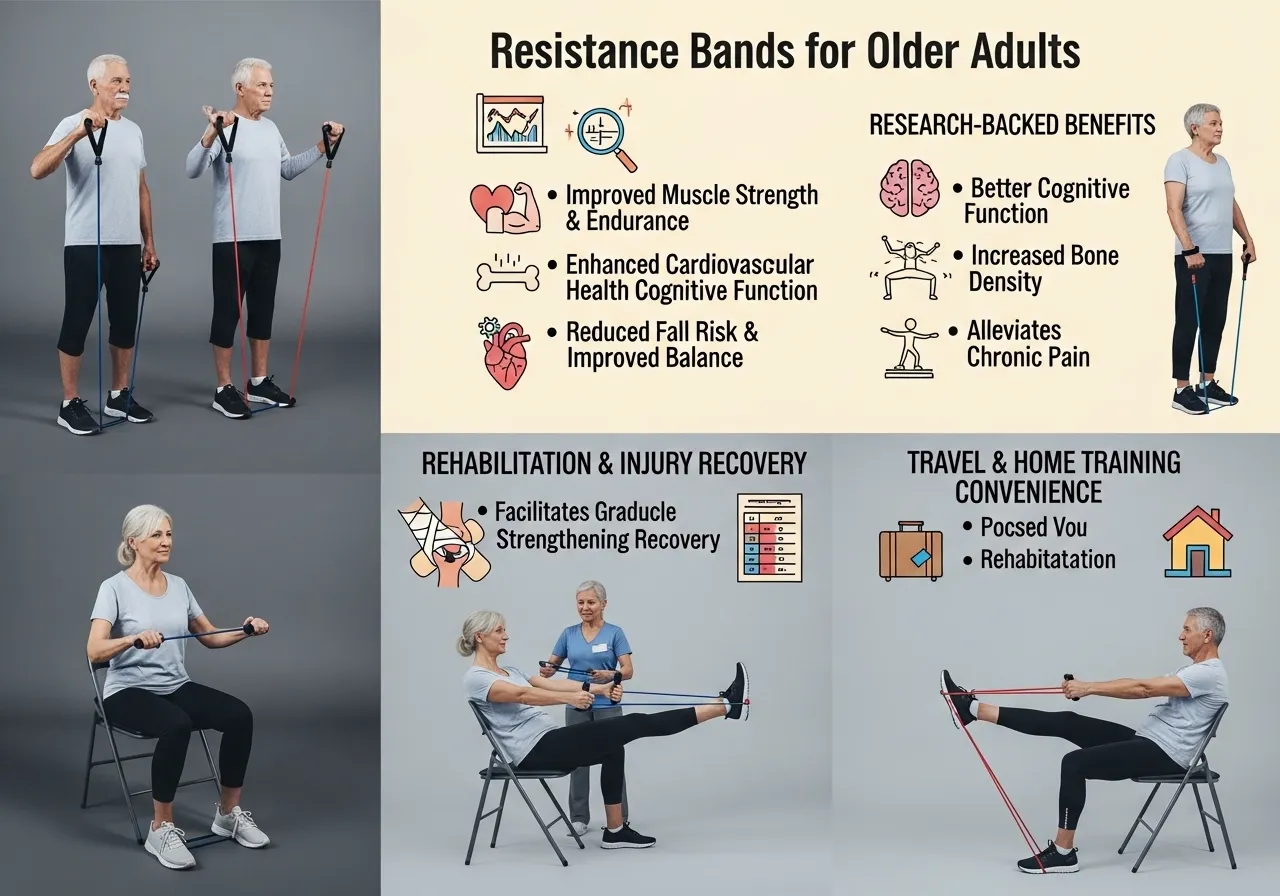
Research on Older Adults
Resistance band training has been particularly extensively studied in older adult populations — partly because the low cost, portability, and low injury risk make it highly practical for this demographic.
These findings position resistance band training as a genuinely comprehensive health intervention for older adults — not merely a “gentle alternative” to real training, but a modality with documented multi-dimensional health benefits.
Rehabilitation and Injury Recovery
Resistance bands are a standard tool in physiotherapy and rehabilitation for several reasons:
Light resistance levels allow loading of healing tissue without the risk of overloading associated with free weights
The variable resistance profile means peak loads are reached only at end range — where tissues are typically strongest after injury
Portability allows home exercise programs that maintain rehabilitation progress between clinic visits
The lower eccentric load compared to free weights may reduce post-exercise soreness during the early stages of recovery
Any resistance band use in an active rehabilitation context should be prescribed and supervised by the treating physiotherapist — self-directed loading during injury recovery may interfere with healing or cause re-injury.
Travel and Home Training
A complete band set weighs under 2 kg, fits in a carry-on bag, and requires no equipment beyond an anchor point (door frame, post, or tree).
For travelers who need to maintain training consistency without gym access, a quality set of resistance bands may be the most effective tool available.
Research supports that resistance band training can maintain strength and muscle mass during short travel periods — preventing the detraining (the reversal of training adaptations during periods of reduced training) that commonly occurs during extended travel or holiday breaks.
Limitations of Band Training
Understanding the genuine limitations of resistance bands helps set appropriate expectations:
Maximum resistance ceiling: Even the heaviest bands are limited to approximately 200 lbs / 90 kg of resistance — insufficient for advanced strength athletes accustomed to much heavier free-weight loads
Load quantification difficulty: Unlike free weights where load is precisely known, band resistance varies with stretch distance and starting tension — making progressive overload tracking less precise
Consistency across brands: The same color band from different manufacturers can have very different resistances — making exact replication of training protocols more difficult when switching equipment
Durability: Bands degrade over time and with UV exposure — periodic replacement is required; using a band that shows cracking or loss of elasticity carries a snap risk
Safety Considerations
⚠️ Before and during band training:
→ Always inspect bands for cracks, fraying, or loss of elasticity before use
→ Ensure anchor points are stable and rated for the resistance being used
→ Do not stretch bands beyond 2.5× their resting length — this risks snapping
→ Keep bands away from sharp edges or hot surfaces that can degrade the rubber
→ When a band snaps under tension, the recoil can cause eye or skin injury — eye protection is advisable for very high-tension band training
Common Questions About Resistance Band Training
Are resistance bands as good as weights for muscle building?
For most fitness goals — general strength development, muscle maintenance, rehabilitation, and functional fitness — resistance band training produces equivalent outcomes to free weight or machine training when effort levels are matched and progressive overload principles are applied.
For advanced strength athletes seeking maximal loads and precise load quantification, free weights provide advantages bands cannot fully replicate.
For general fitness, home training, travel, and older adult populations, bands are a fully evidence-supported tool — not a compromise alternative.
How do I know what resistance level to use?
A band resistance is appropriate when the last 2–3 reps of a set feel genuinely challenging — similar to how you would select free weight loads.
If all 12–15 reps feel easy throughout, the band resistance is too light — use the next resistance level or increase the stretch distance.
If form breaks down before the target reps are reached, the band is too heavy for the current exercise — use a lighter band or reduce the stretch distance.
✅ Key Takeaways
Meta-analysis evidence shows no significant difference between elastic band and conventional resistance training for muscular strength outcomes
Variable resistance (increasing tension as the band stretches) is a unique mechanical property that loads strong positions harder than free weights do
Research specifically supports bands for improving strength, balance, flexibility, and mental health in older adults
A complete band set provides a full-body training program in under 2 kg of equipment — a uniquely portable and cost-effective training solution
Bands degrade and can snap — regular inspection and replacement are necessary safety practices
The Mental Health Dimension of Band Training
The research finding that resistance band training improves mental health outcomes in older adults — specifically reducing depression and improving quality of life — reflects the broader evidence on resistance training and psychological health:
Exercise involving muscular effort produces acute and chronic improvements in mood, anxiety, and self-efficacy (confidence in one’s ability to perform tasks) through multiple mechanisms including endorphin release, increased competence feelings from progressive strength gains, and social engagement for group-based programs.
For older adults or individuals with mobility limitations for whom gym attendance is difficult, at-home resistance band training provides access to these psychological benefits without the barriers of travel, gym membership, or equipment cost.
Individuals experiencing depression or anxiety should work with their healthcare provider to determine how exercise, including resistance band training, fits within their overall treatment approach.
Tracking Progress in Band Training
Progressive overload in band training is less precisely quantifiable than with free weights — but progress can still be tracked effectively:
Reps at same band: Increasing from 10 to 15 clean reps at the same band and stretch distance is measurable progress
Band color advancement: Moving from medium to heavy band for the same exercise confirms strength development
Stretch distance: Standing further from the anchor at the same band color increases tension — trackable by measuring or marking foot positions
Session notes: Recording band color, exercise, and reps each session allows month-over-month progress comparison that individual sessions cannot show
A simple training log — notebook or phone notes — tracking date, exercises, band resistance, and reps per set provides sufficient data to confirm progression and guide adjustment decisions over a training block.
A certified personal trainer or strength coach can design a customized resistance band program tailored to specific fitness goals, available equipment, and any physical limitations — particularly useful for individuals new to resistance training who want guidance beyond general programming templates.
Consistency over months — with progressive increases in band resistance and exercise complexity — remains the primary driver of long-term results from resistance band training, just as it is with any other training modality.
Three minutes of actual sprint work per week produces the same VO2 max improvement as five full hours of moderate-intensity cycling per week. This is not a headline designed to sell something. It is the finding of a peer-reviewed randomised controlled trial from McMaster University. Sprint interval training operates through a different physiological mechanism than…
Fasted cardio — cardiovascular exercise performed after an overnight fast, typically first thing in the morning before eating — is one of the most debated topics in fat loss training. The argument for it is intuitive: low blood glucose and insulin from overnight fasting force the body to oxidise fat for fuel during exercise, producing…
⚠️ Health & Fitness DisclaimerThis article is for general educational purposes only and does not replace professional medical advice. If you have any cardiovascular, joint, or metabolic conditions, consult a qualified healthcare professional before beginning any cycling for fitness guide program. Indoor cycling is among the most versatile and research-supported cardiovascular training tools available —…
Altitude training is the gold standard endurance performance intervention for decades. The reduced oxygen partial pressure at altitude stimulates erythropoietin release, increases red blood cell mass and haemoglobin, and produces measurable improvements in VO2max and endurance performance when the athlete returns to sea level. It is also expensive, logistically complex, and inaccessible to most athletes…
⚠️ Cardiovascular Safety NoteHigh-intensity cycling intervals (Zone 4–5 work) place significant demand on the cardiovascular system — heart rate typically reaches 85–95% of maximum during threshold and VO2max efforts. Individuals with undiagnosed heart conditions, coronary artery disease, or recent cardiac events should obtain medical clearance before starting structured high-intensity cycling training. Any chest pain, dizziness,…
⚠️ Health & Fitness DisclaimerThis article is for general educational purposes only and does not replace professional medical advice. If you have cardiovascular, respiratory, or musculoskeletal conditions, please consult a qualified healthcare professional before beginning a swimming program. Swimming is one of the most physiologically complete forms of exercise available — simultaneously developing cardiovascular fitness,…