⚠️ Health & Fitness Disclaimer This article is for general educational purposes only and does not replace professional medical advice. If you have any lower back, knee, or cardiovascular conditions, please consult a qualified healthcare professional before beginning a rowing machine mastery guide program.
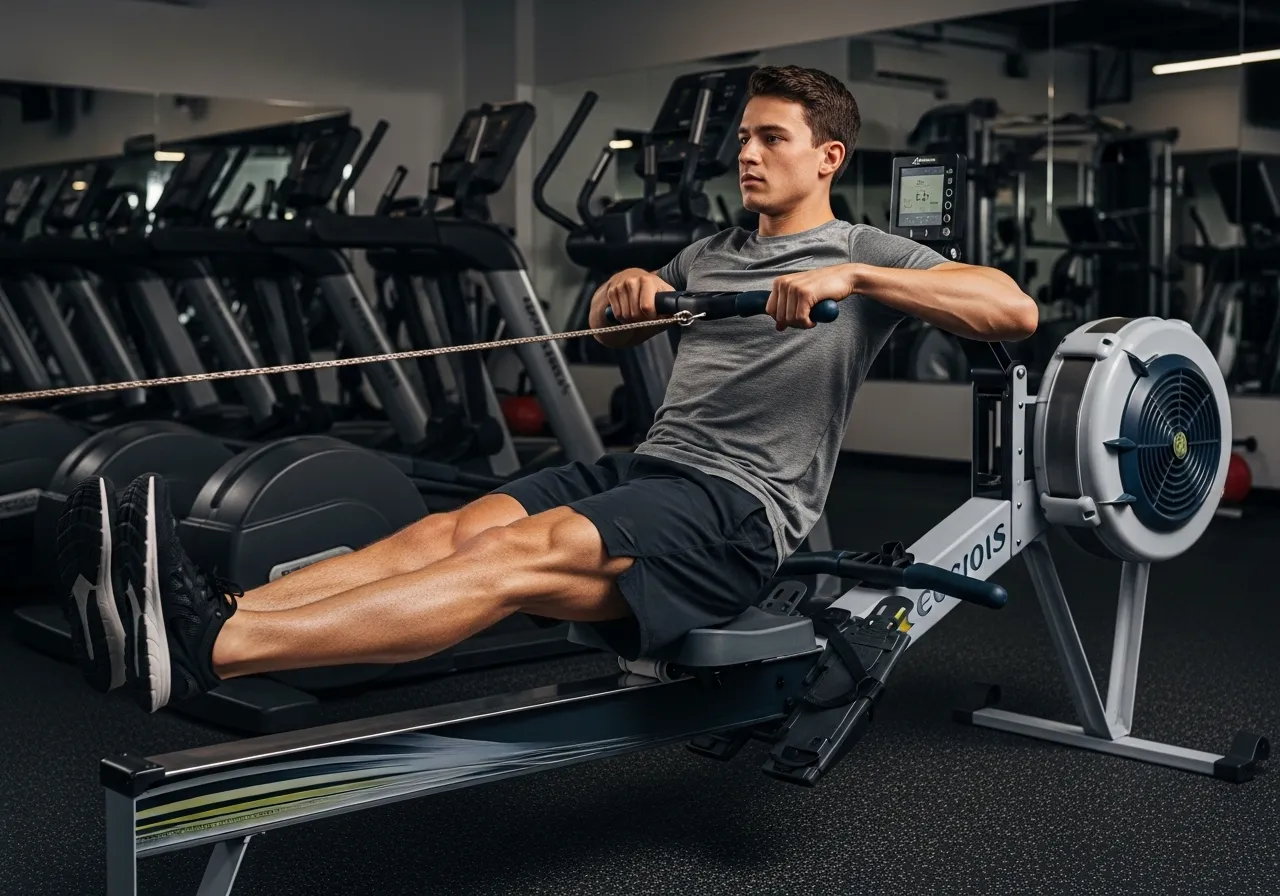
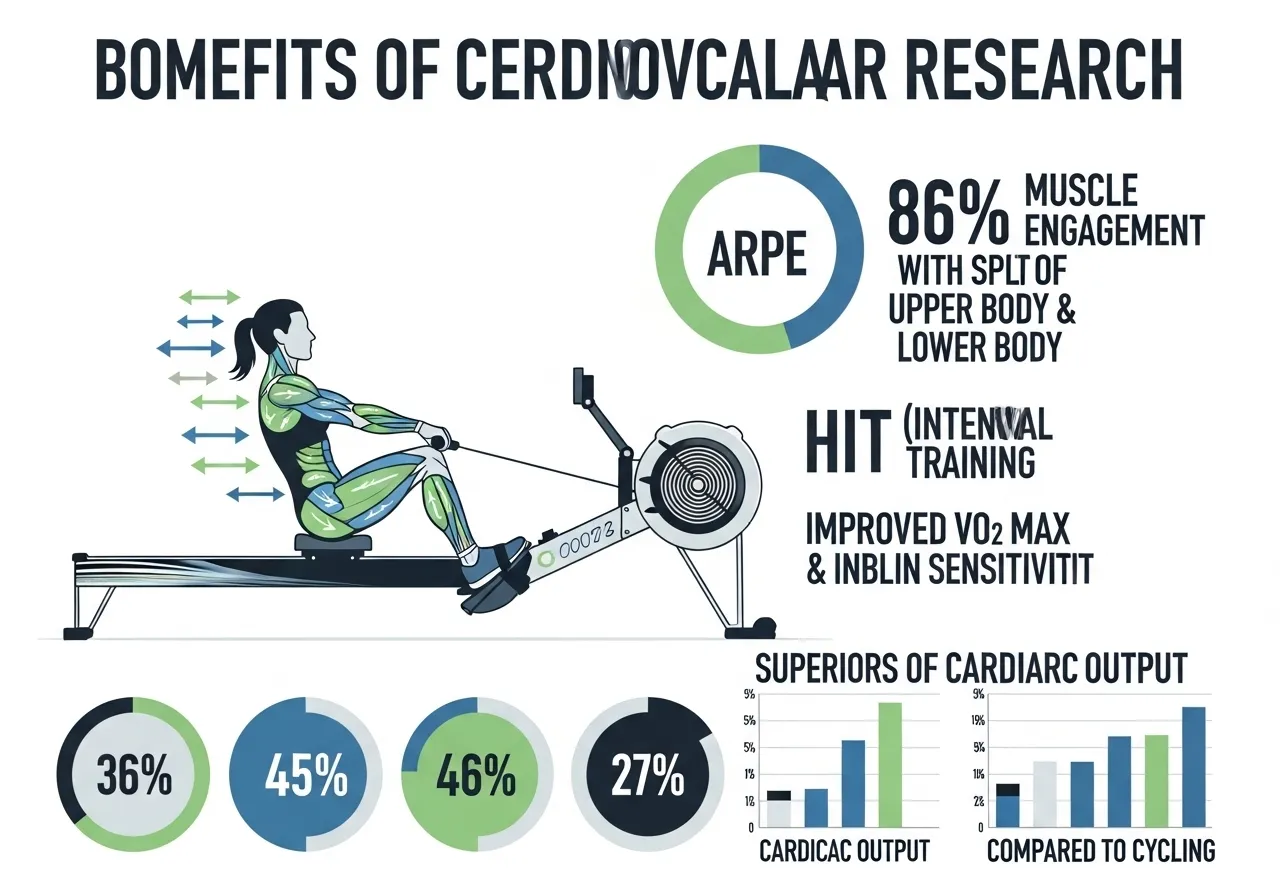
The rowing machine training guide machine — or ergometer — produces a cardiovascular and muscular training stimulus that no other common fitness machine can match. While treadmills train the lower body and cycling trains the legs, rowing simultaneously engages the legs, core, back, and arms through a coordinated sequence that activates approximately 86% of the body’s muscles in every stroke. (Related: heart rate zones)
This whole-body engagement explains why rowing consistently produces among the highest cardiovascular demands of any exercise machine — and why elite rowers develop some of the highest VO2max values and most efficient cardiac function documented in sport science research.
This guide covers the research on rowing’s physiological demands, explains the four phases of the rowing stroke, details correct technique at each phase, and provides an 8-week rowing program from beginner to intermediate fitness.
Rowing Research: Cardiovascular and Physiological Benefits
The Physiology of Rowing: A Comprehensive Overview
Why Rowing Produces Superior Cardiovascular Adaptations
The cardiovascular demand of rowing exceeds most comparable exercise modalities for a mechanistically clear reason: the whole-body muscular recruitment requires more oxygen delivery than partial-body exercises at equivalent mechanical intensities:
The 65–75% lower body / 25–35% upper body power split of rowing requires the heart to pump blood to a much larger active muscle mass than cycling or running — increasing the cardiac output demand substantially at given heart rate levels
Research comparing rowing and cycling hemodynamics shows that rowing produces greater stroke volume (the volume of blood pumped per heartbeat) and cardiac output at equivalent heart rates — explaining the superior VO2max development in rowers compared to cyclists at matched training volumes
The combination of compressive (leg drive) and tensile (arm pull) loading during each stroke challenges vascular control mechanisms differently from single-limb exercises, potentially contributing to the superior cardiac adaptations observed in elite rowers
Rowing and Cardiac Morphology: The Rower’s Heart
Elite rowers consistently show some of the most impressive cardiac morphology of any athletic population — a physiological adaptation that directly reflects the unique cardiovascular demands of their sport:
Left ventricular wall thickness greater than 13 mm — a finding virtually confined to rowers among athletic populations — represents pathological levels in non-athletes but indicates the extreme cardiac hypertrophy of elite rowing training
Both left ventricular cavity enlargement (increased filling volume) and wall thickening (increased contractile power) develop simultaneously in elite rowers — a combination termed “eccentric hypertrophy” that maximises both stroke volume and ejection force
The bidirectional cardiac loading of rowing — the compressive phase of the drive (Valsalva-like) followed by the decompressive recovery phase — may specifically stimulate this combined morphological adaptation that neither purely pressure-loaded nor purely volume-loaded exercise produces
For recreational rowing fitness enthusiasts, this extreme cardiac adaptation is not the goal — but it demonstrates the ceiling of cardiovascular development that consistent rowing training can produce, and confirms that the cardiovascular stimulus of rowing is genuinely exceptional among exercise modalities.
For recreational trainees, these elite cardiac adaptations represent a compelling illustration of the cardiovascular training ceiling available from consistent rowing — a ceiling that conventional gym training and most fitness machines cannot approach, and that confirms rowing as a genuinely exceptional tool for long-term cardiovascular fitness development.
The Four Phases of the Rowing Stroke
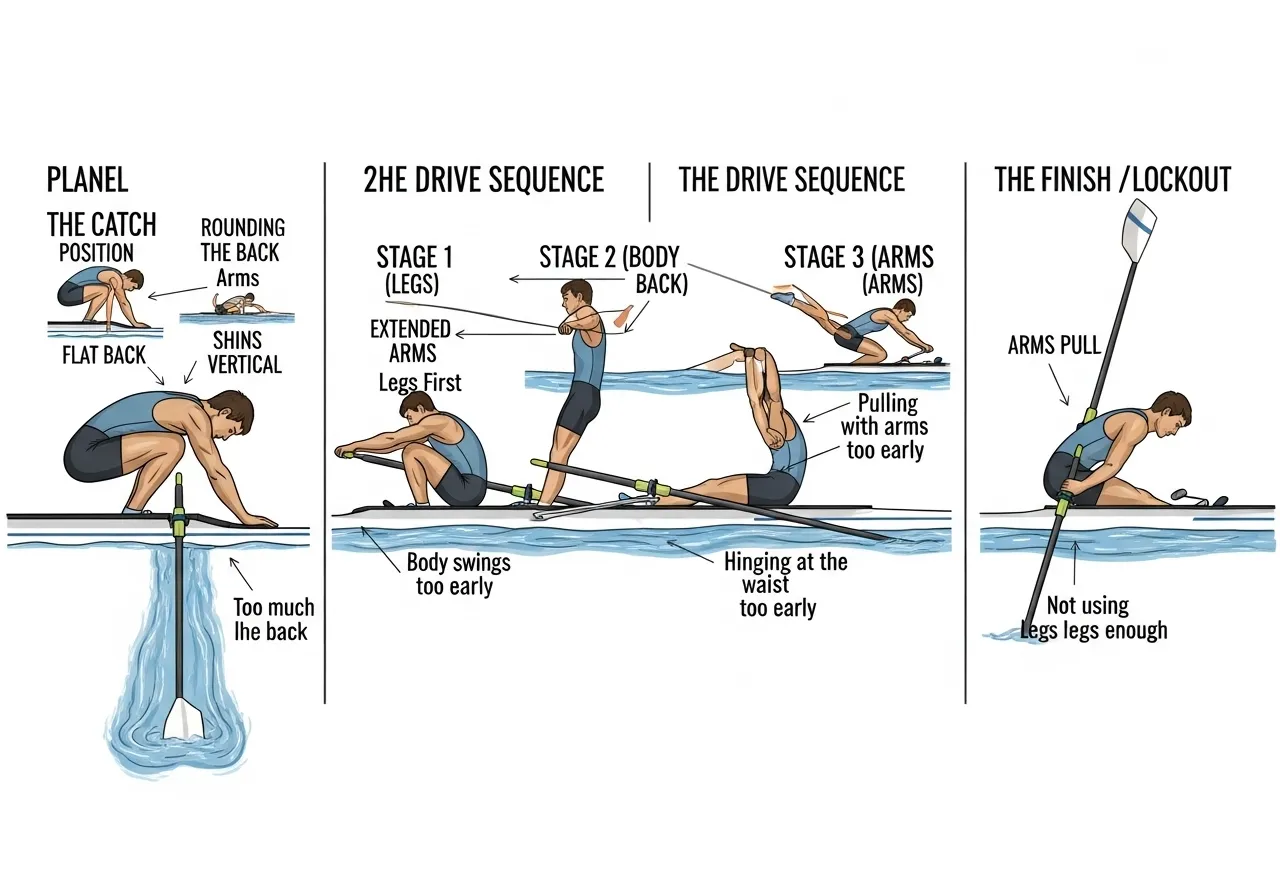
Phase 1: The Catch
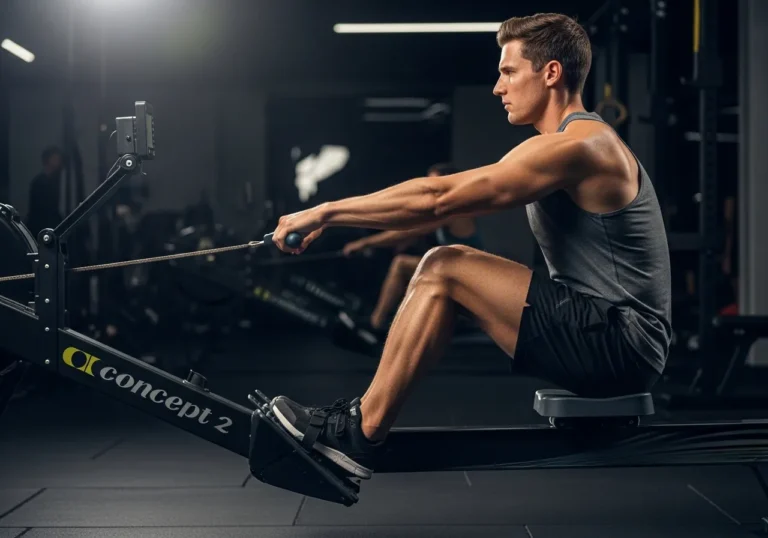
The catch is the starting position of each stroke — the point at which the blade (on water) or handle (on the ergometer) first meets the resistance. Correct catch position requires:
Knees: Fully compressed with shins approximately vertical — not so compressed that the heels rise significantly from the footplate. Arms: Fully extended — the handle is at minimum reach from the body. A common error is breaking the elbow early at the catch, reducing the available stroke length. Trunk: Slightly forward of vertical — leaning forward from the hips (not the waist) with a flat back. The back angle at the catch is typically 10–15° forward of vertical. Core: Braced before the drive begins — the abdominal pressure is generated at the catch, not reactively during the drive.
Phase 2: The Drive
The drive is the power phase — transforming the stored position of the catch into forward momentum. The drive sequence is the most technically important aspect of rowing:
Leg drive initiates: The legs push the footplate away, extending the knees. The back angle remains constant during this initial leg phase — the body acts as a rigid transmission rod transferring leg power to the handle.
Body opens: As the legs near full extension, the trunk begins rotating backward to approximately 10–15° behind vertical. This sequential transition (legs then body) is the fundamental coordination challenge of rowing — rushing the back too early reduces leg power transfer.
Arms draw: As the body reaches its opening angle, the arms draw the handle to the lower sternum. The elbows drive backward along the sides of the body; the wrists remain flat (not flexed).
Finish position: Legs flat, body at full back lean, arms drawn fully to the body — maximum separation between the handle and the footplate.
Phase 3: The Finish
The finish position should be briefly held at full contraction — legs extended, body leaned back, arms fully drawn — before beginning the recovery. The gluteus maximus and latissimus dorsi are at maximum activation at this point.
Phase 4: The Recovery
The recovery is the return to the catch position — and critically, it follows the exact reverse sequence of the drive:
Arms extend first: Before the body or legs move, the arms push the handle away to full extension. A frequent beginner error is moving the body forward while the arms are still bent, creating a cramped, truncated stroke.
Body rocks forward: Once the arms are extended, the body pivots forward to the catch angle at the hips.
Legs compress: Only after the arms are extended and the body is forward do the knees compress — sliding the seat forward to the catch position. The sequence arms → body → legs is as fundamental to the recovery as legs → body → arms is to the drive.
Body Position and Core Engagement Throughout the Stroke
The core’s role in rowing is often underappreciated — it is not merely a stabiliser but an active power transmission system between the legs and arms:
At the catch, a braced core ensures the leg drive force is transferred to the handle without being lost through spinal flexion — a weak or unbraced core allows the back to round and absorbs the leg power before it reaches the handle
During the body opening phase, the erector spinae and gluteus maximus working together produce the controlled back rotation that extends power beyond the legs alone — this is the phase where experienced rowers generate significantly more power than beginners at the same leg drive effort
At the finish, a firm core prevents the common error of collapsing the finish position — shoulders dropping forward, elbows flaring — that reduces the mechanical advantage of the final arm draw
The sequential coordination of legs-body-arms in the drive and arms-body-legs in the recovery is simultaneously the technical challenge that makes rowing difficult to learn initially and the efficiency mechanism that allows experienced rowers to sustain much higher power outputs with lower perceived exertion than the same absolute effort produces in beginners — because the sequential power application allows each muscle group to contribute maximally without prematurely fatiguing the subsequent muscle groups.
Is Rowing Better Than Other Cardio Machines for Fitness?
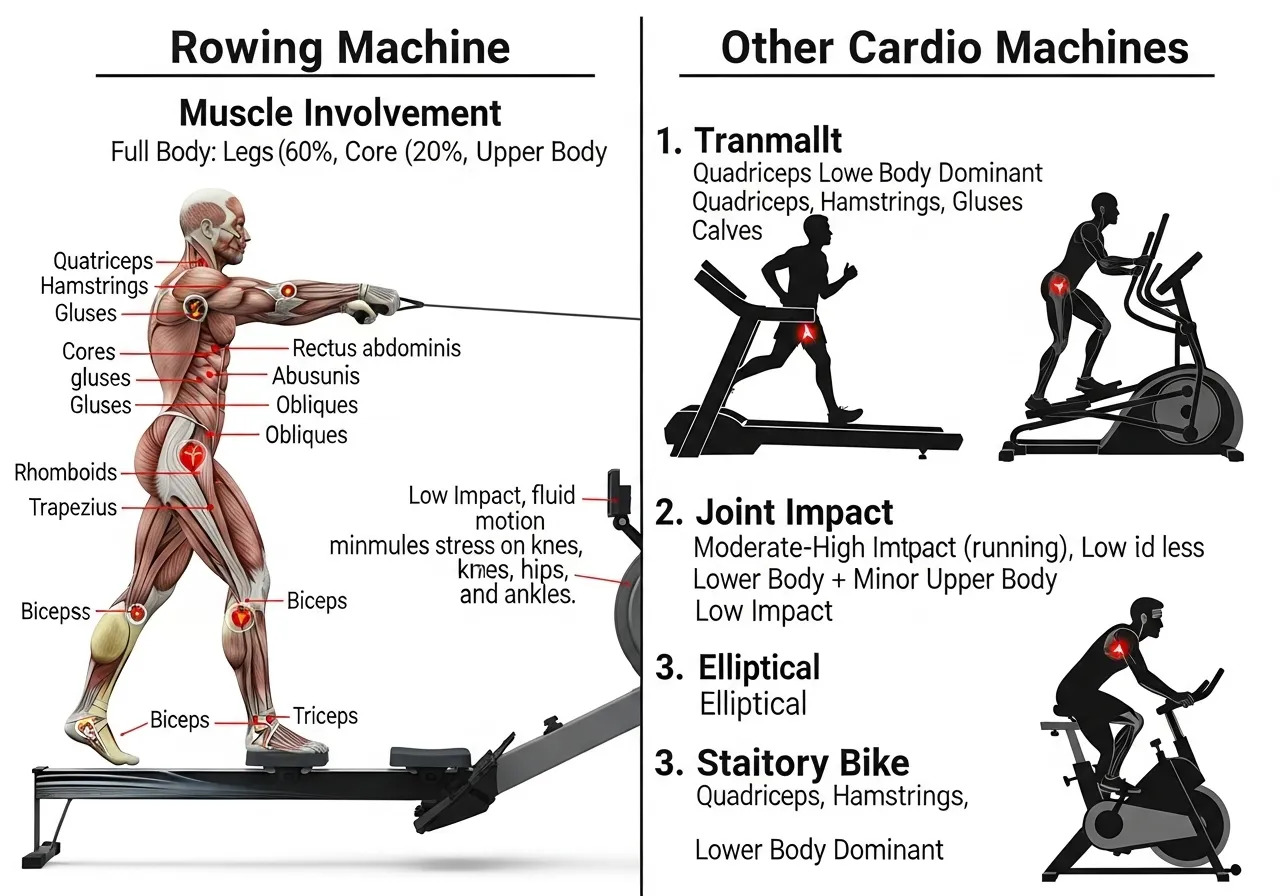
Rowing vs. Treadmill
The treadmill is the most popular cardio machine globally — and rowing’s strongest competitor for cardiovascular training effectiveness:
Quality
Rowing
Treadmill
Muscle involvement
~86% of muscles
Primarily lower body
Joint impact
None — zero impact
High — 2–3× bodyweight per step
VO2max potential
Very high
Very high (slightly higher in runners)
Caloric expenditure
High — whole-body engagement
High — proportional to body weight
Upper body development
Significant
Minimal
Rowing vs. Cycling
Cycling and rowing are both non-impact cardiovascular modalities, but the research highlights meaningful differences:
Rowing produces significantly greater stroke volume and cardiac output at matched heart rates compared to cycling — the superior cardiovascular adaptation mechanism identified in the research literature
Cycling can be performed at higher absolute VO2max-matching intensities for longer than rowing for most people — the biomechanical familiarity of cycling and lower technical barrier allows sustained near-maximal output
For upper body development and comprehensive musculoskeletal stimulus, rowing is clearly superior — cycling provides negligible upper body training
Rowing’s Low-Impact Advantage
The absence of ground impact during rowing is its defining practical advantage over running for many populations:
Post-injury and post-surgical individuals who cannot tolerate running impact can maintain cardiovascular fitness on the rowing machine at the same intensity — relevant for stress fracture recovery, knee and hip joint conditions, and lower limb tendinopathies
Heavier individuals who find running uncomfortable or unsustainable due to body weight impact can perform genuine high-intensity work on the rowing machine without the joint loading that limits running volume
Older adults with osteoarthritis who cannot run can use rowing as their primary high-intensity cardiovascular tool — with no loss of cardiovascular training quality
Rowing for Weight Loss and Body Composition
The caloric expenditure of rowing makes it one of the most effective machines for weight management — particularly when HIIT protocols are applied:
A 70 kg adult rowing at moderate-vigorous intensity burns approximately 400–600 kcal per hour — comparable to cycling and running at equivalent relative intensities
The whole-body muscle involvement of rowing produces higher post-exercise oxygen consumption (EPOC — the elevated caloric burn that continues after exercise ends) compared to lower-body-only exercise at the same external workload
The muscle mass development from rowing — particularly the latissimus dorsi, erector spinae, quadriceps, and posterior chain — increases resting metabolic rate over time, compounding the direct caloric expenditure of each session
The combination of cardiovascular and muscular demand makes rowing particularly time-efficient for body composition goals — a 20-minute HIIT rowing session produces metabolic and cardiovascular adaptations comparable to longer moderate-intensity sessions
Rowing and Mental Health: The Meditative Effect
Beyond the documented physical benefits, regular rowing practice produces psychological benefits that are increasingly recognised in sports psychology research:
The rhythmic, bilateral movement of rowing — the catch-drive-finish-recovery cycle repeated hundreds of times per session — creates a meditative state that regular rowers often describe as uniquely mentally restorative compared to other cardiovascular activities
The intensity required to maintain a challenging rowing session creates a state of focused engagement that displaces the rumination associated with anxiety and depression — a mechanism sometimes called “mental time out” from stressors
Group rowing (crew rowing on water, or class-based ergo sessions) adds the social connection dimension that amplifies the mental health benefits of physical activity — the shared effort and synchronised movement of crew rowing is a particularly distinctive social bonding experience
The practical outcome for recreational trainees: adding a weekly 2000m time trial benchmark to their program provides both the high-intensity training stimulus of near-maximal effort and the objective performance tracking that motivates continued engagement with the training process.
Rowing Machine Settings: Damper, Drag Factor, and Intensity
Damper Setting: What It Actually Does
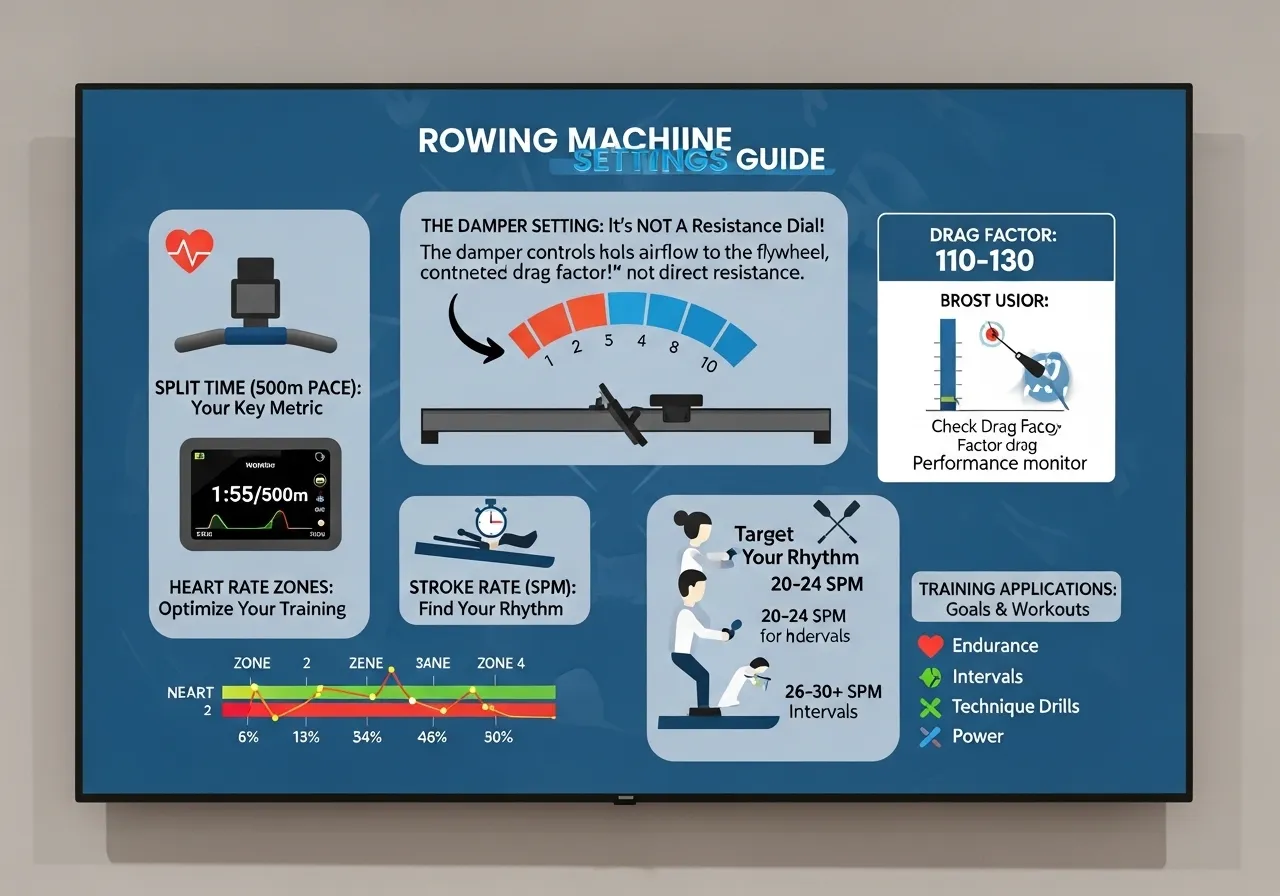
The damper lever on most rowing ergometers (typically numbered 1–10) controls air flow into the flywheel housing — one of the most misunderstood settings in rowing machine training:
Higher damper settings do not make rowing harder in a simple sense — they change the feel of the machine rather than the actual training load
The drag factor (a calculated measure of actual air resistance) is the meaningful metric — a drag factor of 110–130 for recreational users and 120–135 for competitive rowers is typically recommended
A common misconception: higher damper = more work. In reality, a higher damper forces a heavier stroke feel that benefits heavyweight rowers and strength-focused training but may reduce efficiency for lighter rowers performing aerobic work
Most recreational users should set the damper at 3–5 rather than the default-looking 10 — the middle settings produce the most effective training response for general fitness goals
The Split Time: Your Primary Performance Metric
Split time — displayed on the ergometer monitor as the time to row 500 metres at the current pace — is the standard rowing intensity metric:
A 2:00/500m split is a moderately strong recreational pace for most adults; elite rowers may hold 1:35–1:45/500m for 2000m time trials
The split time responds immediately to effort changes — making it the most practical real-time intensity guide during training
For heart rate-based training, a split time that produces 65–75% maximum heart rate represents Zone 2 training aerobic training; splits producing 80–90% max HR represent high-intensity training
Stroke Rate and Power Per Stroke
Stroke rate (strokes per minute, or spm) determines the training character of a rowing session:
Lower stroke rates (18–22 spm) at high power per stroke develop strength and force application — each stroke becomes a mini maximal effort
Higher stroke rates (24–32 spm) at moderate power per stroke develop cardiovascular endurance and technique under fatigue
The optimal race stroke rate for 2000m ergometer work is typically 28–34 spm for most rowers — competitive performance requires both high force and high rate simultaneously
Programming Rowing Within a Comprehensive Fitness Plan
Rowing fits into comprehensive training programs in multiple ways beyond standalone cardio sessions:
As a warm-up before strength training: 5–10 minutes of easy rowing activates the posterior chain, warms the shoulder and hip joints, and elevates heart rate gradually — superior to static stretching as a pre-lifting preparation
As active recovery between strength training days: 20–30 minutes at low intensity on rest days maintains cardiovascular fitness and promotes blood flow and recovery without adding meaningful muscle damage
As HIIT conditioning: Short, intense rowing intervals (20–40 second sprints with equal rest) produce significant cardiovascular and metabolic adaptations in sessions as short as 15–20 minutes — ideal for time-constrained training schedules
As primary cardiovascular training modality: Three to four weekly sessions of 20–45 minutes, systematically progressed in intensity and duration, produces comprehensive cardiovascular fitness development that equals or exceeds treadmill running for many fitness goals
The 20-Minute Rowing Workout: A Time-Efficient Complete Session
For individuals with limited time, a structured 20-minute rowing session provides more comprehensive training stimulus than most alternative 20-minute exercise options:
5 min: Easy rowing warm-up (18–20 spm, very easy pace)
2 min: Build from easy to moderate — gradually increasing power and rate
8 min: Moderate-vigorous continuous (2:15–2:30/500m target for intermediate)
3 min: Hard intervals — 30 sec hard / 30 sec easy × 3
2 min: Cool-down easy rowing
Total: 20 minutes → cardiovascular warm-up, aerobic base, intensity stimulus, recovery
This format within 20 minutes provides a complete session structure — warm-up, steady aerobic work, and brief intensity exposure — that develops all three energy systems and produces meaningful cardiovascular adaptation even on time-constrained days.
8-Week Rowing Machine Program
Program Design
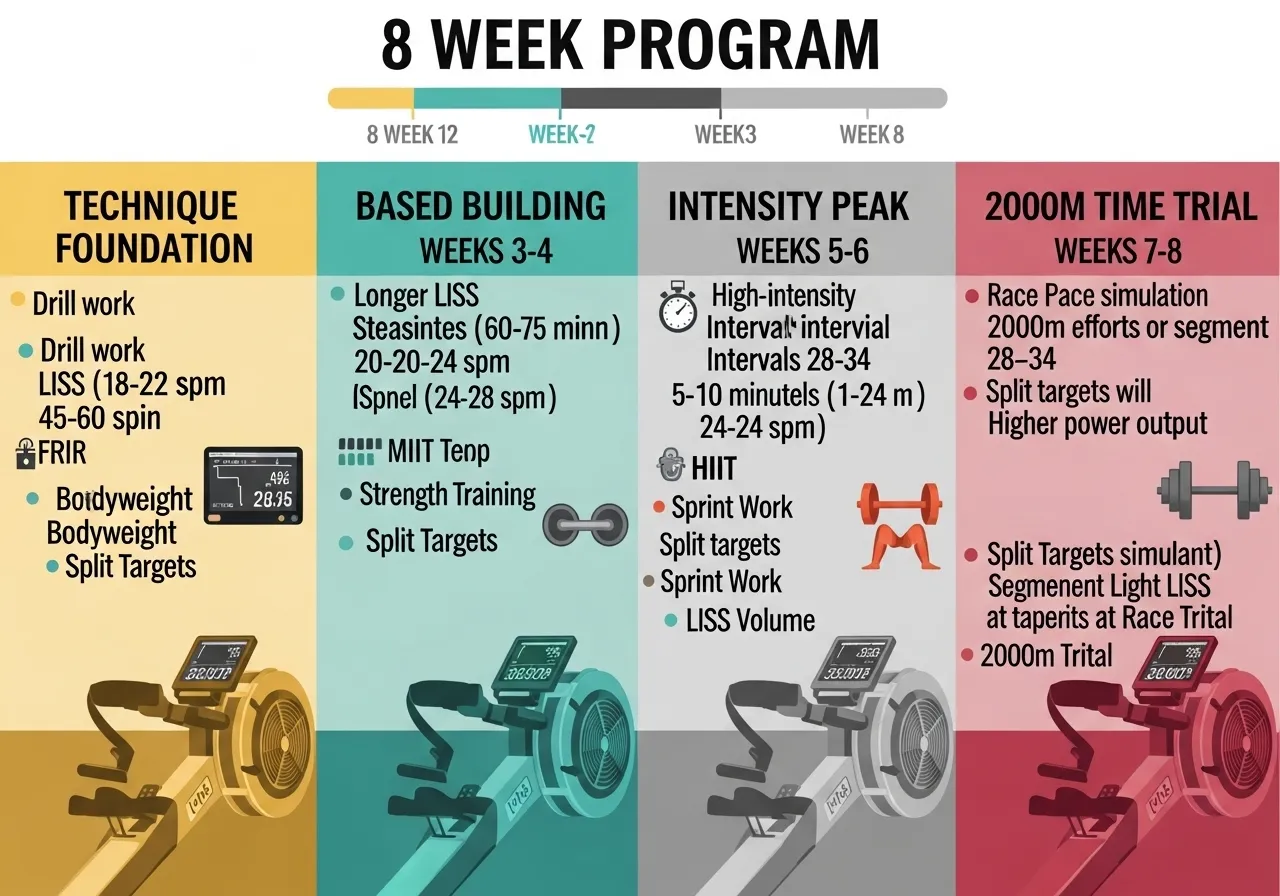
Three to four sessions per week, 20–45 minutes each. The program begins with technique development and short sessions to establish correct movement patterns before progressive intensity and duration increases. All sessions begin with 5 minutes of easy rowing warm-up and end with 5 minutes of easy cool-down rowing.
Phase 1 — Weeks 1–2 (Technique Foundation, 3 sessions/week):
10-minute continuous rowing at easy pace (conversational)
Focus: Drive sequence (legs → body → arms); recovery sequence (arms → body → legs)
Stroke rate target: 18–20 spm to allow attention to each phase
Stop and reset if technique breaks down rather than continuing with poor form
Phase 2 — Weeks 3–4 (Base Building, 3 sessions/week):
Session A: 20 min continuous at moderate pace (slightly breathless; 2:20–2:40/500m range)
Session B: 4 × 5 min @ moderate intensity, 2 min easy between
Session C: 25 min continuous easy (recovery session)
Stroke rate: 20–24 spm
Phase 3 — Weeks 5–6 (Intensity Introduction, 4 sessions/week):
Session A: 30 min continuous at moderate-strong pace
Session B: 8 × 500m @ hard effort (rate 24–26), 90 sec easy between
Session C: 20 min easy (active recovery)
Session D: 4 × 2000m @ moderate-strong, 2 min easy between
Stroke rate: 22–28 spm
Phase 4 — Weeks 7–8 (Peak, 4 sessions/week):
Session A: 2000m time trial (benchmark test) — maximum effort, record split time
Session B: 10 × 1 min on / 1 min off @ near-maximum effort (28–30 spm)
Session C: 30 min easy (active recovery)
Session D: 5000m at strong pace (rate 24–26) — aerobic threshold work
Rowing for Older Adults and Injury Rehabilitation
The rowing machine is one of the most appropriate exercise modalities for populations where running and other high-impact activities are contraindicated:
Older adults: The seated, supported position eliminates the balance and fall risk of treadmill training while providing full-range hip, knee, and shoulder movement. The progressive resistance of the ergometer allows intensity to be scaled from minimal to maximal, accommodating the wide fitness variation in older adult populations.
Post-surgical rehabilitation: Hip and knee replacement patients are frequently cleared for rowing before running — the controlled range of motion and absence of impact allows progressive loading within the prescribed post-operative parameters
Lower body injury: The full-body nature of rowing means it can be modified for lower body injuries — arm-only rowing (with legs extended and stationary) provides genuine cardiovascular training from the upper body alone, maintaining fitness during leg injury recovery
Spinal cord injury: Upper body rowing ergometers allow individuals with lower limb paralysis to achieve genuine cardiovascular training — research documents meaningful improvements in cardiorespiratory fitness and vascular health from upper-body rowing protocols in SCI populations
Rowing Machine Selection: Concept2 and Beyond
The Concept2 rowing ergometer is the industry standard for fitness and competitive rowing — used in all major rowing competitions and most research studies. Its air resistance flywheel produces a consistent, natural resistance feel that water-resistance and hydraulic resistance machines cannot replicate exactly:
Air resistance ergometers (Concept2 Model D, E) provide a resistance curve that increases with rowing power — making them the most natural feel for performance training
Water resistance ergometers provide a similar experience and are preferred by some rowers for the visual feedback of the spinning drum
Magnetic resistance ergometers allow quieter operation — relevant for apartment training environments — but produce a more mechanical feel that differs from natural rowing
Concept2’s Performance Monitor (PM5) provides the split time, stroke rate, caloric expenditure, and distance metrics that make structured training and progress tracking straightforward
The progressive nature of both the technique development and the fitness adaptations from rowing means that training continues to produce novel challenges for years after beginning — unlike exercise modalities where adaptation plateaus relatively quickly, the technical depth of rowing provides ongoing improvement opportunities that combine with the well-documented physiological adaptations to make it a uniquely sustainable long-term fitness practice.
Rowing Machine Safety, Common Errors, and Lower Back Health
The Lower Back Question
The rowing machine carries a reputation for causing lower back pain — and this reputation has both legitimate basis and significant nuance:
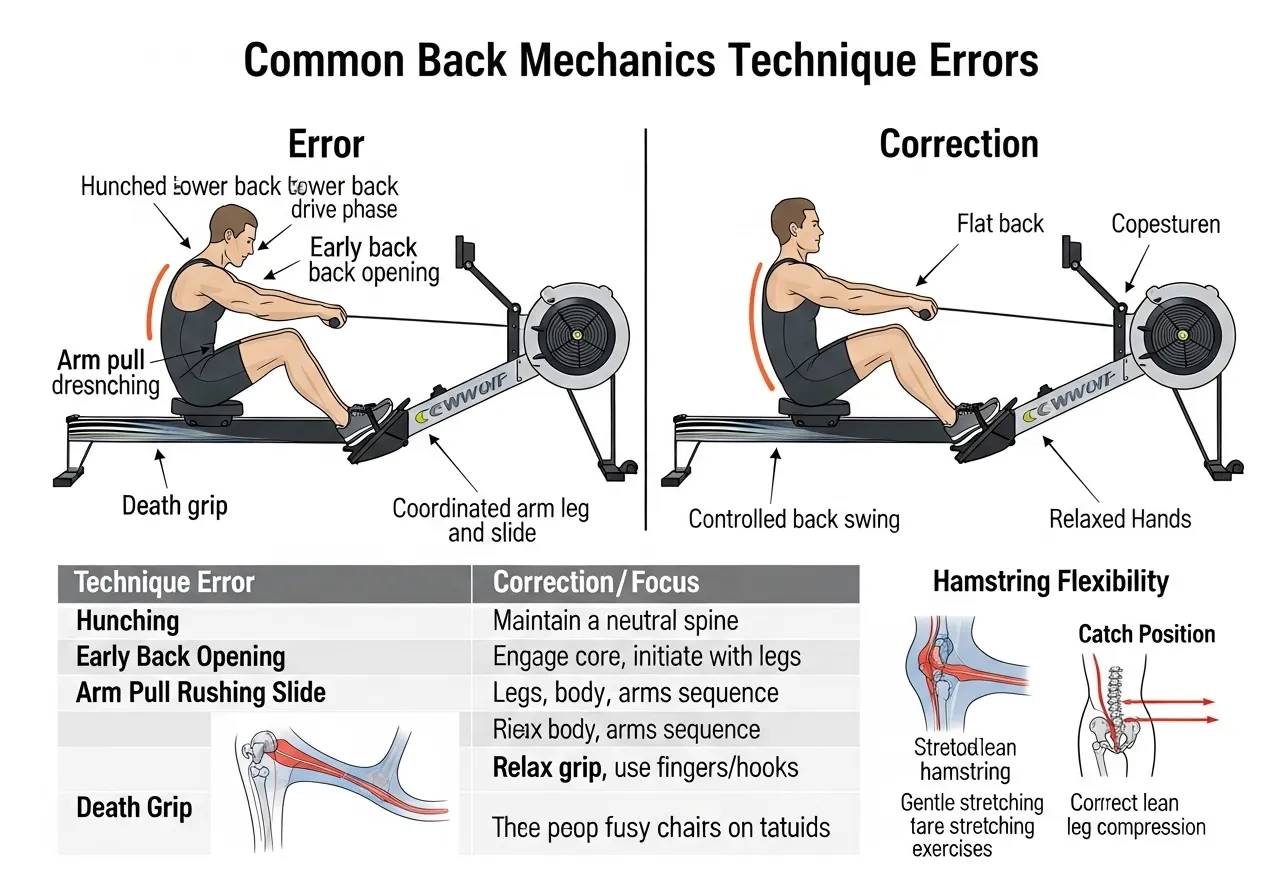
Poor technique — specifically lumbar rounding at the catch position and jerking the back open at the start of the drive — does create flexion-compression loading patterns at the lumbar spine that can aggravate or create lower back issues
Correct technique — maintaining a flat back through the full stroke, using the legs as the primary power source, and controlling the forward body lean at the catch — creates manageable lumbar loading that is within safe physiological ranges for healthy spines
The catch position specifically requires adequate hamstring flexibility — insufficient hamstring length causes the lower back to round as the knees compress, which becomes the lumbar stress point under the subsequent leg drive
Common Rowing Machine Errors
Error
Phase
Correction
Hunching (lower back rounding)
Catch and drive
Maintain flat back; reduce seat compression if hamstrings limit depth
Opening back too early
Start of drive
Suspend: legs push first; back angle constant until legs near extension
Pulling with arms first
Drive
Arms stay straight until legs are flat and body is open
Rushing the slide forward
Recovery
Arms → body → legs sequence; arms extend fully before seat moves
Death grip
All phases
Relaxed grip — hook fingers lightly; squeeze only through the drive
The rowing machine errors table provides a practical reference for periodic technique self-assessment — returning to these fundamentals periodically, even for experienced rowers, prevents the gradual technique drift that accumulates when training focus shifts entirely to intensity and performance metrics.
Rowing Machine FAQ
Periodising Rowing Training: From Beginner to Competitive
Structured periodisation of rowing training follows the same principles as other endurance sports — progressively building aerobic base before adding intensity, with planned deloads to manage fatigue accumulation:
Base phase (4–8 weeks): Predominantly aerobic steady-state rowing at 60–70% max HR, building weekly volume from 3 to 5 sessions per week. This phase establishes the aerobic foundation — mitochondrial density, lactate clearance capacity, and technique under low fatigue — before higher intensities are introduced.
Build phase (4–6 weeks): Progressively incorporating threshold intervals (20–40 minutes at 75–80% max HR) and moderate-intensity intervals — moving training stress toward the lactate threshold that determines sustained rowing performance.
Peak phase (2–4 weeks): High-intensity intervals (above lactate threshold), time trials, and reduced volume to sharpen fitness without accumulating further fatigue. The 2000m ergometer test is the standard benchmark.
Recovery phase (1–2 weeks): Reduced intensity and volume — 40–50% of peak volume at easy intensities. Essential for consolidating adaptations and preventing the overtraining that accumulates from sustained high-intensity training.
Nutrition Considerations for Rowing Training
The energy demands of rowing training are substantial — and nutrition timing relative to sessions significantly affects training quality and recovery:
Moderate-length sessions (20–40 min) can typically be performed in a fasted state without meaningful performance impairment — though individual tolerance varies
Sessions exceeding 45–60 minutes at moderate-high intensity benefit from carbohydrate availability — either a small pre-workout meal 60–90 minutes before or mid-session supplementation for sessions over 75 minutes
Post-rowing protein (0.3–0.4 g/kg body weight within 60 minutes of training) supports the muscle protein synthesis that the strength component of rowing training stimulates — particularly important for the posterior chain muscles that experience genuine hypertrophy stimulus from regular rowing
How long does it take to learn correct rowing technique?
The basic drive and recovery sequence can be learned to a functional standard in 2–4 sessions of focused practice. The beginner phase involves learning the arms → body → legs recovery sequence and the legs → body → arms drive sequence as abstract patterns, then gradually automating them so attention can shift to power application.
The refinements that distinguish good recreational rowing from technically excellent rowing — early back suspension at the catch, the timing of the body opening relative to leg extension, consistent handle height — develop over months of practice and often benefit from periodic video feedback or coaching review.
Is rowing enough exercise on its own?
For cardiovascular fitness, yes — rowing at appropriate intensity meets physical activity guidelines for cardiovascular health. For comprehensive fitness including strength and bone density (rowing is non-weight-bearing), rowing benefits from supplementation with resistance training. The combination of rowing for cardiovascular fitness and compound resistance training for strength produces more comprehensive fitness than either alone.
✅ Key Takeaways
Rowing activates approximately 86% of the body’s muscles per stroke — the most comprehensive cardiovascular and muscular stimulus of any common fitness machine
Rowing produces greater stroke volume and cardiac output than cycling at matched heart rates — confirming superior cardiovascular adaptation potential
HIIT rowing significantly improves VO2max, insulin sensitivity, and body composition including in populations with obesity and type 2 diabetes
The drive sequence (legs → body → arms) and recovery sequence (arms → body → legs) are the technical foundation of efficient rowing
Most recreational users should set damper at 3–5 — not 10 — for optimal training efficiency on the rowing ergometer
⚠️ Health & Fitness DisclaimerThis article is for general educational purposes only and does not replace professional medical advice. If you have cardiovascular, respiratory, or musculoskeletal conditions, please consult a qualified healthcare professional before beginning a swimming program. Swimming is one of the most physiologically complete forms of exercise available — simultaneously developing cardiovascular fitness,…
Warning Fitness Disclaimer: The information in this article is for general educational purposes only and does not constitute professional fitness or medical advice. Always consult a qualified healthcare professional before starting any new exercise program. The cardio mistakes guide Method That Changed Everything I Thought I Knew About Training For most of my training life,…
⚠️ Health & Fitness DisclaimerThis article is for general educational and informational purposes only and does not replace professional medical or fitness advice.If you have any pre-existing back, knee, or cardiovascular condition — please consult a qualified healthcare professional before starting any rowing program. The rowing machine mastery sits in an unusual category among cardio…
⚠️ Fitness Disclaimer: The information in this article is for general educational purposes only and does not constitute professional fitness or medical advice. Exercise carries inherent risks. Always consult a qualified healthcare professional or certified personal trainer before starting or modifying any exercise program, especially if you have a pre-existing medical condition, injury, or health…
⚠️ Fitness Disclaimer: The information in this article is for general educational purposes only and does not constitute professional fitness or medical advice. Always consult a qualified healthcare professional before starting any new exercise program. ⚠️ Cardiovascular Health Notice: If you have a history of heart disease, high blood pressure, or any cardiovascular condition, obtain…
⚠️ Fitness Disclaimer: The information in this article is for general educational purposes only and does not constitute professional fitness or medical advice. Always consult a qualified healthcare professional before starting any new exercise program. ⚠️ Cardiovascular Health Notice: If you have a history of heart disease, high blood pressure, or any cardiovascular condition, obtain…