Leg Extension and Leg Curl Guide: EMG Research, Technique, Knee Health, and 8-Week Program
This article is for general educational purposes only and does not replace professional medical advice. If you have any knee, hip, or lower limb conditions, please consult a qualified healthcare professional before beginning leg machine training.
The leg extension and leg curl machines are two of the most commonly used resistance machines in gyms worldwide — and two of the most frequently misunderstood. They occupy a specific niche in lower body training that compound movements cannot fully replicate, yet they are often either overused as the primary lower body training tool or dismissed entirely as “non-functional” without understanding what they actually provide. (Related: hack squat guide) (Related: hamstring flexibility guide)
This guide covers the EMG research on quadriceps and hamstring activation, explains the open vs. closed kinetic chain distinction that defines how these machines differ from squats and deadlifts, details programming for hypertrophy, strength, and rehabilitation, and provides an 8-week lower body program that integrates machines with compound work.
Quadriceps and Hamstring Anatomy: What These Machines Actually Train
The Quadriceps: Four Muscles, One Function
The quadriceps femoris — the large anterior thigh muscle group — comprises four distinct muscles that share the common function of knee extension:
- Rectus femoris: The only quadriceps head that crosses both the hip and the knee — it assists with both knee extension and hip flexion. Its dual-joint function means that hip position significantly affects its length and activation during knee extension exercises.
- Vastus lateralis (VL): The largest quadriceps head — runs along the outer thigh and is the most consistently activated during all knee extension activities.
- Vastus medialis (VM) and vastus medialis oblique (VMO): The inner quadriceps head — responsible for the final degrees of knee extension and for patellar (kneecap) tracking. The VMO is frequently targeted in rehabilitation protocols for patellofemoral pain (pain around or beneath the kneecap from abnormal patellar tracking).
- Vastus intermedius (VI): The deepest head — lies beneath the rectus femoris and contributes to knee extension torque throughout the range of motion.
A PMC systematic review on leg press machine guide muscle activation found that the leg press exercise elicited the greatest EMG activity from the quadriceps muscle complex — specifically the vastus medialis and vastus lateralis as the most consistently and highly activated muscles — with overall muscle activation increasing as knee flexion angle and exercise intensity increased, confirming that deeper knee flexion angles and heavier loads both independently amplify the quadriceps training stimulus.
The Hamstrings: Two Functions, Two Training Demands
The hamstrings — the posterior thigh muscle group — consist of the biceps femoris long and short heads, the semitendinosus, and the semimembranosus. Critically, the hamstrings perform two distinct functions:
- Knee flexion: Drawing the heel toward the buttocks — the movement trained by the leg curl machine
- Hip extension: Driving the hip backward from a flexed position — the movement trained by Romanian deadlifts, hip thrusts, and similar hinge exercises
This dual function is the most important concept for hamstring training: the leg curl machine trains knee flexion specifically, but does not train hip extension. The Romanian deadlift guide trains hip extension but does not isolate the hamstrings at the knee. Comprehensive hamstring development requires both movement patterns.
A PubMed study on quadriceps-hamstring co-contraction found that hamstring co-contraction during quadriceps extension significantly reduced anterior tibial translation and internal tibial rotation at 30° of knee flexion, and reduced ACL in-situ forces at 15°, 30°, and 60° of flexion by 30–44% — demonstrating that the hamstrings serve as critical dynamic stabilisers of the ACL during knee extension, and that both knee flexor and knee extensor strength must be developed for knee joint safety.
Open Kinetic Chain vs. Closed Kinetic Chain: The Essential Distinction
The leg extension and leg curl machines operate in the open kinetic chain (OKC) — the foot is free to move in space rather than being fixed to the ground. This creates a fundamentally different loading condition from closed kinetic chain (CKC) exercises like squats and leg press:
| Variable | Open Kinetic Chain (Leg Extension/Curl) | Closed Kinetic Chain (barbell back squat/Leg Press) |
|---|---|---|
| Foot position | Free — foot moves through space | Fixed — foot drives against a surface |
| Joint isolation | Single joint (knee only) | Multi-joint (hip + knee + ankle) |
| Functional transfer | Lower — movement pattern unlike most activities | Higher — replicates squat and step patterns |
| Isolation quality | Higher — cannot compensate with adjacent joints | Lower — hip and ankle can compensate for knee weakness |
| Best use | Hypertrophy finish, quad/ham imbalance, rehab | Primary strength builder, athletic training |
An MDPI study comparing OKC and CKC exercises on quadriceps muscle thickness found that open kinetic chain exercise produced greater increases in vastus intermedius thickness with a medium-to-large effect size compared to closed kinetic chain exercise — while CKC showed superior VMO activation — suggesting that each kinetic chain type develops different components of the quadriceps musculature and both contribute uniquely to comprehensive quadriceps rehabilitation and development.
Quadriceps Strengthening and Knee Osteoarthritis Management
Knee osteoarthritis (OA — the degenerative loss of articular cartilage in the knee joint, causing pain, stiffness, and functional limitation) is the most common joint condition in adults over 50, and quadriceps strength is one of the most researched modifiable risk factors for both its onset and its progression.
Adequate quadriceps strength provides dynamic stabilisation of the knee joint, reducing the compressive and shear forces that the passive structures (cartilage, menisci, ligaments) must absorb during weight-bearing activities. Individuals with knee OA consistently demonstrate quadriceps weakness — averaging 20–40% less quadriceps strength than age-matched non-OA controls — and quadriceps strengthening programs are among the most evidence-supported non-pharmacological interventions for OA symptom management.
The leg extension machine and leg press are both used in OA rehabilitation protocols — the machine’s controlled range of motion, adjustable load, and supported position make it accessible to individuals who cannot safely perform deep free-weight squatting due to pain, and allows graduated loading from very light to challenging without the technical demands of barbell exercises.
Integrating machine-based quadriceps training alongside compound exercises may therefore serve both performance and longevity goals by building the muscular support system that protects the knee joint throughout decades of training and daily activity.
Leg Extension Machine: Technique, Programming, and the Safety Debate
Correct Technique on the Leg Extension Machine
The leg extension machine’s simplicity is deceptive — several setup and technique variables meaningfully affect both training effectiveness and knee health:
Pad position: The lower leg pad should contact the lower third of the shin — not the ankle or mid-shin. Ankle contact creates excessive leverage; mid-shin reduces the available range.
Back position: Fully back in the seat — the thigh should be fully supported with no gap between the seat and the rear of the knee at the starting position.
Range of motion: Full extension at the top (legs straight but not forcefully hyperextended) and full return to approximately 90° knee flexion or beyond at the bottom.
The Leg Extension Safety Debate: Evidence vs. Caution
The leg extension has been labelled “dangerous for the knees” by some trainers — primarily citing ACL stress concerns. The research paints a more nuanced picture:
- ACL stress is highest during leg extension at knee angles between 15–30° from full extension — the final few degrees of extension produce greater anterior tibial shear force than mid-range positions
- For healthy individuals with intact ACLs, this stress is within safe physiological limits at moderate training loads — the same anterior tibial shear occurs during activities far more common than gym training (walking downstairs, squatting, decelerating from a run)
- For individuals post-ACL reconstruction or with specific knee pathology, leg extension programming may require modification — avoiding the terminal 15–30° of extension, using lighter loads, or performing the exercise later in rehabilitation under physiotherapy guidance
The evidence-based conclusion: leg extension is safe for healthy individuals when performed through a controlled range of motion at appropriate loads. The safety concerns are most relevant for specific post-surgical populations where a physiotherapist’s guidance should determine the appropriate protocol.
Optimal Range of Motion for Quad Hypertrophy
Research on range of motion effects on muscle hypertrophy consistently shows that greater ROM produces greater muscle growth when matched for volume. For the leg extension machine, this means:
- Full ROM (90° to 0° knee flexion) produces superior hypertrophy to partial ROM at the same load and volume
- Starting from a position of greater knee flexion (beyond 90° if the machine allows) may increase the stretch-mediated hypertrophy stimulus — muscle growth appears to be amplified when the muscle is trained in a lengthened position
- Partial reps used to extend a set beyond muscular failure (drop sets, partial finishers) add volume at the point of highest mechanical load — the mid-range and terminal extension position where torque is highest
Leg Extension Machine Variations
Several modifications of the standard leg extension expand the training stimulus:
- Single-leg leg extension: Trains each leg independently — exposing and correcting left-right quad strength asymmetries that bilateral leg extension masks. Particularly valuable post-injury or post-surgery to ensure the recovering limb reaches the strength of the unaffected side before returning to bilateral loading.
- Tempo manipulation: Extending the eccentric phase to 4–5 seconds dramatically increases time under tension and metabolic stress without requiring heavier loads — useful for adding hypertrophy stimulus when the heaviest available plates are insufficient for progressive overload.
- Peak contraction hold: Pausing 2–3 seconds at full knee extension increases the isometric loading of the VMO at its most mechanically effective position — a useful technique for trainees targeting VMO development for patellar tracking improvement.
Understanding these structural mechanisms — rather than applying blanket safety judgements to the machine — allows trainees to make informed decisions about when to use full ROM, when to modify, and when to prioritise compound movements over isolation work for their specific goals and health status.
Leg Curl Machine: Prone vs. Seated, and Hamstring Training Science
Prone vs. Seated Leg Curl: The Position Difference
Two major leg curl machine configurations exist, each with distinct biomechanical effects:
- Prone leg curl (lying face down): Hip is in a neutral-to-slightly-extended position, which shortens the biarticular hamstring heads (the long head of biceps femoris and the semitendinosus — the muscles that cross both the hip and the knee). Contraction from a shortened starting position reduces the active range where the muscle is under greatest stretch.
- Seated leg curl (sitting upright): The seated position places the hip in approximately 90° of flexion, pre-stretching the biarticular hamstring heads. This pre-stretched starting position increases the length of the hamstrings at the beginning of the contraction and may enhance the hypertrophic stimulus by training the muscle in its lengthened state — consistent with growing research on stretch-mediated hypertrophy.
For hypertrophy specifically, the seated leg curl may produce slightly greater hamstring development due to the hip flexion position, though individual variation in machine fit and comfort affects real-world results. For general strength development, both variations are effective and the practical availability of equipment may guide selection.
The Hamstring-to-Quadriceps Strength Ratio
The hamstring-to-quadriceps (H:Q) strength ratio — the conventional isokinetic ratio comparing peak hamstring to peak quadriceps torque — is one of the most researched parameters in knee injury prevention. A ratio below 0.6 (hamstrings producing less than 60% of quadriceps peak torque) has been associated with increased hamstring strain risk in multiple studies.
Practical implications:
- Trainees who have performed primarily quad-dominant training (squats, leg press) without dedicated hamstring work frequently exhibit low H:Q ratios
- Testing both leg extension and leg curl performance at the same weight reveals this imbalance — a trainee who can leg extend 80 kg but can only leg curl 35 kg has a concerning ratio regardless of absolute strength level
- Programming equal volume of knee flexion and knee extension work — rather than performing only squats and leg press without isolation work — may reduce this imbalance over time
Nordic Curl: The Evidence-Based Alternative
The Nordic hamstring curl (kneeling with feet secured, lowering the body toward the floor using the hamstrings as a brake) is the most researched eccentric hamstring exercise and has consistently shown dramatic hamstring strain prevention in team sports:
- It trains the hamstrings eccentrically at long muscle lengths — the position in which hamstring strains most commonly occur during sprinting
- It requires no machine — only a secured foot anchor (partner, bar pad, or Nordic curl bench)
- It is significantly harder than the leg curl machine and may require weeks of regression work before a full Nordic curl is achievable for beginners
Hamstring Training for Running Performance
Hamstring strains are the most common muscle injury in sprinting and field sports — and the most frequently recurring injury in athletes who return to full training before adequate strength is restored. The leg curl machine plays a specific role in hamstring strain prevention and rehabilitation:
- The prone leg curl at higher loads trains the eccentric hamstring strength at shorter muscle lengths — relevant to the late swing phase of sprinting where the hamstring decelerates the extending knee
- The seated leg curl at higher hip flexion angles trains hamstring strength at longer muscle lengths — relevant to the early swing phase where the hamstring must control initial knee extension
- Combining both curl variations within a program addresses the full range of positions where hamstring strains occur during sprinting biomechanics — neither variation alone covers the complete injury risk profile
Comparing Machine and Free Weight Hamstring Exercises
Each hamstring training approach has a distinct biomechanical profile that makes it valuable in different contexts:
| Exercise | Peak Loading Position | Best Quality Trained |
|---|---|---|
| Romanian deadlift | Long length (hip flexed) | Hip extension strength, posterior chain |
| Seated leg curl | Long length (hip flexed) | Knee flexion, long-length hypertrophy |
| Prone leg curl | Short length (hip neutral) | Knee flexion, shorter-length endurance |
| Nordic curl | Long length (hip neutral, knee extended) | Eccentric strength, sprint injury prevention |
Including at least two different hamstring exercises that differ in their hip position (one hip-flexed, one hip-neutral) produces the most comprehensive hamstring stimulus available — training the muscle across its full functional range rather than in a single positional bias.
Is the Leg Press a Better Alternative to Squats?
What the Leg Press Can and Cannot Do
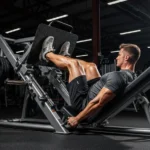
The leg press (a seated machine where the feet drive a weighted footplate away from the body) occupies a middle ground between isolation machines and compound free weight exercises. Understanding its specific value helps programme it appropriately:
Advantages over barbell squats for specific contexts:
- Allows very heavy quadriceps and glute loading without the spinal and upper body fatigue that barbell squats accumulate — useful when the goal is maximum lower body volume without taxing the upper body or spine for subsequent exercises
- More accessible for beginners who lack the thoracic mobility, ankle dorsiflexion, or hip flexibility for safe deep barbell squatting
- Post-surgical populations who are cleared for loaded leg pressing before returning to free weight squatting — the guided movement path and controllable range of motion make it appropriate earlier in rehabilitation
What the leg press cannot replicate from barbell squats:
- Core and spinal stability demand — the backrest eliminates all axial loading, removing the erector spinae and core training stimulus that makes barbell squatting a systemic strength builder
- Balance and proprioceptive development — the guided movement requires no single-leg stability
- Hip extension loading under axial compression — the combination of spinal loading and hip extension that develops the posterior chain synergistically
Foot Placement on the Leg Press: Changing the Stimulus
Foot placement on the leg press footplate meaningfully shifts the muscle emphasis:
| Foot Placement | Primary Emphasis Shift | Mechanical Reason |
|---|---|---|
| Low on plate | Greater quadriceps | Increases knee flexion range at bottom |
| High on plate | Greater glutes and hamstrings | Increases hip flexion at bottom position |
| Wide stance, toes out | Greater inner quad (VMO) and inner thigh | Hip abduction increases hip adductor loading |
| Narrow stance | Greater outer quad (VL) | Reduces hip abductor contribution |
Periodisation Approaches for Machine-Based Lower Body Training
Machine exercises respond well to the same periodisation principles as compound lifts:
- Hypertrophy blocks (8–15 reps, 65–75% of machine’s maximum load): Higher volume, moderate loads, shorter rest periods (60–90 seconds) — accumulating the mechanical tension and metabolic stress that drive muscle growth. The controlled environment of machines makes them particularly suitable for the higher-rep, higher-volume work of hypertrophy blocks.
- Strength blocks (6–10 reps, 75–85%): Heavier loads, longer rest periods — developing the maximum force production capacity and neural efficiency that carries over to compound movement performance. Heavy leg extensions and curls in the 6-rep range develop the specific quad and hamstring strength that compound movements benefit from.
- Deload weeks: Reducing machine exercise volume by 40–50% every 4–6 weeks allows the connective tissues of the knee joint — tendons, cartilage, and menisci — to recover from the cumulative loading that machine isolation work produces. The knee is a highly loaded joint in leg machine training, and adequate recovery prevents the cumulative stress that leads to chronic pain.
The combination of machine-based isolation exercises and compound free weight movements creates the complete lower body development stimulus that neither approach alone provides — machines for targeted hypertrophy and joint-specific isolation, compound lifts for functional strength, balance, and systemic training adaptation.
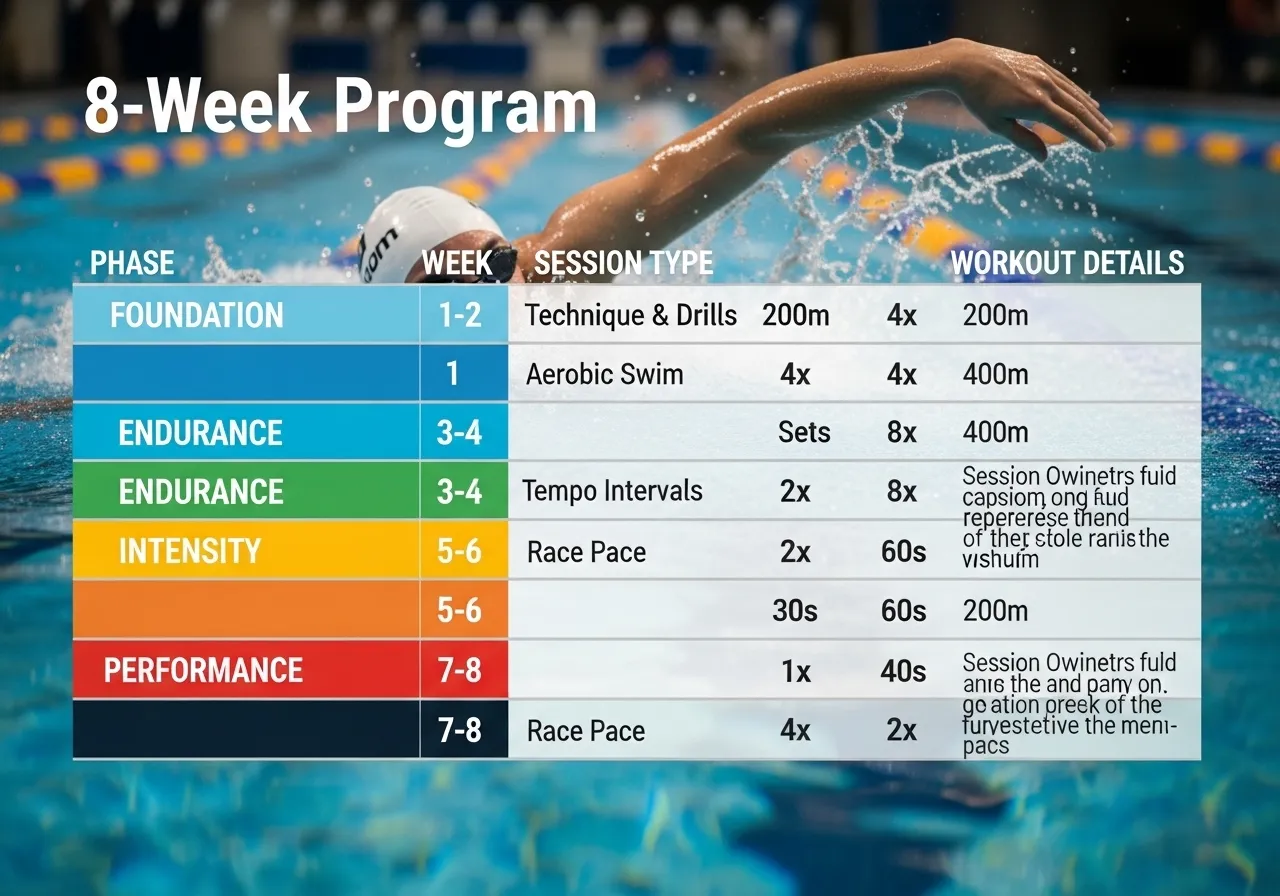
8-Week Lower Body Machine and Compound Program
Program Philosophy: Machines as Complements, Not Replacements
This program treats leg extension, leg curl, and leg press as targeted accessory tools that complement compound movements — not as replacements for them. The compound movements (squat, Romanian deadlift, Bulgarian split squat) build the foundation; the machines develop the specific quad and hamstring qualities that compound movements alone undertrain.
Session A (Quad Focus):
Barbell squat or goblet squat: 4 × 8
Leg press (standard placement): 3 × 12
Leg extension: 3 × 12–15 (full ROM, controlled 3-sec eccentric)
Leg curl: 3 × 12–15
Session B (Posterior Chain Focus):
Romanian deadlift: 4 × 8
Bulgarian split squat: 3 × 10 each side
Seated leg curl: 3 × 12
Single-leg leg press: 3 × 10 each side
Session A:
Barbell squat: 4 × 6 @ 75%
Leg press (high foot placement): 4 × 10
Leg extension: 4 × 12 (add drop set on final set)
Prone leg curl: 4 × 12
Session B:
Romanian deadlift: 4 × 8 @ 70%
Seated leg curl: 4 × 10
Nordic curl (assisted): 3 × 5
Leg press (low foot): 3 × 12
Session A:
Leg press: 5 × 10 (moderate weight, full depth)
Leg extension superset: 4 × 12 then immediately 10 partials (burn out)
Squat (moderate): 3 × 10
Session B:
Romanian deadlift: 4 × 10
Seated leg curl superset: 4 × 10 then immediately leg curl slow eccentric 5 × 5 sec
Nordic curl: 3 × 4
Hip thrust: 3 × 12
Session A:
Barbell squat: Work up to top set of 4 @ 82%; 2 back-off × 8 @ 70%
Leg press heavy: 4 × 6
Leg extension: 3 × 10 heavy
Session B:
Romanian deadlift: Top set of 4 @ 82%; back-off × 8
Seated leg curl: 4 × 8 heavy
Nordic curl: 4 × 4 (unassisted or minimal assist)
Leg curl prone: 3 × 10
How often should I train legs with machines?
Two to three leg training sessions per week, with at least 48 hours between sessions targeting the same muscles, is the evidence-based frequency for both muscle development and tissue recovery. The knee joint — its cartilage, tendons, and surrounding musculature — may require longer recovery from heavy machine work than the muscles alone.
A practical structure for intermediate trainees: two sessions per week that each include 2–3 compound lower body movements and 1–2 machine isolation exercises produces adequate stimulus for continued development without the joint wear accumulation that daily heavy machine training can create over months of training.
Knee Health, Quad-Hamstring Balance, and Injury Prevention
Patellofemoral Pain and the VMO Connection
Patellofemoral pain syndrome (PFPS — pain around or beneath the kneecap during activities that load the knee joint, such as running, squatting, and stair climbing) is among the most common training-related knee complaints. It is strongly associated with relative VMO weakness and subsequent abnormal patellar tracking (the kneecap tracking laterally in its groove rather than centrally).
The leg extension machine in the 0–30° knee flexion terminal range specifically loads the VMO — the range in which it reaches peak activation and where its patellar stabilisation function is most important. This makes terminal-range leg extensions a valuable tool in PFPS rehabilitation protocols, despite being the range most often flagged as potentially dangerous due to ACL considerations.
Key distinction: the VMO-loading benefit of terminal extension is most relevant for PFPS patients with intact ACLs, not for post-ACL reconstruction patients where anterior tibial shear in terminal extension may be contraindicated. Different knee conditions require different approaches — physiotherapy assessment determines which range is appropriate for each individual.
Warm-Up Strategy for Knee Machine Training
The knee joint performs best with adequate synovial fluid distribution and local tissue temperature before heavy loading:
- 5–10 minutes of light cardiovascular activity (stationary bike, walking) before knee isolation work promotes synovial fluid (the lubricating fluid in the knee joint) redistribution and tissue warming
- 2–3 warm-up sets of leg extension and leg curl at 30–50% of working weight before working sets reduces stiffness and allows the patella to track correctly through the movement before heavy loads are applied
- Foam rolling the quadriceps, hamstrings, and IT band (iliotibial band — the thick connective tissue running from the hip to the lateral knee) before knee machine training reduces tissue stiffness that can alter patellar mechanics under load
Common Errors and Their Corrections
| Error | Exercise | Correction |
|---|---|---|
| Swinging / momentum use | Leg extension | 2-sec concentric, 3-sec eccentric; no jerking |
| Not reaching full extension | Leg extension | Reduce load until full ROM is achievable |
| Hips rising off seat | Leg curl | Brace core; reduce load; or switch to seated curl |
| Gripping handles too hard | Both machines | Relaxed grip — the legs are working, not the arms |
| Knee misaligned on leg press | Leg press | Knees track over 2nd toe throughout; check foot width |
Tracking both leg extension and leg curl performance over the program — and maintaining a rough 0.6:1 hamstring-to-quadriceps ratio in the loads used — provides an objective guide for whether hamstring or quadriceps volume needs adjustment to maintain the balance that supports long-term knee health and athletic performance.
Leg Machine Training FAQ
Should I do leg extensions before or after squats?
For most training goals, performing squats (and other compound movements) before leg extensions preserves the neuromuscular freshness needed for heavy compound loading. Performing leg extensions first (pre-exhaustion) would reduce the load achievable on squats — acceptable if hypertrophy is the specific goal and the pre-exhaustion effect is intentionally used, but counterproductive if maximising squat strength or volume is the priority.
One practical exception: performing a light set of leg extensions as an activation warm-up before squats may improve VMO activation and patellar tracking during the subsequent squat sets — particularly relevant for individuals with patellofemoral pain who benefit from VMO pre-activation before loading the knee in deeper squat positions.
Can I build significant quadriceps size using only machines?
Yes — the quadriceps respond to mechanical tension and metabolic stress regardless of whether the load is delivered through a barbell or a machine. Research on machine versus free weight training for hypertrophy does not show significant differences in muscle growth when total load and volume are matched.
The practical advantage of including both approaches is variety of stimulus — the leg press and leg extension load the quadriceps in different portions of their force-velocity curve and with different co-activation patterns, producing a more complete development stimulus than either alone.
Is the leg curl machine important if I already do Romanian deadlifts?
Yes — for the specific knee flexion function of the hamstrings. Romanian deadlifts develop the hip extension function of the hamstrings extremely well, but do not train the knee flexion component with significant resistance. A hamstring trained exclusively through hip extension exercises will have well-developed muscle mass but potentially weak knee flexion strength — a combination that may increase hamstring strain risk during sprinting, where the hamstrings must simultaneously extend the hip and decelerate knee extension.
Including seated or prone leg curls alongside Romanian deadlifts covers both functions of the hamstrings — hip extension and knee flexion — producing more comprehensive posterior chain development than hip-dominant training alone.
- Open kinetic chain machines (leg extension, leg curl) develop the quadriceps and hamstrings in their isolated functions — complementing, not replacing, compound movements that train multiple joints together
- Greater knee flexion angle and heavier loads both increase quadriceps EMG activation on the leg press and leg extension machines
- Hamstring co-contraction during knee extension reduces ACL in-situ forces by 30–44% — training both sides of the knee joint is a direct injury prevention strategy
- The seated leg curl trains the hamstrings in a pre-stretched (hip-flexed) position that may enhance hypertrophy compared to prone curl variations
- An H:Q ratio below 0.6 on isokinetic testing is associated with hamstring strain risk — using both leg curl and compound hamstring work to balance quad and hamstring development may reduce this risk