Most people who exercise do both strength training and cardiovascular work. They are not strength athletes or endurance athletes. They are general fitness trainees who want to be strong, have good cardiovascular health, and maintain a body composition that reflects consistent training. For these people, concurrent training is not a choice. It is the default.
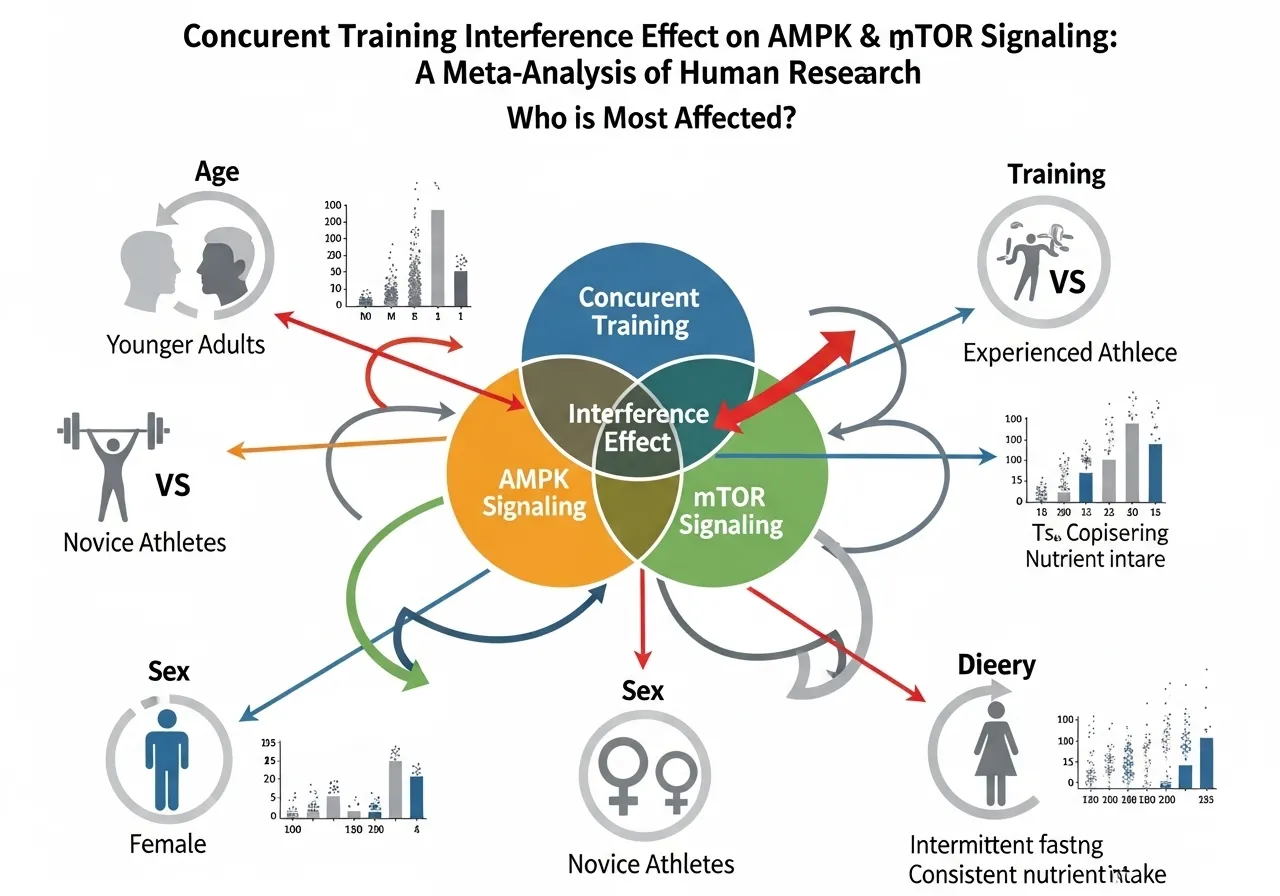
The interference effect is the name given to the observation that combining strength and endurance training in the same programme produces smaller gains in each quality than training either quality in isolation. The molecular basis involves the competing signalling pathways: endurance exercise activates AMPK (AMP-activated protein kinase), which inhibits mTOR, the primary anabolic signalling pathway that resistance training activates. Two pathways pulling in opposite directions within the same training environment are the proposed mechanism for why gains are compromised.
The research, however, tells a more nuanced story. The interference effect is real for specific populations under specific training conditions. It is substantially less significant for most recreational trainees than the simple AMPK-mTOR competition model suggests. This guide covers what the current evidence actually shows about concurrent training interference, which variables determine its magnitude, how training order affects both molecular signalling and practical performance, and how to structure a concurrent training programme that develops both strength and cardiovascular fitness effectively.
The Interference Effect: What the Research Actually Shows vs What Is Commonly Claimed
The Original Interference Effect Claim and Its Limitations
The interference effect concept originates from Hickson’s 1980 study, which found that subjects who combined strength and endurance training gained less strength than those who trained only for strength. This finding generated decades of research and widespread practical concern that cardio would undermine strength gains. The original study, however, used unusually high volumes of both strength and endurance training simultaneously, producing fatigue accumulation that would compromise any training quality regardless of interference mechanisms.
Subsequent research consistently found smaller interference effects than the original Hickson data suggested, with many studies finding no significant interference between moderate volumes of concurrent strength and endurance training in untrained and recreationally trained individuals. The interference effect is most consistently observed in highly trained athletes performing high volumes of both modes, not in the general fitness population combining reasonable amounts of each.
📌 Key Finding
Many human studies have not found mTOR signalling changes consistent with the molecular interference model. The theoretical AMPK-mTOR competition is more consistently observed in animal models and cell culture than in human concurrent training studies, suggesting the interference effect in practice is smaller than the molecular mechanism predicts.
📌 Key Finding
Men experience larger concurrent training interference than women, and trained athletes experience more interference than untrained individuals. Recreational trainees new to structured training are the least susceptible to interference effects, which is the population most concerned about them.
Training Order: Does Strength Before Cardio or Cardio Before Strength Actually Matter?
What the Research Shows About Training Sequence Effects
📌 Key Finding
Training sequence does not significantly affect endurance, hypertrophy, or maximum strength in most human trials. Strength-first order produces better neuromuscular adaptations for explosive power and relative strength. Perform strength training before high-intensity cardio when both qualities matter, but the long-term effect of sequence is smaller than acute molecular data suggests.
The 3-Hour Rule and Same-Session vs Separate-Session Timing
The AMPK elevation from high-intensity endurance training takes at least 3 hours to return to baseline. This means performing strength training within 3 hours of a high-intensity endurance session places the anabolic mTOR signalling environment under sustained AMPK inhibition. The practical implication: if strength and endurance training must occur in the same day, separating them by at least 3 hours produces a better molecular environment for strength adaptation than back-to-back sessions.
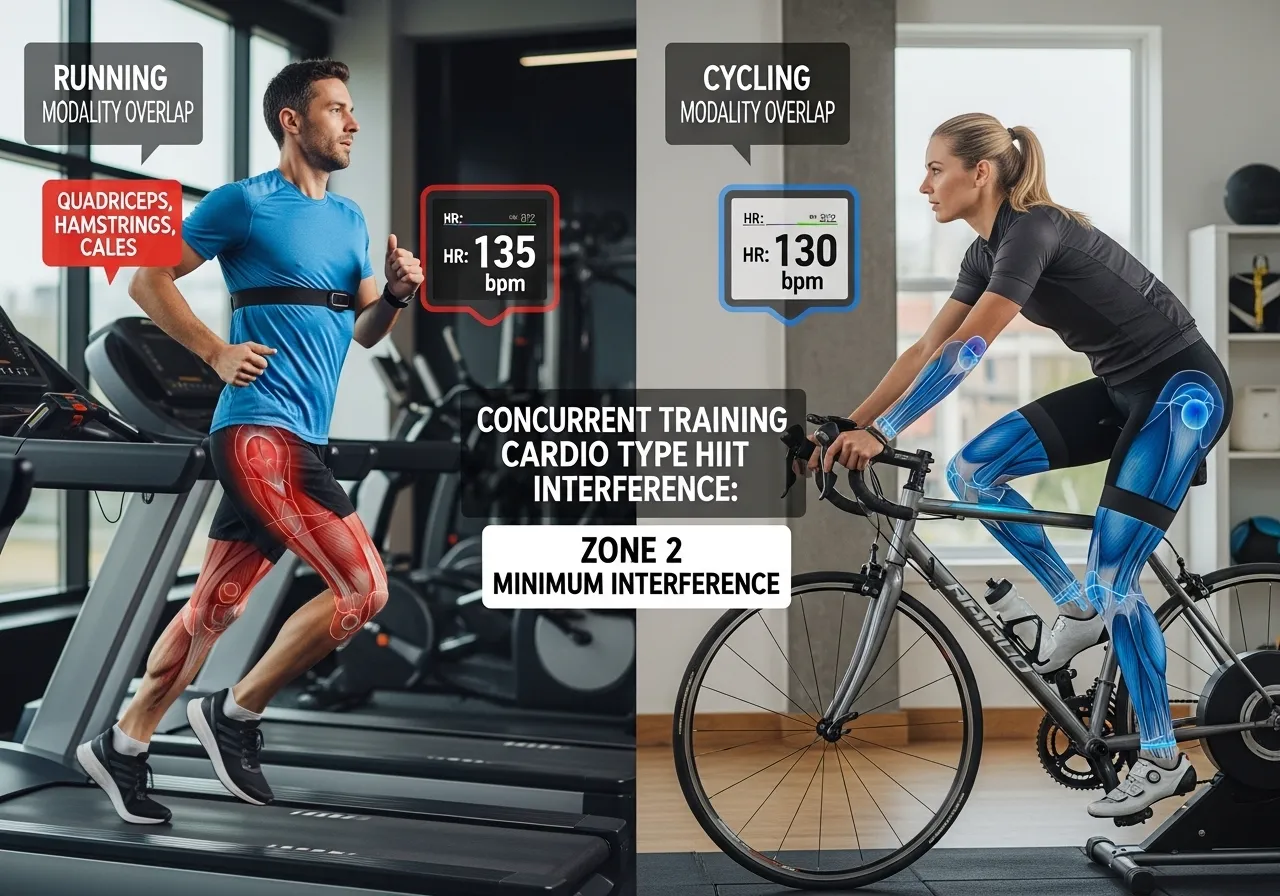
Performing both in the same session is common and produces adequate results for general fitness goals. The interference from same-session concurrent training at recreational volumes is less significant than the interference from performing strength training within the AMPK elevation window after high-intensity endurance work. Zone 2 cardio, performed at moderate intensity below the lactate threshold, produces a significantly smaller AMPK response than high-intensity intervals and creates minimal molecular interference with subsequent strength training, making it the preferred concurrent training modality for strength-focused trainees.
The Practical Order Recommendation
The evidence-based practical recommendation: perform strength training before cardio in the same session when both qualities are priorities. This preserves the neuromuscular quality required for heavy strength work by performing it before cardiovascular fatigue accumulates, and it minimises the duration of elevated AMPK during the post-strength anabolic window. The Zone 2 aerobic training that causes the least interference and how to programme it around strength sessions is covered in the Zone 2 training guide.
Cardio Type Matters: Which Cardiovascular Modalities Produce the Least Interference With Strength Gains
The HIIT Interference Problem
High-intensity interval training produces the strongest AMPK activation of any commonly used cardiovascular training modality. The combination of high metabolic demand, significant glycogen depletion, and acute muscle damage from high-intensity work creates a prolonged post-exercise catabolic environment that conflicts most directly with the anabolic signalling required for strength adaptation. HIIT performed in the same session as or within 3 hours of strength training represents the worst-case concurrent training scenario from an interference perspective.
This does not mean HIIT is incompatible with strength training. Elite athletes combine both successfully. It means that the timing and sequencing of HIIT relative to strength training requires the most deliberate management of any cardio modality. For trainees whose primary goal is strength development and who include HIIT for cardiovascular fitness, placing HIIT sessions on separate days from heavy strength sessions produces less interference than placing them on the same day.
Cycling vs Running: Why Modality Affects Interference Magnitude
Cycling produces less muscle damage and mechanical stress to the lower body than running at equivalent cardiovascular intensities. For trainees who strength train the lower body heavily with squats, deadlifts, and leg presses, running-based cardio accumulates muscle damage in the same primary muscles used in lower body strength training, increasing the recovery competition between the two modes. Cycling, with its lower impact and different muscle recruitment pattern at matched intensities, provides comparable cardiovascular stimulus with less direct competition for lower body muscle recovery resources.
This modality specificity also explains why upper body strength trainees who run for cardio typically experience less interference than leg-dominant strength trainees who run, while leg-dominant strength trainees who row for cardio experience similar competition for recovery resources because rowing heavily involves the same posterior chain muscles as deadlifts. Selecting cardio modalities that minimise overlap with the primary strength training muscle groups is the most practical structural approach to reducing concurrent training interference without sacrificing cardiovascular development.
Low-Intensity Steady State: The Minimum Interference Option
Low-intensity steady state cardiovascular training at Zone 1 to Zone 2 intensity, 60 to 70% of maximum heart rate, produces minimal AMPK activation, negligible muscle damage, and modest glycogen depletion. For strength-focused trainees who need cardiovascular fitness without compromising strength adaptation, Zone 2 walking, easy cycling, or light swimming represents the lowest interference cardiovascular option available. The cardiovascular adaptation from consistent Zone 2 work is meaningful and cumulative. The interference with strength training at this intensity is negligible for most practical purposes.
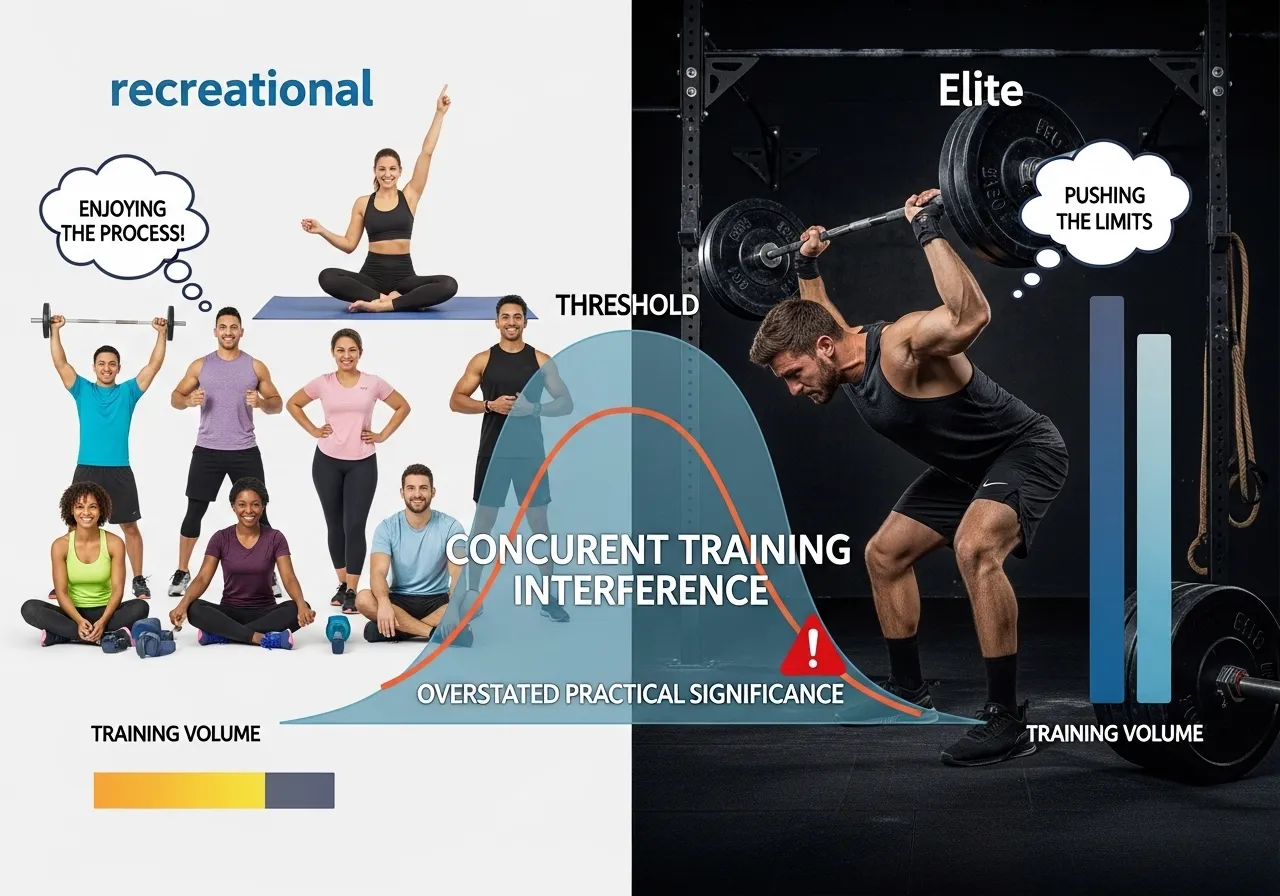
Is the Interference Effect a Real Concern for Recreational Trainees, or Is It Mostly an Elite Athlete Problem?
Why Interference Is Overstated for General Fitness Trainees
The interference effect research that produces the most dramatic findings consistently involves one or more of the following conditions: high training volumes in both modes, highly trained subjects already operating near their adaptive ceiling in both qualities, same-session high-intensity concurrent work, and minimal recovery time between sessions. Recreational trainees combining 3 weekly strength sessions with 2 to 3 moderate cardiovascular sessions typically meet none of these conditions simultaneously.
For most recreational trainees, the practical interference from well-structured concurrent training is negligible relative to the benefits of both modalities. The primary risk is not molecular interference but programming error: choosing training structures that accumulate fatigue faster than recovery can accommodate, regardless of the specific interference mechanism. A recreational trainee who performs brutal HIIT immediately before a heavy leg session and then wonders why their squats are declining is experiencing fatigue management failure, not interference effect.
The Interference Effect Is Largest Where It Matters Least for Most People
Competitive strength athletes who need every marginal gain from their strength training need to manage concurrent training interference carefully. Their training volumes and intensities are high enough, and their adaptations are close enough to their genetic ceiling, that a 5 to 10% reduction in strength adaptation rate from interference has meaningful competition implications. For recreational trainees who have significant distance from their genetic strength and cardiovascular ceilings, the same relative interference produces negligible absolute outcome differences.
A recreational trainee who would gain 10 kg on their squat in 12 weeks of strength-only training might gain 9.5 kg with the same strength programme combined with moderate cardio. The 0.5 kg difference is the interference effect at recreational training levels. This is real but irrelevant to outcomes that matter for health, body composition, and functional fitness. Concern about concurrent training interference is disproportionate to its practical impact for non-competitive general fitness trainees.
When Concurrent Training Interference Does Matter for Recreational Trainees
Interference effects become practically significant for recreational trainees when they are specifically training for a strength competition or performance test where maximum strength expression matters, when they add very high-volume cardio on top of an already demanding strength programme, or when their current programme produces inadequate recovery and any additional modality exacerbates the deficit. In these specific scenarios, managing concurrent training structure through modality selection, timing separation, and volume modulation produces meaningful outcome improvements.
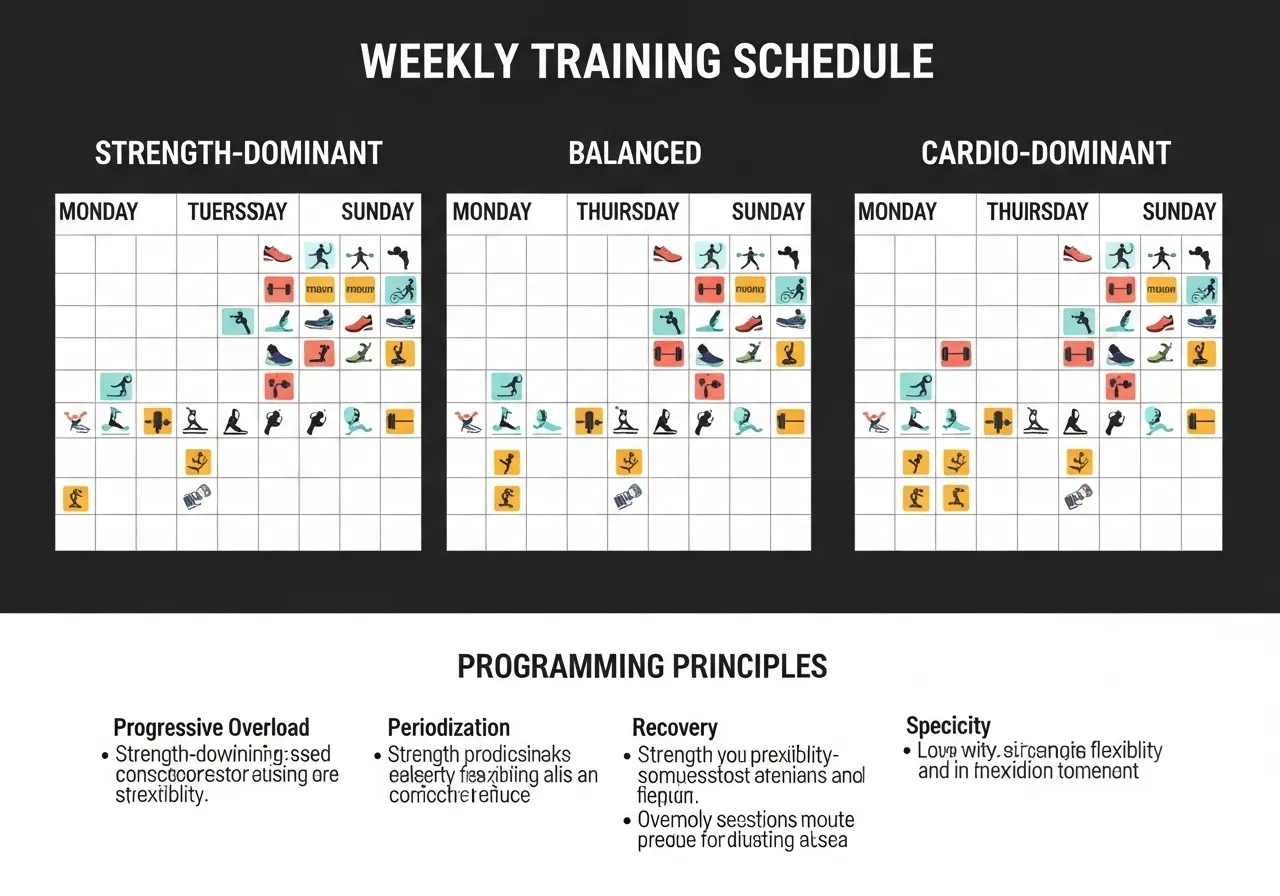
How to Structure a Concurrent Training Programme: Weekly Frameworks by Goal
Monday: Heavy strength training (lower body focus) Tuesday: Zone 2 cardio 30 to 45 minutes (low interference with Monday strength) Wednesday: Heavy strength training (upper body focus) Thursday: Rest or light active recovery Friday: Strength training (total body or accessory) Saturday: Moderate cardio 30 to 40 minutes (Zone 2 or moderate tempo) Sunday: Rest Key principle: Cardio sessions are low-to-moderate intensity and separated from heavy strength days by 24 hours minimum.
Framework 2: Balanced Development (Equal Strength and Cardio Priority)
Monday: Strength then 20 minutes moderate cardio (strength first) Tuesday: 40 minutes Zone 2 cardio Wednesday: Rest Thursday: Strength then 20 minutes moderate cardio Friday: 40 minutes cardio (Zone 2 or one quality tempo session) Saturday: Strength training Sunday: Rest or easy activity Key principle: When both occur on the same day, strength precedes cardio. High-intensity cardio is limited to one session per week.
Monday: Moderate cardio 40 minutes Tuesday: Strength training (upper body focus) Wednesday: Quality cardio session (tempo or intervals) Thursday: Easy cardio 30 minutes recovery pace Friday: Strength training (lower body focus, after easy Thursday) Saturday: Long easy cardio 60 to 90 minutes Sunday: Rest Key principle: Heavy strength sessions follow the day after easy cardio, not after quality cardio sessions. The tempo running and how it fits into this structure is covered in the tempo running guide.
Nutrition and Recovery: The Variables That Determine Whether Interference Becomes a Real Problem
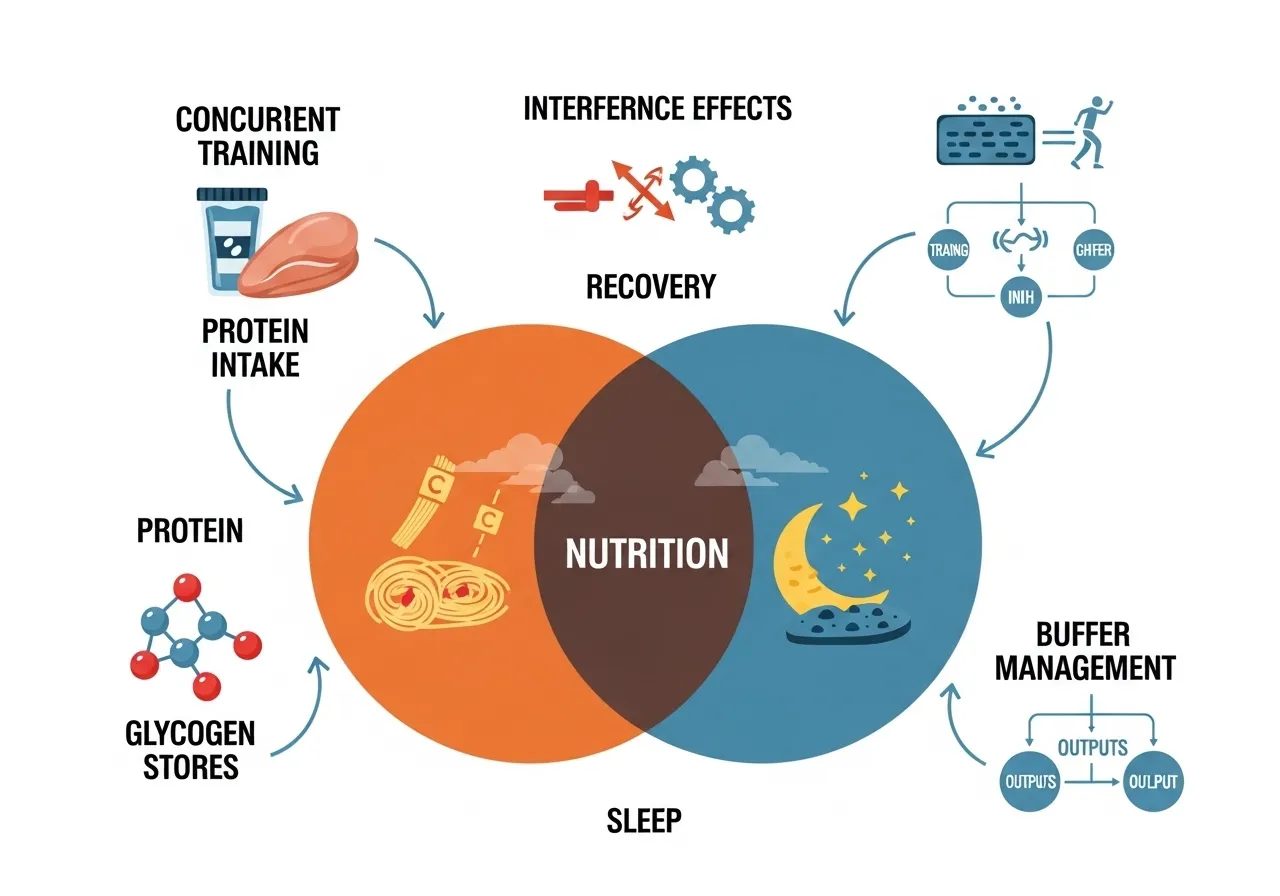
Protein Intake as an Interference Buffer
Adequate protein intake represents the most impactful single nutritional variable for managing concurrent training interference. Endurance exercise increases protein catabolism by 5 to 15% above resting rates, and concurrent training amplifies total protein turnover requirements. A protein intake of 1.6 to 2.2 g per kg body weight daily provides the amino acid availability that supports both muscle protein synthesis from strength training and the mitochondrial protein remodelling from endurance training without competition for building materials.
Distributing protein intake across 3 to 4 meals of 30 to 40 g each maximises muscle protein synthesis stimulation across the day. The post-training protein timing window matters more in concurrent training contexts than in single-mode training because the competing signalling environments make the immediate post-training period especially important for ensuring anabolic signalling has the substrate required to proceed despite AMPK activation from any preceding cardio work.
Glycogen Availability and Concurrent Training Quality
Performing strength training in a glycogen-depleted state after a long endurance session compromises both the quality of the strength work and the anabolic signalling response. Glycogen depletion from endurance training reduces the capacity for high-force muscle contractions, directly limiting the mechanical tension that drives hypertrophy. Additionally, low glycogen states increase AMPK activation, amplifying the interference with mTOR signalling beyond what the endurance training itself produced.
For same-day concurrent training, ensuring adequate carbohydrate intake between the cardio and strength sessions reduces glycogen depletion’s contribution to interference. 30 to 60 g of carbohydrate in the 1 to 2 hours between sessions partially restores muscle glycogen and reduces the glycogen-depletion component of AMPK elevation before the strength session begins.
Timing the Post-Training Nutrition Window in Concurrent Training
Post-training nutrition timing is more critical in concurrent training than in single-modality training because the competing physiological demands create a narrower window where the correct nutritional environment can support both the strength adaptation from resistance training and the mitochondrial adaptation from endurance work. Consuming 30 to 40 g of protein and 40 to 60 g of carbohydrate within 30 to 60 minutes of a concurrent training session provides the amino acids for muscle protein synthesis and the glucose for glycogen replenishment simultaneously.
The carbohydrate component is particularly important in concurrent training contexts because glycogen depletion from the cardio component, if not addressed promptly, prolongs AMPK elevation into the recovery window where mTOR signalling from the strength component should be driving protein synthesis. Providing carbohydrate after a concurrent session supports glycogen resynthesis and reduces the glycogen-depletion AMPK contribution, allowing the post-session anabolic environment to develop more fully.
Sleep and Recovery: The Non-Negotiable Concurrent Training Factor
Concurrent training places a greater total physiological stress on the body than single-modality training at equivalent volumes. The recovery requirement is correspondingly greater. Trainees who manage both strength and cardiovascular training within a week at adequate volumes need 7 to 9 hours of sleep per night to support the concurrent adaptation processes. Sleep deprivation amplifies AMPK signalling and reduces anabolic hormone profiles, effectively creating the molecular interference environment through inadequate recovery that the training itself might not produce with adequate rest.
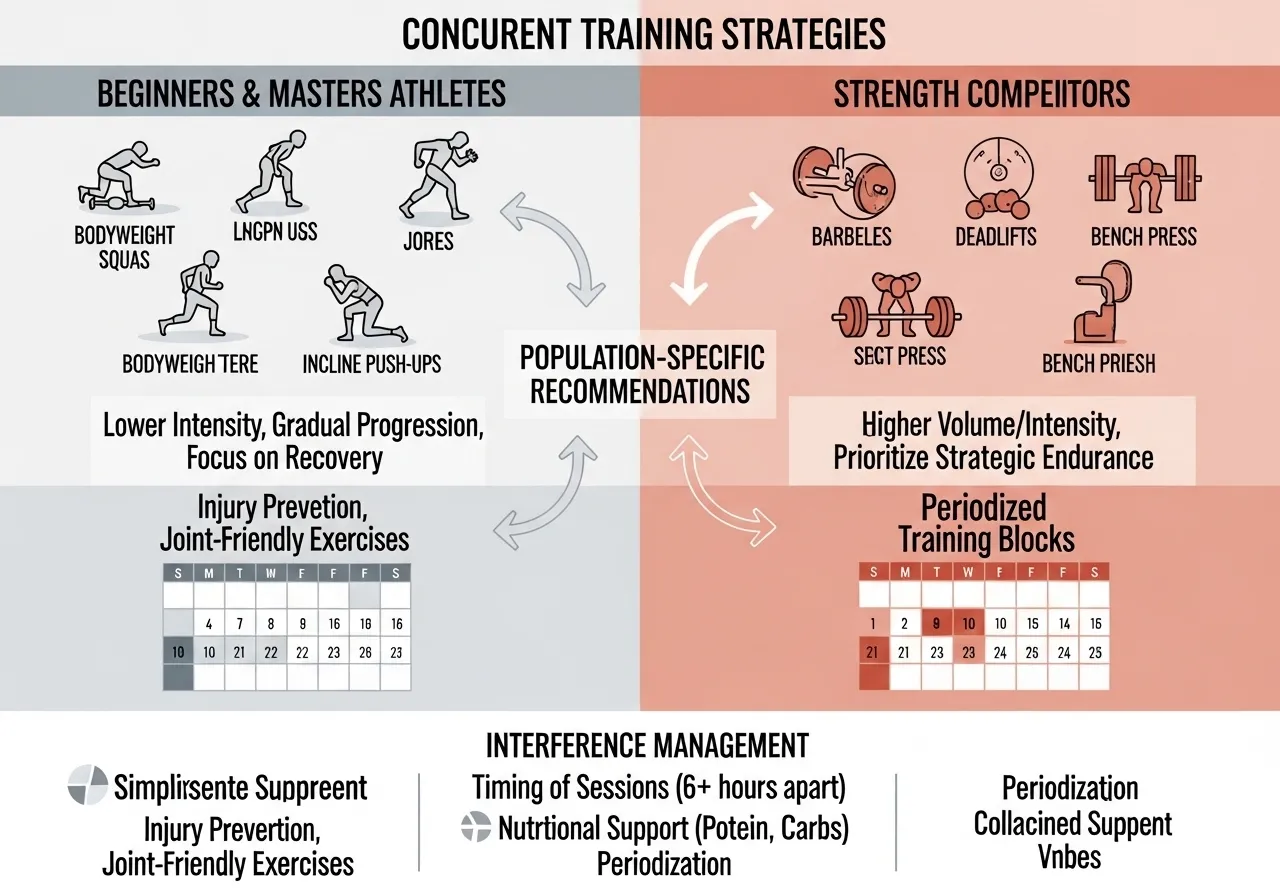
Concurrent Training for Different Populations: Beginners, Masters Athletes, and Strength Competitors
Beginners: The Best Population for Concurrent Training
Untrained individuals beginning concurrent training experience the least interference effect and the most robust simultaneous adaptation in both strength and cardiovascular fitness. This occurs because the adaptive signal from any novel training stimulus is strong relative to the interference, and the molecular competition is less significant when neither pathway is operating near its adaptive ceiling. A complete beginner who combines strength training with cardiovascular work can expect simultaneous improvements in both VO2 max and maximal strength that would be difficult to achieve with the same total training volume applied to only one modality.
For beginners, the practical guidance is to begin concurrent training without interference concern, using reasonable volumes of both modes with adequate recovery between sessions. The time to begin managing interference deliberately is when progress slows and both modalities are producing significant fatigue, not from the first training session.
Masters Athletes: The Concurrent Training Imperative
For adults over 50, the argument for concurrent training is stronger than for any other population regardless of interference considerations. Age-related muscle loss (sarcopenia) and cardiovascular deconditioning both accelerate after 50 and both have well-documented health and functional consequences. The interference effect in masters populations is smaller than in young trained athletes because masters athletes are typically further from their adaptive ceiling in both modalities, and the health cost of neglecting either strength or cardiovascular training is high enough to outweigh any marginal interference between them.
Masters athletes who prioritise only strength development and neglect cardiovascular training accumulate cardiovascular disease risk that the strength training alone cannot mitigate. Those who prioritise cardiovascular training and neglect strength training accelerate muscle loss and lose the functional strength that maintains mobility and fall resistance. Concurrent training for masters athletes is a health imperative, not a performance optimisation decision. The HIIT research that supports cardiovascular development in masters populations alongside strength training is covered in the HIIT training guide.
Competitive Strength Athletes: Where Interference Management Matters
Competitive powerlifters, Olympic weightlifters, and strength sport competitors have the most to gain from careful concurrent training management because marginal strength gains matter for competition outcomes, and their training volumes are high enough for interference to have a measurable effect. For this population, the recommendations shift toward: low-intensity only cardio (Zone 1 to Zone 2) during preparation blocks, separation of all cardio from heavy strength sessions by at least 6 to 8 hours when possible, and significant reduction of cardio volume in the 4 to 6 weeks before competition to prioritise strength expression.
Frequently Asked Questions About Concurrent Training
Will doing cardio kill my strength gains?
No, for the vast majority of recreational trainees. The interference effect at recreational training volumes is measurable in research but practically negligible for most fitness outcomes. Consistent moderate cardiovascular training alongside consistent strength training produces better health outcomes, body composition, and functional fitness than either modality alone, and the marginal strength reduction from concurrent training interference at recreational volumes does not offset these combined benefits.
The conditions where cardio substantially limits strength gains are: very high cardio volumes (marathon training alongside powerlifting, for example), same-session high-intensity cardio immediately before or after heavy strength work, insufficient protein intake, and chronic sleep deficit. Avoiding these specific conditions produces concurrent training outcomes that approach single-modality strength training for most practical purposes.
How much cardio can I do before it starts hurting my strength training?
The threshold varies considerably by training status, modality, and intensity. As a general guideline, 2 to 3 moderate cardiovascular sessions per week of 30 to 45 minutes each produces negligible interference with strength development in recreational trainees with adequate protein intake and recovery. Adding a fourth session of moderate cardio begins to create cumulative fatigue that can limit strength training quality. High-intensity cardio sessions reduce this threshold because each session creates greater AMPK activation and more residual fatigue than equivalent-duration moderate work.
Should I do cardio before or after weights if both are in the same session?
Perform strength training first when both occur in the same session and when strength development is a priority goal. This sequence preserves the neural and muscular freshness that heavy strength work requires, prevents cardiovascular fatigue from degrading technique and force production during compound lifts, and minimises the duration of elevated AMPK during the post-strength anabolic signalling period.
The exception: if the primary goal of the session is cardiovascular development and the strength component is maintenance-focused, performing cardio first may produce better cardiovascular adaptation at the cost of some strength quality. Programme the sequence to match the priority of the session, not a universal rule.
Key Takeaways
The theoretical AMPK-mTOR interference mechanism is less consistently observed in human concurrent training studies than in animal models. The interference effect in practice is smaller than molecular theory predicts for most recreational trainees.
Men experience larger concurrent training interference than women. Untrained individuals experience less interference than trained athletes. The population most concerned about interference is the least susceptible to it.
Training sequence does not significantly affect endurance, hypertrophy, or maximal strength in most human trials, but strength-first order produces better neuromuscular and explosive power adaptations.
AMPK elevation from high-intensity endurance training takes at least 3 hours to return to baseline. Separating high-intensity cardio from strength training by at least 3 hours reduces molecular interference. Zone 2 cardio produces minimal AMPK activation and the least interference with strength adaptation.
For recreational trainees, the primary risk from concurrent training is poor fatigue management, not molecular interference. Adequate protein intake, sleep, and session structure resolve most practical concurrent training interference concerns.
The premise sounds implausible. Apply a cuff to your arms or legs, restrict blood flow partially, then train with weights 20 to 30% of your one-rep maximum, and produce muscle growth equivalent to heavy training at 70 to 80% of your maximum. It sounds like the kind of shortcut that fitness products promise and peer-reviewed…
⚠️ Health & Fitness DisclaimerThis article is for general educational purposes only and does not replace professional medical advice. If you have any pre-existing shoulder, wrist, or back conditions, please consult a qualified healthcare professional before beginning medicine ball training. The medicine ball is one of the oldest and most versatile training implements in existence…
Most athletic training focuses on going faster: building power for acceleration, developing explosive force for jumping, increasing speed across distances. Training to slow down receives a fraction of this attention, despite the fact that most non-contact ACL injuries occur during deceleration, not acceleration. Deceleration is the act of rapidly reducing speed during running, landing, or…
⚠️ Fitness Disclaimer: The information in this article is for general educational purposes only and does not constitute professional fitness or medical advice. Always consult a qualified healthcare professional before starting any new exercise program, especially if you have existing injuries or joint conditions. Why Strength Alone Will Never Make You Truly Explosive I squatted…
Every squat you perform at 100 kg involves both legs. One leg may contribute 55 kg worth of force. The other may contribute 45 kg. The bar goes up. The asymmetry is invisible. This hidden asymmetry compounds over months and years of bilateral-only training. The dominant leg becomes increasingly stronger relative to the non-dominant leg….
There is no neat way to flip a tire. It does not fit into a defined movement category. It is not a deadlift. It is not a push press. It is all of them simultaneously, in a sequence, against an implement that shifts weight as it moves. This awkwardness is the point. Every clean movement…