Why Unilateral Training Produces Results That Bilateral Work Cannot: The Science, Key Exercises, and Programming
Every squat you perform at 100 kg involves both legs. One leg may contribute 55 kg worth of force. The other may contribute 45 kg. The bar goes up. The asymmetry is invisible.
This hidden asymmetry compounds over months and years of bilateral-only training. The dominant leg becomes increasingly stronger relative to the non-dominant leg. The movement compensation patterns that allow bilateral exercises to succeed despite asymmetry become more entrenched. Then a change-of-direction movement, a landing, or a sprint step exposes what the bilateral training concealed, and an injury occurs.
Unilateral training addresses this not as an aesthetic priority but as a functional one. This guide covers what the bilateral deficit research shows about strength production differences between bilateral and unilateral efforts, how asymmetries develop and how to measure them, the most effective unilateral exercises, and a 6-week asymmetry correction programme.
The Bilateral Deficit: Why Two Legs Together Cannot Match Two Legs Separately
What the Bilateral Deficit Actually Is
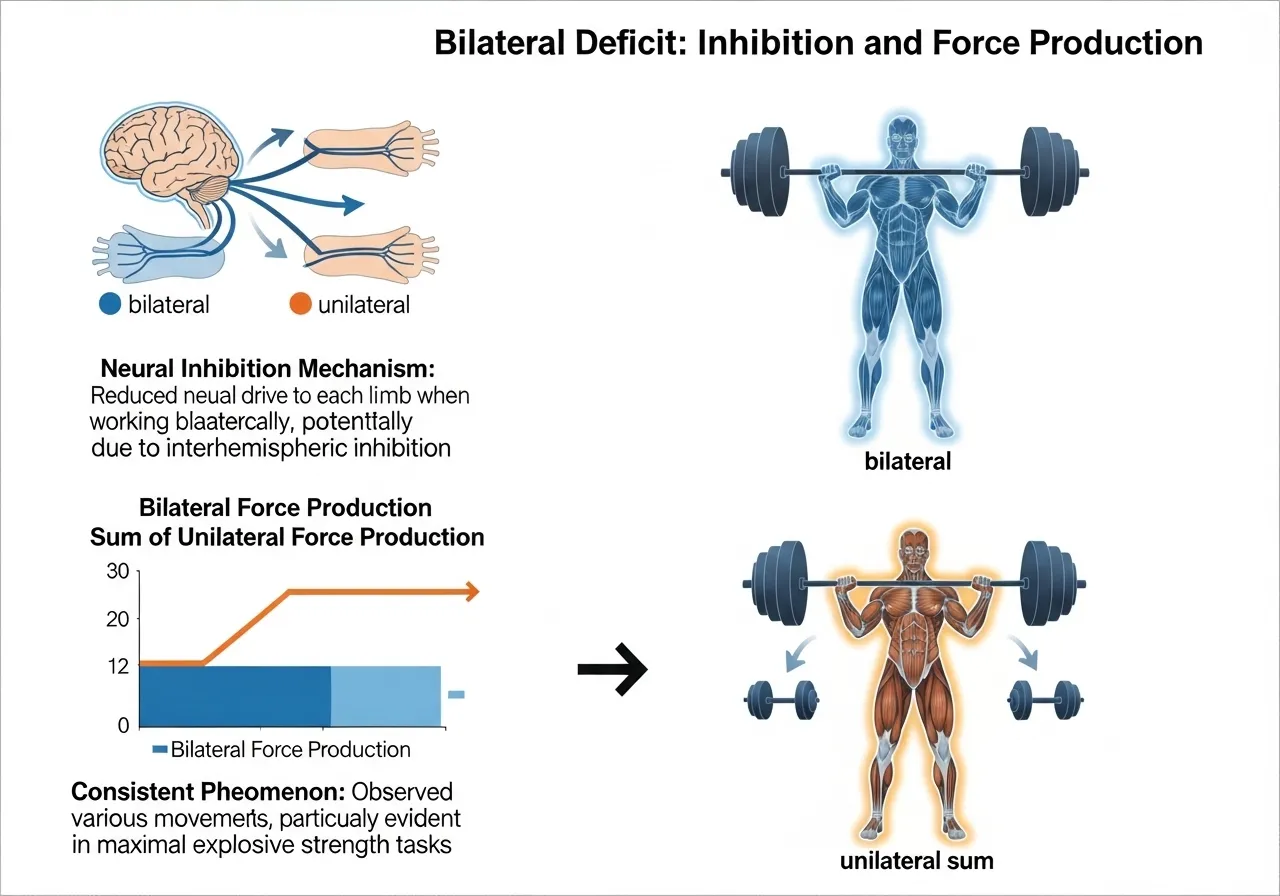
The bilateral deficit describes a consistent physiological finding: the total force produced by both limbs working simultaneously is less than the sum of the forces each limb can produce independently. In practical terms, a trainee who can leg press 80 kg with the right leg alone and 70 kg with the left leg alone cannot leg press 150 kg bilaterally. The bilateral leg press maximum is typically 120 to 135 kg, significantly less than the sum of the individual maximums.
The mechanism is neural. When both limbs contract simultaneously, the central nervous system reduces the drive to each individual limb, apparently to prevent overloading the shared neural pathways involved in bilateral coordination. This reduction means each limb in a bilateral exercise works at less than its individual maximum capacity.
The Research Evidence on Bilateral Deficit
A study investigating the factors influencing bilateral deficit and inter-limb asymmetry of maximal and explosive strength found that bilateral deficits are consistently present across motor tasks and muscle groups, with results highlighting the importance of outcome measure, motor task, and muscle group when assessing bilateral deficits and inter-limb asymmetries of maximal and explosive strength, and confirming that the bilateral deficit is a robust neurophysiological phenomenon that affects both maximal and explosive force production across populations.
The bilateral deficit is a consistent neurophysiological phenomenon affecting both maximal strength and explosive force. Both limbs in a bilateral exercise work at sub-maximal individual capacity, meaning bilateral training systematically undertaxes each limb relative to what unilateral training demands from it.
Practical Implications for Training
The bilateral deficit has two direct training implications. First, unilateral exercises recruit each limb to a higher percentage of its individual maximum than bilateral exercises at matched total load. A single-leg squat at 40 kg provides a greater stimulus per leg than a bilateral squat at 80 kg. Second, bilateral exercises allow the dominant limb to compensate for the weaker limb without either the trainee or the programme detecting the asymmetry.
Trainees who train exclusively with bilateral movements can develop significant inter-limb strength disparities over months of progressive overloading. The bilateral bar continues to go up. The underlying asymmetry continues to grow. The risk accumulates silently until a single-leg activity reveals what was hidden.
How Unilateral Training Corrects Asymmetry: The Research Evidence
Meta-Analysis: Unilateral Plyometric Training and Asymmetry Reduction
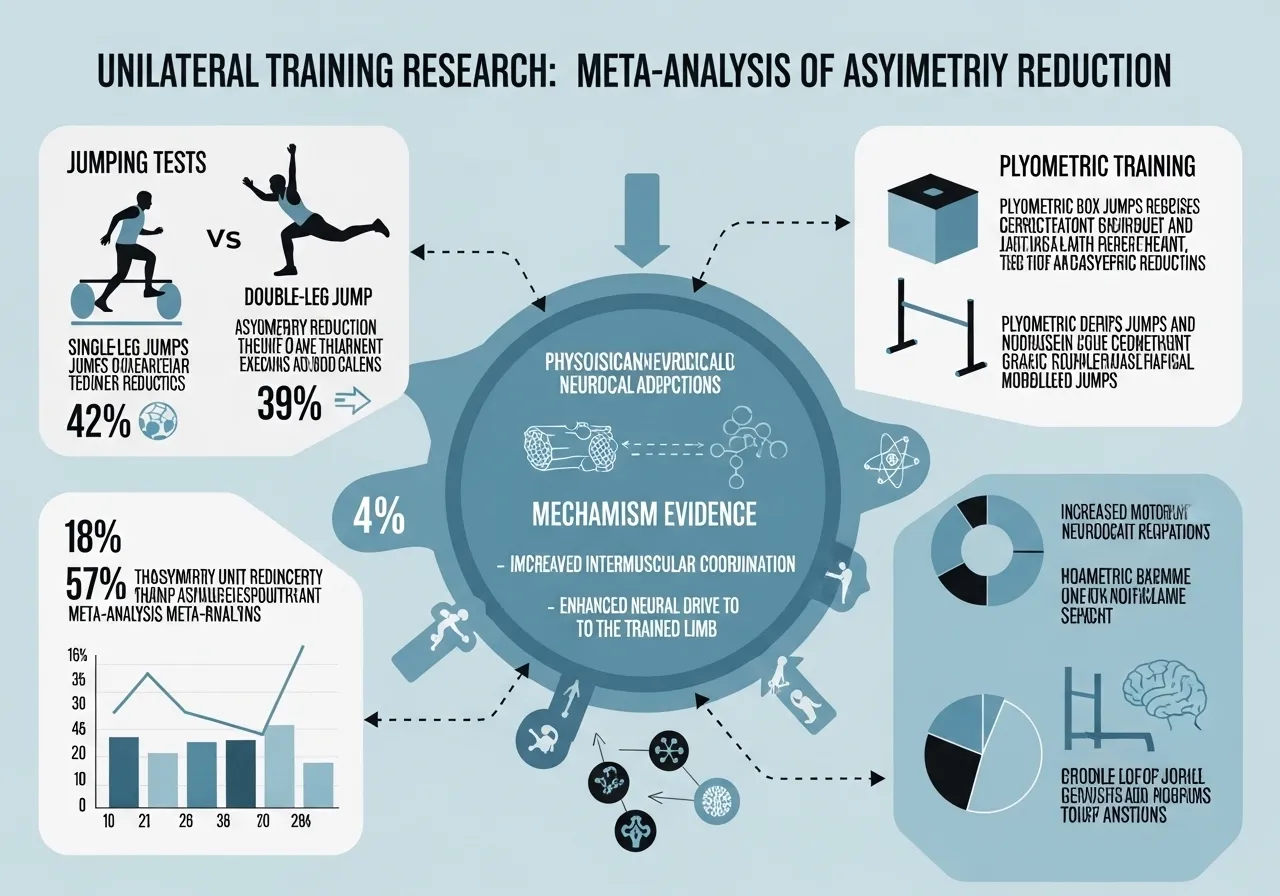
A meta-analysis examining whether unilateral plyometric training effectively reduces lower limb asymmetry in athletes found that unilateral plyometric training effectively reduced lower limb asymmetry across multiple jumping tests including single-leg countermovement jump, single-leg broad jump, and single-leg lateral jump, with the evidence supporting unilateral training protocols as an effective intervention for reducing performance asymmetries in athletes, particularly when the training specifically targets the weaker limb with greater volume or load.
Unilateral training effectively reduces lower limb asymmetry across multiple performance tests. Simply adding unilateral exercises to a programme that previously emphasised bilateral work reduces the performance gap between dominant and non-dominant limbs within weeks.
Bilateral Deficit Reduction Through Unilateral Training
A study investigating the effects of bilateral or unilateral plyometric training on the bilateral deficit during explosive efforts found that unilateral plyometric training produced specific adaptations in single-limb explosive force production that bilateral training did not replicate, with unilateral training producing changes in the bilateral deficit through neural adaptations that improved the contribution of each limb to bilateral movements, demonstrating that unilateral training produces adaptations that transfer to bilateral performance through improved inter-limb neural coordination.
Unilateral training improves bilateral performance through enhanced inter-limb neural coordination. Training each limb individually makes bilateral performance better, not just single-limb performance, because it improves the neural efficiency that bilateral movements depend on.
How to Identify Your Own Asymmetry
Three self-assessment tests identify meaningful inter-limb asymmetries without laboratory equipment:
- Single-leg squat depth test: Perform 5 single-leg squats on each side to the same depth. Note which side requires more compensatory movement, greater forward lean, or produces knee valgus at a shallower depth. A difference of more than 2 to 3 cm in controlled depth indicates a meaningful strength asymmetry.
- Single-leg broad jump: Jump for maximum horizontal distance from one leg and land on the same leg. Compare left and right distances. A side difference greater than 10 to 15% suggests a limb symmetry index below the threshold for optimal function.
- Loaded single-leg Romanian deadlift comparison: Perform 5 reps of single-leg RDL at a moderate load on each side. If the working weight that produces the same level of effort and control differs by more than 10 to 15% between sides, a meaningful strength asymmetry exists in the posterior chain.
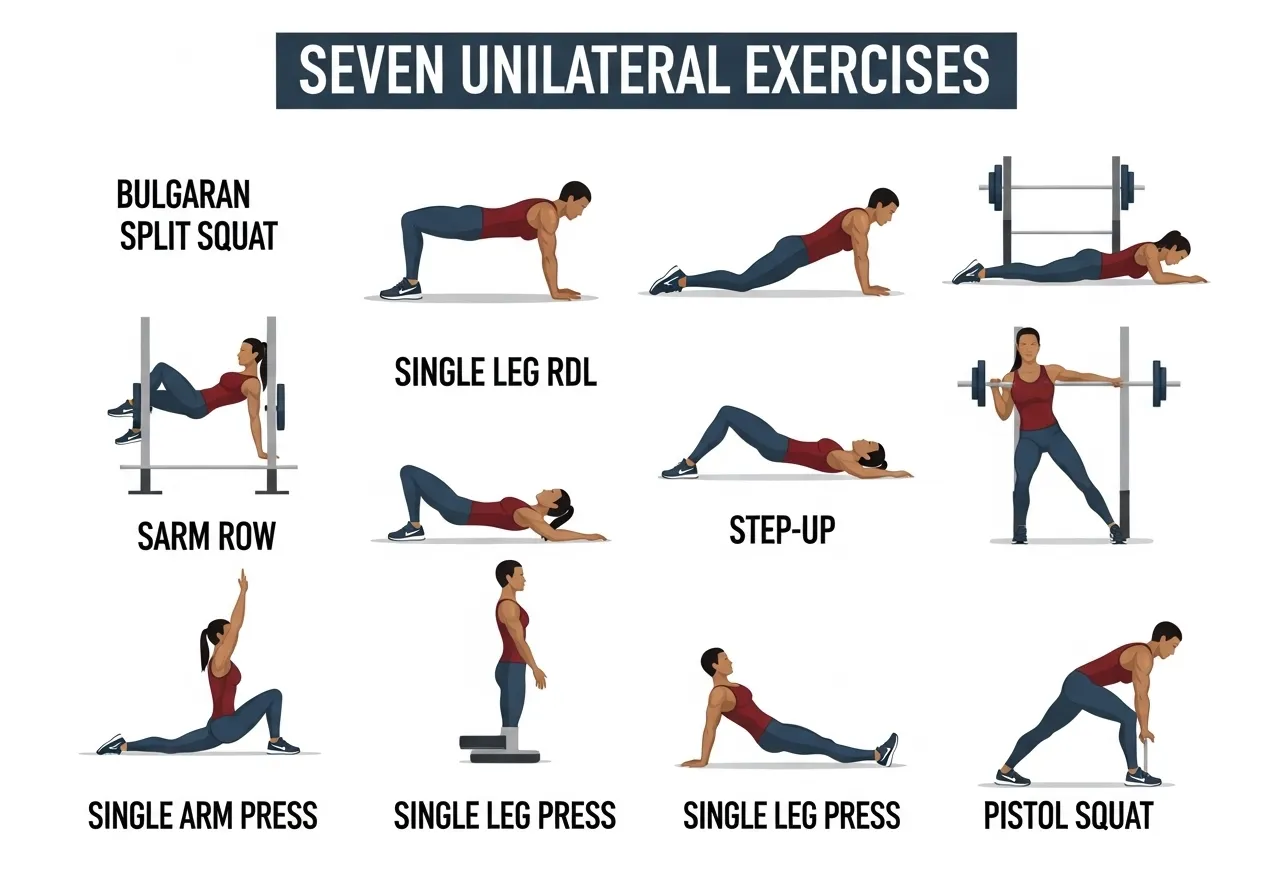
7 Key Unilateral Exercises: Targets, Technique, and When Each Belongs in a Programme
🏋️ 1. Bulgarian Split Squat
Target: Quadriceps, gluteus maximus, hip stabilisers, inter-limb symmetry
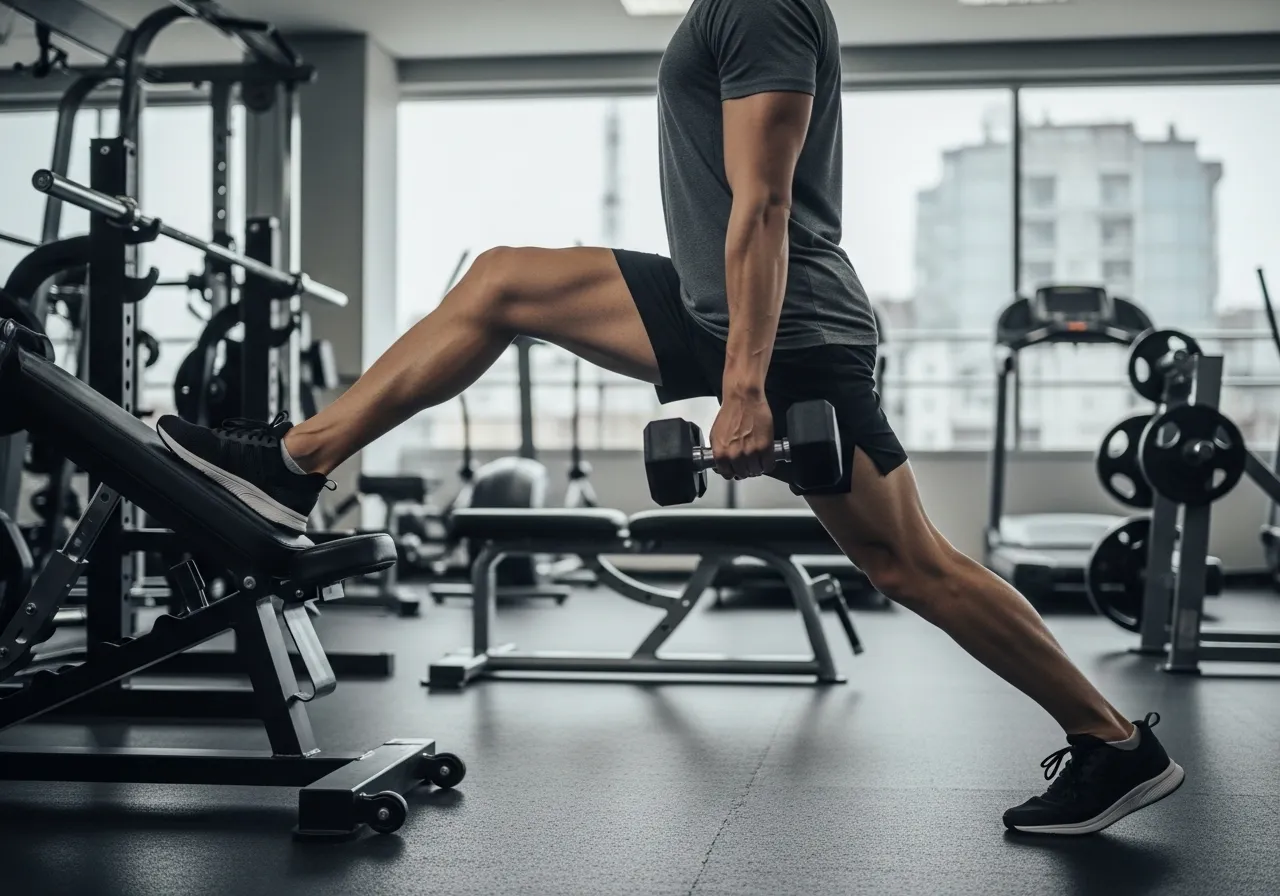
How: Rear foot elevated on a bench at approximately knee height. Front foot forward enough that the front knee tracks over the foot at depth. Lower under control until the front thigh is parallel or below. Drive through the front heel to return.
Best for: Primary unilateral lower body strength development. The most loading-capable unilateral leg exercise for most trainees. The EMG research and trunk position science is covered in the Bulgarian split squat guide.
🏋️ 2. Single-Leg Romanian Deadlift
Target: Hamstrings, gluteus maximus, hip stabilisers, balance under posterior chain load
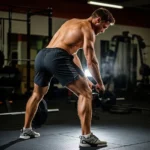
How: Stand on one leg with a dumbbell or kettlebell in the opposite hand. Hinge at the hip, allowing the free leg to extend behind as the torso descends. Keep the working leg with a slight knee bend throughout. Return to standing by driving the hip forward.
Best for: Hamstring and glute development with simultaneous balance demand. Identifies posterior chain asymmetries that bilateral Romanian deadlifts mask. Excellent injury prevention tool for runners.
🏋️ 3. Single-Arm Dumbbell Row
Target: Latissimus dorsi unilateral, rhomboids, mid-trapezius, inter-limb back symmetry
How: Place one hand and knee on a bench for support. Row the dumbbell toward the hip with the opposite arm, initiating with scapular retraction before elbow flexion. Perform all reps on one side before switching.
Best for: Back development with greater range of motion than barbell rows and immediate asymmetry detection. The unilateral position allows greater shoulder extension range than bilateral rowing variations.
🏋️ 4. Step-Up
Target: Gluteus maximus and medius, quadriceps, single-leg power production
How: Place one foot entirely on a box at knee height or slightly below. Drive through the elevated foot to step up, bringing the opposite knee forward to hip height at the top. Step back down under control with the working foot remaining on the box.
Best for: Gluteal development under single-leg loading, functional strength for stair climbing and athletic movement, and as a lower-spinal-load alternative to bilateral squatting for trainees with back sensitivity.
🏋️ 5. Single-Leg Press
Target: Quadriceps unilateral, precise load comparison between limbs
How: Use the standard leg press machine with one foot only. Choose a foot position appropriate for the quad target. Perform all reps on one side before switching. Track the weight used on each side separately.
Best for: Quantifying the exact load difference between limbs on an objective machine. The leg press machine removes balance variables, providing the cleanest bilateral comparison available outside a laboratory setting.
🏋️ 6. Single-Arm Overhead Press
Target: Deltoids unilateral, core anti-lateral flexion, shoulder asymmetry
How: Stand holding a dumbbell at shoulder height in one hand. Press overhead while bracing the core to resist the lateral bend that the unilateral load creates. Lower under control.
Best for: Shoulder strength symmetry development and core anti-lateral flexion training. The single-arm press reveals shoulder strength differences that bilateral barbell pressing conceals and develops the lateral trunk stability that bilateral overhead work does not demand.
🏋️ 7. Pistol Squat (or Assisted Pistol Squat)
Target: Quadriceps and glutes through full range, ankle and hip mobility requirement
How: Stand on one leg with the opposite leg extended forward. Lower into a single-leg squat until the thigh is parallel or below while keeping the heel flat and the extended leg off the floor. Return to standing. Assist with a TRX or pole if needed for balance.
Best for: Advanced bodyweight unilateral strength development. The pistol squat requires simultaneous ankle dorsiflexion mobility, hip mobility, and single-leg quad strength through the full range of motion. It exposes every limiting factor in lower body function simultaneously.
Does Unilateral Training Carry Over to Bilateral Performance?
The Transfer Research
A common concern about prioritising unilateral training is that it may not transfer effectively to bilateral strength performance. Powerlifters squat, bench, and deadlift bilaterally in competition. Athletes perform bilateral jumps. Will spending more training time on single-leg exercises improve bilateral performance or simply develop single-leg capacity?
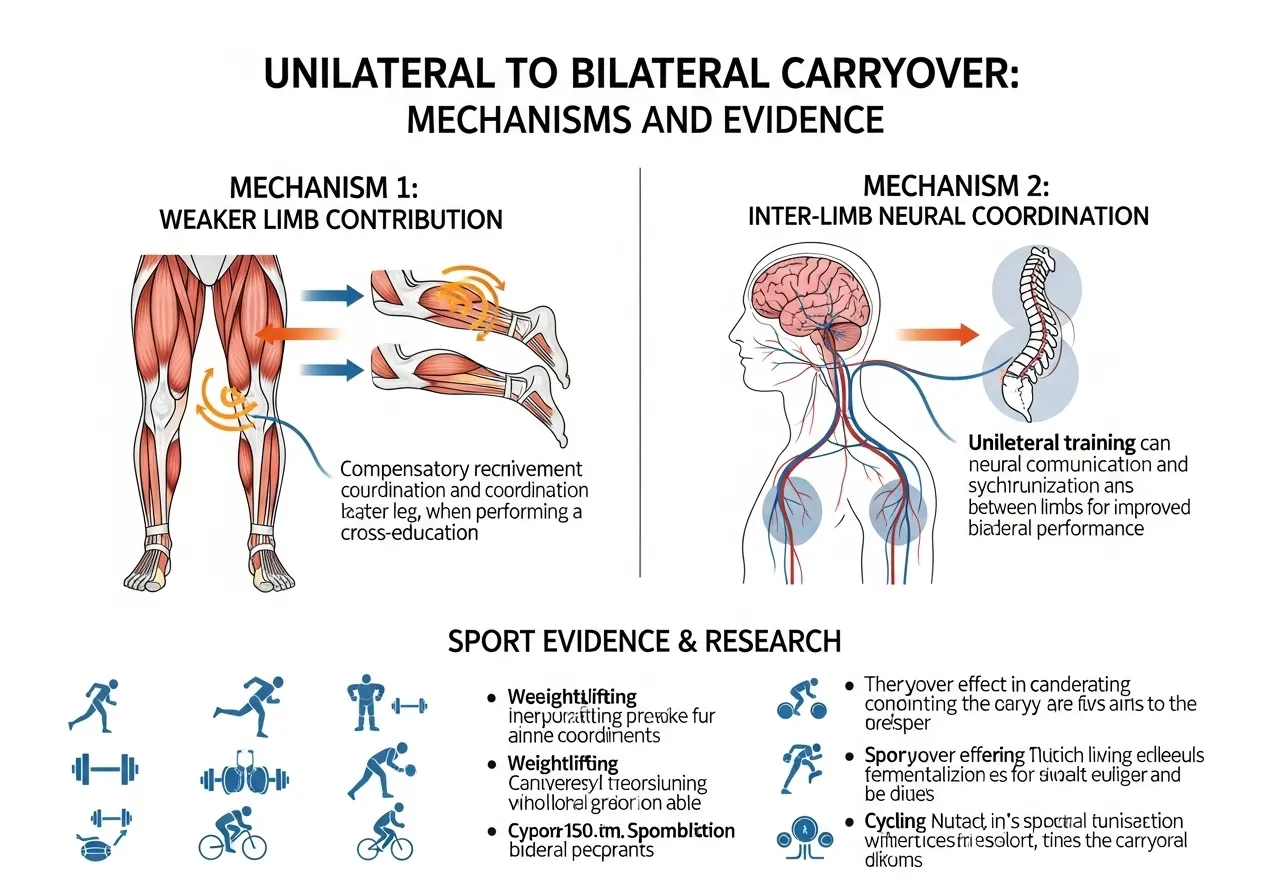
The research on bilateral deficit reduction through unilateral training answers this directly. Unilateral training improves bilateral performance through two mechanisms. First, it develops the weaker limb’s capacity to contribute more to bilateral efforts, reducing the performance drag that asymmetry creates. Second, it improves the inter-limb neural coordination that bilateral exercises depend on by training each limb to produce higher individual forces that translate to more efficient bilateral coordination.
The Practical Evidence From Sport
Elite strength and power athletes, from Olympic weightlifters to sprinters, consistently include significant unilateral work in their programmes alongside bilateral compound lifts. The Bulgarian split squat and single-leg RDL are standard components of competitive powerlifting programmes specifically because coaches observed bilateral performance improvements from unilateral accessory work over decades of practice before the research confirmed the mechanism.
The transfer is not perfect: unilateral training cannot fully replace bilateral training for developing maximum bilateral strength. But the combination of bilateral primary compound lifts and unilateral accessory work consistently outperforms bilateral-only training for both strength development and asymmetry management. The loaded carries and farmer walk variations that develop unilateral stability under axial load are covered in the loaded carries guide.
How Much Unilateral Work Is Enough?
For general fitness trainees without significant asymmetry, 20 to 30% of total lower body training volume in unilateral exercises provides sufficient stimulus for symmetry maintenance and functional development. For trainees with identified asymmetries greater than 10 to 15% between limbs, increasing unilateral volume to 40 to 50% of lower body work and adding extra sets for the weaker limb accelerates asymmetry correction. The weaker limb receives more total work per session until the symmetry index improves to within acceptable limits.
Upper body unilateral work follows the same principle but receives less attention in most programmes because upper body asymmetries are less frequently associated with injury risk than lower body asymmetries. Shoulder, elbow, and wrist pathologies can develop from significant upper body strength imbalances, however, particularly in throwing and racket sports. Including single-arm rows and single-arm presses as standard components of upper body sessions, regardless of measured asymmetry, prevents the slow accumulation of upper body imbalance that eventually manifests as shoulder or elbow overuse pathology.
The practical lower body split that balances bilateral and unilateral work effectively: one primary bilateral lower body session per week with squats or deadlifts as the main movement, and one unilateral-emphasis session per week with Bulgarian split squats or single-leg RDL as the primary movement. This two-session structure provides the bilateral strength development volume and the unilateral asymmetry management volume without excessive total lower body training frequency.
6-Week Asymmetry Correction Programme
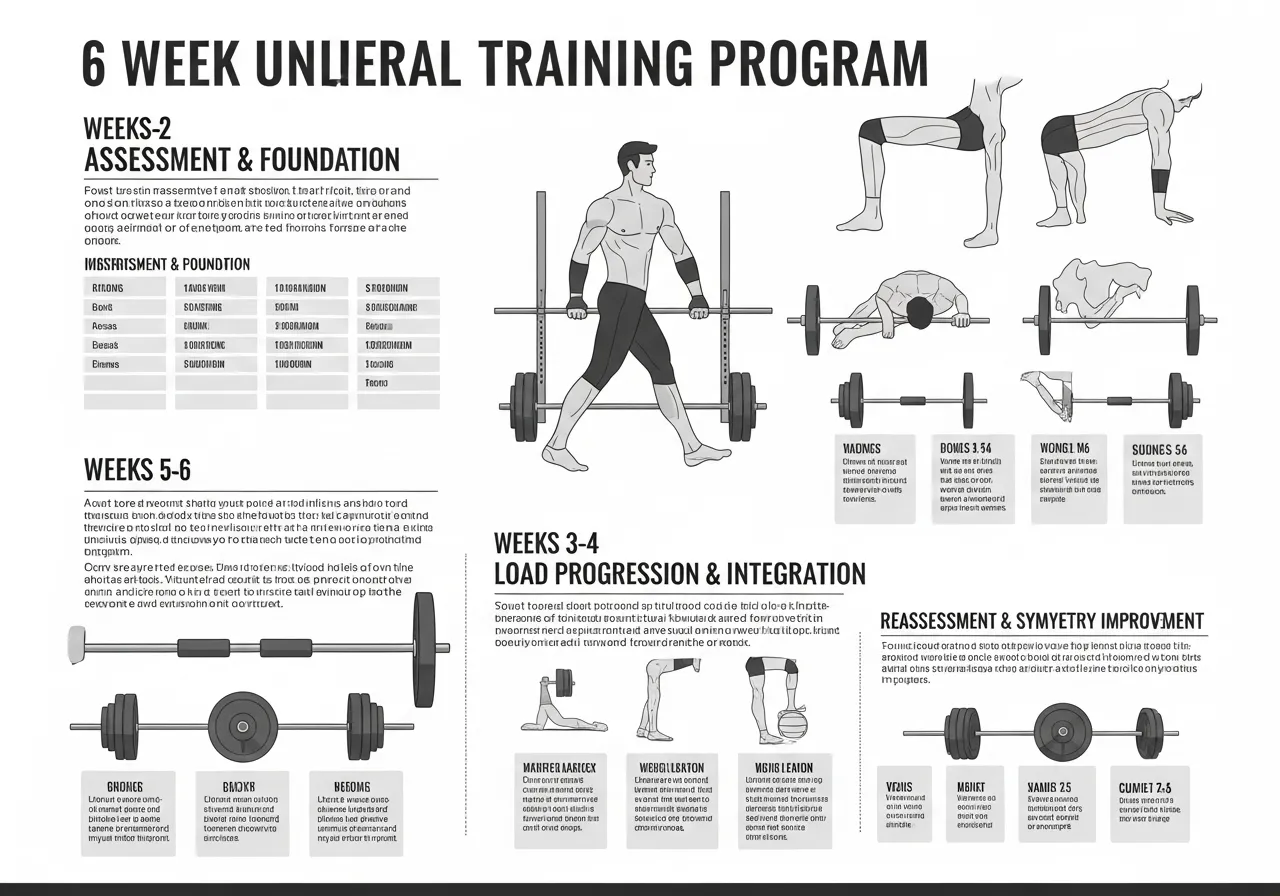
📅 Phase 1: Weeks 1 to 2: Assessment and Foundation
- Perform the three self-assessment tests (single-leg squat, broad jump, single-leg RDL) to establish baseline limb symmetry index
- Bulgarian split squat: 3 sets of 8 per side, weaker side first and with 1 extra set
- Single-leg RDL: 3 sets of 10 per side, weaker side first and with 1 extra set
- Single-arm row: 3 sets of 10 per side, noting any load difference between sides
- All bilateral compound work continues as normal
Focus: Establish the asymmetry baseline and begin addressing it with extra weaker-side volume. The extra set for the weaker side is the primary asymmetry correction tool.
📅 Phase 2: Weeks 3 to 4: Load Progression
- Increase unilateral loads by 5 to 10% from Phase 1
- Bulgarian split squat: 4 sets of 6 to 8 per side (weaker side: 5 sets)
- Single-leg press: 3 sets of 10 per side, track and compare loads precisely
- Single-arm overhead press: 3 sets of 8 per side to address upper body asymmetry
- Step-up: 3 sets of 10 per side as an additional glute stimulus
Focus: Increase mechanical demand on each limb independently. The single-leg press load comparison provides objective asymmetry tracking data each session.
📅 Phase 3: Weeks 5 to 6: Integration and Reassessment
- Maintain Phase 2 unilateral volume and loads
- Add pistol squat progression (assisted) for advanced single-leg demand
- Week 6: repeat the three baseline assessment tests and compare symmetry index to Week 1
- Expected outcome: 5 to 10% reduction in limb symmetry index discrepancy over 6 weeks
- Establish permanent maintenance ratio: 25 to 30% of lower body volume in unilateral work ongoing
Focus: Consolidate gains and establish the long-term maintenance standard. Reassessment confirms progress and guides the next training block’s unilateral volume prescription.
Common Programming Mistakes That Prevent Unilateral Training From Working
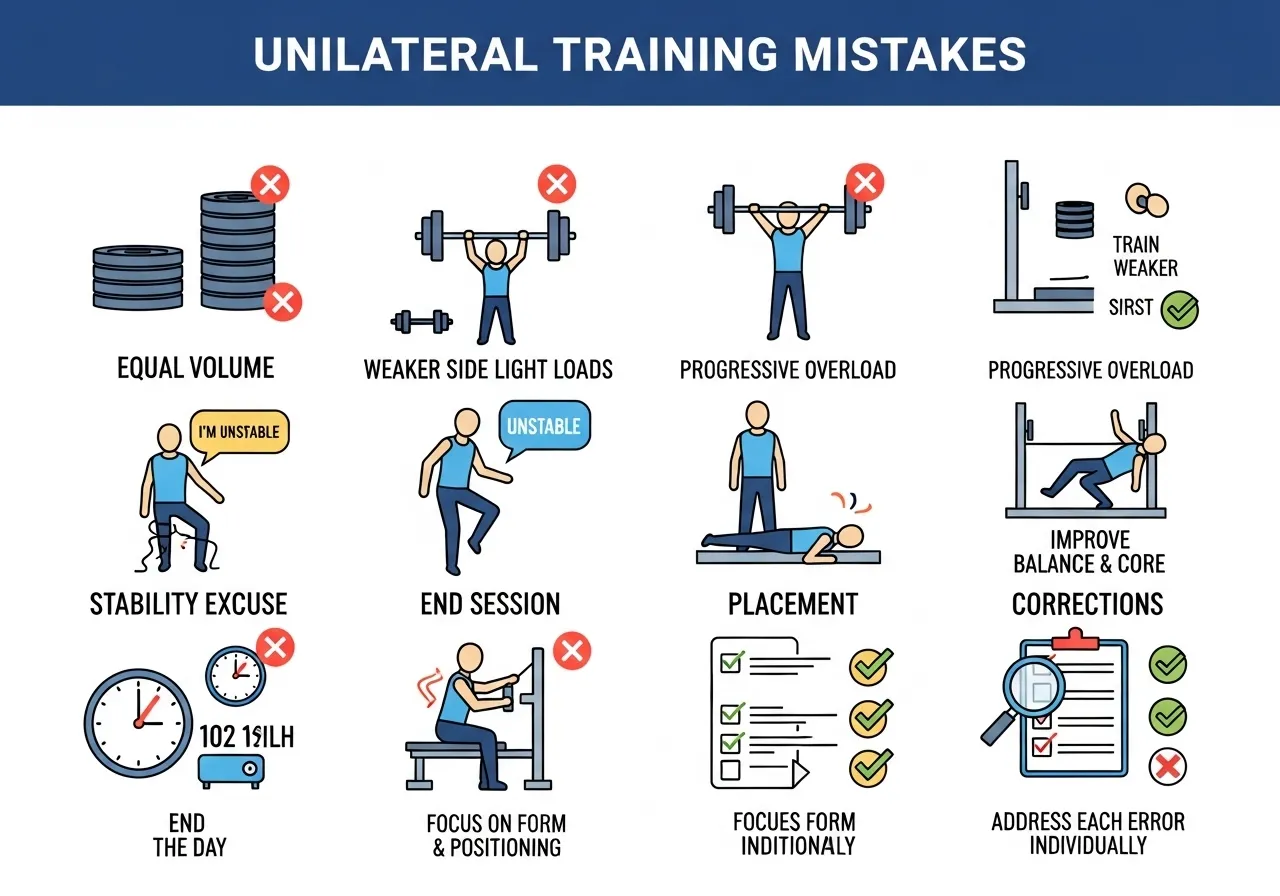
Mistake 1: Training Both Sides Equally When One Side Is Weaker
The most common error in unilateral training programmes is performing exactly the same volume and load on both sides. If the left leg produces 85% of the right leg’s force output, performing identical sets and reps on each side maintains the asymmetry rather than correcting it.
The correction principle: give the weaker side one additional set per exercise session, or start every exercise with the weaker side and use its performance to guide the load selection for the stronger side. The stronger side then performs the same weight and reps as the weaker side achieved. This prevents the stronger side from driving load selection that the weaker side cannot match.
Mistake 2: Using Balance as an Excuse to Use Lighter Loads
Many trainees use unilateral exercises at far lower loads than are needed for genuine strength adaptation because the balance component makes heavier weights feel unstable. The balance demand is real but should not indefinitely cap the load at levels too light to produce strength adaptation.
The solution is progressive loading of the stability demand separately from the strength demand. Begin with assisted variations (TRX support, hand on wall) at moderate loads to develop stability. Once stability is adequate, progressively remove the assistance and load the movement normally. Treating unilateral exercises as permanent low-load balance drills rather than strength exercises produces balance improvement without strength development.
Mistake 3: Only Including Unilateral Work at the End of Sessions
Placing all unilateral exercises at the end of sessions, after heavy bilateral work has fatigued the working muscles, systematically reduces the quality of every unilateral set. The weaker limb is already fatigued. The movement quality degrades. The asymmetry correction stimulus is minimised at exactly the time it should be maximised.
For trainees with significant asymmetries, placing at least one key unilateral exercise early in the session, before primary bilateral compound work, ensures the weaker limb receives high-quality stimulus while fresh. A single set of Bulgarian split squats or single-leg RDL at the beginning of a lower body session, before bilateral squats or deadlifts, costs minimal fatigue but produces disproportionate asymmetry correction benefit. For a complete bodyweight progression framework that complements unilateral loaded work, the bodyweight training guide covers single-limb progressions in detail.
Frequently Asked Questions About Unilateral Training
How do I know if my asymmetry is significant enough to address?
A limb symmetry index (LSI) of 90% or above, meaning the weaker limb produces at least 90% of the stronger limb’s force output, is generally considered acceptable for recreational training. An LSI below 85% represents a significant asymmetry that warrants deliberate correction.
Use the single-leg press comparison as the simplest objective measure. If your right leg can press 80 kg and your left leg can press 65 kg, your LSI is 81 percent, below the acceptable threshold and worth addressing with the asymmetry correction programme above. Reassess every four to six weeks to track improvement.
Should beginners start with unilateral or bilateral exercises?
Beginners benefit most from mastering fundamental movement patterns bilaterally before adding the balance and coordination demands of unilateral work. The goblet squat, hip hinge, and push-pull patterns are more efficiently learned bilaterally where stability is not the limiting factor.
After two to three months of consistent bilateral training, introducing unilateral exercises as secondary movements alongside the primary bilateral lifts provides the asymmetry detection and correction that early bilateral-only training cannot deliver. The two approaches are sequential rather than competing: bilateral movement mastery first, unilateral integration second.
Is unilateral training appropriate for older adults?
Unilateral training is particularly beneficial for older adults because asymmetry accumulates over decades and the functional consequences of single-leg strength deficits are most evident in daily activities: stair climbing, balance recovery after perturbation, and walking gait. Falls in older adults almost always occur during single-leg stance phases, not during bilateral standing.
Modified unilateral exercises with support, such as step-ups holding a rail, assisted single-leg squats, and single-leg balance work with a chair, provide the unilateral stimulus appropriate for older adults who cannot safely load full unsupported unilateral exercises. The balance and fall prevention benefits increase with age, making unilateral work progressively more important rather than less as training age increases.
How does unilateral training relate to functional fitness and daily life strength?
Almost every physically demanding daily activity occurs in a unilateral or quasi-unilateral position. Walking, climbing stairs, picking something off the floor, standing up from a chair, and getting in and out of a car all require single-leg stability and single-leg strength to be executed smoothly and safely. The bilateral squat and deadlift develop the strength capacity that underlies these activities but do not specifically train the balance and single-limb stability the activities require.
Unilateral training provides the bridge between bilateral gym strength and real-world single-leg function. A trainee who can bilateral squat 120 kg but wobbles during a single-leg squat at bodyweight has developed impressive gym strength that does not fully transfer to the single-leg demands of daily function. Developing both bilateral strength and unilateral stability simultaneously produces the most complete functional fitness outcome available, covering health, daily life requirements, and athletic performance in a single integrated approach.
- The bilateral deficit means each limb works at sub-maximal individual capacity during bilateral exercises. Unilateral training taxes each limb to a higher percentage of its individual maximum.
- Unilateral plyometric training effectively reduces lower limb asymmetry across multiple performance tests. Adding unilateral work to a bilateral-focused programme reduces the strength gap between limbs within weeks.
- Unilateral training improves bilateral performance through enhanced inter-limb neural coordination. Training each limb individually makes bilateral performance better, not just single-limb performance.
- Give the weaker side one additional set per exercise. Using the weaker side to guide load selection prevents the stronger side from masking the deficit by driving weight choice upward.
- A limb symmetry index below 85% warrants deliberate correction. The single-leg press load comparison provides the most accessible objective measurement without laboratory equipment.
- Unilateral training is not a replacement for bilateral compound lifts. The most effective programmes combine bilateral primary movements for maximum strength development with unilateral accessory work for asymmetry correction and functional single-leg capacity.