Fasted cardio — cardiovascular exercise performed after an overnight fast, typically first thing in the morning before eating — is one of the most debated topics in fat loss training. The argument for it is intuitive: low blood glucose and insulin from overnight fasting force the body to oxidise fat for fuel during exercise, producing more fat burning than post-meal cardio where insulin suppresses fat mobilisation. The argument against it is equally intuitive: depleted glycogen impairs performance, and the body compensates for greater fat oxidation during the session by burning more carbohydrate afterward.
Both arguments capture part of the picture. The research on fasted cardio is clear enough in some areas and genuinely contested in others, and separating what is established from what remains uncertain prevents both the overclaiming of fasted cardio’s fat loss advantages and the dismissal of its legitimate applications in specific contexts.
This guide covers what the meta-analysis evidence shows about fat oxidation differences between fasted and fed exercise, what the 24-hour energy balance data shows about whether session-level fat oxidation differences translate to greater body fat loss, the muscle protein breakdown question, practical considerations for different training contexts, and the specific populations for whom fasted cardio has legitimate advantages.
What the Research Actually Shows: The Fat Oxidation Evidence
Meta-Analysis Conclusion: Fasted Cardio Does Increase Fat Oxidation During Exercise
📌 Key Finding
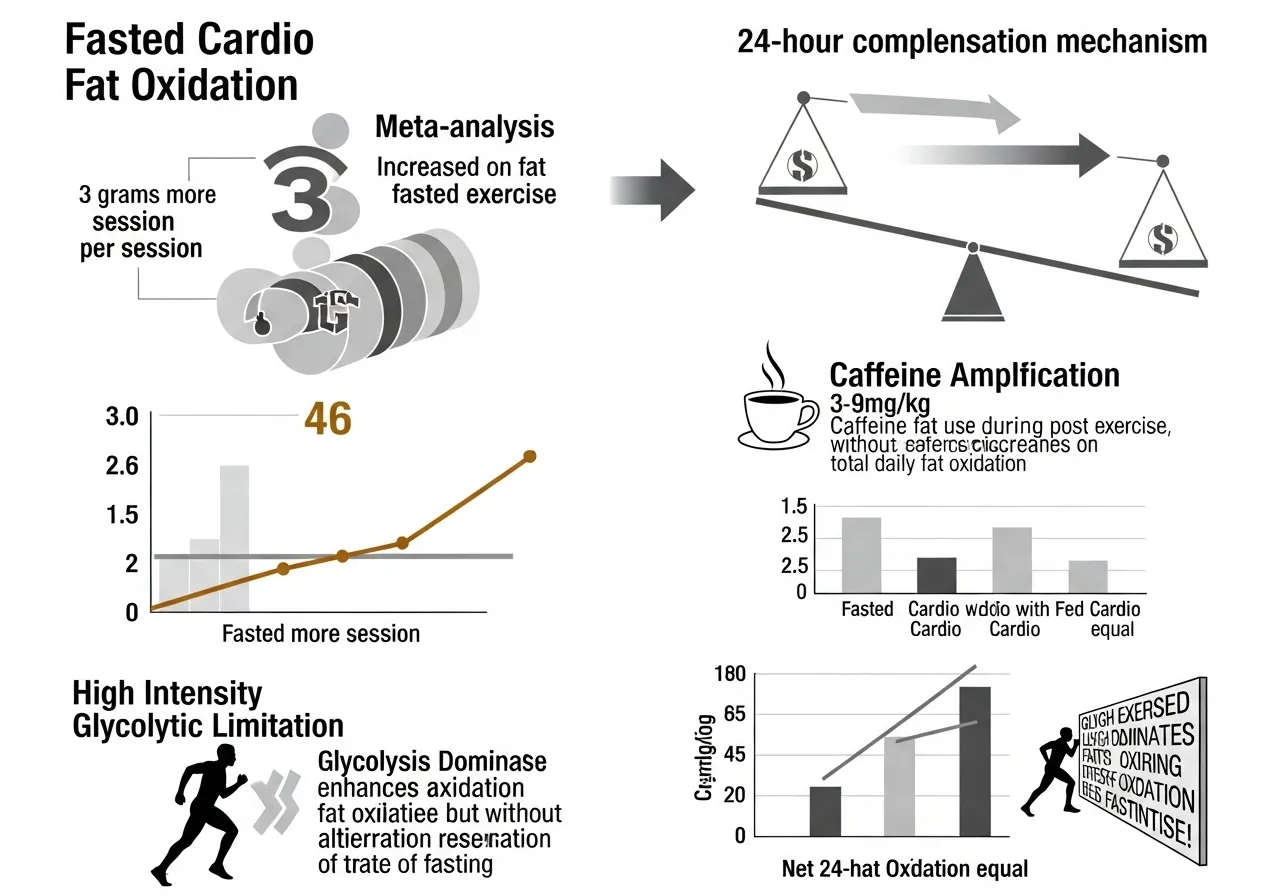
Fasted cardio produces significantly more fat oxidation during the exercise session than fed cardio. Approximately 3 extra grams of fat oxidised per session at matched intensities. This is the physiological basis for the fasted cardio preference — and it is real, not a myth.
The Critical Nuance: Fat Oxidation During Exercise vs 24-Hour Fat Balance
The 3 grams of additional fat oxidised during a fasted session represents approximately 27 extra calories from fat. Over 24 hours, the compensatory metabolic adjustments — reduced fat oxidation during the rest of the day in response to the depleted fat stores used during fasted exercise — substantially reduce the net fat balance difference between fasted and fed exercise at matched total caloric intake.
This is the most important distinction in the fasted cardio debate. Greater fat oxidation during the exercise session does not automatically produce greater fat loss over time, because the body regulates substrate utilisation across the full 24-hour period rather than within a single exercise window. The fat burned during fasted morning cardio is largely replaced by reduced fat oxidation during the subsequent waking hours, resulting in similar 24-hour fat balance to matched fed-state exercise.
📌 Key Finding
Fasted exercise’s greater fat oxidation has implications for appetite regulation through gastrointestinal hormone effects. Post-exercise hunger and compensatory eating behaviour may differ between fasted and fed conditions, affecting whether the session-level fat oxidation advantage translates to net fat loss at the daily level.
Caffeine and Fasted Cardio: The Amplification Effect
📌 Key Finding
Caffeine (3–9 mg/kg) before fasted cardio further increases fat oxidation above fasted exercise alone. Fasted + caffeine is the highest-fat-oxidation acute exercise condition available through common nutritional strategies — relevant for those prioritising metabolic flexibility.
The Intensity Limitation: Why High-Intensity Fasted Cardio Undermines the Advantage
The fat oxidation advantage of fasted exercise is intensity-dependent. At low to moderate intensities (Zone 1 to Zone 2, below approximately 65% of VO2max), the fasted state’s reduced insulin and elevated fatty acid availability allows fat oxidation to dominate substrate utilisation. At higher intensities above Zone 2, glycolytic energy production becomes obligatory regardless of fasting state, because fat oxidation is too slow to supply ATP at the rate high-intensity exercise demands. Performing fasted high-intensity intervals produces glycogen depletion and impaired performance without the fat oxidation benefit that justifies the fasted approach in the first place.
The Muscle Preservation Question: Does Fasted Cardio Cause Muscle Loss?
The Theoretical Concern
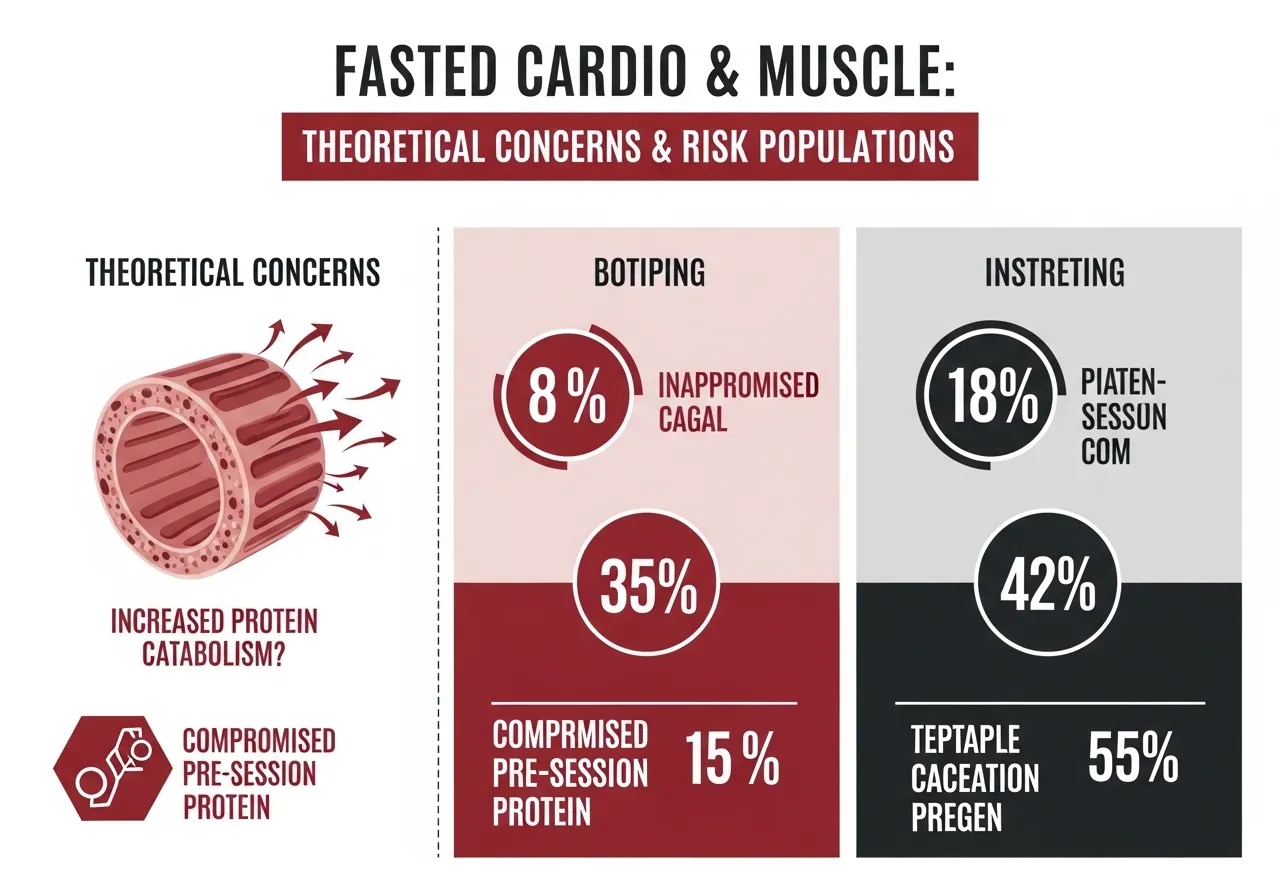
The concern that fasted cardio causes muscle breakdown derives from the physiology of low insulin and low blood glucose during fasting. Insulin is anabolic — it suppresses muscle protein breakdown. In the absence of insulin from overnight fasting, the theoretical concern is that the body increases muscle protein catabolism during the fasted exercise session to provide gluconeogenic substrates. This concern is particularly relevant for trainees who perform moderate to high intensity fasted cardio of longer duration.
What the Evidence Actually Shows
The research on muscle protein breakdown during fasted versus fed low to moderate intensity cardio shows modest increases in muscle protein breakdown markers during fasted sessions that are largely compensated by the subsequent post-exercise fed period. In the context of a well-planned diet with adequate daily protein intake, the marginal additional muscle protein breakdown from fasted cardio does not produce measurable differences in muscle mass outcomes over training periods of several weeks when protein intake is adequate.
The caveat is important: adequate daily protein intake. Trainees performing fasted cardio within a significant caloric deficit and inadequate protein intake face meaningfully greater muscle preservation risk than those performing fasted cardio within an appropriate deficit with 1.6 to 2.2 grams of protein per kilogram bodyweight daily. The fasted cardio session does not cause muscle loss independently of the nutritional context in which it occurs.
The Duration Threshold for Muscle Catabolism Concern
Sessions under 45 to 60 minutes at moderate intensity produce modest and nutritionally manageable muscle protein breakdown in the fasted state. Sessions exceeding 60 minutes at moderate intensity or any sessions at high intensity in the fasted state produce greater muscle catabolism risk that requires specific nutritional strategies — branch chain amino acid supplementation before the session or a small protein-containing pre-exercise meal that provides amino acids without significantly raising insulin — to manage effectively.
Who Should Be More Cautious About Fasted Cardio and Muscle
Three populations face genuine muscle preservation risk from regular fasted cardio that others do not. First, individuals in significant caloric deficit whose total protein intake falls below 1.6 grams per kilogram daily — the combination of caloric deficit and fasted exercise creates synergistic catabolism that adequate protein alone may not fully protect against. Second, trainees who perform resistance training later the same day after fasted morning cardio and who need maximal muscle protein synthesis signalling from their first post-exercise meal of the day. Third, natural bodybuilders in pre-competition phases with very low body fat levels, where muscle preservation becomes the critical variable that any catabolic stimulus can undermine.
The Practical Compromise: Protein Before Fasted Cardio
Consuming 20 to 30 grams of rapidly absorbed protein (whey, essential amino acids, or casein hydrolysate) immediately before a fasted cardio session provides sufficient amino acid availability to blunt muscle protein breakdown while producing minimal insulin response relative to a full meal. This approach preserves the elevated fat oxidation of the fasted state to a significant degree — because blood glucose and glycogen remain low — while protecting muscle protein more effectively than fully fasted exercise. For trainees concerned about muscle preservation but wanting the fat oxidation benefits of fasted cardio, this protein-before-fasted-cardio approach represents a practical middle position supported by available evidence.
Who Actually Benefits From Fasted Cardio: A Practical Assessment
The Three Populations Who See Real Advantages
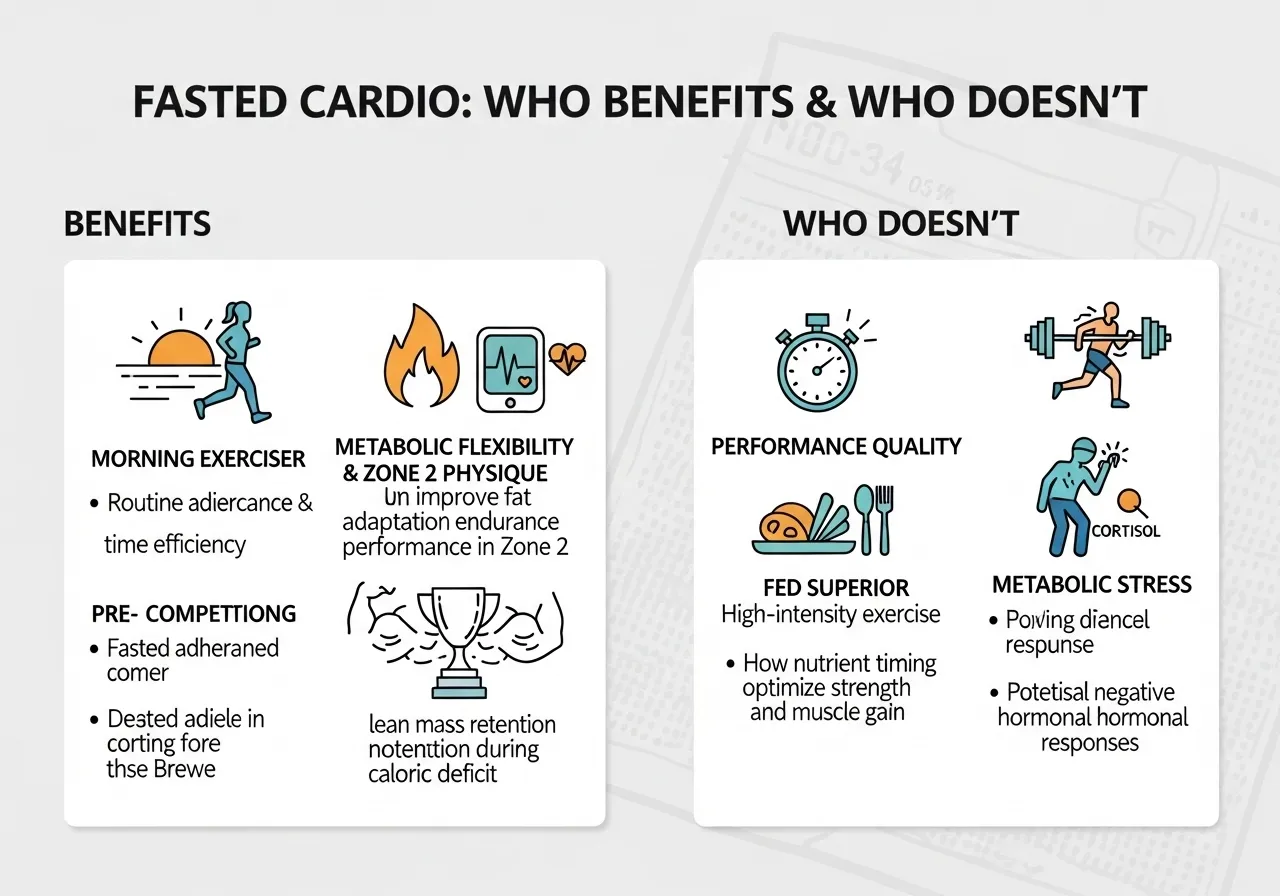
Fasted cardio provides genuine practical advantages for three specific trainee profiles beyond the general population claim that it produces superior fat loss. Understanding who these profiles are prevents the error of applying a strategy that offers real advantages to one population to a different population where it provides no advantage over simpler fed-state approaches.
Profile 1: The Morning-Only Exerciser With Appetite Management Goals
Trainees who can only train in the morning and who find that eating before morning sessions creates gastrointestinal distress, reduces session quality, or requires waking significantly earlier than practical benefit most directly from fasted cardio. For these individuals, fasted morning cardio is not primarily a fat loss strategy but a practical necessity that happens to produce adequate fat oxidation for their goals. Forcing a pre-workout meal to optimise substrate availability when the meal impairs the session is a worse strategy than fasted training even if the fed-state fat oxidation research would suggest otherwise under ideal conditions.
Profile 2: The Intermediate Trainee Developing Metabolic Flexibility
Intermediate trainees at Zone 1 and Zone 2 intensities who are specifically developing fat oxidation capacity — the ability to sustain exercise from fat stores at progressively higher intensities — benefit from periodic fasted cardio as a metabolic flexibility training tool. Regular exposure to the fasted low-glycogen exercise state develops mitochondrial adaptations and fat oxidation enzyme capacity that improves the fat-burning ceiling at any given exercise intensity. For these trainees, fasted Zone 2 training is not primarily about immediate fat loss but about developing the metabolic substrate flexibility that improves aerobic performance at all intensities over months. The Zone 2 physiology and why fat oxidation capacity at low intensity matters for aerobic development is covered in the Zone 2 training guide.
Profile 3: The Pre-Competition Physique Athlete
Competitive bodybuilders and physique athletes at low body fat levels facing the specific challenge of mobilising remaining adipose tissue stores may benefit from fasted low-intensity cardio as one component of an extreme fat loss phase. At very low body fat levels, the fat mobilisation advantages of the low-insulin fasted state become relatively more important because the adipose tissue depot is small and its mobilisation requires optimal hormonal conditions. This population-specific advantage does not apply to general population trainees at moderate to high body fat levels where total caloric deficit, not fat mobilisation efficiency, is the binding constraint.
Who Does Not Benefit From Fasted Cardio
Fasted cardio provides no measurable fat loss advantage over fed cardio for trainees whose only goal is total body fat reduction and who are willing to control total daily caloric intake. The fat loss outcome from any cardiovascular exercise protocol is determined primarily by the 24-hour energy balance, not by substrate utilisation during the exercise session. A trainee who performs 45 minutes of moderate-intensity fasted cardio and then eats 200 extra calories that morning because they are hungrier than they would be after fed-state cardio produces an equal or worse fat loss outcome despite the greater session-level fat oxidation.
The Performance Trade-Off: When Fasted Cardio Costs More Than It Gains
Any trainee whose primary goal is cardiovascular performance improvement rather than fat loss should perform cardio in the fed state. Session quality — running pace, cycling power, sustainable duration — is consistently lower in the fasted compared to fed state at matched intensities. Lower quality sessions produce smaller cardiovascular adaptations per session. For performance-focused trainees, sacrificing session quality for fat oxidation advantages that do not produce superior fat loss outcomes over 24 hours is a clear negative trade-off. The polarised training intensity distribution and how session quality determines training benefit is covered in the polarised training guide.
Practical Implementation: How to Do Fasted Cardio Effectively
The Optimal Fasted Cardio Session Structure
Effective fasted cardio requires specific session design that maximises the fat oxidation advantage while managing the performance and muscle preservation limitations. Three variables must be correctly set: session intensity, session duration, and nutritional strategy immediately post-session.
Intensity: The Non-Negotiable Rule
Fasted cardio sessions must be performed at low to moderate intensity — Zone 1 to Zone 2 — to produce the fat oxidation advantage that justifies the approach. The target is a pace or effort level that is conversational, where nasal breathing is possible throughout, and where the respiratory exchange ratio stays below 0.85 (indicating fat as the primary fuel). Sessions at or above Zone 3 intensity in the fasted state produce glycogen depletion, impaired performance, and increased catabolism without the superior fat oxidation that characterises low-intensity fasted work. The nasal breathing approach that identifies Zone 1 intensity without equipment is covered in the nasal breathing guide.
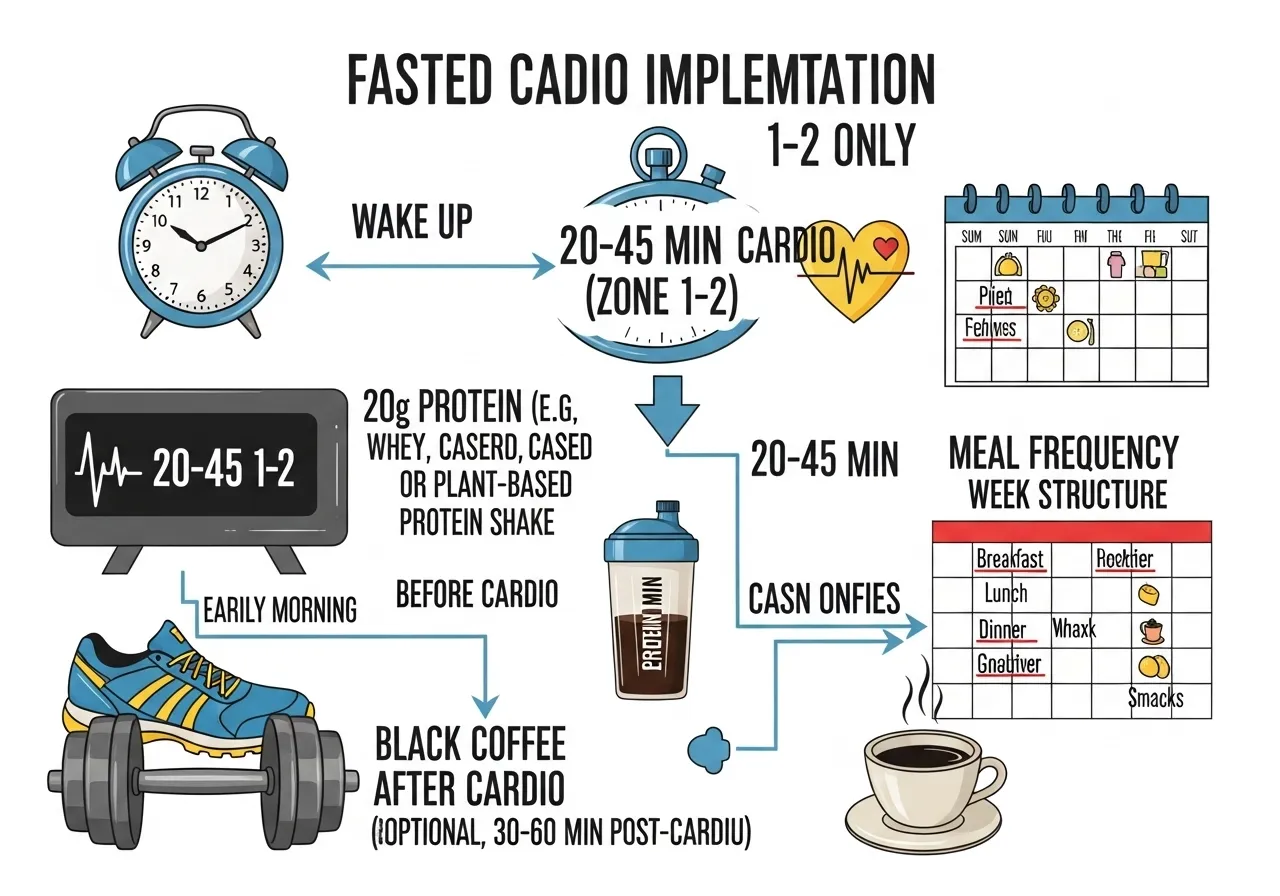
Duration: The 20 to 45 Minute Window
Fasted cardio sessions of 20 to 45 minutes at Zone 1 to Zone 2 intensity provide the fat oxidation benefit with manageable muscle preservation risk and acceptable post-session appetite. Sessions under 20 minutes provide insufficient duration for meaningful fat substrate adaptation. Sessions over 60 minutes at any intensity in a fully fasted state increase muscle catabolism risk and typically produce post-session compensatory eating that reduces the 24-hour fat balance advantage of the session.
Nutritional Strategy: Before and After
Before: If muscle preservation is a concern, 20 grams of rapidly absorbed protein 15 to 20 minutes before the session blunts catabolism without meaningfully raising insulin above fasting levels within the session’s timeframe. Black coffee or caffeine without calories maintains the fasted hormonal state and amplifies fat oxidation per the research. No carbohydrates before the session — even small amounts — elevate insulin sufficiently to significantly reduce fat oxidation and eliminate most of the fasted cardio advantage.
After: Break the fast within 30 to 60 minutes of completing fasted cardio with a meal containing both protein (30 to 40 grams) and carbohydrates to restore muscle glycogen and initiate muscle protein synthesis. Delaying the post-fasted-cardio meal significantly — performing fasted cardio then skipping breakfast for several hours — increases the muscle catabolism window without producing additional fat loss benefit beyond what the session itself provides.
Frequency: How Often to Use Fasted Cardio
Daily fasted cardio at Zone 1 to Zone 2 intensity is appropriate for trainees in fat loss phases who have adequate protein intake and are using fasted cardio as a morning session necessity or metabolic flexibility development tool. Two to three times per week is the practical recommendation for most trainees who train at mixed intensities across the week, preserving fed-state sessions for higher quality and higher intensity cardiovascular work where performance quality determines the training adaptation.
📅 Sample Fasted Cardio Week Structure
Monday: 30 min fasted Zone 1 walk or easy cycle (fat oxidation focus)
Tuesday: Fed-state training (higher intensity intervals or strength)
Wednesday: 35 min fasted Zone 1/2 run or row (metabolic flexibility)
Thursday: Fed-state training
Friday: 30 min fasted Zone 1 (recovery cardio, fat oxidation maintenance)
Weekend: Fed-state longer session or rest
This structure places fasted cardio on days adjacent to non-intensive training or rest, preserving fed-state conditions for sessions where performance quality determines training outcome.
Fasted Cardio Myths, Misconceptions, and What the Evidence Does Not Support
Myth 1: Fasted Cardio Burns More Total Fat Over Time
The meta-analysis evidence consistently shows that fasted cardio produces greater fat oxidation during the exercise session but does not produce greater total fat loss over controlled periods at matched total caloric intake. The 2017 systematic review on fasted exercise, weight loss, and body composition found no additional effect on body fat mass when sessions were performed in the fasted versus fed state at matched exercise volumes and comparable caloric intakes. The session-level fat oxidation advantage does not translate to greater fat loss when the 24-hour energy balance is controlled.
This finding does not make fasted cardio useless for fat loss — it makes the caloric deficit more important than the feeding state. Trainees who perform fasted cardio and maintain a caloric deficit will lose fat. Trainees who perform fed-state cardio and maintain the same caloric deficit will lose the same amount of fat. The fasted state is not a metabolic override that produces fat loss independent of energy balance.
Myth 2: You Must Perform Fasted Cardio at High Intensity to Get Results
This reverses the optimal fasted cardio protocol. High-intensity exercise in the fasted state produces the worst outcomes: impaired performance from glycogen depletion, increased muscle catabolism from cortisol elevation, and failure to maintain the low-intensity fat oxidation that justifies the fasted approach. The fat oxidation advantage of fasted exercise is maximised at low to moderate intensity where fat can supply the energy demand. Performing high-intensity intervals fasted produces the disadvantages of fasted exercise (impaired performance, catabolism risk) without the advantages (enhanced fat oxidation at the intensity being performed).
Myth 3: Fasted Cardio Is Dangerous for Everyone
Fasted cardio at appropriate intensity and duration is safe for healthy adults. The catabolism and performance concerns that lead some practitioners to dismiss fasted cardio entirely apply to extreme versions: very long sessions, high intensity, inadequate protein intake, or deep caloric deficit simultaneously. Moderate-intensity fasted sessions of 30 to 45 minutes with adequate daily protein are well-tolerated and safe for the majority of healthy trainees. The concern is appropriate for clinical populations including type 1 and type 2 diabetics on medication, individuals with eating disorder histories, and those with hypoglycaemic tendencies — not for generally healthy exercising adults.
Myth 4: The Pre-Workout Meal Timing Doesn’t Matter
The timing of the last meal before cardio affects the fasted versus fed substrate utilisation profile. Exercise performed within 1 to 2 hours of a meal containing significant carbohydrates is fed-state exercise in terms of its substrate utilisation. Exercise performed 8 to 12 hours after the last meal (typical overnight fasting duration) is genuinely fasted-state exercise. Exercise performed 3 to 6 hours after a light meal occupies an intermediate zone where neither the full fasted nor the full fed profile applies. The distinction matters because trainees who claim to “eat nothing before morning cardio” after eating dinner at 10 PM and training at 7 AM have fasted for 9 hours — genuine overnight fast — while those who eat a late snack at midnight before a 7 AM session have fasted for only 7 hours, a shorter but still meaningful fast.
The Truth About Fasted Cardio and Body Composition
The evidence-based summary: fasted cardio produces meaningfully greater fat oxidation during the exercise session, does not produce meaningfully greater fat loss over time at matched caloric intake, has legitimate applications for specific populations and goals, and has no meaningful advantage over fed-state cardio for performance-focused trainees. It is neither the essential fat loss tool that its proponents claim nor the muscle-wasting myth that its detractors assert. It is a tool with a specific appropriate use case that provides real but modest advantages when applied correctly.
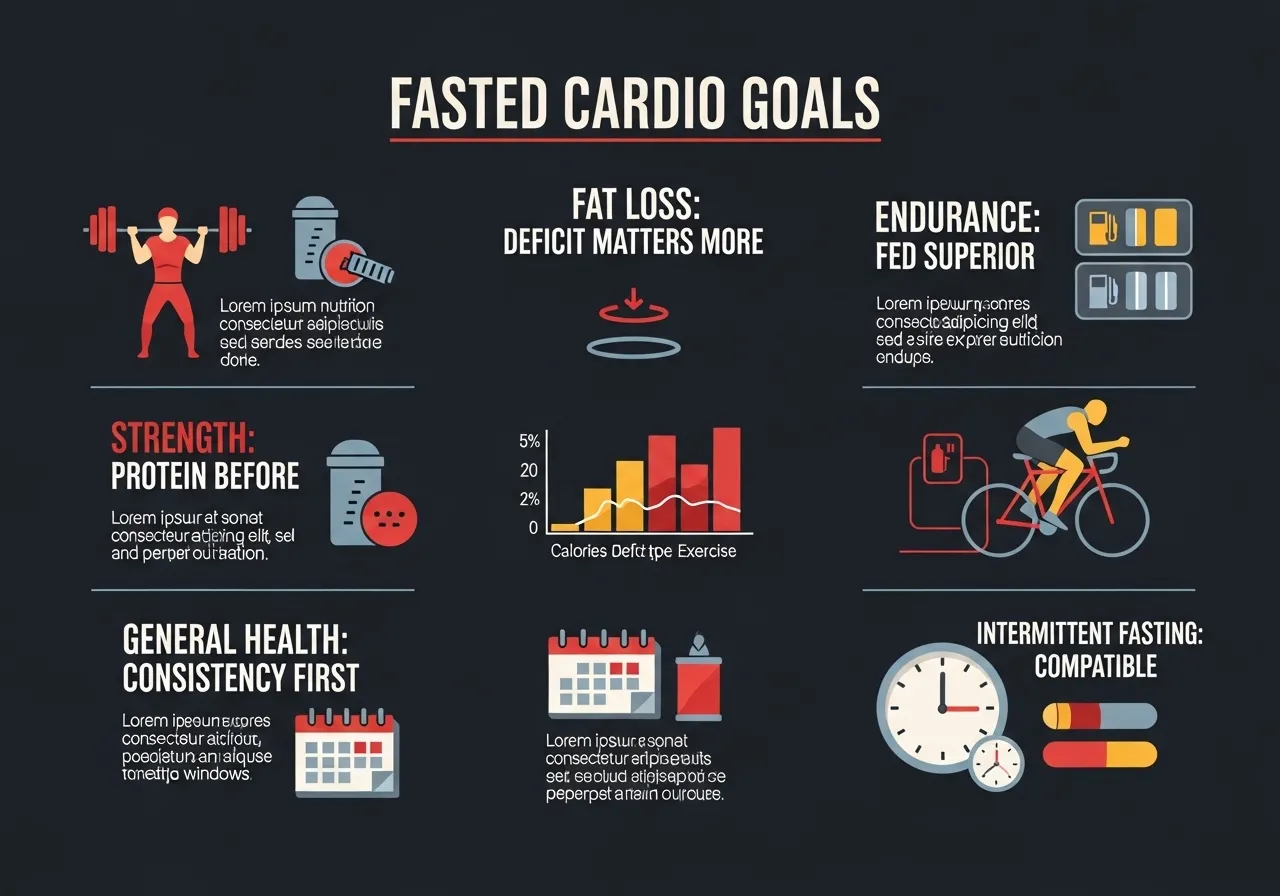
Fasted Cardio for Different Training Goals: A Decision Guide
For Fat Loss: What Actually Matters More Than Feeding State
Total caloric deficit over the week matters more than feeding state before cardio for fat loss outcomes. A trainee who performs fed-state cardio and maintains a 500-calorie daily deficit will lose more fat than one who performs fasted cardio while in a 200-calorie deficit. The feeding state is a minor variable in the fat loss equation compared to total energy balance, total protein intake, and training consistency. If fasted cardio makes morning training more feasible — because eating before morning sessions causes discomfort or requires impractically early waking — then fasted cardio serves the fat loss goal by enabling greater training consistency. This is the legitimate fat loss case for fasted cardio, not the substrate utilisation case.
For Endurance Performance: Fed State Is Superior
For any training session where performance quality is the primary determinant of the adaptation — interval sessions, tempo runs, long aerobic efforts at the upper end of Zone 2 — fed-state training is superior. Pre-exercise nutrition that maintains blood glucose and glycogen availability allows higher-quality efforts, greater training volume, and better recovery between efforts within the session. The marginal fat oxidation advantage of fasted exercise does not compensate for the reduction in session quality that glycogen depletion produces at endurance training intensities.
For Strength Training: Fasted Resistance Training Has Different Implications
Fasted resistance training carries greater muscle preservation risk than fasted cardio because resistance training is a more potent driver of muscle protein breakdown and because the anabolic stimulus from a resistance training session requires amino acid availability for muscle protein synthesis. Performing heavy strength training in a fully fasted state without any protein before the session risks both impaired performance and suboptimal muscle protein synthesis in the post-training window. If morning training must be fasted, light protein (20 to 30 grams of rapidly absorbed protein) before the session is more important for resistance training than for moderate-intensity cardio.
For General Health: Morning Movement Matters More Than Feeding State
For trainees whose primary goal is general health, metabolic health, and consistency of exercise habit rather than body composition optimisation or performance, the distinction between fasted and fed cardio is less important than the consistency of morning cardiovascular activity. A 30-minute walk before breakfast is excellent for metabolic health, cardiovascular risk reduction, and habit formation regardless of whether it is classified as Zone 1 fasted cardio or incidental morning movement. The feeding state debate is primarily relevant when fat loss or performance goals require optimised substrate utilisation — not when the goal is general health and movement consistency.
Combining Fasted Cardio With Intermittent Fasting
Trainees using intermittent fasting protocols, particularly time-restricted eating windows beginning later in the morning, naturally perform their morning exercise in a fasted state as a consequence of the eating window rather than as a deliberate fasted cardio strategy. In this context, fasted cardio is a byproduct of the dietary protocol rather than a deliberate substrate manipulation. The same intensity and duration principles apply: low to moderate intensity sessions are compatible with intermittent fasting protocols without producing significant muscle preservation concerns when daily protein intake within the eating window is adequate. High-intensity training within intermittent fasting protocols requires more careful nutritional management to prevent muscle catabolism from compounding the catabolic conditions of extended fasting.
Frequently Asked Questions About Fasted Cardio
Will I feel dizzy or weak during fasted cardio?
Lightheadedness or weakness during fasted cardio typically reflects one of three issues: exercise intensity exceeds what the fasted state can support (too much glycolytic demand on depleted stores), dehydration from the overnight fast that has not been corrected before starting the session, or hypoglycaemic tendency that makes fasted exercise systematically poorly tolerated for that individual.
The solutions are practical: ensure the session is genuinely Zone 1 to Zone 2 intensity, drink water before starting, and if symptoms persist despite correct intensity and hydration, consider whether fasted cardio is appropriate for your individual metabolic response. Some people tolerate fasted exercise very well; others do not, regardless of whether the research supports it for others. Individual tolerance is a legitimate selection criterion independent of the research on average effects.
Should I take BCAAs before fasted cardio to prevent muscle loss?
Branch chain amino acids (leucine, isoleucine, valine) before fasted cardio provide muscle-protein-sparing effects at a cost of some insulin elevation that partially reduces fat oxidation. Compared to no supplement, BCAAs before fasted cardio reduce muscle catabolism markers. Compared to whey protein, BCAAs provide similar muscle preservation with lower total caloric content, making them a more fasting-compatible muscle preservation strategy than a full protein shake for trainees specifically trying to maintain the fasted hormonal state while blunting muscle catabolism.
Does the type of cardio matter for fasted training?
The modality of fasted cardio is less important than the intensity. Walking, jogging, cycling, rowing, and elliptical training all produce similar fat oxidation responses at matched Zone 1 to Zone 2 intensities in the fasted state. The practical consideration is joint impact: high-impact modalities like running are more demanding on the musculoskeletal system when performed in a glycogen-depleted fasted state because fatigue-related form breakdown occurs earlier. Lower-impact options like cycling and walking may be preferable for trainees who find fasted running produces earlier technique degradation and discomfort compared to their fed-state sessions at the same pace.
How long should I fast before morning cardio for maximum fat oxidation?
Research on fasted exercise typically uses overnight fasting of 8 to 12 hours as the standard condition for “fasted” exercise. The fat oxidation advantage of fasted exercise becomes meaningful at approximately 8 hours of fasting, when liver glycogen is substantially depleted and insulin has returned to baseline fasting levels. Shorter fasting periods of 3 to 6 hours after a moderate-carbohydrate meal produce intermediate substrate utilisation profiles between fully fasted and fully fed states.
For most trainees performing morning cardio after waking, the natural overnight fast of 7 to 10 hours provides sufficient fasting duration to produce the fat oxidation advantage documented in the research. Extending the fast artificially by skipping dinner the evening before to achieve a longer pre-exercise fast does not produce meaningfully greater fat oxidation during the subsequent morning session and introduces the risk of energy deficiency and impaired sleep-related recovery that the pre-exercise fasting literature does not endorse.
Is fasted cardio appropriate for women differently than for men?
Research suggests sex differences in fat oxidation response to fasting and exercise, with women generally showing higher baseline fat oxidation rates and potentially smaller relative differences between fasted and fed states than men. The muscle preservation concerns may also differ by sex due to hormonal differences in protein metabolism. These sex-specific differences do not negate the core findings — fasted exercise produces higher fat oxidation in both sexes — but they suggest that the magnitude of advantage from fasted cardio may be somewhat smaller for women than the male-dominated research literature’s averages imply. Women at adequate protein intake performing moderate-intensity fasted cardio face no evidence of disproportionate muscle loss risk compared to men under the same conditions.
Key Takeaways
Fasted cardio produces significantly more fat oxidation during the exercise session (approximately 3 grams more per session versus fed cardio). This is a real physiological effect, not a myth.
Greater session-level fat oxidation does not translate to greater total fat loss over time at matched caloric intake. The 24-hour compensatory adjustments reduce the fat balance advantage that session-level data suggests.
Fasted cardio must be performed at Zone 1 to Zone 2 intensity to access the fat oxidation advantage. High-intensity fasted exercise produces impaired performance and increased catabolism without the fat oxidation benefit.
Adequate daily protein intake (1.6 to 2.2 grams per kilogram) is the most important muscle preservation variable — more important than whether cardio is fasted or fed for sessions under 60 minutes at moderate intensity.
Total caloric deficit matters more than feeding state for fat loss. Fasted cardio is a legitimate tool for specific populations (morning-only exercisers, metabolic flexibility developers, pre-competition physique athletes) but does not override energy balance for general population fat loss.
⚠️ Health & Fitness DisclaimerThis article is for general educational and informational purposes only.It does not replace professional medical or fitness advice.If you have any pre-existing condition, knee, hip, or lower back concern — please consult a qualified healthcare professional or certified personal trainer before starting or modifying any exercise program. The barbell back squat…
Altitude training is the gold standard endurance performance intervention for decades. The reduced oxygen partial pressure at altitude stimulates erythropoietin release, increases red blood cell mass and haemoglobin, and produces measurable improvements in VO2max and endurance performance when the athlete returns to sea level. It is also expensive, logistically complex, and inaccessible to most athletes…
⚠️ Health & Fitness DisclaimerThis article is for general educational and informational purposes only. It does not replace professional medical or fitness advice. If you have any pre-existing condition, injury, or health concern — consult a qualified healthcare professional or certified personal trainer before starting or modifying any exercise program. The Romanian conventional deadlift guide…
⚠️ Fitness Disclaimer: The information in this article is for general educational purposes only and does not constitute professional fitness or medical advice. Always consult a qualified healthcare professional before starting any new exercise program. ⚠️ Cardiovascular Health Notice: If you have a history of heart disease, high blood pressure, or any cardiovascular condition, obtain…
Warning Fitness Disclaimer: The information in this article is for general educational purposes only and does not constitute professional fitness or medical advice. Always consult a qualified healthcare professional before starting any new exercise program. The cardio mistakes guide Method That Changed Everything I Thought I Knew About Training For most of my training life,…
⚠️ Health & Fitness DisclaimerThis article is for general educational and informational purposes only.It does not replace professional medical or fitness advice.If you have any pre-existing condition, joint concern, or cardiovascular issue — please consult a qualified healthcare professional before starting or modifying any exercise program. Jump rope training has been used by boxers, athletes,…