Rucking is walking with a weighted pack. That description makes it sound simple. The physiological demand it creates is not.
Carrying 15 to 20% of your bodyweight on your back while walking at a brisk pace elevates heart rate to Zone 2 to Zone 3 intensity, loads the posterior chain continuously, compresses the spine under axial load, and builds grip and forearm endurance through sustained pack weight. All of this happens with near-zero impact on the joints compared to running.
The military has used load carriage as the foundation of physical conditioning for centuries. The research that has accumulated around it, largely driven by military performance science, provides a clear picture of what rucking does physiologically and how to programme it effectively.
This guide covers the metabolic science, cardiovascular and musculoskeletal effects, load selection guidelines, technique, and an 8-week progressive rucking programme for beginners and intermediates.
The Metabolic Science: What Carrying Weight Does to Energy Expenditure
The Load-Energy Relationship
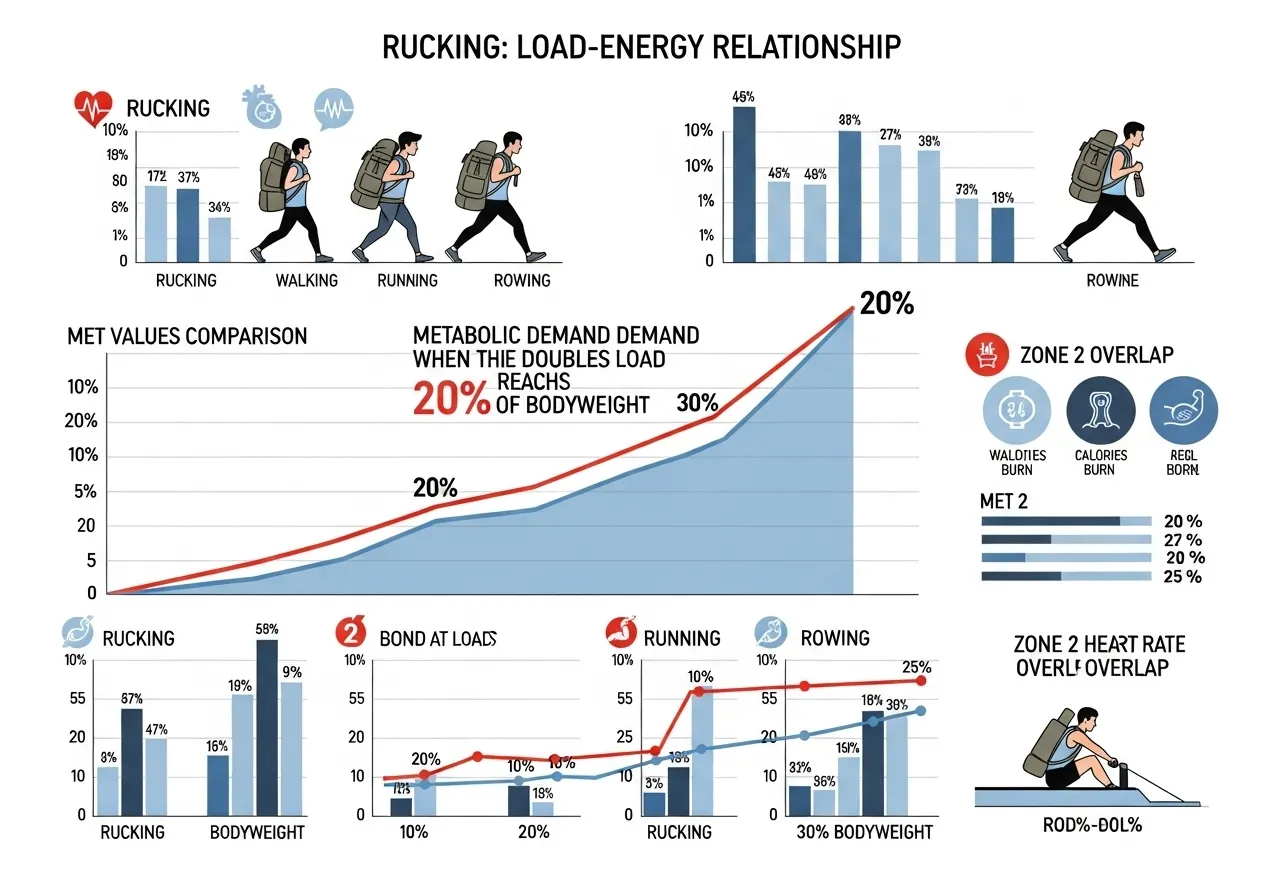
Adding load to walking increases metabolic cost in a roughly linear relationship up to moderate weights. Each additional kilogram of carried weight increases oxygen consumption and caloric expenditure proportionally because the body must perform additional work to move the combined mass of bodyweight plus pack against gravity with each stride.
📌 Key Finding
Load carriage metabolic cost is predictable and substantial. Carrying approximately 20% of bodyweight while walking roughly doubles the energy expenditure of unloaded walking at the same speed. A 45-minute rucking session with adequate load is metabolically comparable to vigorous rowing or circuit training.
MET Values and Caloric Comparison
The Compendium of Physical Activities assigns rucking a MET value of approximately 5 to 8, depending on load and terrain, compared to walking at 3.5 to 4.5 METs and running at 8 to 12 METs. Rucking sits between brisk walking and jogging for metabolic intensity, with the critical difference that it achieves this intensity at low impact force on the joints.
The energy cost increases approximately 7 to 10% for each additional 5 kg of carried weight at standard walking speeds. This means load selection directly controls training intensity without requiring changes to pace or terrain, giving rucking a precision not available in standard walking.
Zone 2 Overlap: Why Rucking Builds Aerobic Base
Rucking with a moderate pack at normal walking pace typically places heart rate at or just above the first ventilatory threshold, which corresponds to the upper boundary of Zone 2 in most heart rate zone models. This is the intensity zone most strongly associated with mitochondrial density increases, fat oxidation efficiency, and long-term aerobic base development.
For trainees who struggle to maintain genuine Zone 2 heart rate during conventional walking, adding a pack solves the problem without requiring faster walking that disrupts gait mechanics. The load creates the cardiovascular demand; the walking pace creates the mechanical efficiency. The Zone 2 training framework and its aerobic base benefits are covered in the Zone 2 training guide.
Why Rucking Produces Different Adaptations Than Gym Training
Most gym-based training involves discrete sets with full rest between bouts. The muscles work intensely for 20 to 60 seconds, then rest for 60 to 180 seconds. The cardiovascular system is challenged intermittently rather than continuously.
Rucking creates a sustained, continuous demand across the full session duration. The posterior chain, core stabilisers, and cardiovascular system all work without rest for 30 to 90 minutes. This sustained demand produces muscular endurance adaptations, specifically slow-twitch fibre hypertrophy and oxidative enzyme upregulation, that intermittent gym training underserves.
The practical result: trainees who add rucking to a conventional gym programme often notice improvements in their ability to sustain effort across long training sessions, faster recovery between sets, and reduced lower back fatigue in daily activities. These are the hallmarks of aerobic base development that rucking specifically targets.
Rucking also develops grip strength and forearm endurance from continuous pack weight management, shoulder girdle endurance from sustained pack strap tension, and ankle stability from terrain variation. These peripheral adaptations rarely appear in conventional gym training and represent genuine fitness development, not just cardiovascular improvement.
Cardiovascular and Physiological Effects of Load Carriage
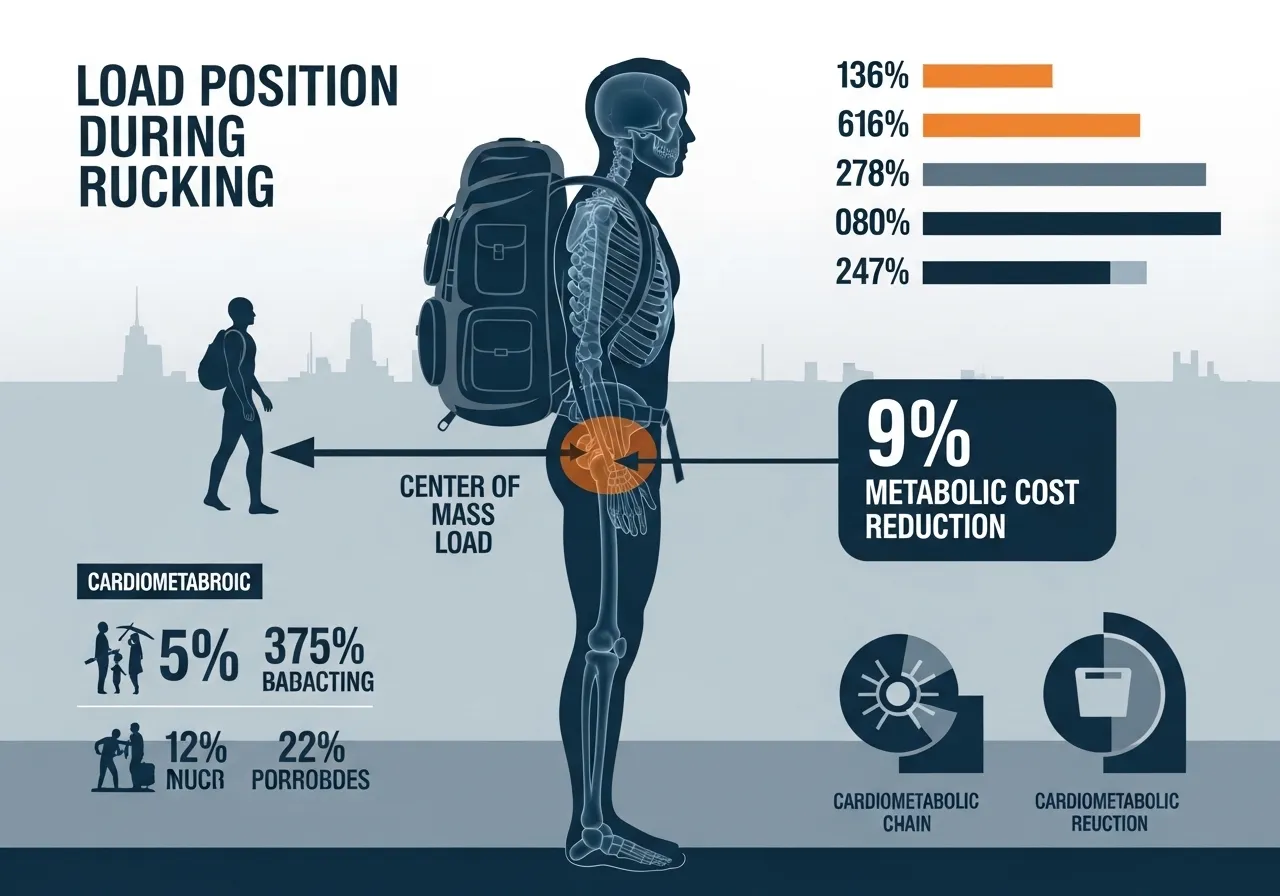
📌 Key Finding Load position matters as much as load weight. Pack loads carried close to the centre of mass and high on the back produce lower metabolic cost and less cardiovascular stress than loads carried low on the back or distributed across the chest. Proper pack fit directly affects the training stimulus and reduces injury risk.
Rucking is a load-bearing activity. Every step applies compressive force to the spine, hip, and lower extremity bones proportional to the combined bodyweight plus pack weight. This compressive stimulus is a primary driver of bone mineral density maintenance and improvement, particularly relevant for populations with osteoporosis risk or those who perform primarily non-weight-bearing exercise such as cycling and swimming.
The posterior chain musculature, including the erector spinae, glutes, and hamstrings, works continuously during rucking to maintain an upright posture against the forward pull of the pack. This sustained isometric and dynamic demand differs from the intermittent loading of most gym exercises and produces a specific muscular endurance adaptation that transfers directly to loaded carrying tasks in daily life and athletic contexts.
Load Selection, Pack Setup, and Terrain: The Practical Variables
How Much Weight to Carry
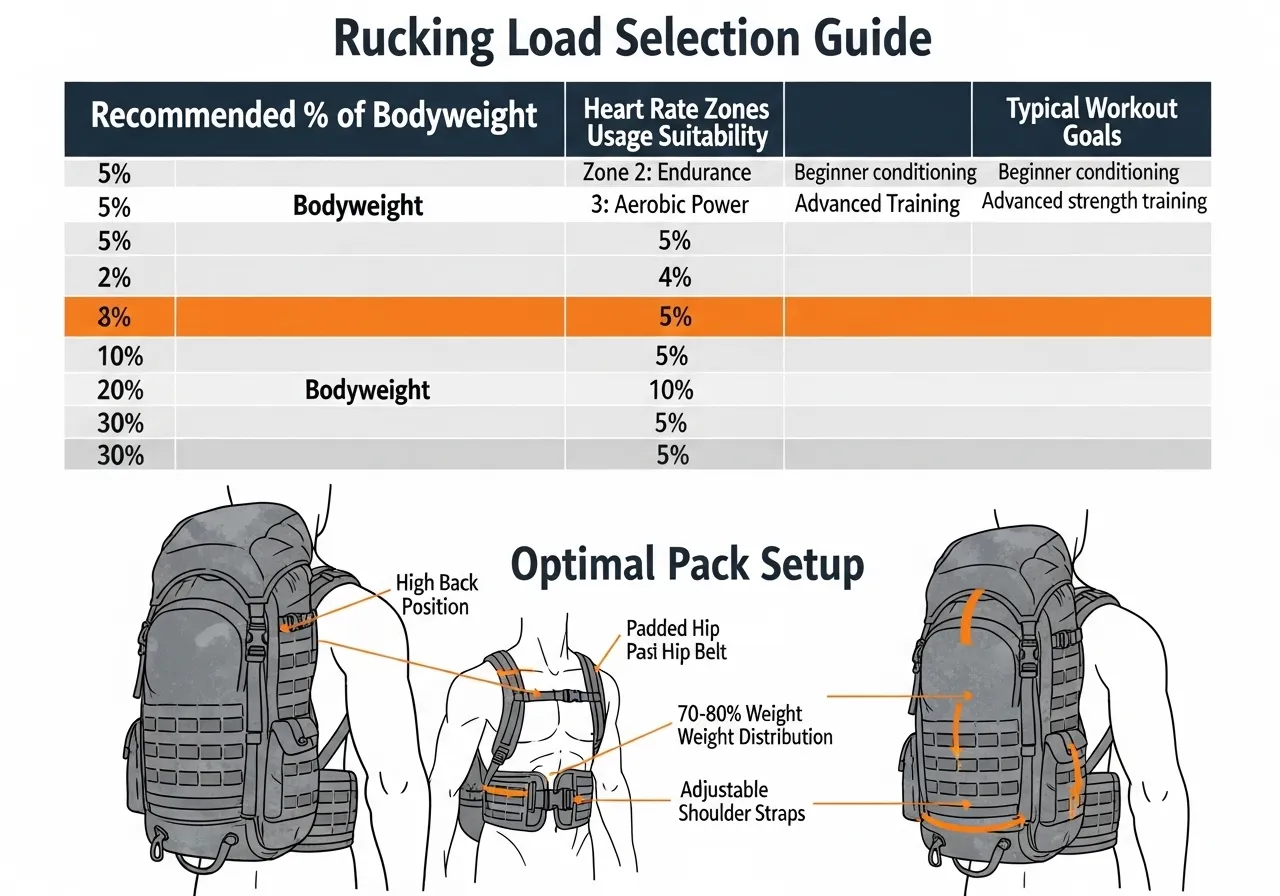
Load selection for rucking follows a simple principle: use the minimum load that produces the target heart rate zone at your normal walking pace. Most trainees find that 10 to 15% of bodyweight achieves Zone 2 heart rate at a comfortable walking pace. Higher loads push into Zone 3 at the same pace.
Load (% Bodyweight)
Typical Heart Rate Zone
Best For
Beginner Appropriate?
5 to 10%
Zone 1 to 2
Recovery days, beginners
Yes
10 to 20%
Zone 2 to 3
Aerobic base building, general fitness
After 4 weeks
20 to 30%
Zone 3 to 4
Conditioning, military preparation
Intermediate only
Above 30%
Zone 4+
Military and tactical training
No
The standard entry point for recreational ruckers is a 10 kg pack or 10% of bodyweight, whichever is lighter. Beginning lighter and progressing systematically over weeks is strongly preferable to starting heavy and managing the spinal, hip, and knee stress that excessive early load creates.
Pack Setup: How Load Position Affects the Session
The pack should sit high on the back with the weight positioned close to the spine. The hip belt should be fastened and bear approximately 70 to 80% of the pack weight, with the shoulder straps bearing the remaining 20 to 30%. This distribution transfers load to the hip girdle where the body is structurally designed to carry weight.
A low-hanging pack with weight poorly distributed to the shoulder straps creates a forward-lean moment at the torso that the lumbar erectors must counteract continuously. Over a 45-minute session, this position generates significant lower back fatigue that is the pack setup problem rather than a rucking problem. Correct setup eliminates this entirely.
Terrain and Speed Effects
Terrain gradient significantly multiplies the metabolic cost of rucking. Carrying a 10 kg pack on a 5% incline roughly doubles the metabolic demand compared to flat terrain at the same pace. For trainees using rucking for Zone 2 base building, flat terrain with moderate load is the appropriate starting point. Incline rucking is an effective intensity tool for intermediate trainees who have plateaued on flat terrain at their current load.
Walking speed also modulates intensity. Faster paces increase metabolic demand at the same load. A common progression strategy increases either load or pace, but not both simultaneously, to control the intensity increase across a training block.
Distance vs Time: How to Structure Sessions
Beginners benefit from time-based sessions rather than distance-based goals. A 30-minute session at a consistent pace covers a predictable distance that varies only with terrain. Time-based programming removes the temptation to push pace to reach a distance target, which introduces intensity variability that undermines controlled progression.
Intermediate trainees with established base fitness often prefer distance-based goals because they create a concrete performance metric: completing a 5 km or 10 km ruck at target load within a target time. This structure suits goal-oriented trainees and provides a clear progression benchmark. The transition from time-based to distance-based programming typically occurs after four to six weeks of consistent rucking when technical proficiency and load tolerance are both established.
Either approach produces equivalent physiological adaptation when total load-time under tension is matched. The choice is preference and goal orientation rather than physiological superiority of one format over the other. Most experienced ruckers use time-based sessions for recovery and base building, and distance-based benchmarks for periodic fitness testing within the same training programme.
Rucking Technique: Posture, Stride, and Foot Strike
⚠️ Spinal Loading Safety Note Rucking places compressive load on the lumbar spine throughout each session. Individuals with active disc herniations, lumbar stenosis, or recent spinal surgery should obtain medical clearance before beginning rucking. Begin with the minimum load that produces a training effect (typically 5 kg) and progress conservatively. Any sharp radiating pain into the legs during rucking indicates spinal nerve involvement and requires immediate assessment.
Posture: The Critical Technical Point
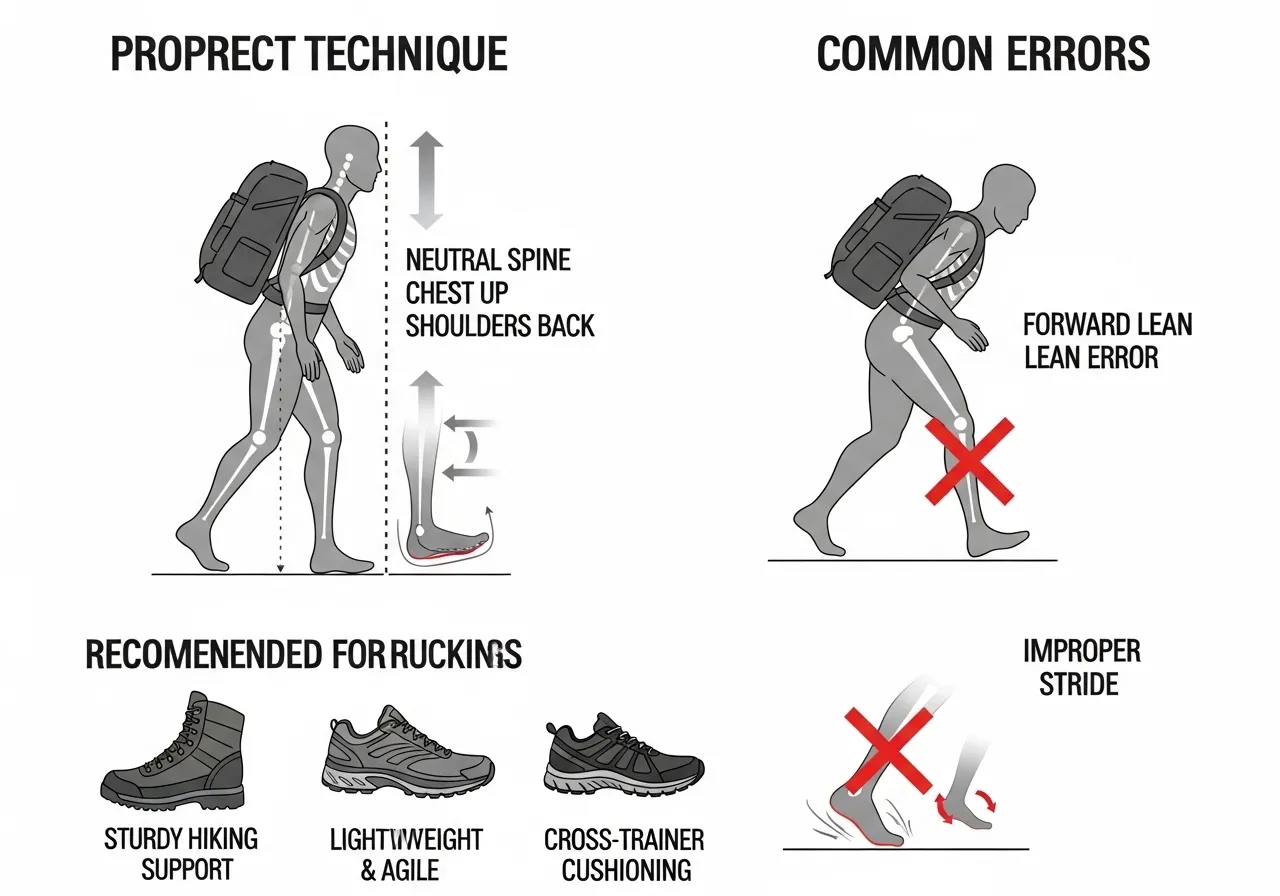
The primary postural error in rucking is forward lean, where the torso bends forward at the waist in response to the pack pulling the centre of mass rearward. This compensatory lean actually increases lumbar loading and reduces hip drive efficiency.
Correct rucking posture: spine neutral, chest up, shoulders slightly retracted, core braced moderately throughout. The torso should be upright or very slightly forward inclined from the ankle, not hinged forward at the hip. Imagine a plumb line from the ear to the ankle running straight down through the body. The pack should not pull this line rearward.
Stride Mechanics
Rucking stride is shorter than running stride but longer and more purposeful than casual walking. Overstriding, landing the heel well in front of the body’s centre of mass, increases braking forces and joint stress under load. A natural, slightly faster cadence with a midfoot landing produces lower joint forces than a long-stride heel-strike pattern.
The loaded carries research consistently shows that midfoot strike patterns under load reduce peak ground reaction forces and lower-extremity stress compared to heel-strike patterns at equivalent speeds. Shortening stride length and increasing cadence to maintain the same pace reduces injury risk on longer rucking sessions. The loaded carries training science is covered in the loaded carries guide, which covers the relationship between carry mechanics and functional strength development.
Foot and Footwear Considerations
The footwear choice significantly affects comfort and injury risk in rucking. Running shoes are not ideal because their cushioned heels change the ankle mechanics under load and provide insufficient lateral stability for weighted walking over varied terrain. Trail running shoes or light hiking shoes with a lower heel-to-toe drop and wider toe box distribute load more naturally and provide better grip on uneven terrain.
Wool or moisture-wicking synthetic socks reduce blister risk significantly. Blisters are the most common acute rucking injury and are almost entirely preventable with appropriate footwear and socks. Breaking in footwear before the first loaded session prevents the most common cause of session abandonment.
Common Rucking Technique Errors and Corrections
The forward lean error is the most common and most consequential. Lean forward at the hip and the lumbar spine extends under shear load. Over a 45-minute session, this pattern creates the lower back soreness that most beginners attribute to rucking itself rather than to improvable technique.
Correction: set the hip belt correctly before beginning and consciously pull the sternum up at the start of each session. The hip belt creates a forward anchor that counteracts the rearward pull of the pack. When the hip belt is loose, the torso must lean forward to compensate. When it is correctly tightened, upright posture requires no additional effort.
The second common error is overstriding on descents. Descending terrain with heavy pack weight and long strides creates high eccentric quadriceps demand and significant knee joint stress. Shortening stride length on descents and allowing the pace to slow naturally reduces this stress without adding significant time to the session.
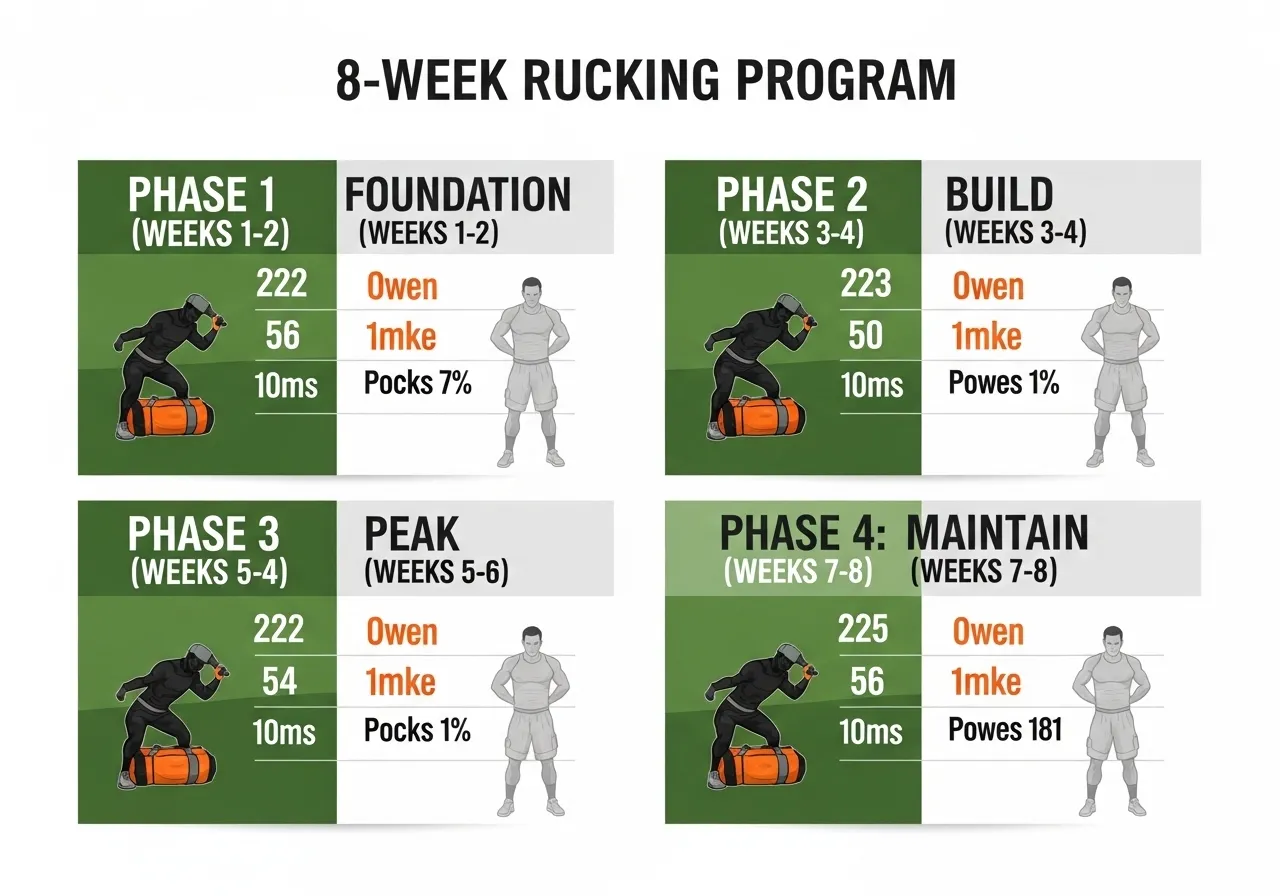
8-Week Progressive Rucking Programme
📅 Phase 1: Weeks 1 to 2: Load Introduction
2 sessions per week, 30 minutes each
Load: 5 to 8 kg (approximately 8 to 10% bodyweight for most adults)
Terrain: flat only
Pace: comfortable conversational walking pace
Focus: pack fit, posture, and establishing baseline comfort under load
The goal in Phase 1 is not cardiovascular stimulus. It is spinal and lower extremity adaptation to the load stimulus. Conservative entry prevents the overuse injuries that derail most beginner ruckers.
📅 Phase 2: Weeks 3 to 4: Duration Build
2 to 3 sessions per week, 40 to 45 minutes each
Load: maintain Phase 1 load, do not increase yet
Terrain: flat with optional gentle incline on one session
Pace: brisk walking, aim for Zone 2 heart rate
Monitor: any lower back fatigue or hip discomfort signals to reassess pack setup
Duration increases before load increases. The connective tissue and spinal structures adapt more slowly than cardiovascular fitness. Rushing load progression is the primary cause of rucking-related overuse injuries.
📅 Phase 3: Weeks 5 to 6: Load Progression
3 sessions per week, 45 minutes each
Load: increase by 2 to 3 kg from Phase 1 load (now approximately 10 to 12 kg)
Terrain: include one incline session per week if available
One session per week: longer walk at 60 to 75 minutes at lighter Phase 1 load
The longer lighter session builds aerobic base while the two loaded sessions develop load tolerance. This split mirrors the polarised training principle applied to rucking.
📅 Phase 4: Weeks 7 to 8: Consolidation
3 sessions per week: 45 minutes loaded, 45 minutes loaded, 75 to 90 minutes lighter load
Load: 12 to 15 kg on loaded sessions (approximately 15 to 20% bodyweight)
Introduce varied terrain on at least one session per week
Week 8: compare heart rate at Phase 1 load and pace with Week 1 data. Lower heart rate at the same load and speed is the primary fitness marker.
After completing Phase 4, most trainees are ready for the maintenance rucking standard: 2 to 3 sessions per week, 45 to 60 minutes, 15% bodyweight load. This maintains all adaptations with minimal recovery cost.
Frequently Asked Questions About Rucking
Is rucking a substitute for running?
Rucking is not a direct substitute for running in terms of cardiovascular intensity ceiling or speed-specific adaptations. It is a complement that covers the low-to-moderate intensity cardiovascular work that running either overloads (for high-mileage runners) or underdelivers (for those who cannot sustain running).
For trainees who cannot run due to joint issues or who find running too high impact to recover from consistently, rucking provides a metabolically comparable Zone 2 stimulus with dramatically lower ground reaction forces. For runners, rucking on easy days provides active recovery with additional muscular loading without the inflammatory cost of additional easy running.
How does rucking compare to walking on a treadmill with incline?
Incline treadmill walking at high grades, sometimes called the “12-3-30” protocol, shares significant overlap with rucking in cardiovascular demand. The primary practical differences are that rucking adds spinal and postural loading from the pack weight and involves outdoor terrain adaptation that treadmill walking cannot replicate.
Both produce effective Zone 2 cardiovascular stimulus. Rucking additionally loads the posterior chain under pack compression, develops grip and forearm endurance from pack holding, and exposes the ankle and hip stabilisers to real terrain variation. For bodyweight training context on how rucking fits within a broader calisthenics and loaded movement programme, the bodyweight training guide covers progressive loading principles that directly complement rucking.
What is the ideal rucking frequency per week?
Two to three sessions per week is the standard recommendation for general fitness rucking. One session per week maintains baseline adaptations but produces slower progress. Four or more sessions per week at moderate to high loads accumulates spinal compressive stress that most recreational trainees cannot recover from without symptom development.
The rule of thumb: no more total loaded carry time per week than your current capacity allows without residual fatigue or soreness entering the next session. Progressive increase of one session or 10 to 15 minutes of total weekly duration every two weeks is a sustainable progression rate for most trainees.
Can I ruck every day with light load?
Daily rucking at very light loads, 5% of bodyweight or less, is sustainable for most healthy adults and is essentially a loaded walk that provides mild spinal compression stimulus, postural engagement, and Zone 1 cardiovascular activity. Many trainees incorporate 20 to 30 minutes of light rucking as a daily habit distinct from their structured heavier rucking sessions.
The key constraint is spinal recovery time. The intervertebral discs re-hydrate and recover overnight from compression. Very light daily loads (under 7 to 8 kg for most adults) do not accumulate meaningful spinal compressive fatigue. Loads above 15% of bodyweight daily are not recoverable for most recreational trainees over time.
How do I track progress in rucking?
The primary rucking progress marker is heart rate at a fixed load, pace, and terrain over time. If your heart rate at 10 kg, 5 km/h, flat terrain drops from 135 bpm to 120 bpm over six weeks, that represents measurable cardiovascular adaptation.
Secondary markers include total distance at a given load before fatigue, perceived exertion at standard sessions, and lower back comfort during and after sessions. All three improve with consistent training and provide meaningful feedback that simple time-based tracking misses.
Tracking every session with consistent conditions, the same route and pace, removes terrain and pace variables that otherwise obscure adaptation. A weekly or fortnightly benchmark session on a standard flat route at standard load provides the cleanest progress data.
What weight should I use in a rucksack versus a weighted vest?
Both a rucksack and a weighted vest are valid load carriage options for rucking. The rucksack distributes weight high on the back with hip belt support, which is more comfortable over longer distances and allows greater load without the pressure points that vests create.
Weighted vests distribute load evenly across the chest and back, keep the centre of mass closer to the body, and allow a more natural arm swing. They are more practical for mixed rucking and gym sessions and easier to remove quickly. For sessions under 30 minutes or loads under 10 kg, vests and packs perform comparably. For longer sessions or higher loads, the hip belt of a proper rucksack significantly reduces shoulder and neck fatigue.
Key Takeaways
Carrying approximately 20% of bodyweight roughly doubles energy expenditure compared to unloaded walking. Load selection directly controls training intensity without requiring changes to pace or terrain.
Load position matters as much as load weight. Pack loads carried high on the back and close to the spine produce lower metabolic cost and less lower back stress than loads carried low or away from the body.
Rucking places heart rate at Zone 2 to Zone 3 intensity with near-zero joint impact compared to running, making it ideal for aerobic base building for trainees who cannot sustain high running volumes.
Progress duration before load. Connective tissue and spinal structures adapt more slowly than cardiovascular fitness. Rushing load progression is the primary cause of rucking overuse injuries.
Correct posture: neutral spine, chest up, hip belt bearing 70 to 80% of pack weight. Forward lean at the waist increases lumbar loading and reduces the efficiency of every session.
⚠️ Fitness Disclaimer: The information in this article is for general educational purposes only and does not constitute professional fitness or medical advice. Always consult a qualified healthcare professional before starting any new exercise program. ⚠️ Cardiovascular Health Notice: If you have a history of heart disease, high blood pressure, or any cardiovascular condition, obtain…
The farmer’s walk may be the most honest exercise in strength training. You pick up something heavy in each hand, walk until you cannot continue, and put it down. There is no technique to hide behind, no momentum to exploit, and no machine to stabilise the load. If the grip fails, the set ends. If…
The premise sounds implausible. Apply a cuff to your arms or legs, restrict blood flow partially, then train with weights 20 to 30% of your one-rep maximum, and produce muscle growth equivalent to heavy training at 70 to 80% of your maximum. It sounds like the kind of shortcut that fitness products promise and peer-reviewed…
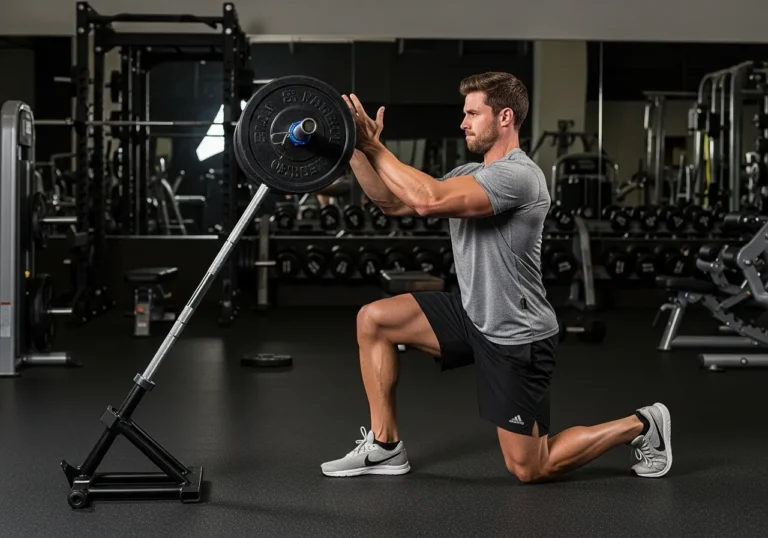
Why the Landmine Is the Most Versatile and Underused Training Tool in the Gym The landmine — a barbell anchored at one end in a pivot device or wedged into a corner, with the free end loaded with plates — is one of the most versatile training tools available in any gym and one of…
⚠️ Health & Fitness DisclaimerThis article is for general educational purposes only and does not replace professional medical advice. If you have any lower limb, knee, or ankle conditions, please consult a qualified healthcare professional before beginning plyometric training overview training. Plyometric training — exercise that uses the stretch-shortening cycle (the rapid lengthening of a…
Most training programmes develop either strength or power. Powerlifters squat heavy and get strong. Sprinters sprint fast and get explosive. The two qualities rarely develop in the same session, in the same set pairing, or even in the same training block. Contrast training challenges this separation. By pairing a heavy compound lift with an explosive…